Dev Stack
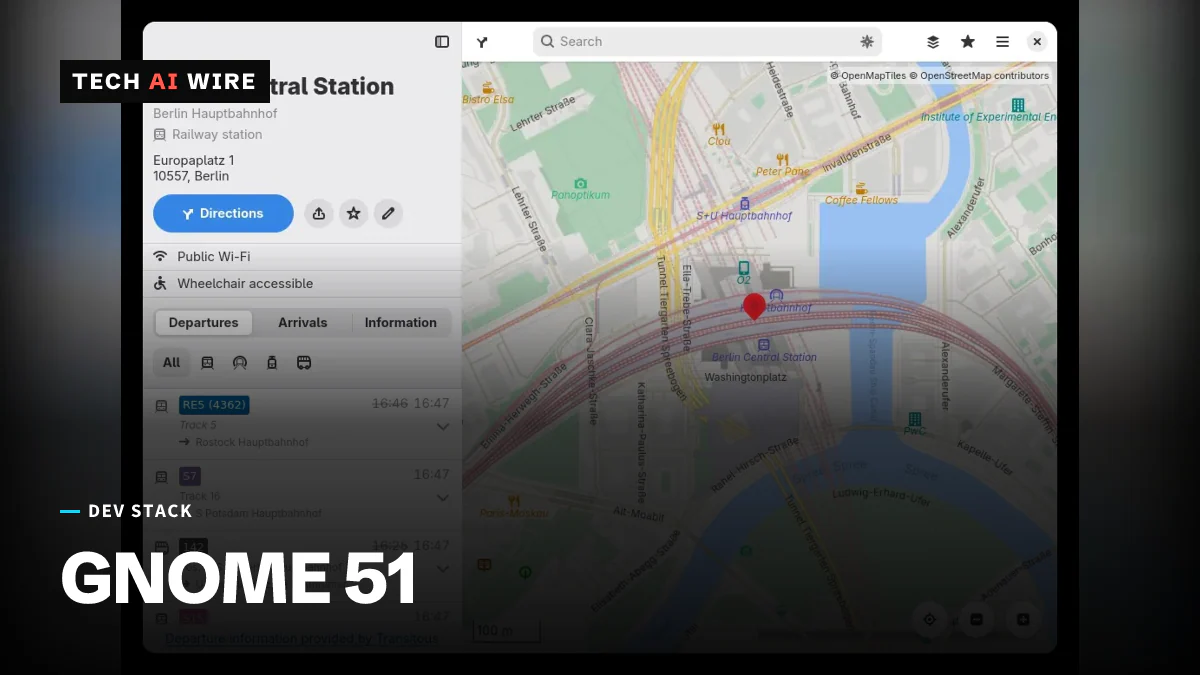
GNOME 51 ships reworked frame scheduling in Mutter
GNOME 51 arrived September 16 with smoother frame scheduling, FIDO2 passkey login, and one removal developers should note: legacy NVIDIA EGLStreams.
New developer tools, frameworks, and releases worth your attention.
GNOME 51 arrived September 16 with smoother frame scheduling, FIDO2 passkey login, and one removal developers should note: legacy NVIDIA EGLStreams.
Fedora 45 moves the text console out of the kernel. Three tools stop working, and the beta landed September 15 with an automatic fallback to fbcon.
Early access to Google Home's MCP server needs the $20-a-month Premium Advanced tier, plus your own Google Cloud project, before an agent touches a device.
Ubuntu 26.10 hands cp, mv and rm to Rust. A 113-issue audit held those three back from 26.04 LTS, and stable arrives October 15.

Reference Image negatives move to deleted photos after 30 days, and EU capture is off at launch. Apple's September 15 post explains the signing chain.
Ryan Gordon's port, sponsored by Outfit7 and squashed from 77 commits, merged upstream on September 15, 2026 with video, audio and touch working.
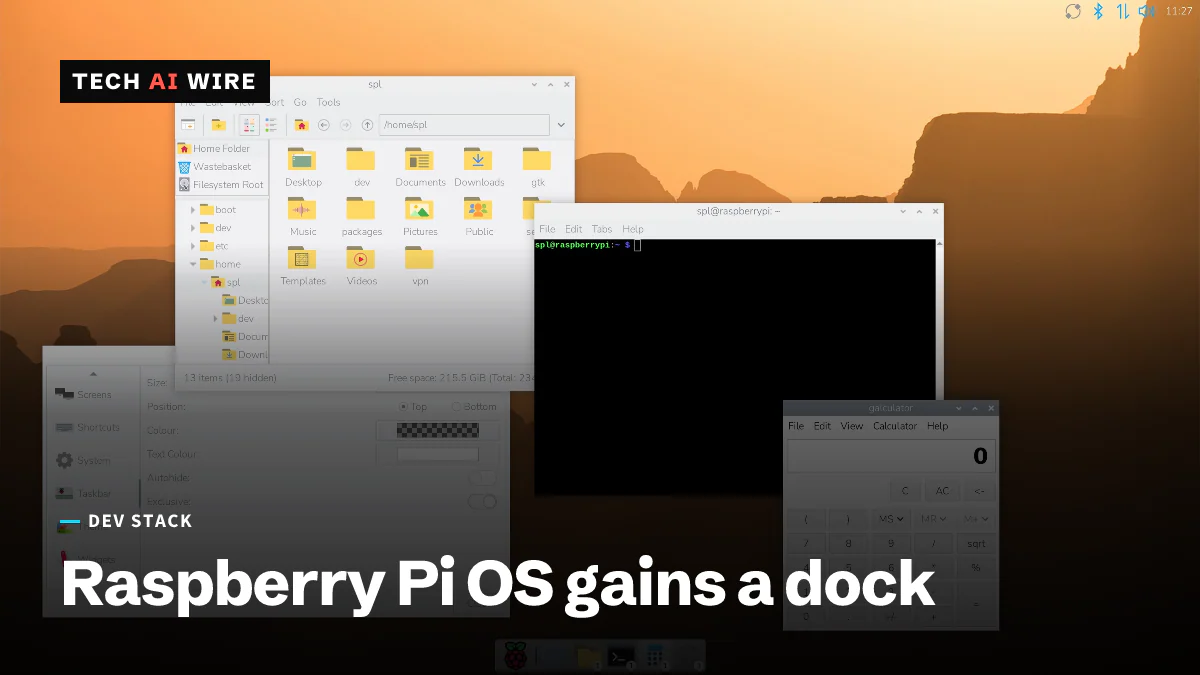
A swaybg option trims memory on boards under 2GB, and the labwc desktop gains an optional icon dock, a search-driven launcher and a Control Centre.
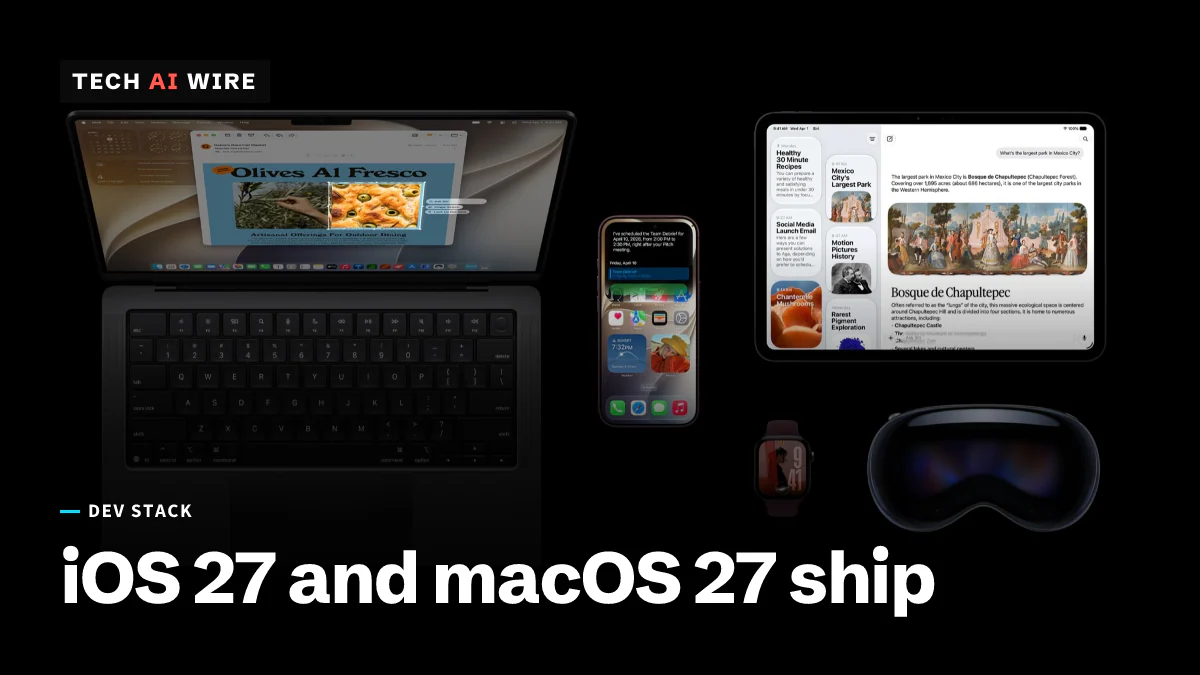
Apple shipped six platform updates on September 14, 2026, claiming app launches up to 30% faster, and iPhone 11 still makes the cut.
A new benchmark puts AVIF ahead of JPEG XL across the fidelity range, and clocks a 1,918-byte JPEG XL file at 17.43 seconds to decode.
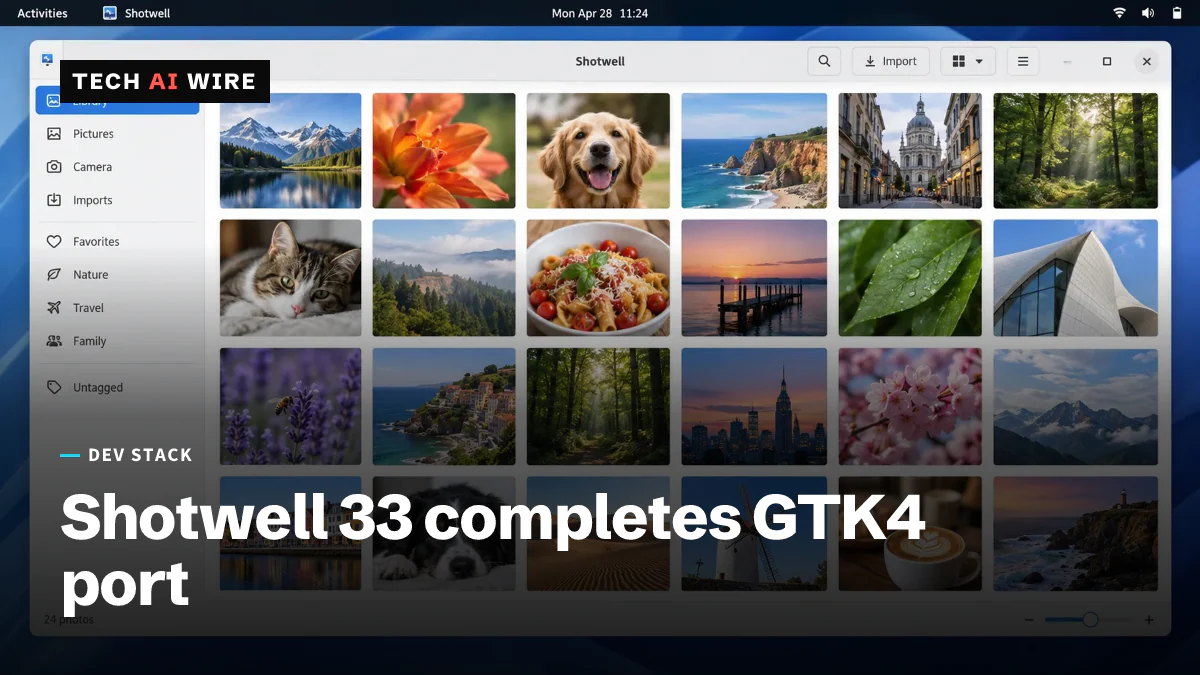
Shotwell 33 is the GNOME photo manager's first major release since 0.32 in April 2023, and the GTK4 move restores drag-and-drop export on Wayland.
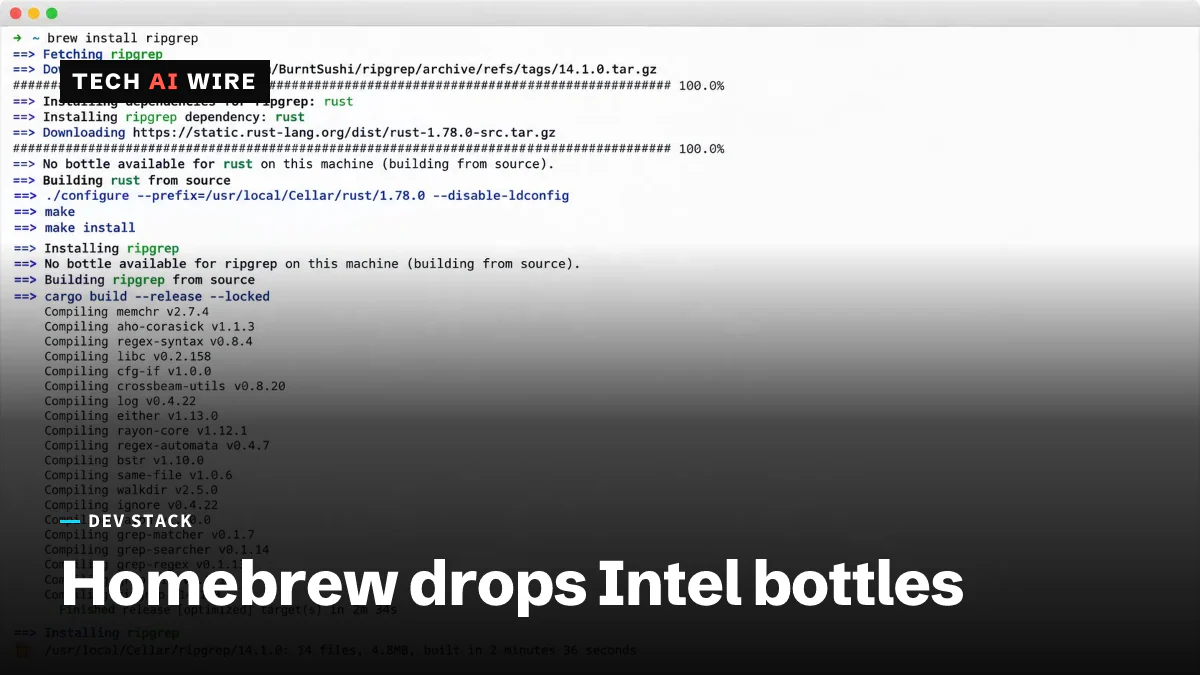
Homebrew 7.0.0 moves Intel Macs to Tier 3, so brew install now compiles from source there, and support ends in or after September 2027.
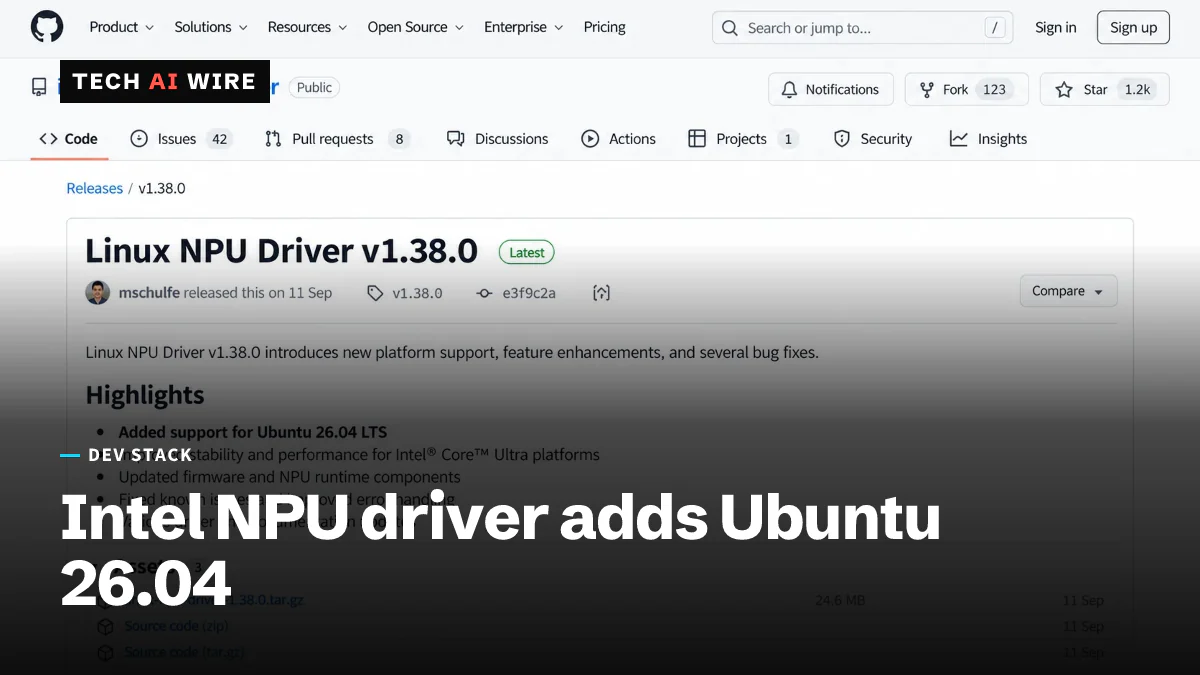
Intel's NPU driver 1.38 officially supports Ubuntu 26.04 LTS about five months late, with 322 tests passing across five processor generations.
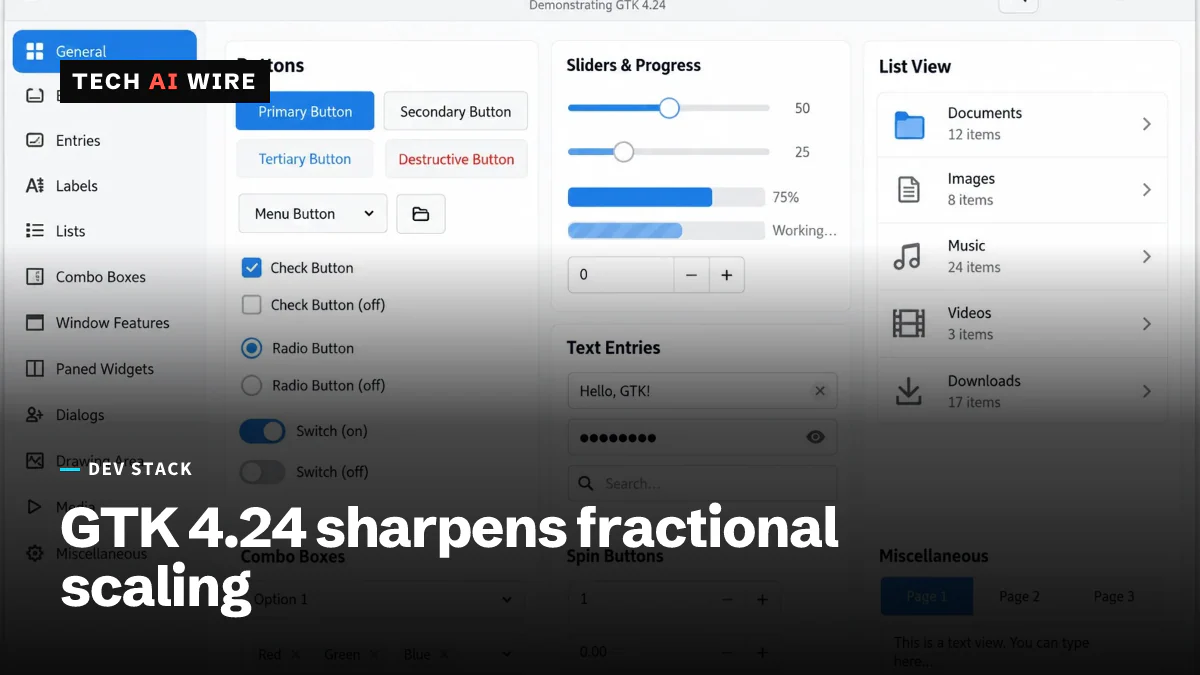
GTK 4.24 snaps content to whole screen pixels for sharper fractional scaling, reworks the frame clock, and pushes session restore back to 4.26.
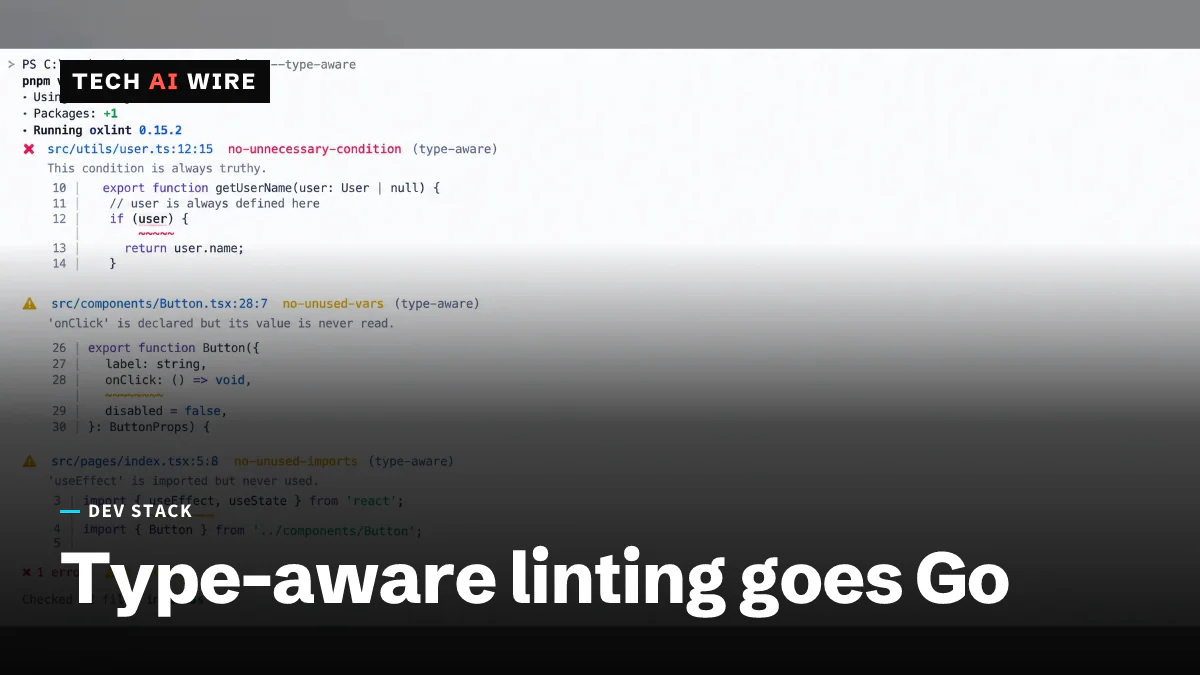
tsgolint v7 runs typescript-eslint's type-aware rules in Go. It covers 59 of 61 rules, and the project's own two speed claims do not agree.
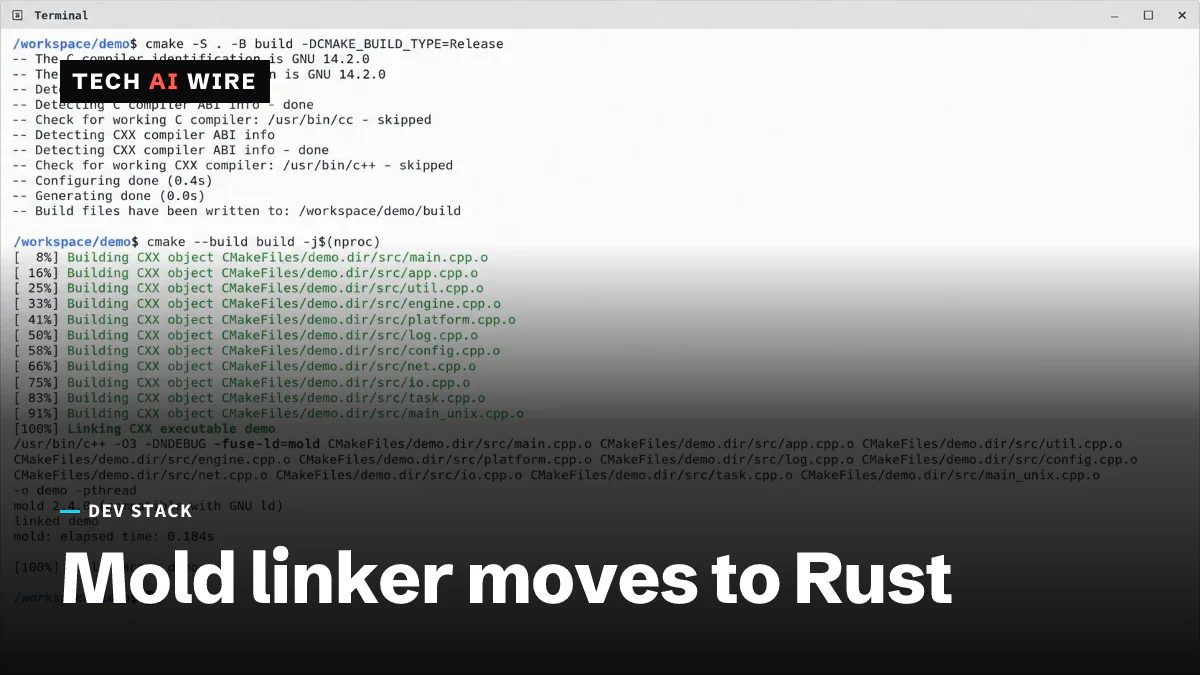
Mold links 4.9x faster than LLVM lld. Its author is rewriting it in Rust and wants distributions to install it as the default linker, /usr/bin/ld.
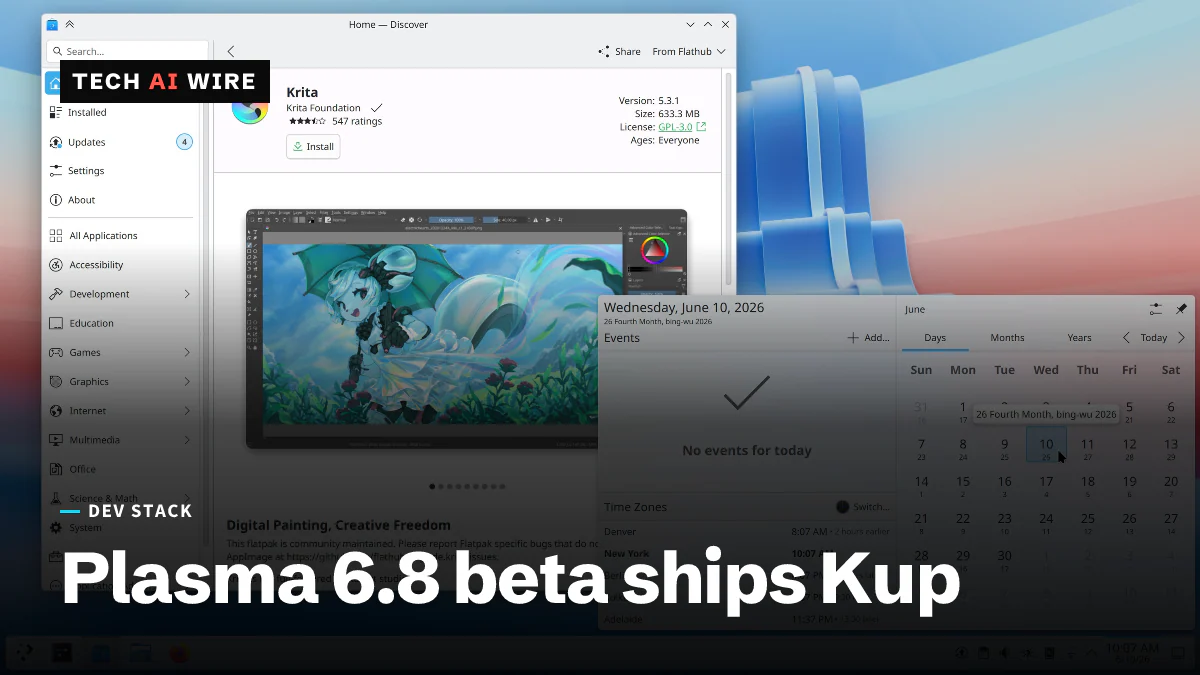
KDE shipped the Plasma 6.8 beta as version 6.7.90 on September 10, 2026. It adds Kup as the desktop's backup scheduler, with stable due October 14.
GNU Automake 1.19, its first release in 15 months, fixes a 14-year-old bug that broke concurrent commands like make dist-bzip2 dist-xz.
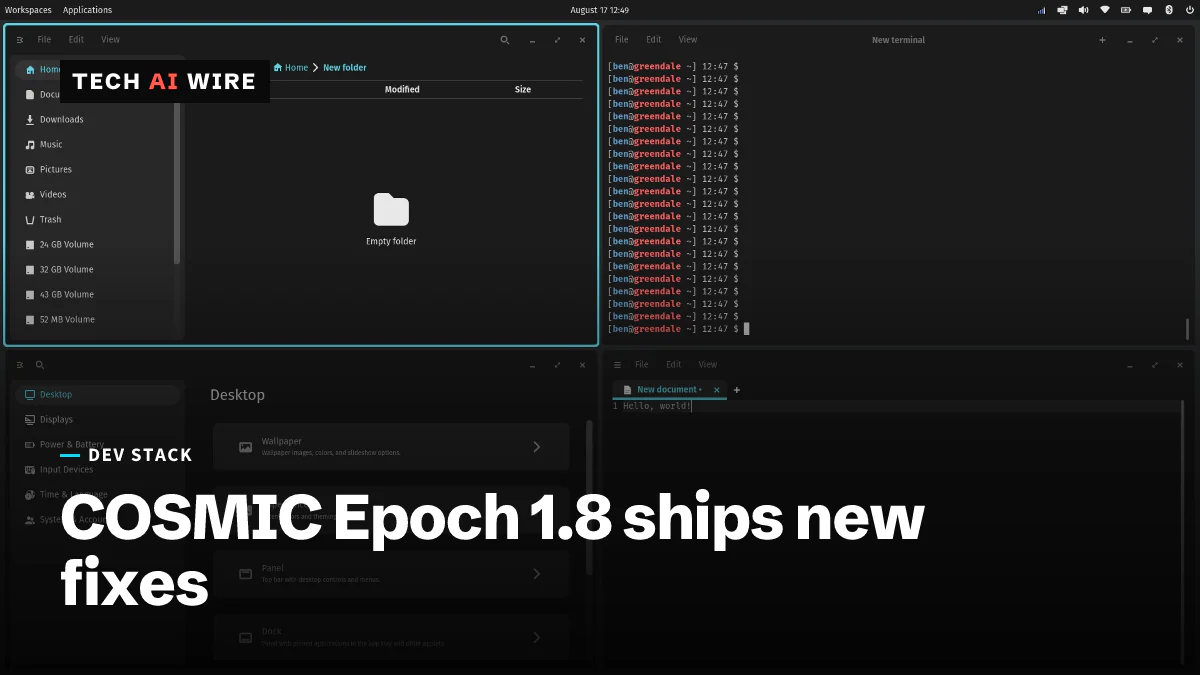
COSMIC Epoch 1.8 shipped two weeks after 1.7 with tablet grab support and Bluetooth device renaming, but System76's own changelog is still pending.
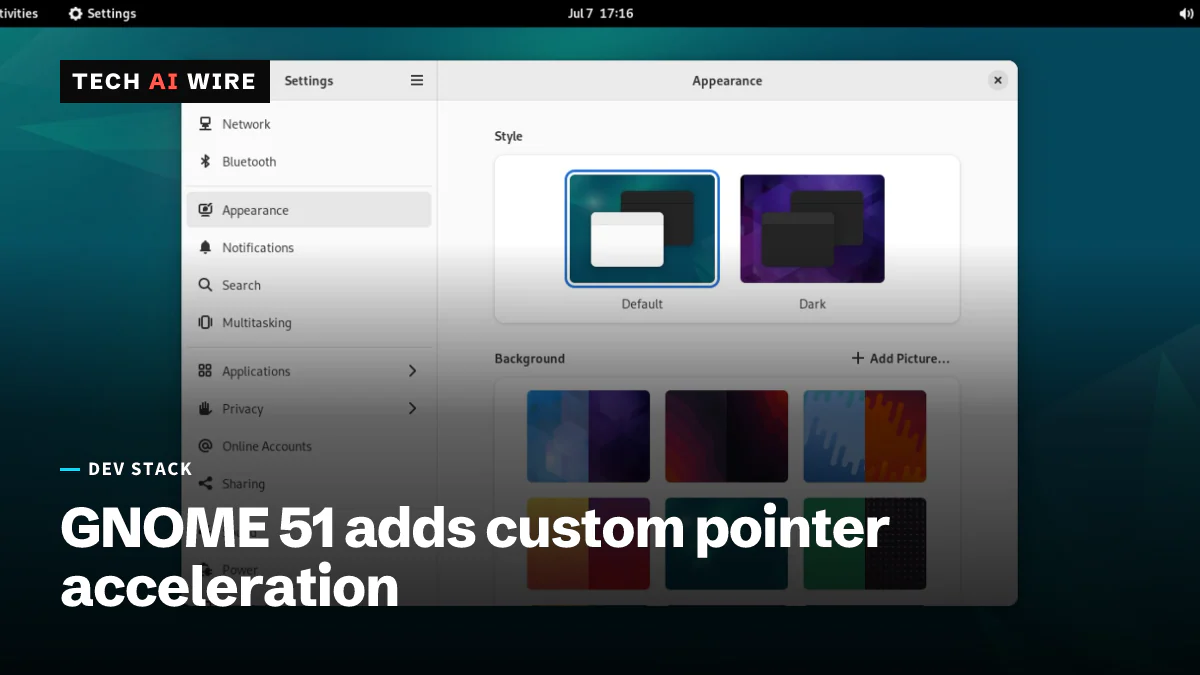
GNOME 51, shipping September 16, 2026, lets users define a custom pointer acceleration curve instead of picking one fixed speed profile.

Coreboot and AMD's openSIL now run on the MSI B850P, a real desktop AM5 board. It cuts closed-source firmware code by 79.1%, but it ships as a paid product, not a free download.

A Red Hat engineer got the open-source Nouveau driver and NVK running on Nvidia's DGX Spark GB10. It took about 100 patches, and upstreaming isn't settled yet.
YSERVER 1.5, an X11 server written from scratch in Rust, adds Reverse PRIME multi-GPU support and 40 other fixes. Claude Code helped write its early code.
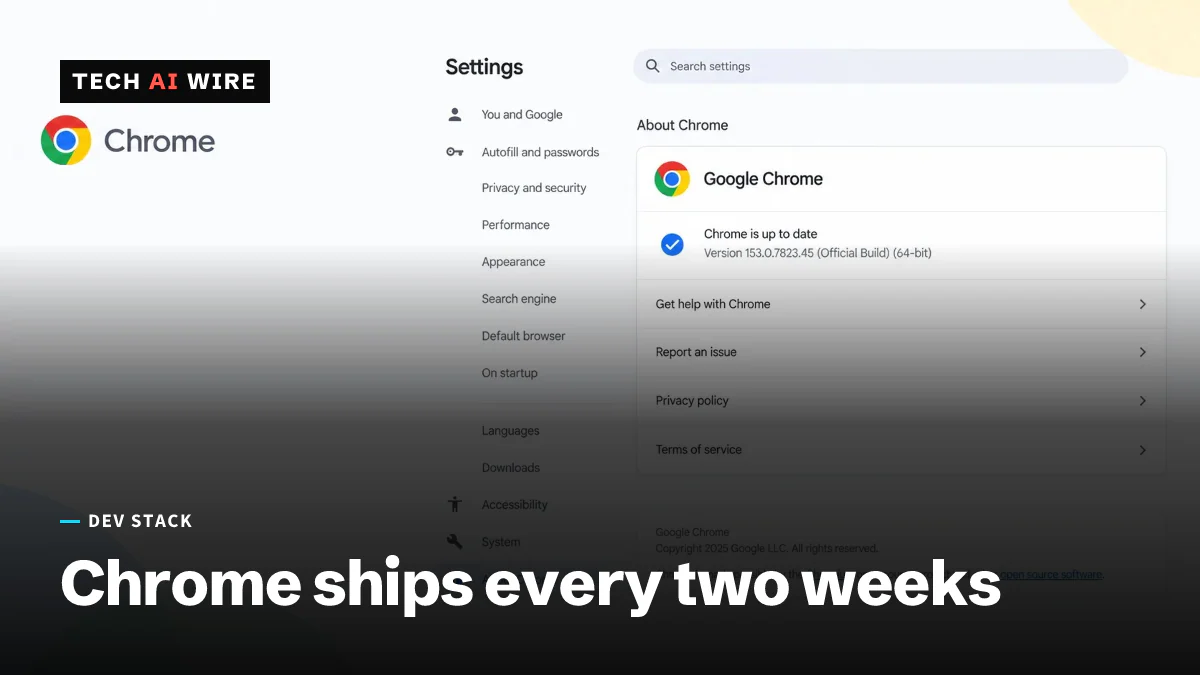
Chrome 153 starts a two-week milestone cycle, down from four. Google says Chrome 149 and 150 alone fixed 1,072 security bugs as LLMs find flaws at scale.
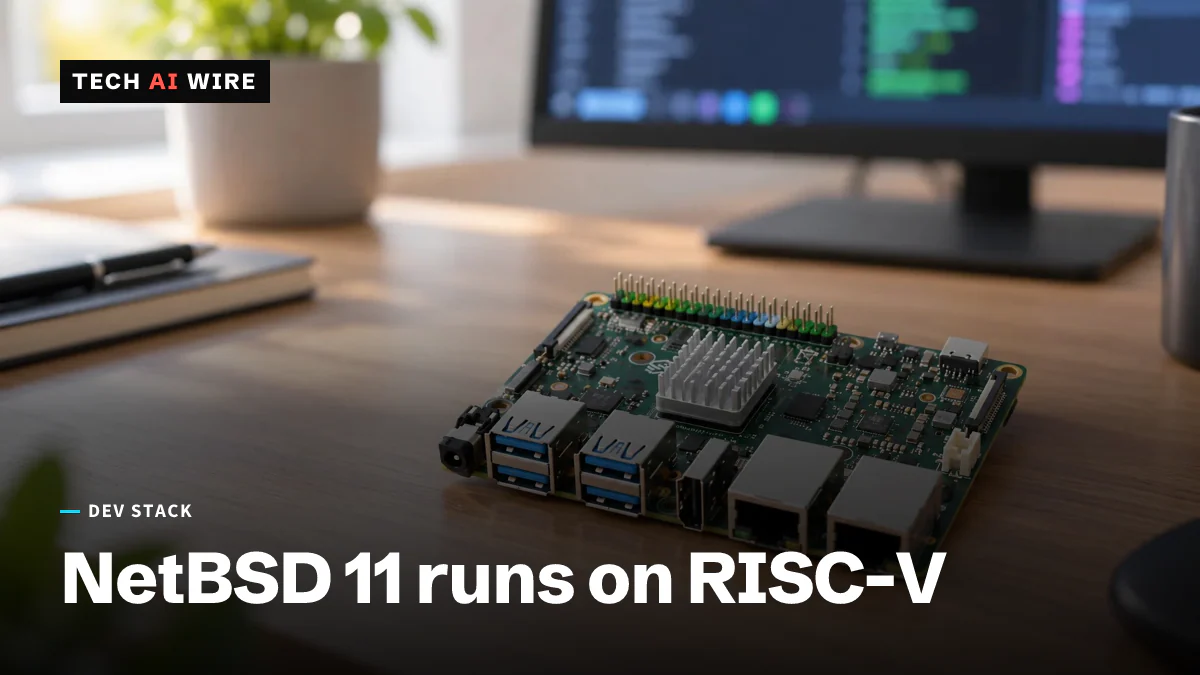
NetBSD 11.0 boots a virtual machine in about 10 ms with its new MICROVM kernel. It is also the first stable release to run on 64-bit RISC-V boards.
One email every Friday with the week's top stories from all six desks: AI, dev tools, coding, the tech industry, startups and what's next. Free, no spam.