COSMIC Epoch 1.8 ships tablet grab, Bluetooth renaming
COSMIC Epoch 1.8 shipped two weeks after 1.7 with tablet grab support and Bluetooth device renaming, but System76's own changelog is still pending.
2 min read
By the numbers
- COSMIC Epoch version, released two weeks after 1.7
- 1.8
- community reactions on the GitHub release page
- 21
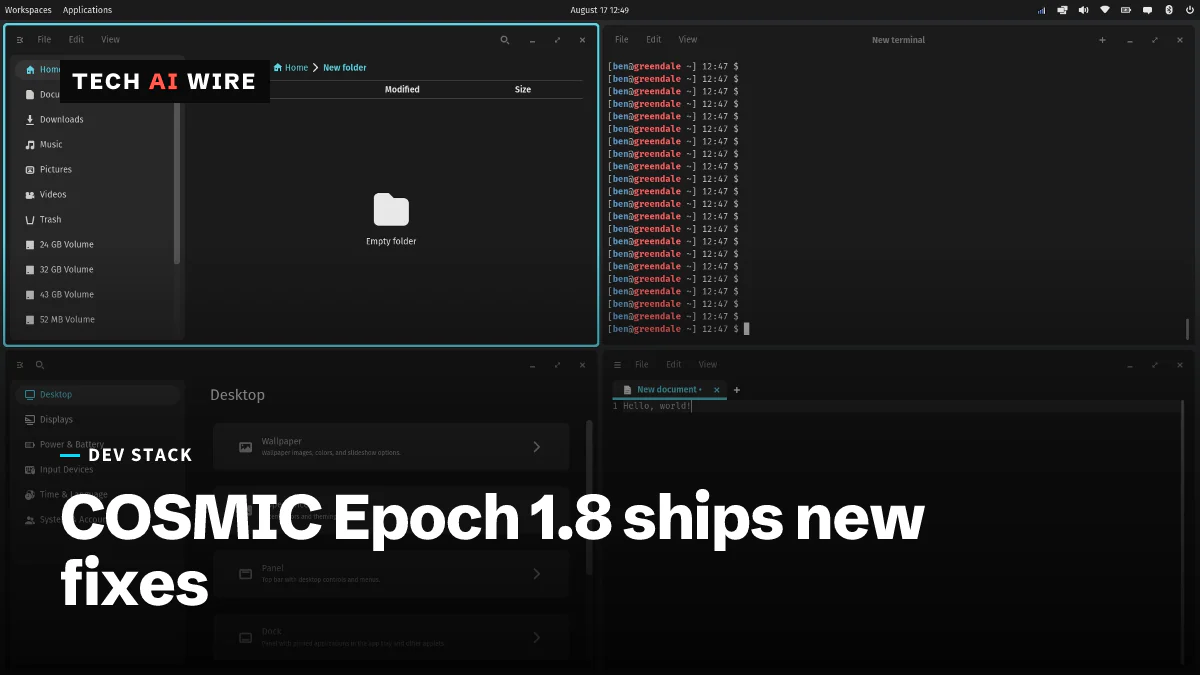
COSMIC Epoch 1.8 is out, the latest release of System76's Rust-based desktop environment for Pop!_OS and other Linux distributions. Phoronix reported the release on September 10, 2026, noting it arrived just two weeks after version 1.7.
COSMIC is System76's own desktop environment, built with Rust and its Iced GUI toolkit, rather than a fork of GNOME or KDE. The company ships it as the default on Pop!_OS and makes it available to other Linux distributions too. A two-week gap between minor releases is fast for a desktop environment; GNOME and KDE Plasma, by comparison, ship on cycles measured in months.
What Phoronix reported as new
According to Phoronix, COSMIC Epoch 1.8 adds three user-facing changes. XWayland windows, meaning older, non-Wayland-native applications running through a compatibility layer, can now start in a minimized state through the COSMIC Compositor, instead of always opening on screen. COSMIC Shell gains improved tablet support, including the ability to grab, or capture exclusive input from, a graphics tablet. COSMIC Settings now lets a user rename a connected Bluetooth device, instead of only seeing its default hardware name.
What the official release page says
The official GitHub release for epoch-1.8.0 tells a narrower story. As of publication, System76 marks the release a pre-release, and its own changelog is listed as "pending" rather than filled in. The text that is there describes the update as "translation updates and dependency updates for many projects" across the COSMIC codebase. The release page has drawn 21 community reactions so far.
The two accounts do not contradict each other, but they do not fully match either. Phoronix describes specific new features. System76's own release notes, at the time of writing, describe only translation and dependency work and have not been filled in with feature detail yet. Both can be true if System76 simply has not finished writing up the release, which the "pending" label suggests.
What this means for developers
If you build a COSMIC applet, or a tool that reads Bluetooth device names from the desktop, test it against the new rename feature. A device's displayed name is no longer guaranteed to match its hardware default.
If your app depends on XWayland window state on COSMIC, check how it behaves when launched minimized. The compositor-level change probably reads window-manager hints your app already sends, rather than requiring new code, but it is worth a quick test.
If you package software for Pop!_OS or another COSMIC-based distribution, treat this release the way you would any dependency bump. The Phoronix report says the update carries dependency changes across many parts of the codebase, even though the exact list is not public yet. Rebuild against 1.8 before you assume your package still works, rather than waiting for a user to report a problem.
Developers who want the authoritative feature list should check the epoch-1.8.0 release page directly once System76 finishes writing it. Relying on a third-party summary alone is risky while the official changelog still says "pending," since it can be revised or expanded after the fact.
The next release has since shipped: COSMIC Epoch 1.9 adds an image viewer and an on-screen keyboard.
Sources
- COSMIC Epoch 1.8 Provides Latest Fixes & Minor Improvements For This Rust Desktop - Phoronix
- epoch-1.8.0 - GitHub (pop-os/cosmic-epoch)
Related articles
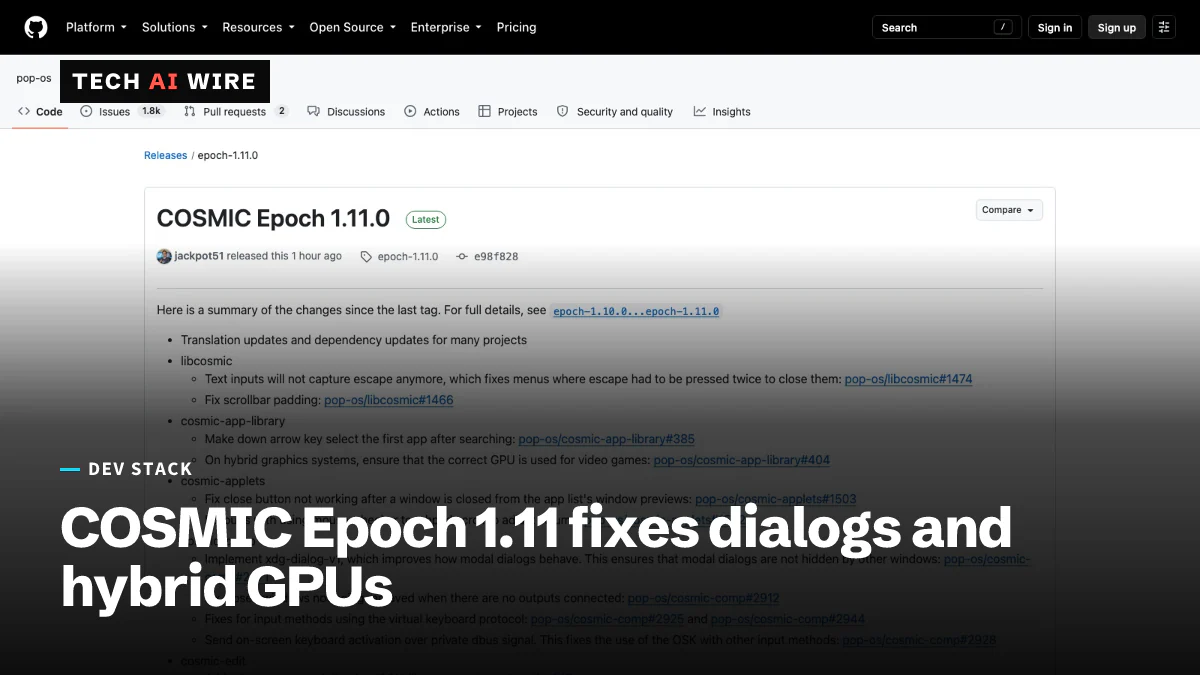
COSMIC Epoch 1.11 adds xdg-dialog-v1, hybrid GPU fixes
COSMIC Epoch 1.11 keeps modal dialogs on top with Wayland's xdg-dialog-v1 and sends games to the right GPU on hybrid laptops, 12 days after 1.10.
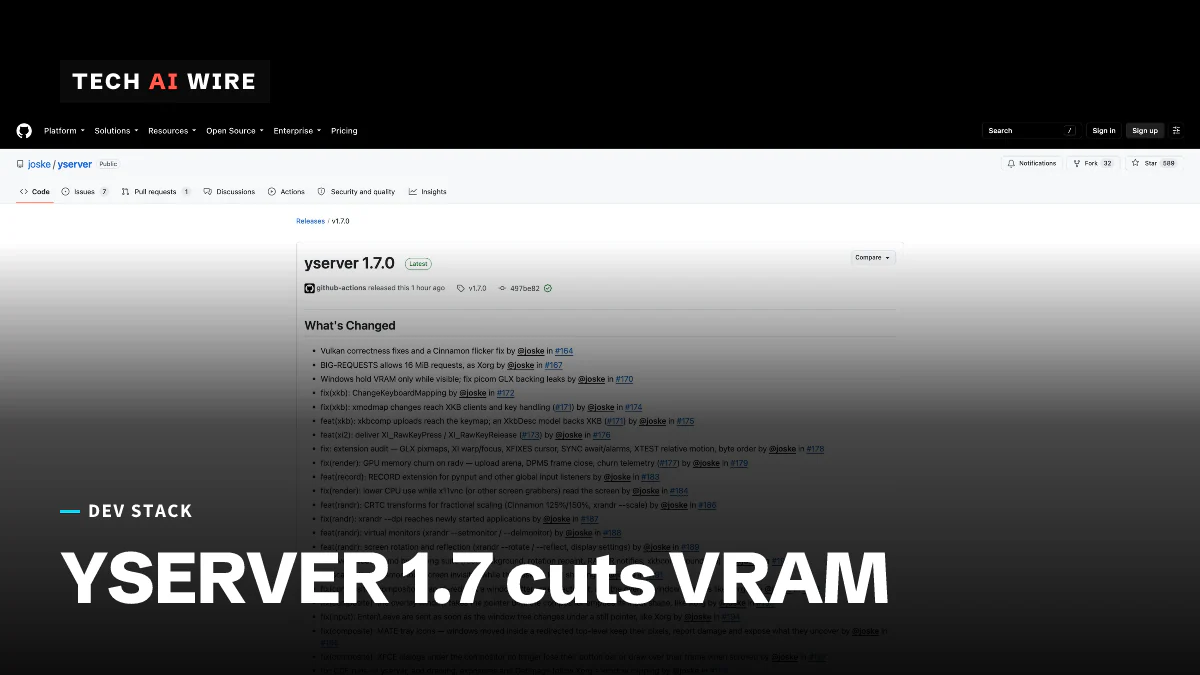
YSERVER 1.7 adds Vulkan 1.2 and cuts 4K VRAM use
YSERVER 1.7 cuts 4K VRAM use from 2-4GB to about 1.2GB, near X.Org's 0.9GB, and adds Vulkan 1.2 support for older Intel graphics.
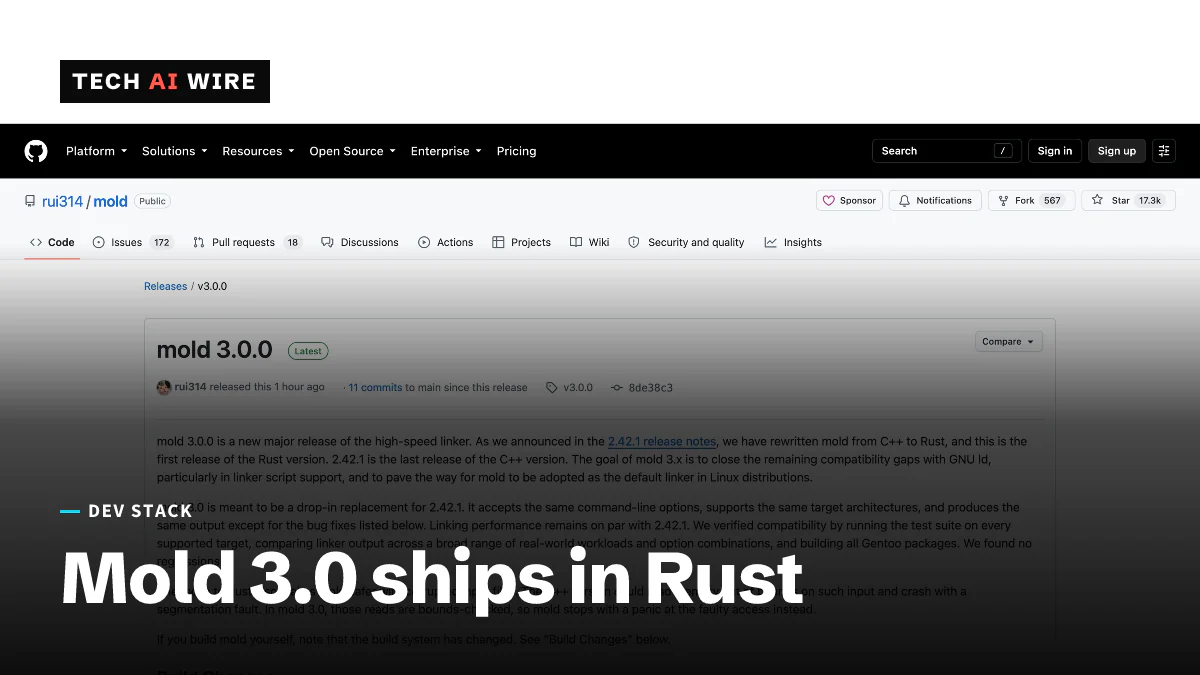
Mold 3.0 ships its Rust rewrite as a drop-in linker
Mold 3.0 is the first release written in Rust. It needs Rust 1.95, drops Intel's oneTBB and links as fast as 2.42.1, the last C++ version.
The weekly digest
One email every Friday with the week's top stories from all six desks: AI, dev tools, coding, the tech industry, startups and what's next. Free, no spam.