NetBSD 11 adds 64-bit RISC-V and a 10ms microVM kernel
NetBSD 11.0 boots a virtual machine in about 10 ms with its new MICROVM kernel. It is also the first stable release to run on 64-bit RISC-V boards.
3 min read
By the numbers
- stated MICROVM kernel boot time
- 10ms
- hardware platforms supported
- 60+
- major NetBSD release
- 19th
NetBSD 11.0 is out, and it is the first stable version of the system that runs on 64-bit RISC-V chips. The project announced the release on July 30, 2026. That matters for two reasons. An open chip architecture gains a mature Unix, and a new kernel option boots a virtual machine in about 10 milliseconds.
NetBSD is a free Unix-like operating system, which means it behaves like Unix without using Unix code. The project's stated goal is portability: running one system on many kinds of machine. Version 11.0 is its nineteenth major release.
The project posted the news to its blog on August 1, 2026. "The NetBSD project is pleased to (finally) announce the 11.0 release!" the post said. The word in brackets is the project's own.
The 64-bit RISC-V milestone
RISC-V is an open instruction set, which is the basic vocabulary a processor understands. Anyone can design a chip around it without paying a license fee. That is why it attracts hardware startups, universities and researchers.
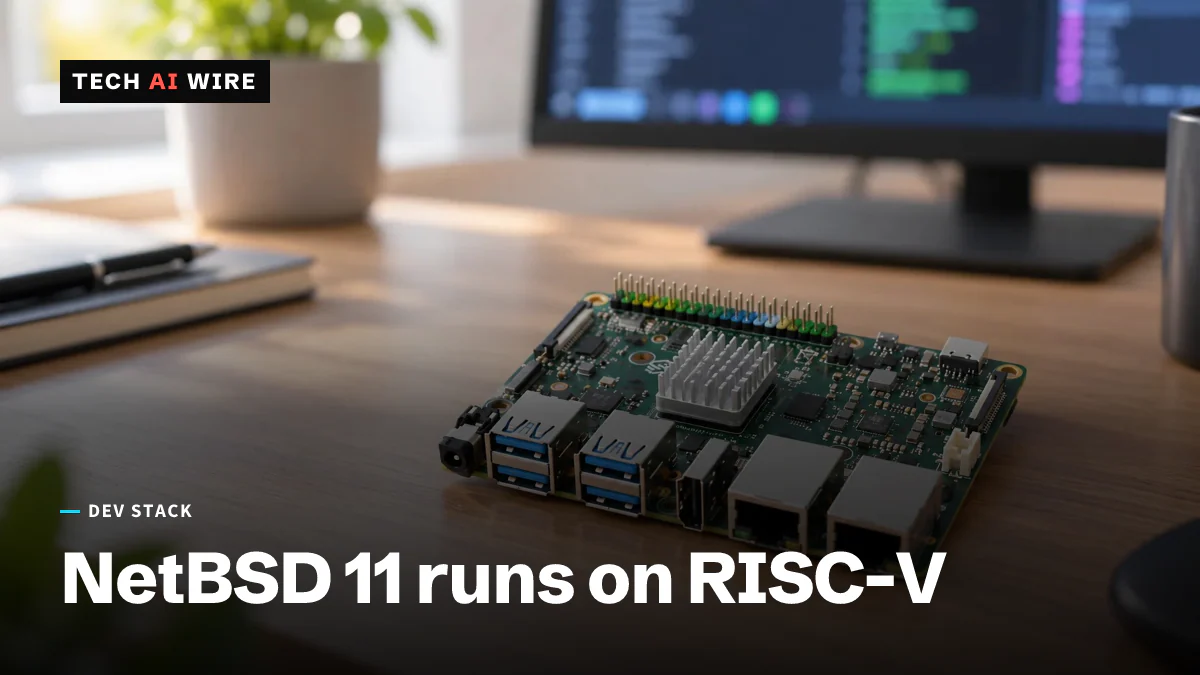
Version 11.0 is, in the release notes' words, "the first stable release to include support for 64-bit RISC-V platforms." The first boards supported are built on StarFive's JH71XX chips. Those are the VisionFive 2 and the PINE64 STAR64, both small single-board computers. Phoronix listed the same two boards in its report on August 1, 2026.
The release also adds preliminary support for Qualcomm Snapdragon X Elite devices. Preliminary means the system starts but the work is unfinished. Asahi Linux took a similar step for Apple hardware last week, when it added official M3 Mac support.
A kernel built for fast boots
NetBSD 11.0 ships a new kernel for x86 and amd64 machines called MICROVM. Its purpose is what the release notes describe as "extremely fast virtual machine boot." The figure the project gives is "about 10 ms."
A virtual machine is a whole simulated computer, so it normally takes seconds to start. Cutting that to milliseconds puts it near the speed of a container, which shares the host kernel instead of booting its own. The trade-off matters because a virtual machine isolates code far more strictly than a container does.
What else changed
The rest of the release is spread across the firewall, the Linux compatibility layer and the standards the system targets.
| Area | Change in NetBSD 11.0 |
|---|---|
| npf firewall | Adds "layer 2 and user/group filtering" |
| Linux compatibility | compat_linux(8) gains epoll, POSIX message queues and statx |
| Standards | Better "compliance with POSIX.1-2024 and C23 programming interface standards" |
| Platforms | Over 60 supported |
The bundled developer tools also moved up.
| Component | Version in 11.0 |
|---|---|
| GCC | 12.5.0 |
| OpenSSL | 3.5.7 |
| GDB | 15.1 |
| SSH | 10.3 |
Phoronix also reported SIMD-accelerated optimizations in the release. SIMD lets one instruction act on several pieces of data at once.
Putting it on a 2012 laptop
Five weeks after the release, a developer published a full manual install. The post, "NetBSD 11 from scratch", appeared on September 6, 2026. It uses a 2012 HP Pavilion with an Intel Core i7, 3.79 GB of memory and a 900 GB disk.
The guide sets up full disk encryption with CGD, NetBSD's cryptographic disk driver. It uses the adiantum cipher and derives the key with pkcs5_pbkdf2/sha1. The root partition is 50 GB.
The author gives one non-technical reason for the choice: NetBSD's stance against putting generative AI into the project.
What this means for developers
The MICROVM kernel is the piece worth testing first. If you build sandboxes, CI runners or per-request isolation, a 10 ms boot brings a real virtual machine close to container startup times. Measure it on your own workload before you trust the number, because boot time is only one part of total latency.
If you target RISC-V, NetBSD is now a second mature option beside Linux. A VisionFive 2 or STAR64 board is the cheapest way to try it. Check the drivers you need first, since first-generation support usually covers the basics only.
The compat_linux additions matter if you run Linux binaries on NetBSD. epoll and statx are common in modern server software, so a tool that failed before may work now. Test it rather than assume it.
The C23 and POSIX.1-2024 work also makes NetBSD a useful portability check. Building your C code there tends to expose assumptions that Linux and glibc quietly forgive.
Sources
Related articles
Snapdragon X2 gets an early Linux developer preview
Qualcomm's Snapdragon X2 Linux preview arrived on September 23, 2026, with official kernel support due around November 2026.
ZLUDA adds cuFFT support for AMD GPUs via hipFFT
A merged pull request adds NVIDIA's cuFFT library to ZLUDA, letting AMD GPUs run CUDA-based Folding@Home units with no code changes.

FEX-Emu breaks down the cost of x86 TSO on Arm
Emulating x86 memory rules on Arm drops unaligned throughput to 8.5% of baseline. Write-combine stores are reported 816 times worse.
The weekly digest
One email every Friday with the week's top stories from all six desks: AI, dev tools, coding, the tech industry, startups and what's next. Free, no spam.