California SB 1246 fines robotaxis that block responders
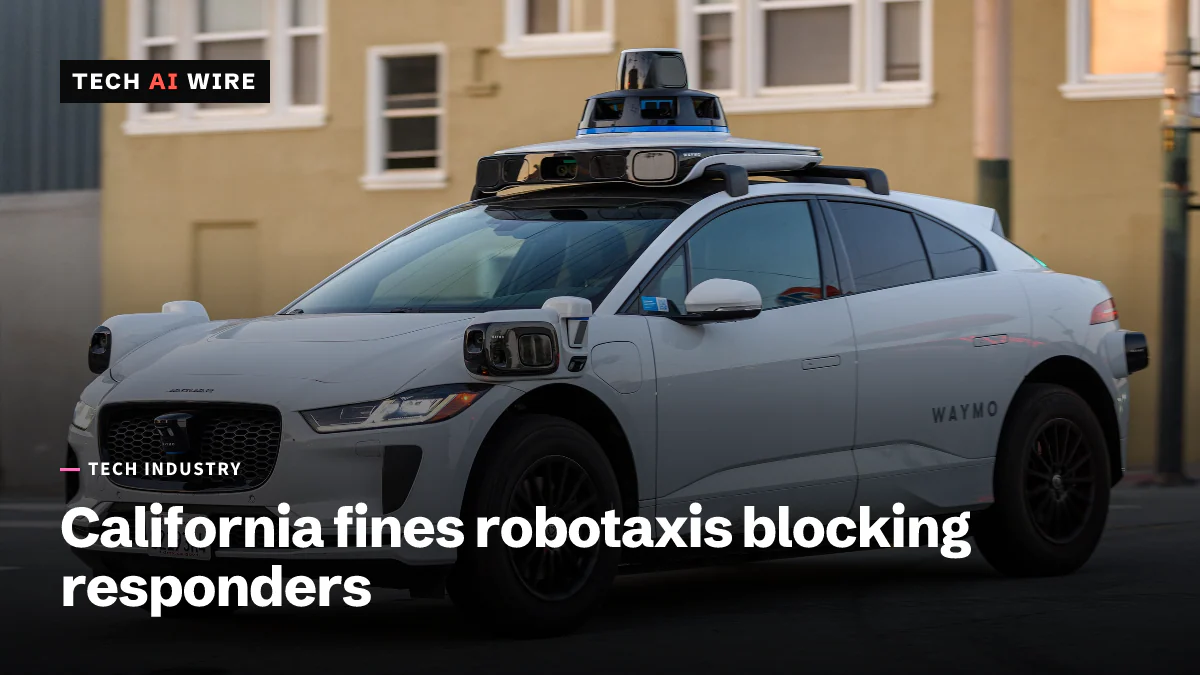
California's SB 1246 fines robotaxi firms up to $10,000 per car that blocks an emergency for over 30 minutes, and sets 30-second rules from July 2028.
3 min read
By the numbers
- maximum fine per car blocking an emergency for over 30 minutes
- $10,000
- to answer a first responder's call on the emergency line
- 30 sec
- to acknowledge an emergency geofence and move the fleet
- 2 min
- date the new rules take effect
- July 1, 2028
California Gov. Gavin Newsom signed SB 1246 on September 30, 2026, the governor's office said. The law lets officials fine robotaxi operators up to $10,000 per car that blocks an emergency scene for more than 30 minutes. It also sets hard response times for the companies, measured in seconds and minutes. The rules apply from July 1, 2028, and they turn emergency response into a product requirement for every driverless fleet in the state.
State Sen. Dave Cortese, a Democrat from Silicon Valley, wrote the bill. "We should never allow technology to move faster than public safety," he said before the vote, according to his office.
What SB 1246 requires from robotaxi operators
The bill text on the Legislature's site sets fines and deadlines that apply to every company running driverless cars. The main numbers are below.
| Rule | Requirement |
|---|---|
| Answer the emergency phone line | Within 30 seconds |
| Acknowledge an emergency geofence message | Within 2 minutes |
| Direct the fleet to leave or avoid the area | Within 2 minutes |
| Warn local governments of a fleet-wide failure | Immediately |
| Fine per violation of the move-the-car rules | Up to $5,000 |
| Fine per car blocking an emergency for over 30 minutes | Up to $10,000 |
| Rules take effect | July 1, 2028 |
A geofence is a virtual boundary on a map. Officials draw one around a fire or crime scene, and the cars are supposed to stay out.
Operators must also send a "local incident technician" right away after a crash or when officials ask for help. That is a person on the ground who can move or shut down a stuck car. Cortese's office says first responders get the power to disable a robotaxi, by hand or remotely, when they ask. Fine money goes back to the local government.
The California Department of Motor Vehicles (DMV) must set guidelines for how fast technicians should arrive, also by July 1, 2028. The bill tells it to weigh city versus rural areas, how serious the incident is and how many cars a company runs nearby. The DMV will also publish quarterly statistics for each manufacturer.
Remote operators, the staff who guide stuck cars from a control room, must be based in the United States. The bill text calls for a valid California driver's license of the right class. TechCrunch and Cortese's office describe it as a U.S. license.
Why California wrote the law
The law follows a string of robotaxi failures in San Francisco. During a power outage on December 20, 2025, about 1,500 Waymo cars stalled across the city. First responders waited up to 53 minutes on hold trying to reach the companies, Cortese's office said. More Waymo cars blocked roads during Fourth of July celebrations in 2026.
The San Francisco Standard counted 31 times that Waymo cars had blocked first responders since April 2025. Waymo runs about 4,000 driverless cars nationwide, including 1,200 in the Bay Area, TechCrunch reports.
Police, firefighter and labor groups backed the bill. Supporters included California Professional Firefighters, the California Police Chiefs Association and SEIU California. Cortese's office named no opponents.
The law is not the first robotaxi rule in the West. Nevada approved paid robotaxi service in Las Vegas in August, as Tech AI Wire reported. California's bill focuses on what happens when those cars go wrong.
What this means for developers
Treat the deadlines as requirements for your software. A 30-second phone pickup and a 2-minute geofence acknowledgment are service-level targets. A team cannot meet them with a shared inbox. Fleet software needs to receive emergency geofence messages automatically, confirm them and reroute cars without waiting for a human.
Plan for fleet-wide failures. The December blackout shows that a single outage can strand hundreds of cars at once. Test what your system does when the cars lose power or network access together. Check how fast it can tell every affected city where its vehicles are.
Budget for people, not just code. The law requires on-site technicians and U.S.-based remote operators. Companies that run remote operations from other countries will need to move that work before July 2028.
Log everything the DMV may ask for. The agency will publish quarterly numbers by manufacturer, so response times will become public. Keep timestamps for every emergency call, geofence message and technician dispatch.
Watch the DMV's guidelines next. The exact technician arrival times are still to be set. Those numbers will decide how many staff a fleet needs in each city.
Sources
- Robotaxi operators will face fines for blocking first responders - TechCrunch
- SB-1246 Autonomous vehicles - California Legislative Information
- Major Victory for Public Safety as Accountability, Oversight, and Emergency-Response Standards Governing Autonomous Vehicles Signed Into Law - Office of Sen. Dave Cortese (EIN Presswire)
- California bill would fine Waymo $10K for blocking first responders - The San Francisco Standard
Related articles
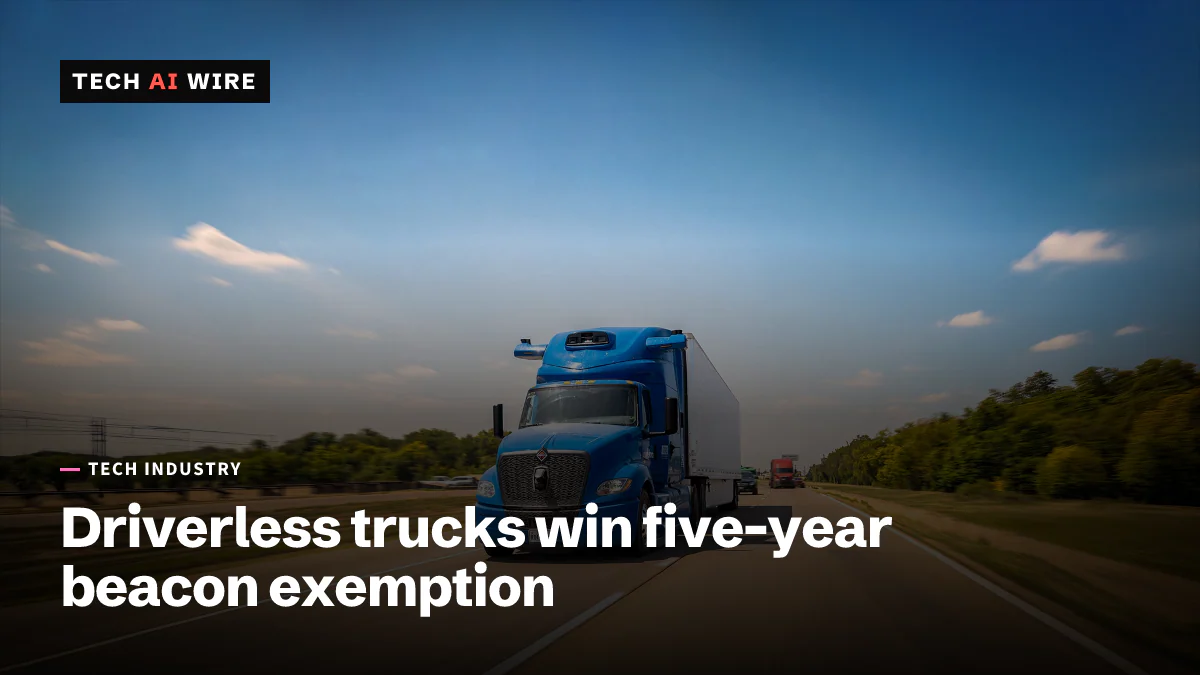
FMCSA gives driverless trucks a 5-year beacon exemption
Driverless trucks may use cab-mounted beacons instead of roadside warning triangles until October 7, 2031, under a five-year FMCSA exemption.
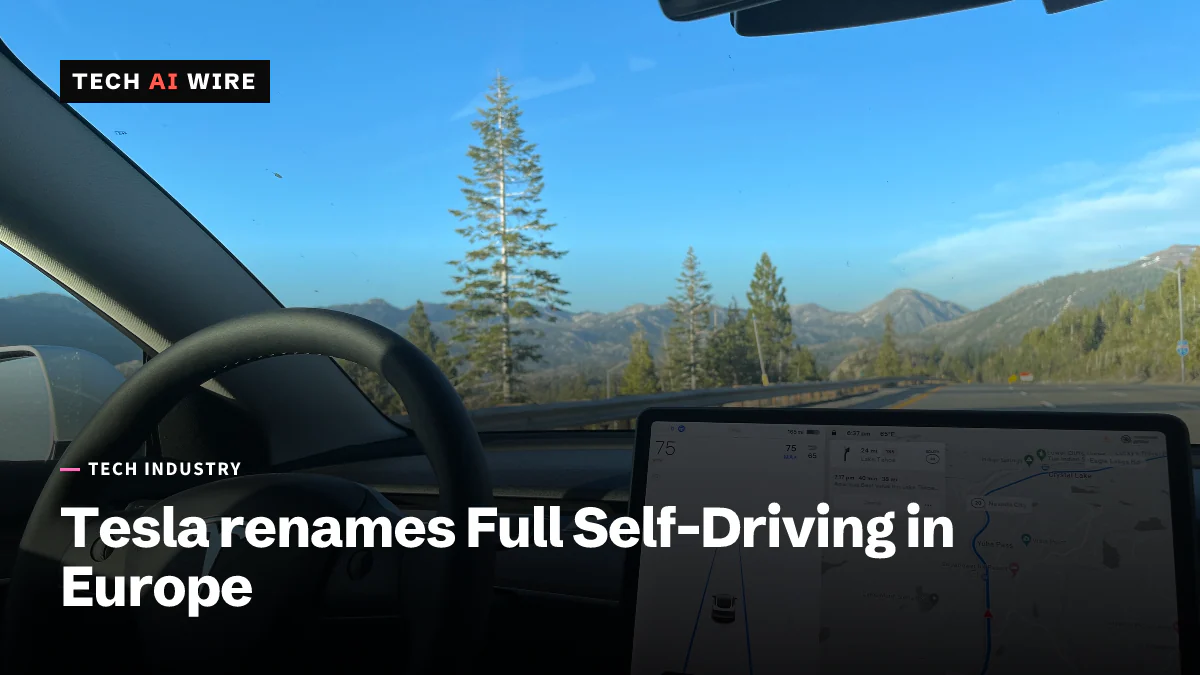
Tesla renames FSD to Tesla Assisted Driving in Europe
Tesla calls Full Self-Driving Tesla Assisted Driving on its European sites, after Germany called the old name misleading. The EU vote slipped to December.
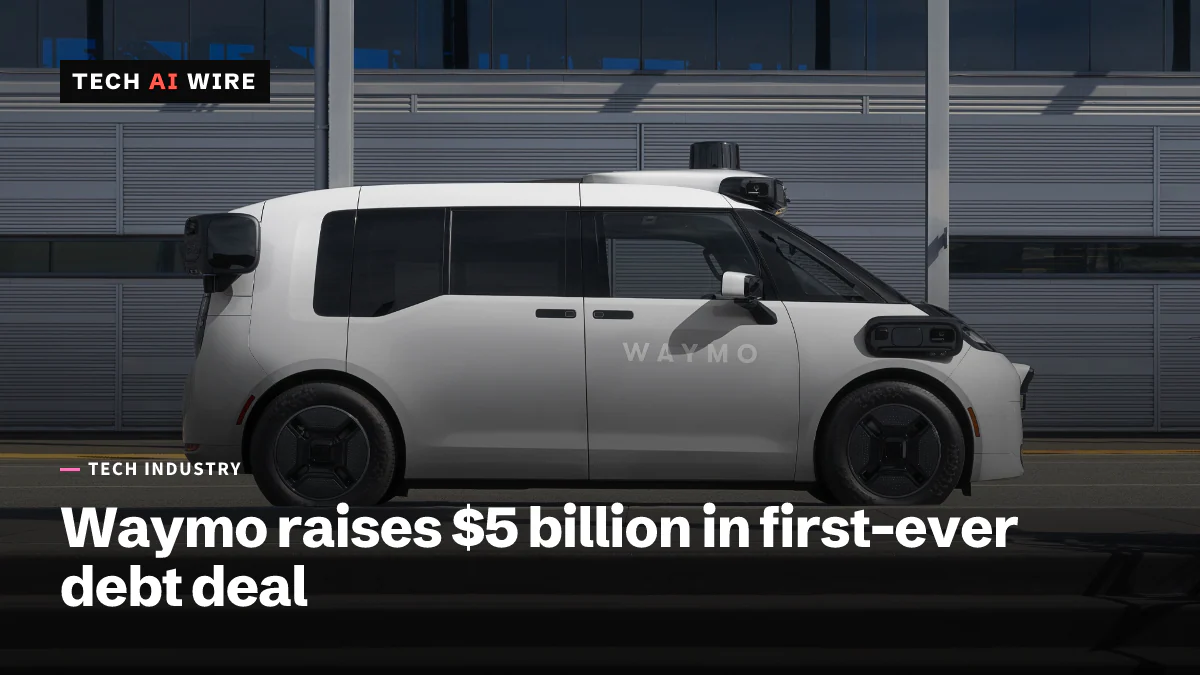
Waymo closes $5 billion loan, its first debt financing
Waymo closed a $5 billion term loan on October 8, its first debt deal, led by PIMCO, Blackstone and Sixth Street, to expand its robotaxi service abroad.
The weekly digest
One email every Friday with the week's top stories from all six desks: AI, dev tools, coding, the tech industry, startups and what's next. Free, no spam.