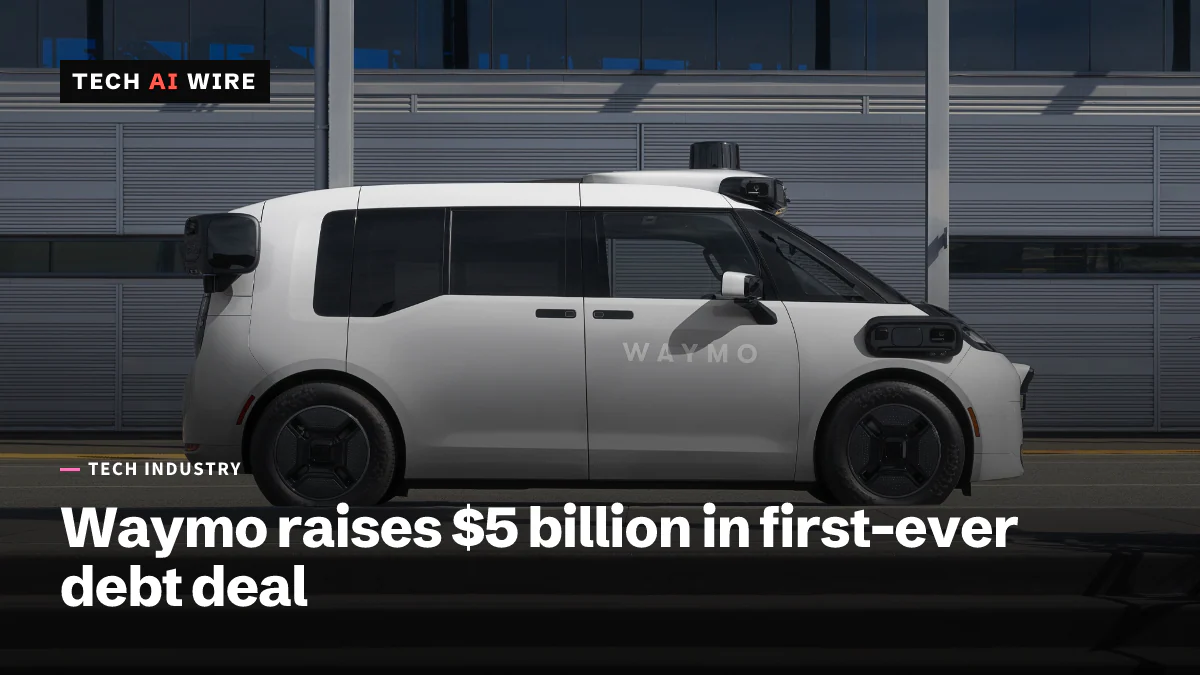
Waymo closes $5 billion loan, its first debt financing
Waymo closed a $5 billion term loan on October 8, its first debt deal, led by PIMCO, Blackstone and Sixth Street, to expand its robotaxi service abroad.
3 min read
By the numbers
- term loan, Waymo's first debt financing
- $5B
- equity raised earlier in 2026
- $16B
- U.S. cities with Waymo service
- 15
Waymo, the robotaxi company owned by Google's parent Alphabet, closed a $5 billion term loan on October 8, 2026. It is the first time Waymo has raised money through debt instead of selling shares. The company says the money will speed up the expansion of its driverless ride-hailing service in the United States and abroad.
The deal
A term loan is borrowed money that is paid back, with interest, over a set period. Waymo's announcement, signed by chief financial officer Steve Fieler, lists the lenders in three groups:
| Role | Firms |
|---|---|
| Lead lenders | PIMCO, Blackstone, Sixth Street |
| Significant lenders | Capital Group, Loomis Sayles, T. Rowe Price |
| Other lenders | Apollo, Blue Owl, Diameter Capital Partners, Franklin Templeton, Fidelity Management & Research Company, HPS Investment Partners, Oaktree |
| Sole lead bookrunner | Goldman Sachs |
A bookrunner is the bank that organizes a loan and finds the lenders. The Next Web reports that ten more lenders joined beyond those named.
Bigger than first planned
The loan grew while it was being arranged. The Next Web reports, citing Bloomberg, that Waymo first sought more than $3 billion in early September. People familiar with the deal told Bloomberg it is priced at 5.25 percentage points above the benchmark rate. Waymo's own post does not give the original target or the interest rate.
Fieler framed the loan as a sign of strength. "Our strong momentum has enabled us to complement our equity financing with debt," he wrote, as quoted by The Next Web.
Where the money goes
Waymo's post says the loan will "accelerate the continued expansion of our fully autonomous ride-hailing service across the United States and internationally." TechCrunch adds that the money is meant for faster growth in existing cities and new markets in the US, Europe and Japan.
Waymo launched in its fifteenth US city last month, its post says. The Next Web names that city as Las Vegas. Nevada cleared Waymo, Tesla and Uber to run paid robotaxis there in August. The Next Web also reports that Waymo has named Munich for 2027 and Singapore for 2028.
Equity first, now debt
Until now, Waymo has paid for its growth by selling shares. Its post refers to a $16 billion equity investment that closed earlier this year. The Next Web dates that round to February and puts Waymo's valuation at $126 billion.
Debt works differently. Lenders do not get a stake in the company, so existing owners keep their share. In return, Waymo must make interest payments whatever happens to its business. Lenders usually agree to that only when they expect steady income to cover the payments.
The loan also lands in a busy week for driverless vehicles. A day earlier, on October 7, US regulators gave driverless trucks a five-year exemption from a roadside warning rule.
What this means for developers
For people who build, buy or run technology, the loan changes a few practical things:
- More cities, sooner. The money is tied to new markets. Businesses in named cities, such as Munich and Singapore, can expect driverless rides to arrive on a published timeline. Planning for depots, charging and local partnerships can start now.
- Suppliers get a steadier customer. Each new city needs vehicles, sensors, computing hardware and mapping. Companies that sell into robotaxi fleets gain a buyer with fresh cash to spend.
- A test for rivals. Tesla and Uber compete with Waymo in places like Las Vegas. A well-funded leader raises the bar for service quality and price in each shared market.
- Debt investors are now watching. Big lenders have priced robotaxi risk for the first time at this scale. If the loan performs, other autonomous-vehicle companies may find it easier to borrow instead of giving up shares.
For corporate travel teams, the useful step is to check which of their busiest routes fall inside Waymo's current or announced cities. Those are the first places a driverless ride could join a company's travel options.
Sources
Related articles
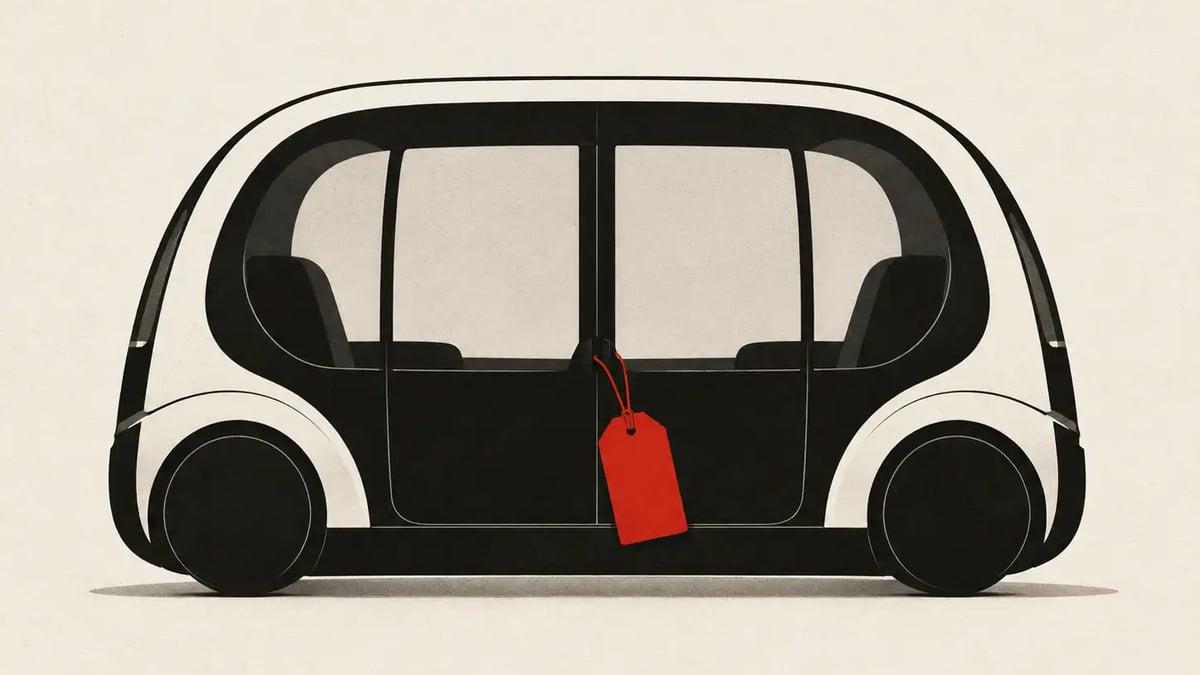
Nevada approves thousands of paid robotaxis for Las Vegas streets
Nevada's Transportation Authority cleared Tesla, Waymo, and Uber to run paid robotaxis in Clark County - up to 5,000 for Tesla alone - within the next 12 months.
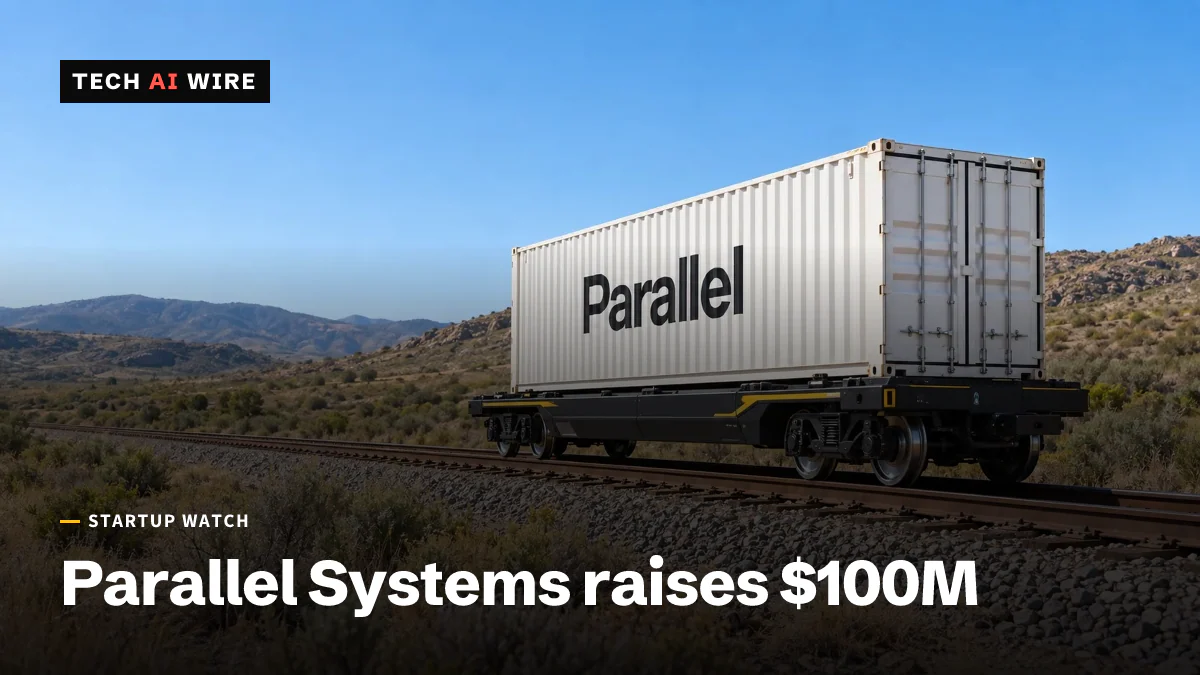
Parallel Systems raises $100M for driverless freight rail
Parallel Systems, founded by ex-SpaceX engineers, raised a $100M Series C led by AVP to build battery-powered rail vehicles that run without drivers.
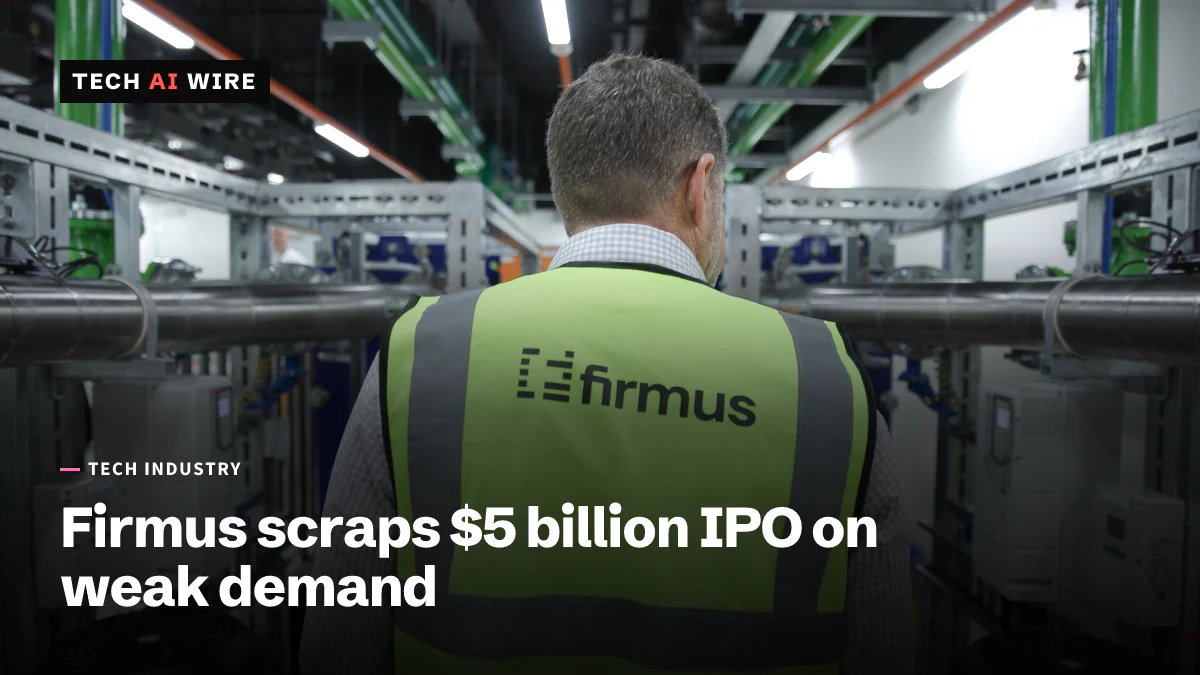
Firmus pulls $5 billion IPO, turns to private investors
Nvidia-backed Firmus pulled its US$5 billion IPO on October 9, citing volatility. It had sought a US$30.6 billion value, triple its August round.
The weekly digest
One email every Friday with the week's top stories from all six desks: AI, dev tools, coding, the tech industry, startups and what's next. Free, no spam.