FMCSA gives driverless trucks a 5-year beacon exemption
Driverless trucks may use cab-mounted beacons instead of roadside warning triangles until October 7, 2031, under a five-year FMCSA exemption.
4 min read
By the numbers
- length of the exemption, through October 7, 2031
- 5 years
- limit for switching the beacons on after a stop
- 5 min
- public comments FMCSA weighed before deciding
- 402
- miles driven by 34 Aurora trucks under the first waiver
- 500,000+
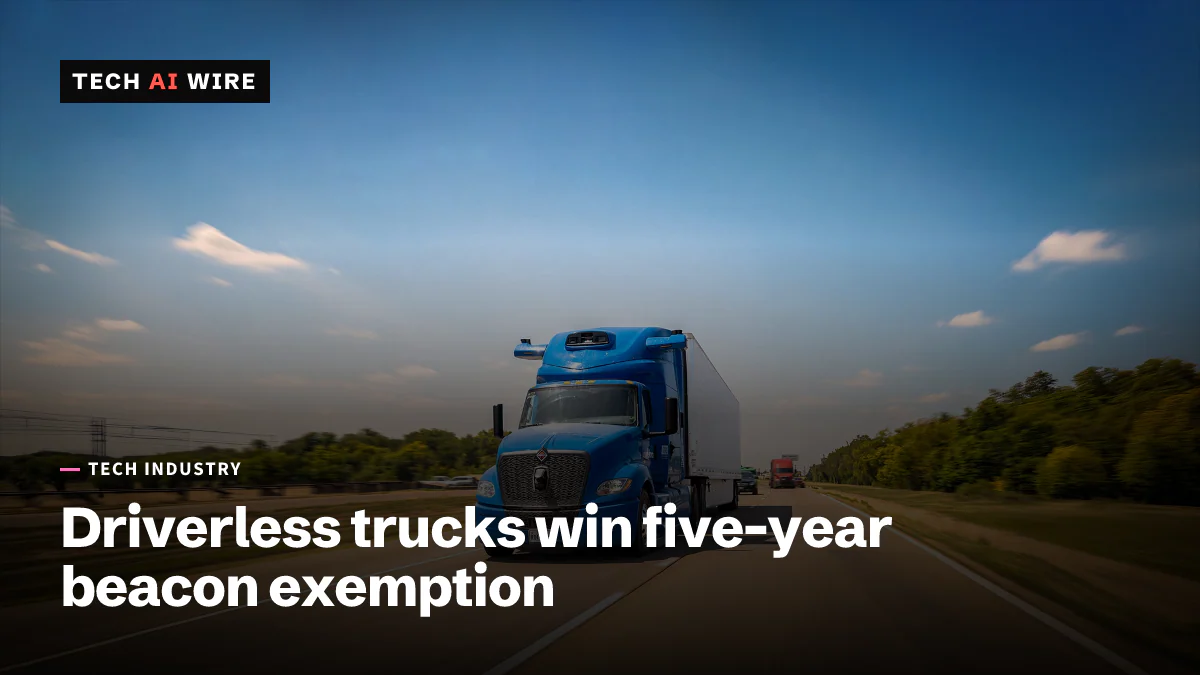
The Federal Motor Carrier Safety Administration (FMCSA), the US agency that regulates trucks and buses, has given driverless trucks a five-year exemption from a rule written for human drivers. They may now use warning beacons mounted on the cab instead of reflective triangles placed on the road. The exemption took effect on October 7, 2026, and runs until October 7, 2031, according to the Federal Register notice published October 9. It clears what TechCrunch calls a major obstacle for self-driving trucks.
What the exemption allows
Under the existing rule, a driver who breaks down on the roadside must set out warning triangles within 10 minutes, TechCrunch reports. A self-driving truck has no driver to walk back and place them. TechCrunch calls that a major obstacle for the industry.
The exemption covers Level 4 trucks. Level 4 means the software drives the whole trip within set conditions, with no human needed at the wheel. Instead of triangles, these trucks switch on warning beacons fixed high on the cab. The beacons must switch on within five minutes of a stop. FMCSA calls that shorter limit "a clear, verifiable safety improvement," according to FreightWaves.
The notice sets these conditions:
| Condition | What the notice requires |
|---|---|
| Beacon activation | Within five minutes of a stop |
| Power | Redundant power sources for the beacons |
| Mounting height | At least 100 inches |
| Vehicle width | At most 122 inches, beacon mountings included |
| Reporting | An annual report, due November 1 |
| Loads not covered | Hazardous materials, passengers, and work that would need an H, X, P or S license endorsement |
| Long trucks | Only doubles pulling two 28-foot trailers |
Who it covers
The application came from Aurora Operations, the trucking arm of Aurora Innovation. But the relief is not limited to one company. "It is not just Aurora. It is any other autonomous vehicle company doing these operations," Jeff Farrah, CEO of the Autonomous Vehicle Industry Association, told FreightWaves. TechCrunch reports that Aurora and Kodiak AI both won the exemption.
Industry reaction was quick:
- Aurora. Gerardo Interiano, its senior vice president of government relations, called the beacons "a critical, 21st-century solution that enhances roadside safety."
- Kodiak AI. Daniel Goff said the decision would help "usher in an autonomous era of freight movement on U.S. roads," per TechCrunch.
- Bot Auto. Bart Teeter, its director of fleet and operational safety, said it "will give the autonomous freight industry a key piece of regulatory certainty," FreightWaves reports.
How FMCSA got here
The road to this decision took three years:
| Date | Step |
|---|---|
| 2023 | Aurora and Waymo ask FMCSA for the same relief |
| December 27, 2024 | FMCSA publishes its denial |
| October 10, 2025 - January 9, 2026 | Aurora runs 34 trucks under a temporary waiver |
| October 2025 onward | Four three-month waivers keep Aurora operating, per FreightWaves |
| April 15, 2026 | FMCSA publishes Aurora's new application |
| October 7, 2026 | The five-year exemption takes effect |
In 2024, FMCSA said the request would "exempt a class of unspecified carriers using unspecified equipment," the new notice recalls. This time the agency added conditions, including the five-minute limit and the backup power. Under the first waiver, Aurora's 34 trucks drove over 500,000 miles. Their beacons were switched on for nearly 10 hours in total, the notice says.
FMCSA weighed 402 public comments. Supporters included the American Trucking Associations, the autonomous vehicle industry group and Waymo. Opponents included OOIDA, which represents owner-operator truck drivers, plus Advocates for Highway and Auto Safety and the Truck Safety Coalition. The beacons' real-world safety record and Aurora's ability to scale are both still unproven, RuntimeWire notes.
What this means for developers
Many safety rules quietly assume a person will do a physical task. Teams building self-driving vehicles, delivery robots or any machine that works alone face the same gap. This decision shows what regulators will accept in place of the human step:
- List every human task in the rules. Placing triangles, signaling, calling for help: map each one and design a machine substitute early, before a regulator asks.
- Make the substitute automatic and redundant. The exemption demands beacons that switch on within five minutes and run on backup power. Stop detection and spare power belong in the core design.
- Collect evidence in a form a regulator can read. Aurora's case rested on 34 trucks, more than 500,000 miles and a count of beacon hours. Plan for the annual report from the first day of operation.
- Check the exclusions before buying. Fleets cannot use the exemption for hazardous loads or passengers, and long combinations are capped at two 28-foot trailers.
Rules for driverless vehicles are being rewritten in several places at once. California's SB 1246, which fines robotaxis that block emergency responders, is another recent example. Watch which other carriers start running under the beacon exemption, and what the first annual reports show. TechCrunch asks the bigger question: "Could these cab-mounted warning beacons eventually become standard equipment across the entire trucking industry?"
Sources
- Parts and Accessories Necessary for Safe Operation; Application for Exemption From Aurora Operations, Inc (USDOT #341156) - TheFederalRegister.org
- AV truck fleets win 5-Year exemption on warning beacons - FreightWaves
- TechCrunch Mobility: A roadblock clears for self-driving trucks - TechCrunch
- Aurora gets five-year federal exemption for driverless-truck warning beacons - RuntimeWire
Related articles
Tesla renames FSD to Tesla Assisted Driving in Europe
Tesla calls Full Self-Driving Tesla Assisted Driving on its European sites, after Germany called the old name misleading. The EU vote slipped to December.
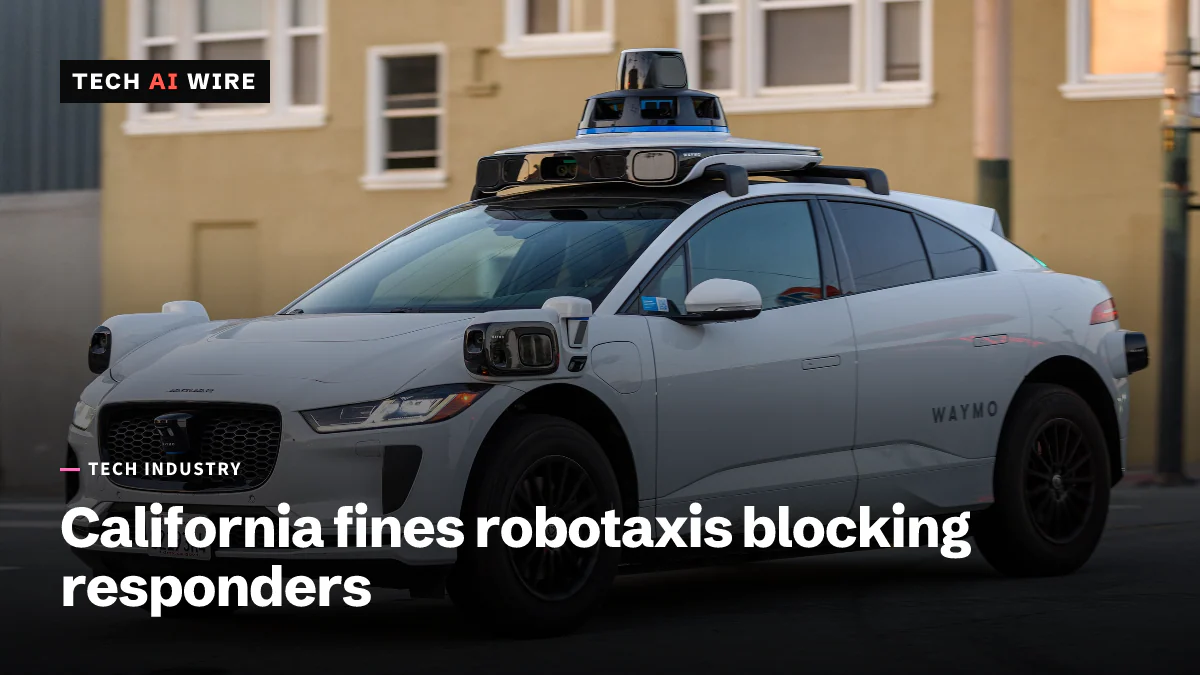
California SB 1246 fines robotaxis that block responders
California's SB 1246 fines robotaxi firms up to $10,000 per car that blocks an emergency for over 30 minutes, and sets 30-second rules from July 2028.

Waymo closes $5 billion loan, its first debt financing
Waymo closed a $5 billion term loan on October 8, its first debt deal, led by PIMCO, Blackstone and Sixth Street, to expand its robotaxi service abroad.
The weekly digest
One email every Friday with the week's top stories from all six desks: AI, dev tools, coding, the tech industry, startups and what's next. Free, no spam.