Varda raises $251M to make medicines in orbit
Varda raised $251M at a $1.6B valuation to process drugs in orbit. It has flown six reentry missions since 2023 and plans more than a dozen through 2028.
3 min read
By the numbers
- Series D, led by Lux Capital and Natural Capital
- $251M
- valuation after the round
- $1.6B
- total raised to date
- $598M
- reentry missions flown since 2023
- 6
Varda Space Industries, a startup that processes medicines in orbit, has raised $251 million in a Series D round at a $1.6 billion valuation. Lux Capital and Natural Capital led the round, Payload reports. The money will pay for more flights and more drug partnerships, as Varda tries to deliver the first medicine made in space. Varda has now raised $598 million in total, according to Pharmaceutical Technology.
What Varda does
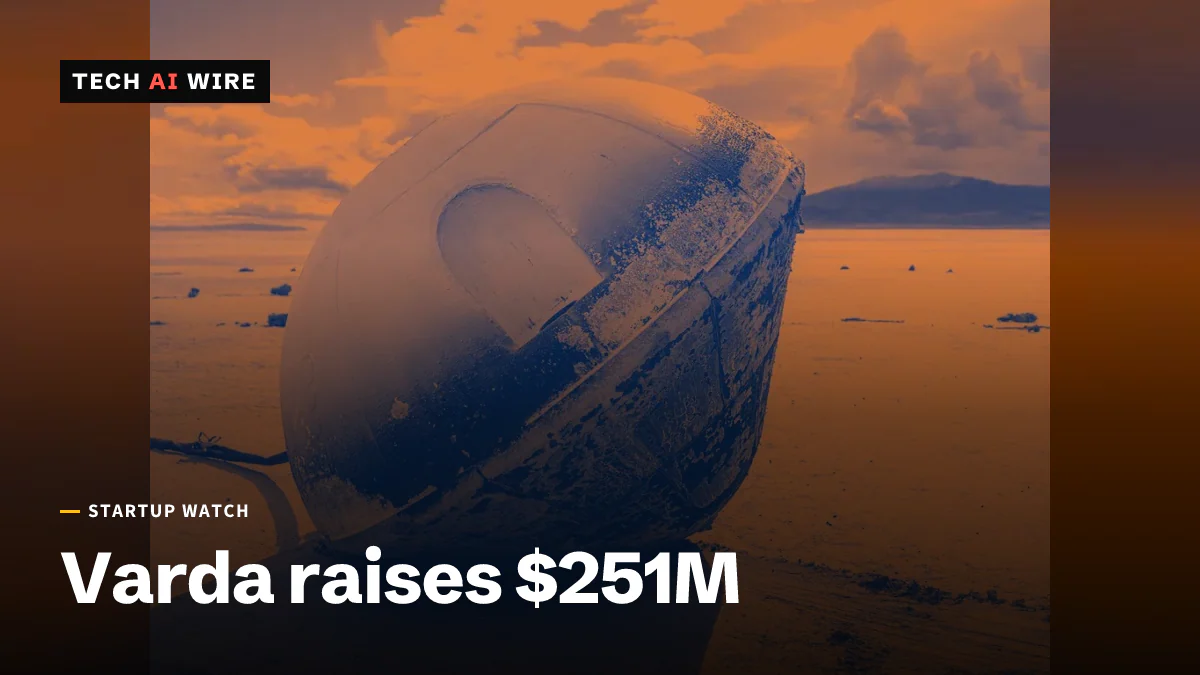
Varda flies small capsules that orbit Earth, run a manufacturing process in microgravity, then fall back to the ground. In microgravity, the active ingredients in drugs can form crystals in ways that are hard or impossible to reproduce on Earth, Pharmaceutical Technology explains.
The capsules come home fast. They reenter the atmosphere at Mach 25, according to Tech Funding News.
Co-founder and president Delian Asparouhov explained the bet to Pharmaceutical Technology. "We started Varda with the conviction that the first product manufactured in space and consumed on Earth would be a pharmaceutical," he said.
Missions so far and next
Varda has completed six successful reentry missions since its first launch in 2023, all three outlets report. It plans more than a dozen more launches and reentries through 2028.
The next two capsules, W-8 and W-9, are booked on SpaceX's Transporter-18 rideshare mission. The reported dates differ: Payload said the launch could come as soon as October 3, 2026, while Tech Funding News gave October 1.
Who uses the capsules
Medicine is the goal, but Varda already has other customers. Payload lists pharmaceutical makers, semiconductor manufacturers and the US Department of Defense. It also names Syensqo, a materials company that uses the flights to test heat shield tiles.
The fast reentry is useful in its own right. Tech Funding News reports customers from the US military and national security. In May 2026, Varda announced a collaboration with United Therapeutics on treatments for rare lung diseases, according to the same report.
Where the money goes
Asparouhov laid out the plan to Tech Funding News. "This round gives us the resources to increase our cadence, deepen our pharmaceutical partnerships, get closer to delivering the first medicine made in space," he said.
Regulation is moving too. Pharmaceutical Technology reports that the UK government is building a regulatory sandbox for licensing the reentry of drugs made in space. The UK and Swiss governments are also working together on rules for the field.
What this means for developers
For hardware and materials teams, Varda's flights are becoming a service you can buy. Syensqo uses them to test heat shield tiles, and Payload names semiconductor makers among the customers. If your product must survive extreme heat or needs testing in microgravity, an orbital test flight is no longer a one-off government program.
Expect launch slots to remain the limit. Varda plans more than a dozen missions through 2028, several a year. Teams that want to fly experiments should talk to the company early, since partners already include drug makers and defense customers.
For anyone working in drug development, watch the regulators. The UK sandbox would be the first clear licensing path for a medicine made in orbit. Until rules like that exist, a space-made drug cannot reach patients, no matter how well the process works.
Watch the next flights. If W-8 and W-9 return on schedule, Varda will have flown eight reentry missions. Its funding is now sized for a much higher cadence than it has managed so far.
Sources
- Varda Raises $251M Series D - Payload
- Varda pockets $251m to back space-based pharma processing mission - Pharmaceutical Technology
- Varda raises $251M led by Lux Capital and Natural Capital to make medicines in orbit - Tech Funding News
Related articles
Flow Engineering raises $50M Series B at a $750M valuation
Flow Engineering, whose AI agents check CAD and requirements for hardware teams, raised $50M at a $750M valuation a year after its $23M Series A.
a16z lifts its fifth Growth fund to $8.5B and adds an AI hardware fund
Andreessen Horowitz said on August 31, 2026 that it added $1.75 billion to its fifth Growth fund, taking it to $8.5 billion. A separate $1.1B fund targets AI hardware.

Supabase raises $150M and buys Turso for agent databases
Supabase raised $150M four months after a $500M Series F and is buying Turso, whose SQLite tech lets one server run millions of small databases.
The daily brief
Three to five stories a day, and what each one means for the people who build software. Free, no spam.