Microsoft Maia 300 chip aims for 40% more tokens per watt
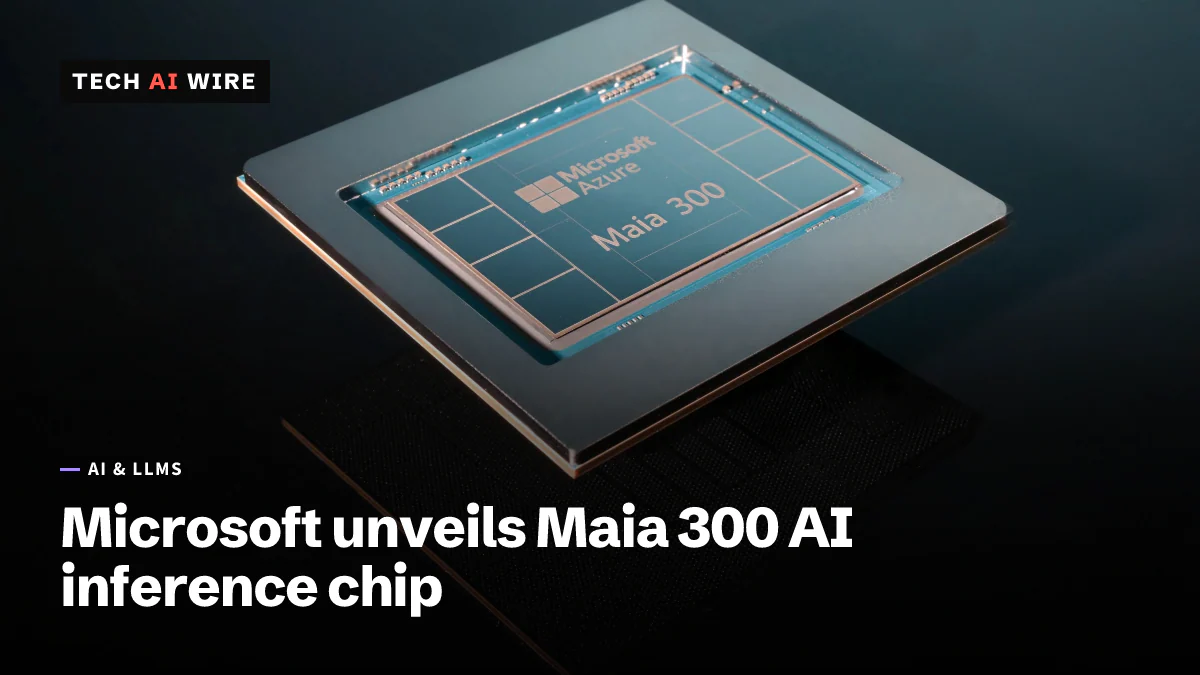
Microsoft unveiled Maia 300, its third-generation AI chip. It expects 40% more tokens per watt than leading GPU-based systems, with deployments in 2027.
3 min read
By the numbers
- more tokens per watt than leading GPU-based systems, Microsoft expects
- 40%
- of HBM4 memory per chip
- 288 GB
- rack-scale token throughput of Maia 200, at most
- 7x
- planned production deployment, per Data Center Knowledge
- 2027
Microsoft has unveiled Maia 300, the third generation of its own AI chip, built to run AI models rather than train them. Microsoft expects it to deliver 40% more tokens per watt than leading GPU-based systems. A token is a small chunk of text that a model reads or writes, so the figure measures how much AI output the chip gives for the power it uses. The chip is aimed at the services Microsoft already runs, including Copilot and GitHub Copilot.
What Microsoft announced
Microsoft described the chip in two Azure blog posts dated October 12 and October 13, 2026. Its technical deep dive says Maia 300 is built for inference, the work of running a trained model to answer requests. It targets long-context, reasoning and agentic workloads, where a model writes long answers one step at a time.
Here is what Microsoft says is inside:
| Part | Detail |
|---|---|
| Compute dies | Made on TSMC's N2P process |
| Memory and I/O | On separate dies |
| Memory | Eight HBM4 stacks, 288 GB in total |
| Memory bandwidth | 18 TB/s |
| Rack | 96 chips in 24 trays of four, drawing 167 kW |
| Cooling | Liquid cooling removes more than 80% of the rack's heat |
| Largest cluster | Up to 12,288 chips across up to 128 racks |
| Network | A custom AI transport built on Ethernet |
HBM4 is a type of fast memory stacked next to the chip. Large memory matters for inference because the model and its long conversations must sit close to the compute.
How it compares with Maia 200
Maia 200, the previous chip, is already in production and powers Copilot, Data Center Knowledge reports. Microsoft says Maia 200 is being deployed in the US, Europe and Australia.
Against Maia 200, Microsoft lists these gains for Maia 300:
- Memory bandwidth: 2.5 times higher.
- Memory capacity: 33% more.
- Compute: 36% more FLOPs, a measure of raw math speed.
- Chip-to-chip bandwidth: 14% more.
- Rack output: up to 7 times the token throughput in a full 96-chip rack.
- Density: twice as many chips per rack.
The efficiency claim
"We expect Maia 300 to deliver 40% more tokens per watt compared to leading GPU-based systems," Microsoft's October 13 post says. It is a projection. The posts do not name which GPU systems Microsoft compared against.
Microsoft makes a similar claim for the older chip. It says Maia 200 delivers up to 1.7 times more tokens per watt than leading GPU infrastructure for AI features in Teams, Copilot and Cowork.
Microsoft still relies heavily on Nvidia and AMD GPUs, Data Center Knowledge notes. Amazon and Google build their own AI chips too. In August, OpenAI said its Jalapeño chip beats Nvidia's GB300 per watt, also on its own numbers.
When it arrives
Microsoft plans to put Maia 300 into production in 2027, with deployments at multi-gigawatt scale, Data Center Knowledge reports. Microsoft names Microsoft Copilot, GitHub Copilot and Microsoft Foundry among the workloads it is designed for. Microsoft says it will share more at its Ignite conference, November 17 to 20, 2026.
Maia chips are not available for customers' own workloads on Azure instances, the outlet notes. Microsoft's posts did not say whether that will change.
"Maia 100 was a proof of concept," Matt Kimball, an analyst at Moor Insights & Strategy, told Data Center Knowledge. Of the new chip, Kimball said: "It's going to be used very broadly to support their workloads across the globe."
What this means for developers
For teams that build on Azure or Microsoft's AI services:
- You cannot rent it directly. Maia runs Microsoft's own services, not your virtual machines. Plan GPU capacity on Azure as before.
- Watch the services it will power. Copilot, GitHub Copilot and Foundry are the named targets. If Maia lowers Microsoft's cost per token, watch for changes to their pricing and rate limits in 2027.
- Long-context work is the focus. With 288 GB of memory per chip, the design favors long prompts and agents that run many steps. Those are the jobs where inference costs grow fastest.
- Treat the 40% as a vendor figure. No comparison system is named. When Maia-backed services launch, test them on your own workloads before moving traffic.
- Check Ignite in November. Microsoft has promised more detail there, including any change to who can use the chip.
Sources
- Deep dive into Azure Maia 300 architecture - Microsoft Azure Blog
- Infrastructure for the frontier era: Scaling intelligence through open industry collaboration - Microsoft Azure Blog
- Microsoft Pushes Custom AI Chips with Azure Maia 300 - Data Center Knowledge
Related articles
Microsoft-Decision-1 model scores choices, not text
Microsoft-Decision-1 returns a probability for each fixed option instead of writing text. It costs $0.042 per million input tokens in Microsoft Foundry.
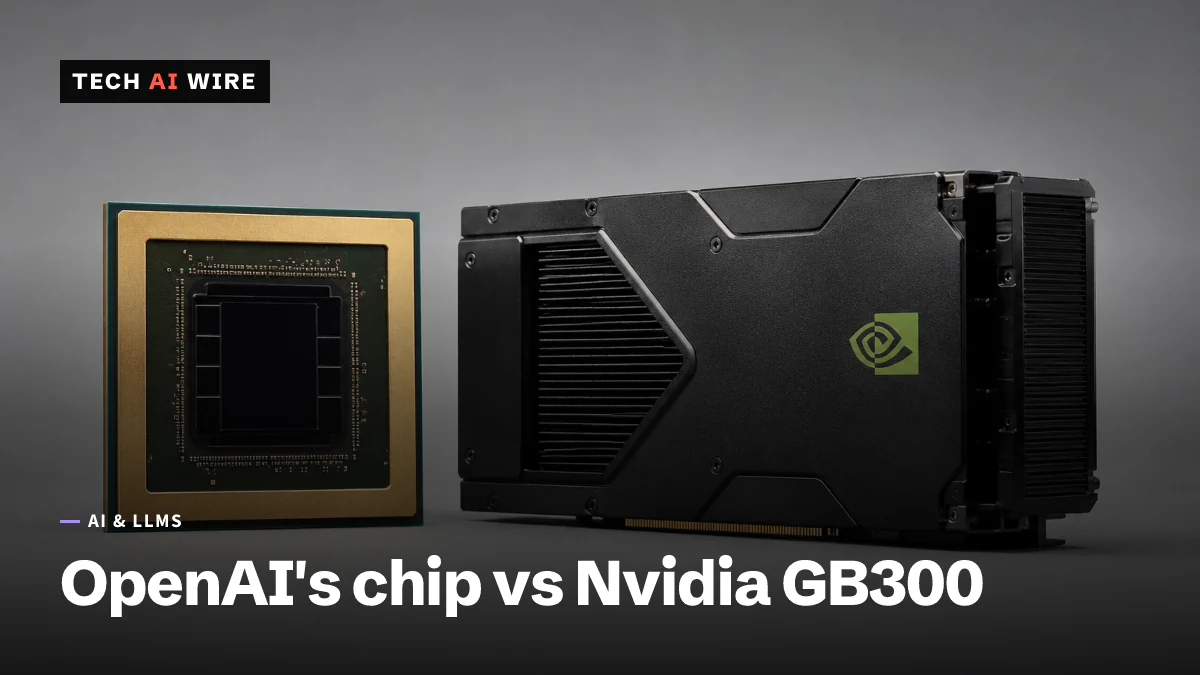
OpenAI says its Jalapeño chip beats Nvidia's GB300 per watt
OpenAI's first published Jalapeño benchmarks claim 1.5 to 1.9 times more work per kilowatt than Nvidia's GB300, at half the power. The numbers are OpenAI's own.
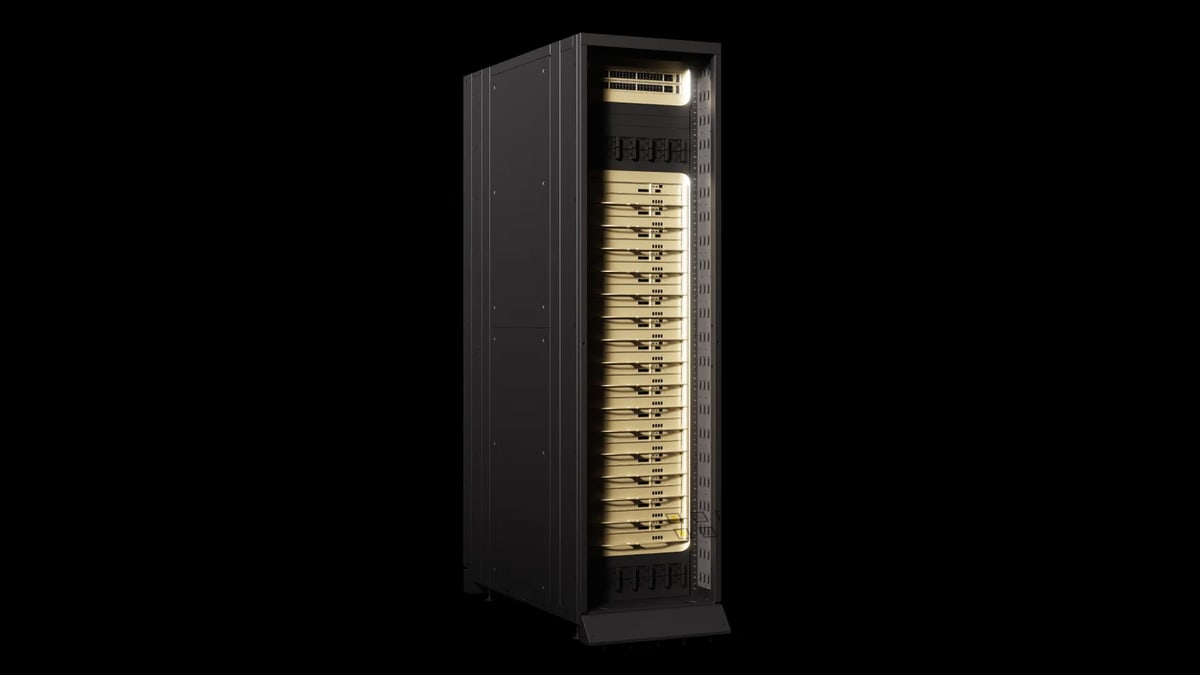
Nvidia's Groq 3 LPX inference chip enters full production
Nvidia put its dedicated inference accelerator into full production, splitting agent workloads so GPUs handle context and the new chips handle token generation.
The weekly digest
One email every Friday with the week's top stories from all six desks: AI, dev tools, coding, the tech industry, startups and what's next. Free, no spam.