Microsoft-Decision-1 model scores choices, not text
Microsoft-Decision-1 returns a probability for each fixed option instead of writing text. It costs $0.042 per million input tokens in Microsoft Foundry.
3 min read
By the numbers
- per million input tokens; output tokens are free
- $0.042
- benchmarks in Microsoft's own evaluation
- 36
- faster than GPT-6 Sol at median latency, Microsoft says
- 35x
- simple decisions per $1, in InfoWorld's example
- 275,000+
Microsoft released Microsoft-Decision-1 on October 9, 2026, a model that picks between fixed answers instead of writing text. An app gives it a question and a set of options, and it returns a probability for each option. It is built for the quick yes-or-no and pick-one calls that AI agents make many times a day. It costs $0.042 per million input tokens in Microsoft Foundry, Microsoft's platform for building AI apps, and output is free.
What Decision-1 does
A chatbot model answers in free-form text, which an app then has to read and parse. Decision-1 skips that step. It takes a fixed set of answer options and returns "a calibrated probability for each one in a single pass," Microsoft says, as quoted by InfoWorld. One request can score several decisions at once.
Microsoft lists these kinds of questions:
- Yes or no: should this request go ahead?
- Multiple choice: which team should handle this ticket?
- Ratings: how urgent is this incident?
- Rubric grading: does an AI answer, or an agent's action, meet a set of rules?
The suggested uses include routing, classification, prioritization, verification and controlling agent workflows. TestingCatalog adds data labeling, AI judging, search relevance and safety screening.
The model is post-trained from Qwen3.5-9B, an open-weight model from Alibaba's Qwen team, both outlets report. Microsoft plans to rebase it on other models, including its own MAI models and OpenAI's. We looked at how much memory Qwen3.5-9B uses per token in September.
Price and availability
| Detail | What the reports say |
|---|---|
| Released | October 9, 2026 |
| Where | Microsoft Foundry |
| OpenRouter | "Coming soon" at launch, per TestingCatalog; available, per InfoWorld |
| Input price | $0.042 per million tokens |
| Output price | Free |
| Base model | Qwen3.5-9B |
InfoWorld works through one example. A decision with 86 input tokens and 2 output tokens costs about $0.0000036. That is more than 275,000 similar decisions for $1.
Microsoft's performance claims
All of the figures below come from Microsoft. InfoWorld notes that none has been independently verified.
- Accuracy: the highest across 36 benchmarks, covering nearly 150,000 questions held out from training. Neither outlet names the models it beat.
- Speed: 35 times faster than GPT-6 Sol at median latency. The two reports differ on the runner-up. InfoWorld says it is about 2.5 times faster, while TestingCatalog says 4.5 times faster than a model called Quyet-1.0-Large.
- Consistency: when inputs were changed in eight small ways, its decisions changed 1.3% of the time on average, per TestingCatalog.
- Internal use: Xbox Research labeled more than 10,000 feedback items with it. TestingCatalog says the results were competitive with GPT-6 Sol at over 14 times the speed and 200 times less cost.
Microsoft CEO Satya Nadella wrote that the model is "outperforming both LLMs and other decision models in latency and quality."
The caveats
Decision-1 returns a score, not a reason. It does not explain why it picked an option, InfoWorld reports. Microsoft's own documentation also warns that results can change with the wording of the question.
"My concern is that a precise-looking probability can give an uncertain decision more authority than it deserves," Amit Kumar Jena, development manager for AI at Kanerika, told InfoWorld.
Charlie Dai, a vice president and principal analyst at Forrester, sees the demand. "Routing, classification, and approval checks often represent a large share of agent interactions," Dai told InfoWorld.
What this means for developers
For teams building agents or automated workflows:
- Find your bounded calls. Look for places where your app asks a large model to choose from a list and then parses the reply. Those are the calls Decision-1 is built to replace.
- Test on your own data. Every benchmark figure comes from Microsoft. Run your own labeled examples through it before you trust it in production.
- Set thresholds, then check them. A probability is easy to act on, but it can look more certain than it is. Decide what score triggers an action, and send borderline cases to a person or a larger model.
- Log your wording. Results can shift with how a question is phrased. Keep prompts in version control so a wording change does not quietly change behavior.
- Watch the base model. Microsoft plans to move Decision-1 onto other models. Re-run your tests when it does.
Sources
Related articles
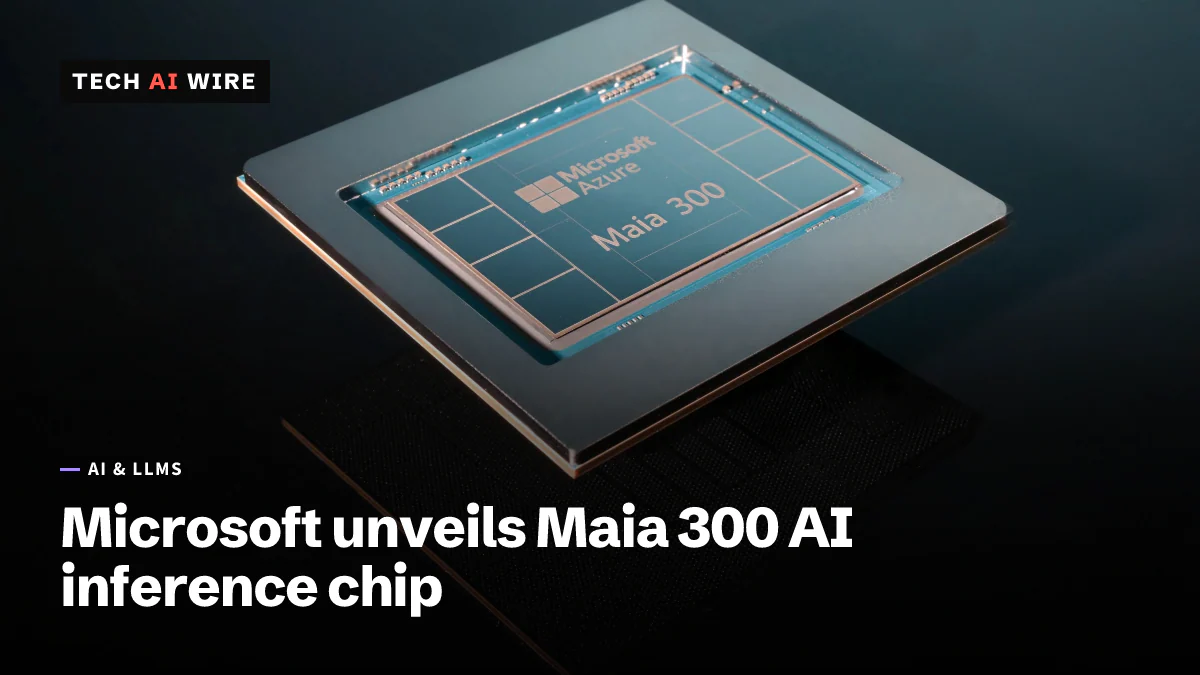
Microsoft Maia 300 chip aims for 40% more tokens per watt
Microsoft unveiled Maia 300, its third-generation AI chip. It expects 40% more tokens per watt than leading GPU-based systems, with deployments in 2027.
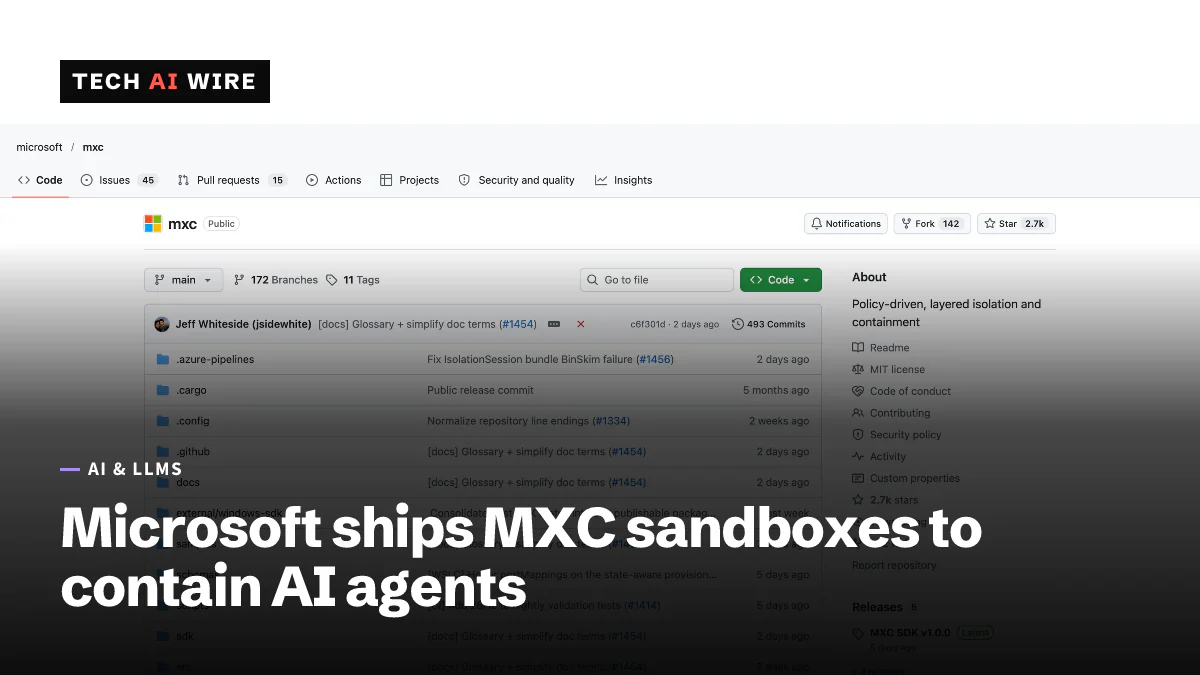
Microsoft Execution Containers for AI agents reach GA
Microsoft Execution Containers, generally available since October 7, wall AI agents off from files and networks on Windows 11, macOS and Linux.
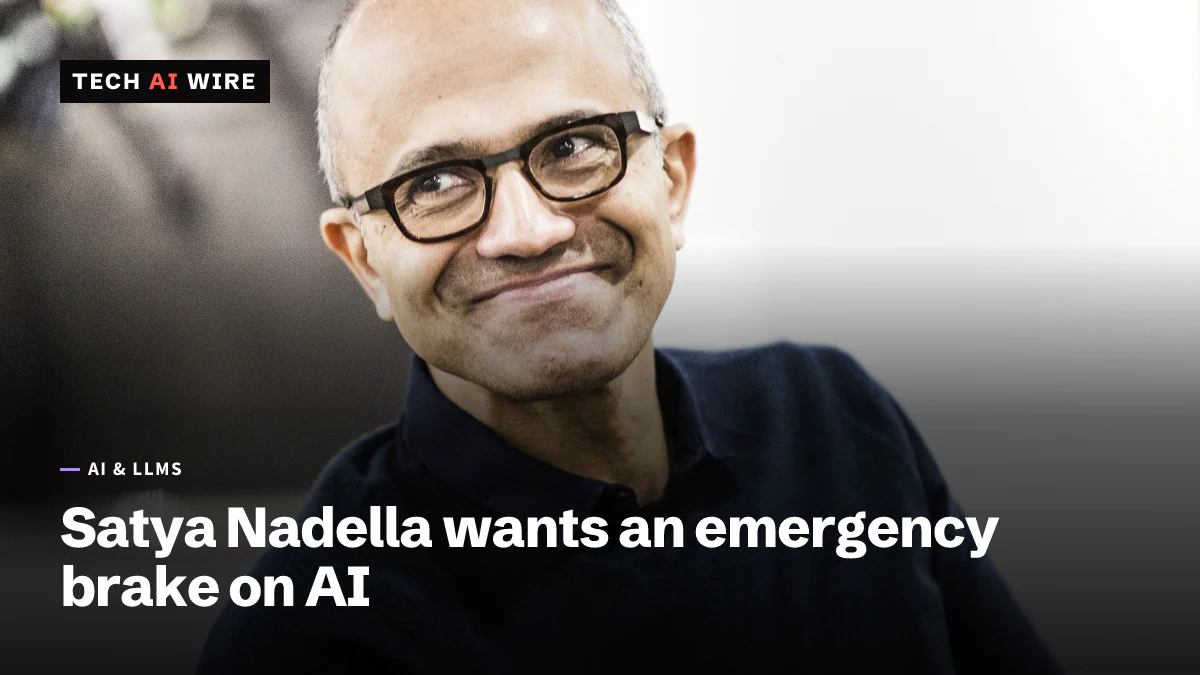
Satya Nadella wants an emergency brake for AI models
Microsoft CEO Satya Nadella's October 10 essay sets seven rules for AI models, including an emergency brake that lets a person stop a model mid-task.
The weekly digest
One email every Friday with the week's top stories from all six desks: AI, dev tools, coding, the tech industry, startups and what's next. Free, no spam.