Micron sees tighter memory supply in 2027 and 2028
Micron posted $54.23 billion in fiscal Q4 revenue and guided to $61.5 billion, then warned memory supply will be tighter in 2027 and 2028 than in 2026.
3 min read
By the numbers
- fiscal Q4 2026 revenue
- $54.23B
- fiscal Q1 2027 revenue guidance, plus or minus $1.5B
- $61.5B
- of 2027 output already committed, per Yahoo Finance
- 75%+
- when new factory capacity arrives
- Late 2028
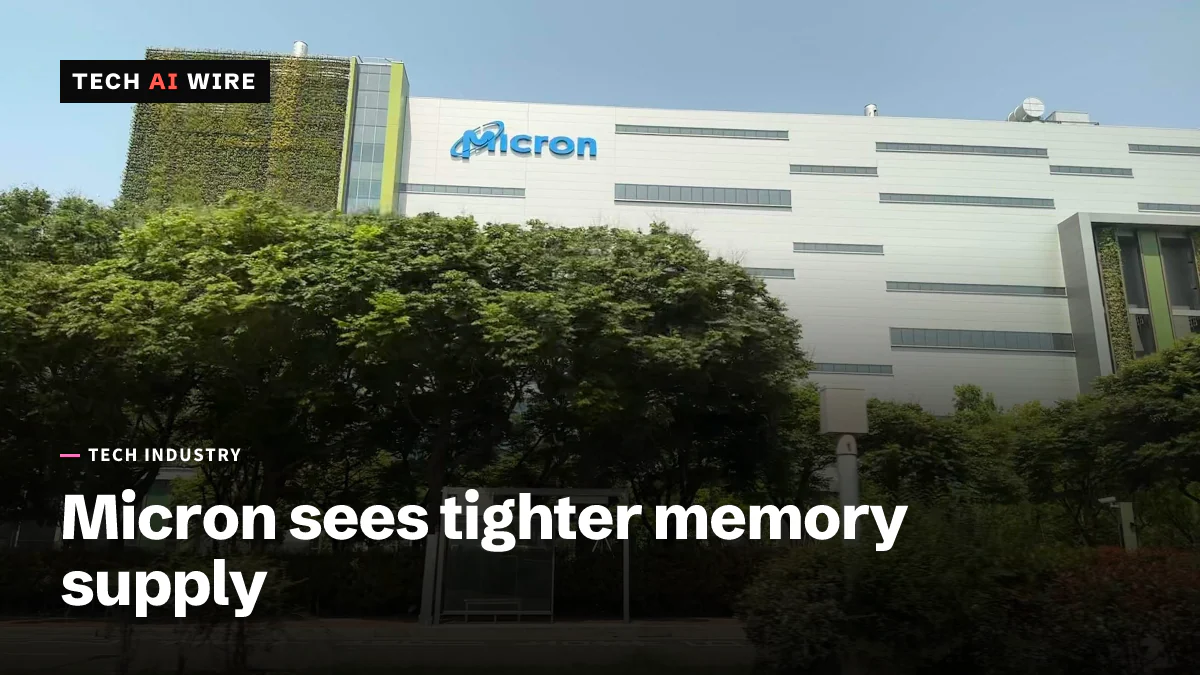
Micron Technology reported record results on September 30, 2026, then warned that memory chips will get harder to buy, not easier. Its fiscal fourth-quarter revenue reached $54.23 billion. Chief executive Sanjay Mehrotra said the company "cannot currently see when supply and demand will return to balance," according to Yahoo Finance.
That matters to anyone who buys servers, PCs or phones. Micron makes the memory chips inside all three, and it says supply will be much tighter in 2027 and 2028 than it was in 2026.
The quarter in numbers
Micron's results release gives these figures:
| Measure | Fiscal Q4 2026 | Fiscal Q1 2027 guidance |
|---|---|---|
| Revenue | $54.23 billion | $61.5 billion, plus or minus $1.5 billion |
| GAAP gross margin | 86.8% | About 85.95% |
| GAAP earnings per share | $32.87 | $37.84, plus or minus $1.00 |
| Non-GAAP earnings per share | $33.42 | $38.15, plus or minus $1.00 |
Full-year fiscal 2026 revenue came to $133.19 billion, Micron says. The company held its earnings call on Wednesday, September 30, at 2:30 p.m. Mountain Time.
The quarter beat expectations, though the sources cite slightly different forecasts. Yahoo Finance puts the analyst consensus at $50.97 billion in revenue and $31.35 in earnings per share, while Aroged cites $51.07 billion and $31.61. Analysts had expected about $57 billion in revenue for the next quarter, so Micron's $61.5 billion guidance is well ahead. Yahoo Finance calls it Micron's eighth straight quarter of beating estimates.
Why supply stays tight
Most of next year's output is already spoken for. Yahoo Finance reports that more than 75% of Micron's 2027 output is committed to customers. Aroged goes further and reports that all of 2027's production is sold out, so the two sources differ on the exact share.
High-bandwidth memory is the tightest product. Known as HBM, it is the stacked memory that sits beside AI chips in data-center accelerators. Yahoo Finance says Micron's HBM is largely sold out, at much higher prices than in 2026.
Micron has also locked in long contracts. PANews reports 26 long-term agreements worth about $150 billion in committed customer orders.
New factories will not help soon. Fresh capacity from new plants does not arrive until late 2028, Yahoo Finance reports. Micron plans to spend about $25 billion on equipment and plants in the first half of fiscal 2027, and more in the second half, according to PANews.
Aroged quotes Mehrotra this way: "In 2027 and 2028, we expect demand to exceed supply." He added that he expects shortages "to be more severe than in 2026."
Where the growth is coming from
AI data centers are driving the demand. DRAM, the working memory in servers and PCs, made up 73% of Micron's revenue and grew about 3.5 times year over year, Aroged reports. The same report says server SSD sales grew by more than 1,000% and are approaching $10 billion.
Mehrotra framed it in the results release: "AI is becoming Super Intelligence, and memory enhances this intelligence."
The pressure is already showing up in prices. In September, DRAM and NAND contract prices rose again as memory makers moved capacity to AI servers. Phone buyers have felt it too: smartphone prices in India are up 21% this year.
What this means for developers
Buy memory-heavy hardware early. If your team plans to add servers, GPU nodes or high-memory workstations in 2027, Micron's outlook says waiting will not make them cheaper. Get quotes now and lock in prices where suppliers allow it.
Budget for higher prices in 2027. Aroged reports that Micron expects memory prices to rise significantly next year, and the company cannot see when the shortage ends. Put a memory price increase into next year's hardware and cloud budgets instead of assuming this year's rates.
Use less memory where you can. Smaller AI models, 4-bit or 8-bit weights, tighter caches and right-sized cloud instances all cut how much memory you need. Each gigabyte saved is now worth more than it was a year ago.
Watch cloud pricing for memory-heavy instances. Cloud providers buy the same chips. If your bill depends on high-memory or GPU instances, review pricing updates and reserve capacity where it saves money.
Plan around late 2028. That is when Micron says new factory output arrives. Until then, treat memory as a constrained resource in hardware and capacity plans.
Sources
- Micron Technology, Inc. Reports Record Fiscal Fourth Quarter and Full Year 2026 Results - Micron
- Micron Blew Past Estimates and Says It Can't See When the Memory Shortage Ends - Yahoo Finance
- Micron: Memory prices will continue to rise in 2027, and shortages may continue after 2028 - Aroged
- Micron CEO: Memory market supply-demand will be tighter in 2027-2028 than 2026 - PANews
Related articles
Nvidia posts $96.2B quarter and guides to $108B for Q3
Nvidia reported $96.2 billion in revenue, up 106% in a year, with data centre sales at $89 billion. Its own release guides to $108 billion for this quarter.

Amazon signs 20-year Calvert Cliffs nuclear power deal
Amazon will buy 690 MW from Maryland's Calvert Cliffs nuclear plant for 20 years, backing a $3 billion upgrade that adds 190 MW between 2030 and 2032.
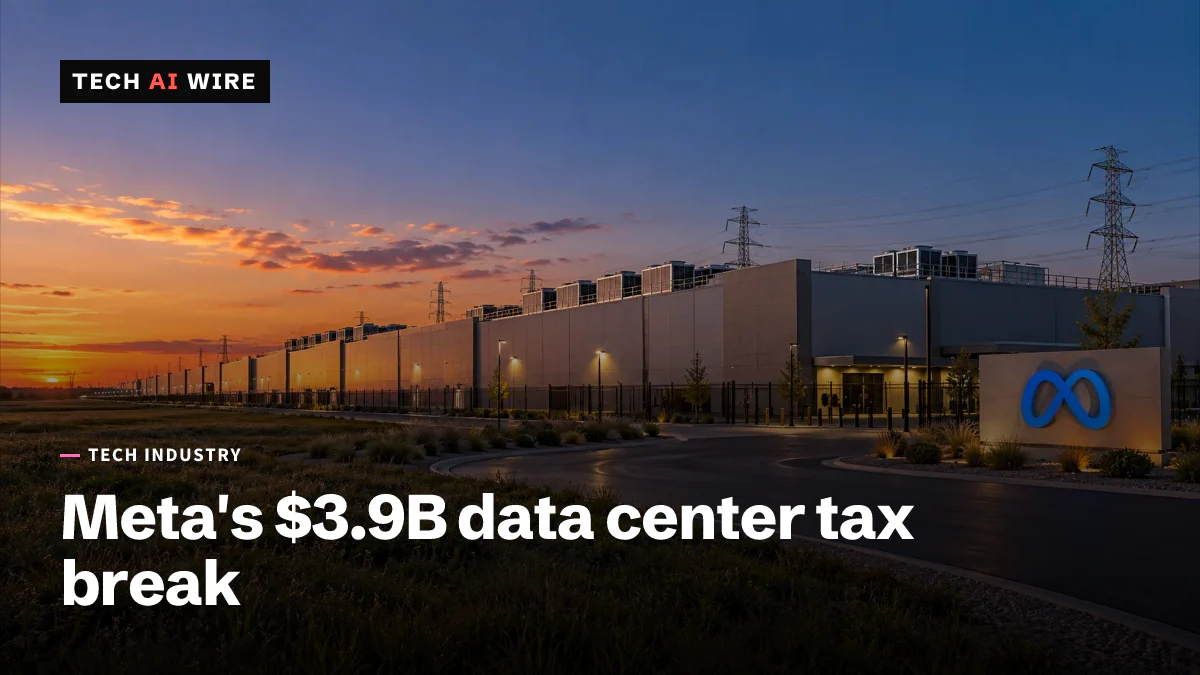
Meta claims $3.9B research tax credit on AI data centers
Meta saved $3.9 billion in 2025 by calling AI data centers research 'pilot models' under a 1981 tax credit, the New York Times reports.
The daily brief
Three to five stories a day, and what each one means for the people who build software. Free, no spam.