Meta Q3 revenue rises 26% as free cash flow turns negative
Meta's Q3 2026 revenue rose 26% to $64.6 billion, but $34.9 billion of capex and a $9.9 billion legal charge pushed free cash flow negative.
3 min read
By the numbers
- Q3 revenue, up 26% from a year earlier
- $64.6B
- Q3 capital spending, up from $19.37B
- $34.91B
- Q3 free cash flow
- -$2.12B
- employees at quarter end, down 15%
- 66,775
Meta reported third-quarter 2026 revenue of $64.6 billion on October 21, up 26% from a year earlier and above its own forecast. Spending on AI data centers rose even faster. Capital spending of $34.9 billion outran the cash the business generated, so free cash flow turned negative.
The quarter in numbers
Revenue beat the roughly $63.3 billion analysts expected, Fortune reports. It also topped Meta's own forecast of $61 billion to $64 billion, according to Stock Titan. Ads drove nearly all of it: Meta showed 10% more ad impressions and charged 14% more per ad.
| Measure | Q3 2026 | Q3 2025 |
|---|---|---|
| Revenue | $64.60B | $51.24B |
| Operating income | $12.99B | $20.54B |
| Operating margin | 20% | 40% |
| Net income | $9.86B | $2.71B |
| Diluted earnings per share | $3.83 | $1.05 |
| Capital spending | $34.91B | $19.37B |
| Free cash flow | -$2.12B | $10.63B |
Free cash flow is the cash left after paying for new buildings and equipment. Meta's operations brought in $32.79 billion, which was $2.12 billion less than it spent on that capital work.
Two one-time items distort the profit lines. A $9.89 billion charge for a teen-safety settlement with 52 state attorneys general cut operating income by 37%, according to Stock Titan and TradingKey. Without it, earnings per share would have been $7.40. Net income still jumped 264%, because the year-ago quarter carried a $15.93 billion tax charge.
Where the money is going
Meta now expects 2026 capital spending of $135 billion to $145 billion, up from a low end of $130 billion. Total 2026 expenses are now forecast at $175 billion to $179 billion. For the fourth quarter, Meta guides revenue to $73 billion to $76 billion.
Fortune reports that Meta is moving money from Reality Labs, its virtual reality and glasses unit, toward AI. That unit lost $4.13 billion in the quarter on $443 million of revenue. Meta expects its 2026 loss there to be $18 billion to $19 billion, and about $15 billion in 2027.
Headcount fell 15% to 66,775, Stock Titan reports. Meta also announced a new nonvoting Class C stock. Each Class A or Class B share gets one Class C share as a stock dividend, effective January 19, 2027.
Muse is the growth story Meta is selling
Mark Zuckerberg pointed investors to Muse, Meta's AI assistant and agent. Fortune reports more than 10 million Muse users in the U.S. and Canada. "Our investments are paying off, the core business is strong, and we're seeing velocity across the board," Zuckerberg said.
On the call, Zuckerberg explained the limited rollout: "Because this is a compute-intensive service to run, we have not launched it globally yet." Zuckerberg also signaled that charging for it may come early. "I think that we are going to work on monetization somewhat sooner on this than our normal playbook," Zuckerberg said.
Shares rose as much as 5% after hours, Fortune reports. TradingKey saw the gain narrow to 2.86% at $717.47 by press time. Meta's model work behind Muse is covered in Meta Muse Wonder launches as its first frontier model.
What this means for developers
Meta's numbers matter well beyond Menlo Park, because its spending sets demand across the AI supply chain.
- Expect tight AI hardware supply to continue. A capex range of $135 billion to $145 billion keeps Meta among the largest buyers of chips and data center space. Teams renting GPUs should not budget for falling prices yet.
- Plan for Muse pricing. Zuckerberg's words on early monetization mean free access may not last. If you build on Meta's agent or model products, track their terms.
- Budget more for Meta ads. Average price per ad rose 14%. Growth teams buying Instagram or Facebook ads should plan for higher costs next quarter.
- Watch the cash line. Negative free cash flow at Meta's scale shows how costly the AI build-out is. Meta also claims tax credits on that spending, as covered in Meta claims $3.9B research tax credit on AI data centers.
Sources
- Meta's revenue surges 26% to $64.6 billion, but billions in settlements and skyrocketing AI spending turn screws on profit, free cash flow - Fortune
- Meta Class C Stock: New Share With No Vote Announced With Q3 2026 Earnings - Stock Titan
- Meta Q3 Net Profit Surges 264% YoY, Raises Full-Year Capex Slightly; Shares Briefly Rise Over 4% After Hours - TradingKey
Related articles

CoreWeave bond yield passes 16% as AI debt fears grow
CoreWeave shares fell 15.46% on October 14 and a 2031 bond briefly yielded over 16% as investors questioned how the AI cloud carries its debt.
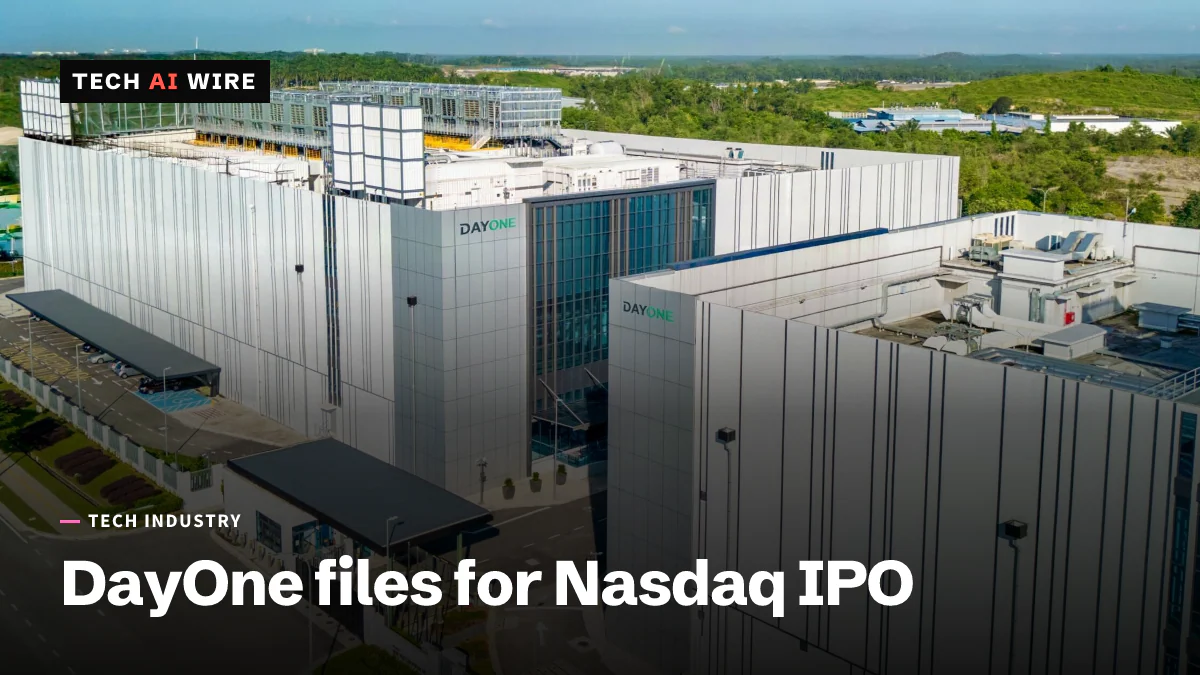
DayOne files for a Nasdaq IPO with 962 MW in service
Data center operator DayOne filed for a Nasdaq IPO as DODC. It has 962 MW in service and needs about $11.4B to build the 2,281 MW it has already booked.

Meta claims $3.9B research tax credit on AI data centers
Meta saved $3.9 billion in 2025 by calling AI data centers research 'pilot models' under a 1981 tax credit, the New York Times reports.
The weekly digest
One email every Friday with the week's top stories from all six desks: AI, dev tools, coding, the tech industry, startups and what's next. Free, no spam.