Parallel Systems raises $100M for driverless freight rail
Parallel Systems, founded by ex-SpaceX engineers, raised a $100M Series C led by AVP to build battery-powered rail vehicles that run without drivers.
3 min read
By the numbers
- Series C, led by AVP
- $100M
- raised to date, per RuntimeWire
- $200M+
- range of each Panther vehicle
- 500 miles
- railcars in backlog from railroads
- 300+
Parallel Systems, a startup founded by former SpaceX engineers, has raised a $100 million Series C to build battery-powered rail vehicles that run without a driver. AVP led the round, TechCrunch reported on October 7, 2026. The company wants to win back short freight trips that now go by truck.
What Parallel Systems builds
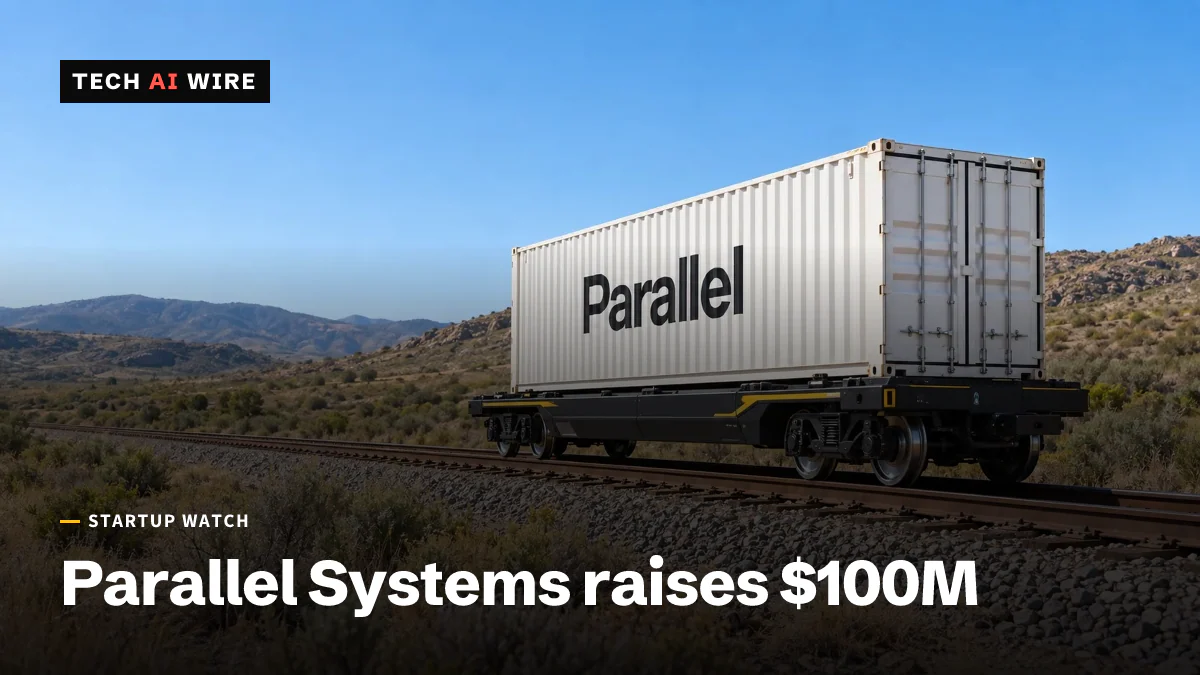
The company's vehicle is called the Panther. It is a battery-electric railcar that carries several tons of cargo and can travel up to 500 miles, according to TechCrunch.
Traditional freight trains link cars with couplers into one long train behind a locomotive. The Panther has no couplers. Each vehicle can run on its own, or join others in a platoon, a group that travels close together. At rail yards, platoons split and merge automatically.
Robotics & Automation News, reporting in May 2026, says each vehicle has six cameras, lidar and several backup braking systems. Lidar uses laser pulses to measure the distance to objects around the vehicle.
The funding
| Detail | Figure |
|---|---|
| Round | Series C |
| Amount | $100 million |
| Lead investor | AVP |
| New investors | Hillspire, Agility Global, Cobalt Capital |
| Returning investors | Anthos Capital, Congruent Ventures, Riot Ventures, Collaborative Fund |
| Total raised | More than $200 million, per RuntimeWire |
The funding history needs care. Robotics & Automation News reported a $100 million raise in May 2026, and the company's newsroom lists a $100 million raise that month. RuntimeWire puts total funding above $200 million after this Series C, which treats the October round as new money.
Where the trains run today
Parallel Systems is testing in Georgia with Genesee & Wyoming, a short-line railroad operator, under the supervision of the Federal Railroad Administration (FRA), RuntimeWire reports. Robotics & Automation News puts the route at about 160 miles, between the Port of Savannah and Cordele. TechCrunch says the FRA approval for Port of Savannah operations came about 18 months ago.
CEO Matt Soule spent 13 years at SpaceX before founding the company in 2020, according to Robotics & Automation News. He told that outlet: "We're the only ones doing anything like this that has Federal Railroad Administration approval."
Commercial service is close, but not here yet. Soule told TechCrunch the company has "been verifying all the safety controls and operating practices that are best evaluated in a real-world setting." He described "a path toward our first commercial payload coming up very soon."
RuntimeWire says the third-generation Panther is now in production. Railroads, which it does not name, have more than 300 railcars on order. The company also signed a partnership with Agility on September 28, 2026, to expand into the Gulf states, Europe, the Middle East and Africa.
Why rail, and why short trips
TechCrunch frames the market as $1 trillion of surface freight. It says about 60% of US freight moves under 500 miles by truck today. Long freight trains are efficient over long distances but slow to assemble for short hauls. Small self-driving railcars could make shorter rail trips worth running again.
What this means for developers
For people who build logistics, autonomy or rail software, Parallel Systems is a test of autonomy in a tightly controlled setting.
- Rails simplify autonomy. A vehicle on a fixed track does not steer, which removes much of the hardest work self-driving cars face. Detection and braking remain the core safety problem, which is why the Panther carries cameras, lidar and backup brakes.
- Regulation sets the pace. Each step so far has followed an FRA approval. Teams building in this space should plan for supervised pilots and safety cases before revenue.
- Shippers will need new software. Freight that splits and merges in platoons changes how loads are tracked and scheduled. Logistics platforms will need to handle individual railcars rather than whole trains.
- Watch the first commercial payload. Soule says it is "coming up very soon." The date it happens, and the route, will show whether the 300-car backlog turns into real service.
The first paid shipment is the milestone to track. Until then, Parallel Systems is a well-funded pilot on one Georgia line.
Sources
- SpaceX alumni nab $100M to rethink shipping with autonomous freight trains - TechCrunch
- Parallel Systems raises $100M to scale Matt Soule's autonomous freight railcars - RuntimeWire
- Parallel Systems raises $100 million to bring autonomous freight trains into mainstream logistics - Robotics & Automation News
Related articles

Mecka AI raises $60M from Sequoia for robot training data
Mecka AI raised a $60M Series B led by Sequoia, with Nvidia and M12. The startup pays people to record everyday tasks with body sensors to train robots.
RobCo hits $1B valuation as employees sell $40M in shares
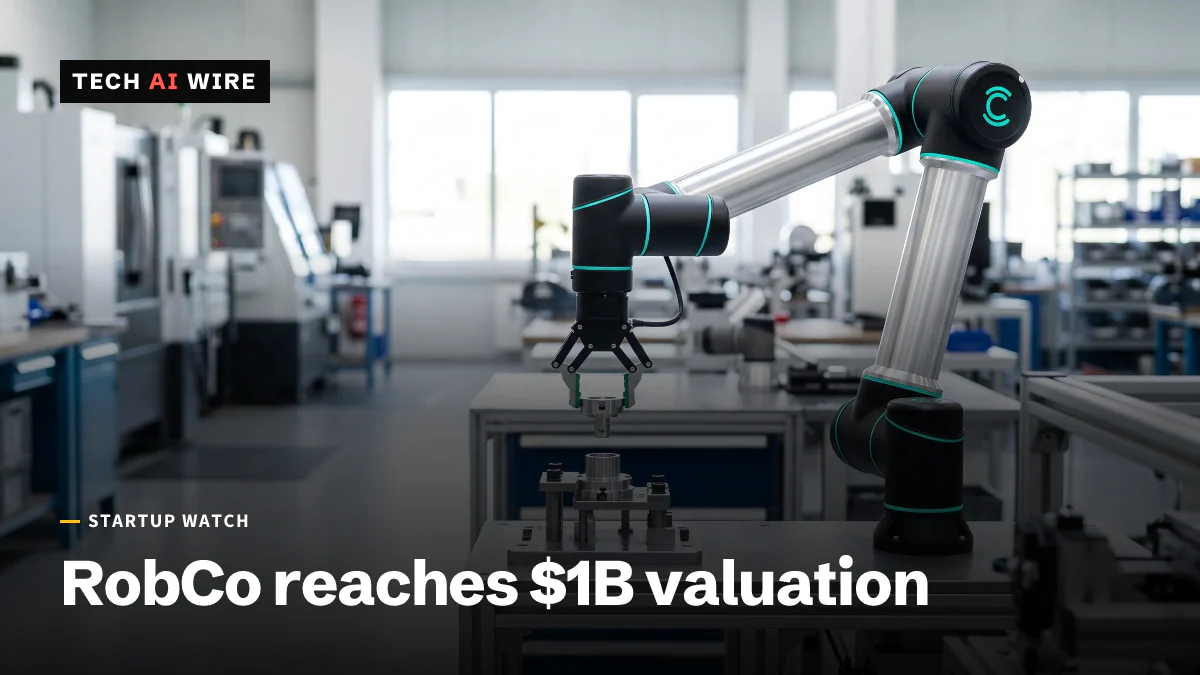
RobCo passed a $1 billion valuation, double its level nine months ago, as employees sold $40 million in shares. Its two-armed Alfie robot ships in 2027.

Arena, the AI leaderboard, raises $200M at $3.1B
Arena raised $200M at a $3.1B valuation, nearly double January's price, and previewed an index that ranks AI models on unsafe and deceptive behavior.
The weekly digest
One email every Friday with the week's top stories from all six desks: AI, dev tools, coding, the tech industry, startups and what's next. Free, no spam.