Sony QSSR brings AI upscaling to the base PS5
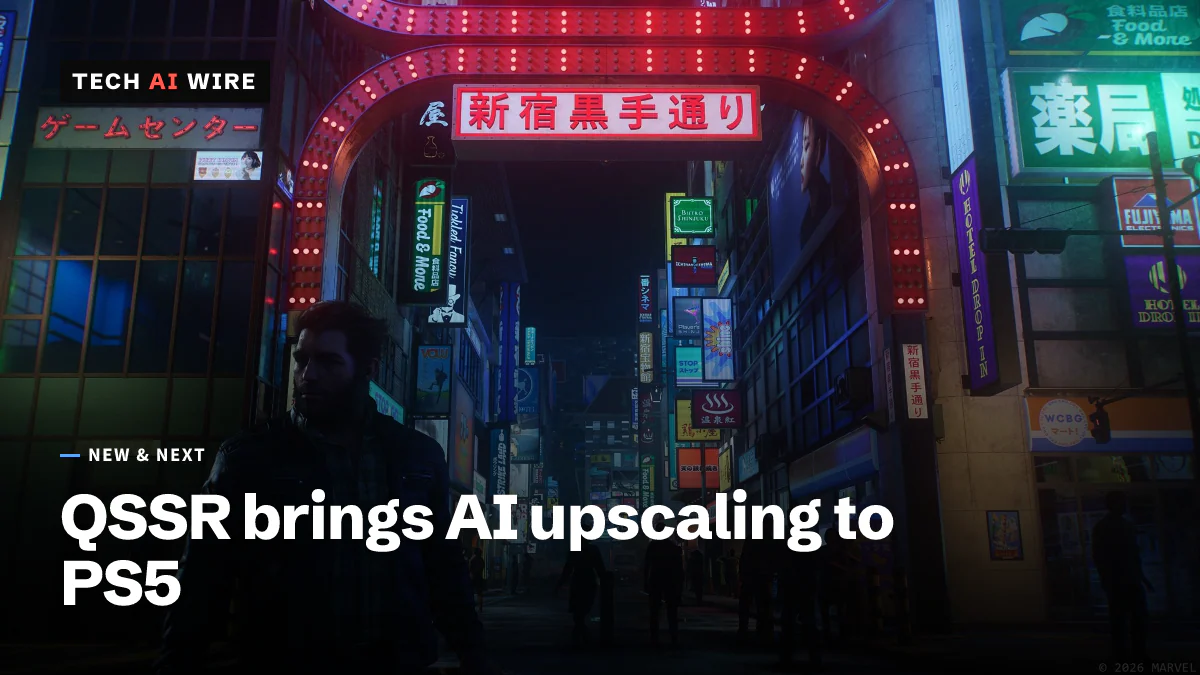
Sony's QSSR, built with AMD, brings PS5 Pro-style AI upscaling to the standard PS5. Marvel's Wolverine and Ghost of Yōtei added it on October 1.
3 min read
By the numbers
- games patched with QSSR on day one
- 2
- extra frame time in Wolverine, per TheSixthAxis
- 1.5-1.8ms
- the upscale TheSixthAxis measured in Wolverine
- 864p to 1440p
Sony announced Quick Spectral Super Resolution (QSSR) on October 1, 2026, an AI upscaler for the standard PlayStation 5. Until now, Sony's AI upscaling ran only on the more expensive PS5 Pro. QSSR gives the original console a lighter version of the same idea. Two games added it the same day: Marvel's Wolverine and Ghost of Yōtei.
Upscaling means a game draws each frame at a lower resolution and then enlarges it for the screen. That frees the graphics chip to run faster. An AI upscaler uses a small neural network to fill in the missing detail, so the result looks closer to a frame drawn at full resolution.
What QSSR is
QSSR comes from Project Amethyst, Sony's graphics partnership with AMD, according to the PlayStation Blog. The same project produced PSSR, the PlayStation Spectral Super Resolution upscaler on PS5 Pro. Gizmodo notes that PSSR 2 arrived on the Pro earlier in 2026.
Sony credits two changes for making QSSR fit the older console. One is a streamlined neural network. The other is a hand-tuned implementation written to get the most out of the PS5's hardware.
Sony does not claim QSSR matches the Pro. "PSSR remains the gold standard on PS5 Pro," said Daniel Craig, a principal engineer in PlayStation's graphics research group, as quoted by Gizmodo. QSSR still brings "notable improvements to both image detail and image stability on PS5," he said.
Why the base PS5 needed its own version
The standard PS5's graphics chip lacks INT8 support, according to TheSixthAxis. INT8 is a fast, low-precision number format that AI models often use. Without it, QSSR runs in FP16, a format with more precision that costs more time per calculation. That helps explain why Sony built a slimmer network rather than porting PSSR as is.
The price gap is why this matters to players. Gizmodo puts the PS5 Pro at $900 and the base PS5 without a disc drive at $600. The original console is now six years old.
The first two games
Insomniac's Marvel's Wolverine and Sucker Punch's Ghost of Yōtei were patched on October 1 with QSSR as an optional graphics setting, the PlayStation Blog says. Insomniac describes "more pixel-level clarity and stability." Sucker Punch says QSSR gives temporal stability, meaning less shimmer between frames, that "hasn't been possible on the PS5 console until now," according to Unite.AI.
TheSixthAxis looked at what the upgrade costs.
| Game | Comparison | Result, per TheSixthAxis |
|---|---|---|
| Marvel's Wolverine | QSSR vs. Insomniac's own upscaler, 864p to 1440p | 1.5-1.8ms more per frame, 8-10fps lower, still well above 60fps |
| Ghost of Yōtei | QSSR replacing AMD's FSR3 | No noticeable performance difference |
QSSR is not automatic. Each game needs its own patch, TheSixthAxis notes. Sony says it will offer the library broadly to all PlayStation developers.
What it could mean for PC
The work may not stay on consoles. Unite.AI reports that Project Amethyst's results also reach PC players through AMD's FSR 4 upscaler. TheSixthAxis suggests AMD may use similar techniques to bring FSR 4 to older Radeon RX 6000 graphics cards in early 2027. That is the outlet's reading, not an AMD announcement.
What this means for developers
For PS5 developers, QSSR is a new option to test, not a free upgrade. Budget the frame time first. Wolverine's 1.5-1.8ms is a real cost when a 60fps game has about 16.7ms per frame in total. Measure it against your current upscaler at the resolutions you actually ship.
Ghost of Yōtei shows the other path. Swapping QSSR in where FSR3 already ran cost almost nothing measurable. If your game already uses FSR3, start your tests there.
Ship it as a setting, the way both launch games did. Players can then pick sharpness or frame rate. Watch your crash and performance telemetry by console model after the patch.
For PC developers, the signal is AMD's direction. Upscaling now runs on a neural network even on older hardware, if the network is small enough. If FSR 4 reaches RX 6000 cards as TheSixthAxis expects, plan to support it on hardware your players already own.
Sources
Related articles
Fujitsu MONAKA ships 144 Armv9 cores in November
Fujitsu's 144-core MONAKA goes on sale in November, with 2nm cores stacked over 5nm cache and GCC 15 support already upstream.
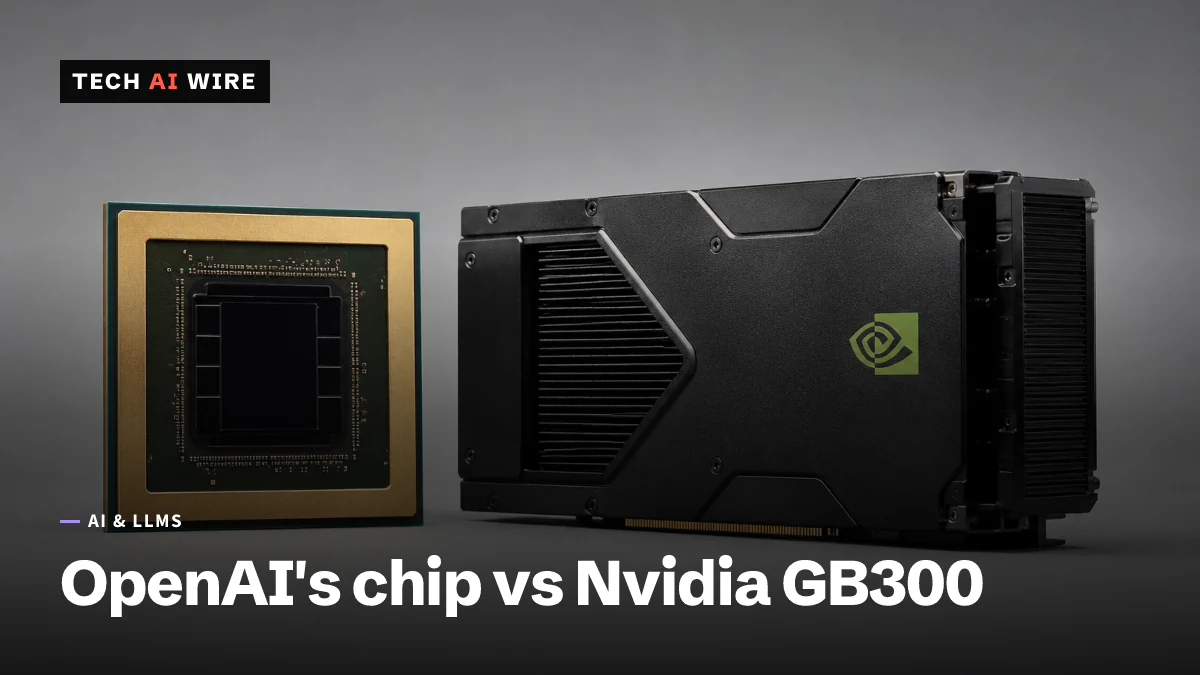
OpenAI says its Jalapeño chip beats Nvidia's GB300 per watt
OpenAI's first published Jalapeño benchmarks claim 1.5 to 1.9 times more work per kilowatt than Nvidia's GB300, at half the power. The numbers are OpenAI's own.
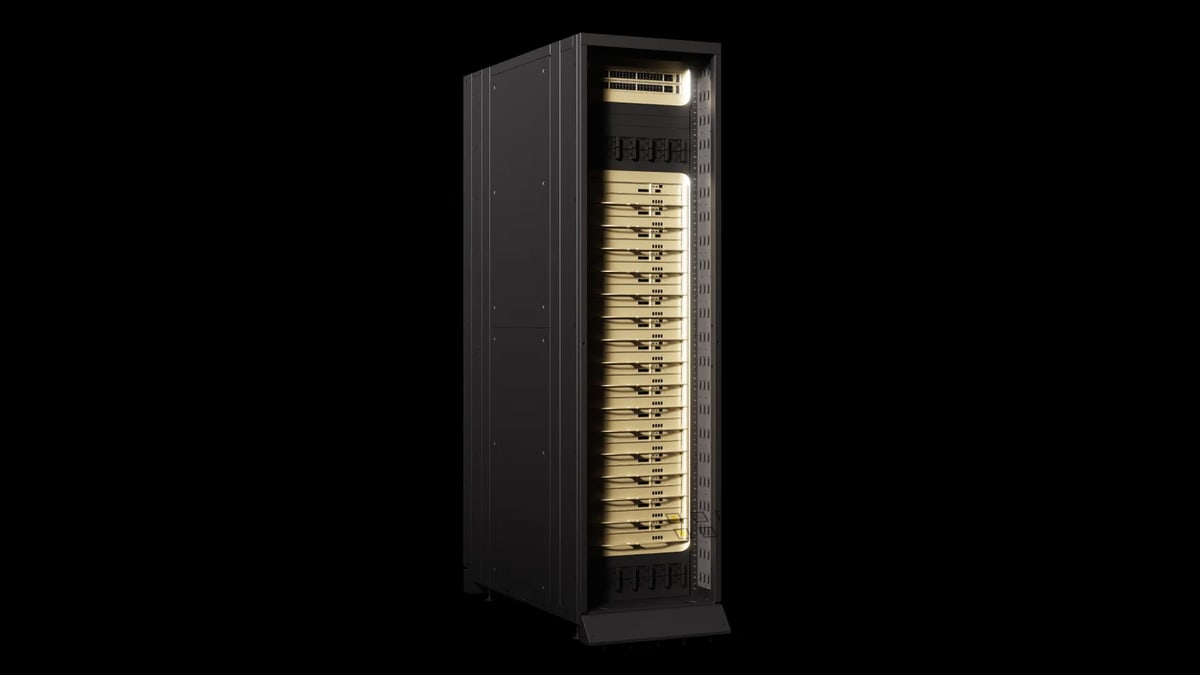
Nvidia's Groq 3 LPX inference chip enters full production
Nvidia put its dedicated inference accelerator into full production, splitting agent workloads so GPUs handle context and the new chips handle token generation.
The weekly digest
One email every Friday with the week's top stories from all six desks: AI, dev tools, coding, the tech industry, startups and what's next. Free, no spam.