Fujitsu MONAKA ships 144 Armv9 cores in November
Fujitsu's 144-core MONAKA goes on sale in November, with 2nm cores stacked over 5nm cache and GCC 15 support already upstream.
3 min read

By the numbers
- Armv9 cores in one MONAKA CPU
- 144
- memory speed, with up to 24 RDIMMs
- 8800 MT/s
- ambient temperature the air-cooled servers accept
- 40°C
- Air-cooled
- 2.1GHz
- Liquid-cooled
- 2.9GHz
- Maximum
- 3.8GHz
Fujitsu has formally announced MONAKA, a 144-core Arm server processor. The part developers can act on is already in place: Phoronix reports that GCC 15 carries upstream compiler support for it. The chip goes on sale in November 2026.
That ordering is unusual and welcome. Compiler support landing before the hardware means you can target this processor with a release compiler on day one. The usual wait is a year for the toolchain to catch up.
What the chip actually is
MONAKA is built as a 3D stack on two process nodes. Phoronix reports 2nm for the cores, with 5nm for the cache and the I/O, and 144 Armv9 cores in total.
The clock speed depends on how you cool it. Air-cooled parts run at 2.1GHz and liquid-cooled parts at 2.9GHz, with a maximum operating frequency of 3.8GHz. That is a deployment decision rather than a bin, so the cooling in your rack sets the clock you get.
Two Arm features do the work behind Fujitsu's performance pitch. StorageReview reports SVE2 and matrix instructions, which are the vector and matrix extensions that let a CPU do the multiply-heavy arithmetic inference needs.
Fujitsu says the chip "achieves twice the throughput for AI inference compared to other CPUs." Both reports note the comparison is unspecified, so treat it as a vendor claim until someone benchmarks it independently.
What you can buy, and when
The chip is sold on its own as well as inside Fujitsu's servers.
| Item | Detail |
|---|---|
| Standalone CPUs | On sale November 2026 |
| Servers | 2U all-in-one; 1U scalable, single or dual CPU; 2U multi-node with 4 nodes |
| Memory | 24 RDIMMs on the 2U and the dual-CPU 1U, 12 on the single-CPU 1U, at 8800 MT/s |
| Regions | Japan and Europe from November 2026, expanding April 2027 |
| Cooling | Air-cooled systems accept ambient temperatures up to 40°C |
The 40°C figure is the one that decides where this can go. Air cooling at that ambient temperature means a room that cannot host dense GPU racks can still host inference capacity. That is Fujitsu's argument about server count rather than raw speed.
What this means for developers
Check your compiler before you plan anything else. GCC 15 already carries MONAKA support upstream, so the question for your build is whether your distribution ships GCC 15 or something older. If you are pinned to an older toolchain in a container image, that pin is now the thing standing between you and the hardware.
Treat SVE2 as the porting question. Code that already uses SVE2 through a library or compiler auto-vectorization should benefit without changes, while anything hand-tuned for NEON or for x86 AVX will not. If you maintain numeric kernels, the useful preparation is knowing which of your hot paths have an SVE2 path at all.
Plan capacity around the cooling split, not the peak number. A 2.1GHz air-cooled part and a 2.9GHz liquid-cooled part are a 38% clock difference for the same silicon, so a benchmark taken on one configuration does not describe the other. Ask which configuration any number you are given came from.
The wider context is that Arm server silicon keeps arriving while the kernel sheds its past. This site covered the plan to remove 247,000 lines of old ARM platform code from Linux earlier this month. Those are two sides of one move: the old embedded Arm boards leave, and 144-core Arm servers with current compiler support take their place.
Finally, wait for independent numbers on the inference claim. Twice the throughput of unnamed CPUs is not something you can size a cluster against. The first real comparison will likely come from someone testing it against an Ampere or Graviton part.
Sources
Related articles
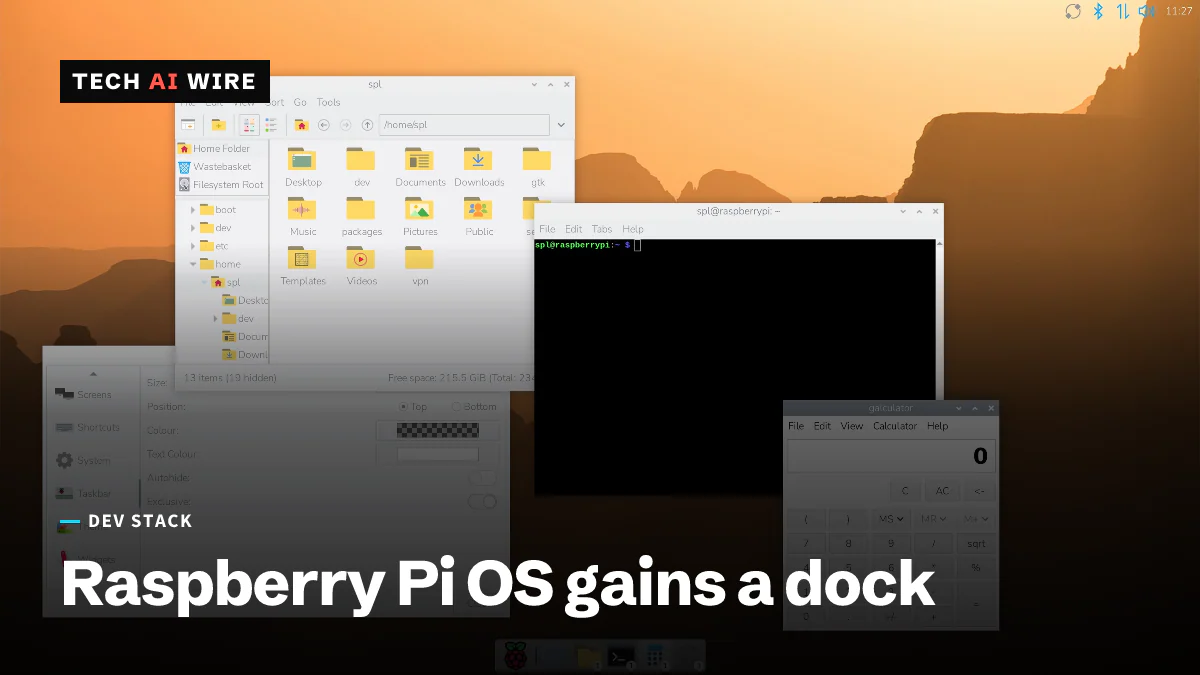
Raspberry Pi OS adds an icon dock and app launcher
A swaybg option trims memory on boards under 2GB, and the labwc desktop gains an optional icon dock, a search-driven launcher and a Control Centre.
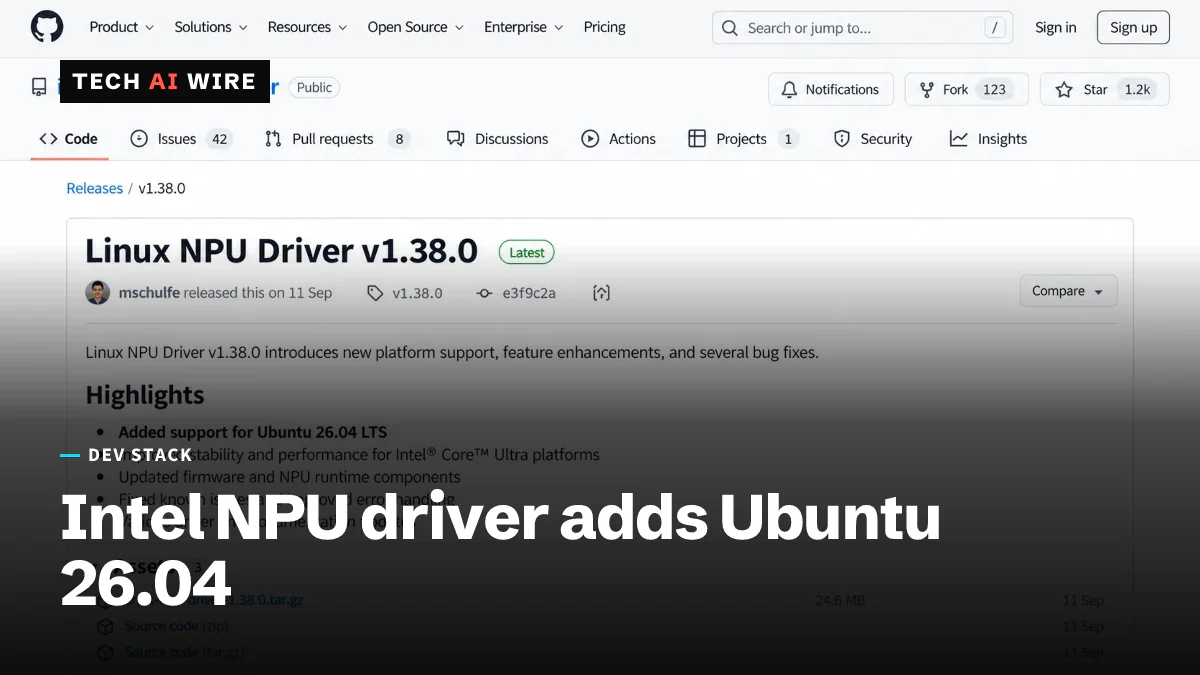
Intel's Linux NPU driver 1.38 adds Ubuntu 26.04 support
Intel's NPU driver 1.38 officially supports Ubuntu 26.04 LTS about five months late, with 322 tests passing across five processor generations.
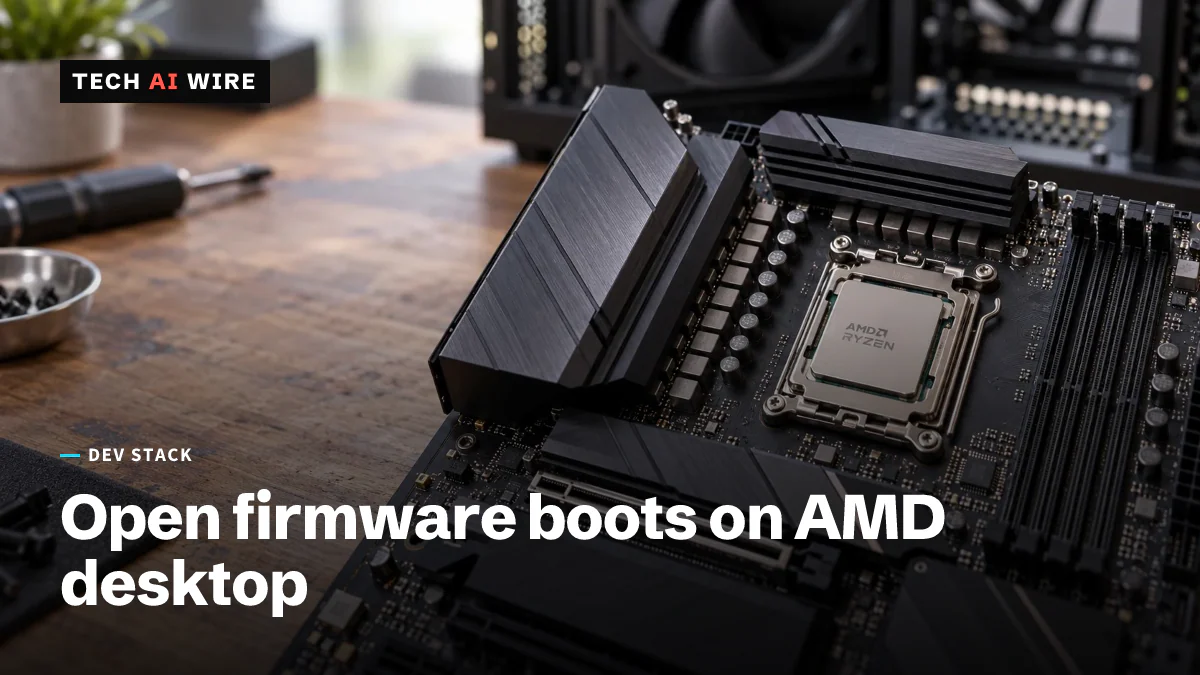
Open-source firmware boots on a consumer AMD desktop board
Coreboot and AMD's openSIL now run on the MSI B850P, a real desktop AM5 board. It cuts closed-source firmware code by 79.1%, but it ships as a paid product, not a free download.
The daily brief
Three to five stories a day, and what each one means for the people who build software. Free, no spam.