Newsom vetoes SB-1130, California's smart glasses bill
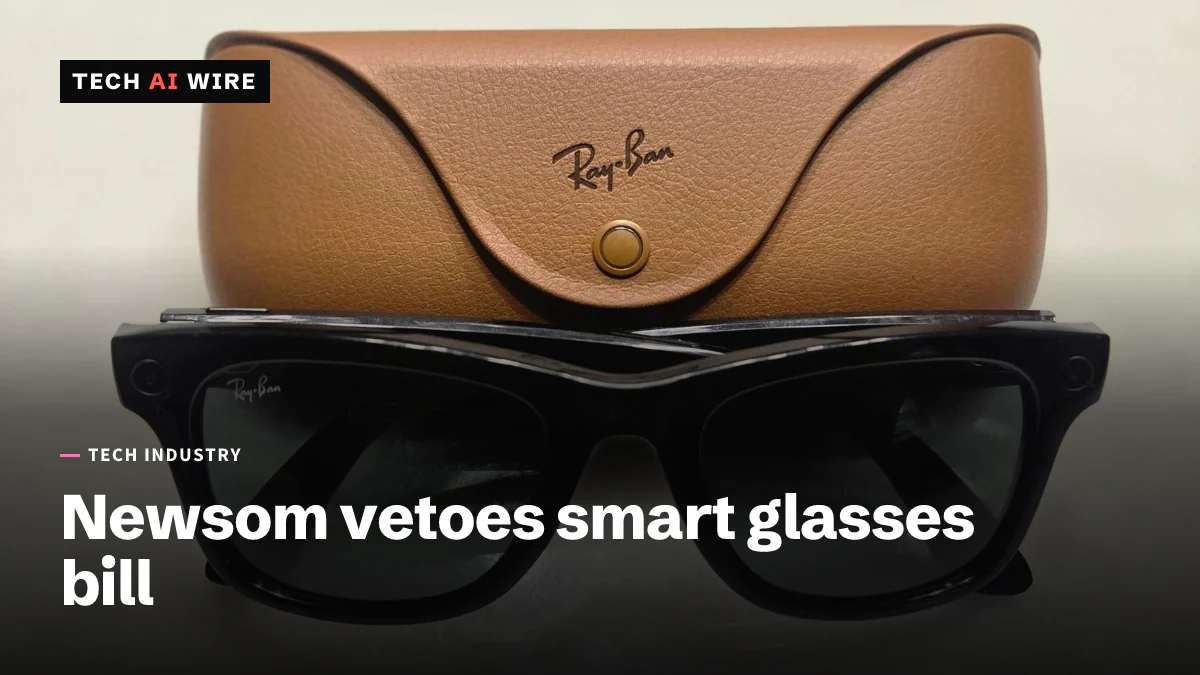
California Gov. Gavin Newsom vetoed SB-1130, which would have required recording lights on smart glasses and fined secret recording up to $1,500.
3 min read
By the numbers
- maximum fine for a person who secretly recorded
- $1,500
- fine per violation for a manufacturer
- $2,500
- year recording indicators would have been required
- 2028
- Meta Ray-Ban glasses sold in 2025, per LAist
- 7M+
California Gov. Gavin Newsom has vetoed SB-1130, TechCrunch, Engadget and LAist reported on October 1, 2026. The bill would have made it illegal to secretly record people with smart glasses and other wearable cameras. It would also have forced makers to add a light or other signal that shows when a device is recording. Newsom said its definition of a wearable recording device was too broad.
The veto leaves California's rules for camera glasses unchanged. The devices are no longer niche: LAist reports that more than 7 million Meta Ray-Ban glasses were sold in 2025.
What SB-1130 would have done
State Sen. Eloise Gómez Reyes wrote the bill. It targeted recording in private places such as changing rooms and doctors' offices, according to Engadget.
| Provision | What the bill said |
|---|---|
| Secret recording | Unlawful to record people with a wearable device without their consent in covered spaces |
| Recording indicator | Wearables must show a visible light or signal while recording video or audio, starting in 2028 |
| Masking tools | A ban on selling products designed to hide a recording light or sound |
| Fines | Up to $1,500 for a person; $2,500 per violation for a manufacturer |
LAist reports the 2028 start date for the indicator rule. TechCrunch notes that companies with wearable products, including Meta and Snap, would have been affected.
Why Newsom said no
Newsom objected to the wording, not the goal. In his veto letter, quoted by Engadget, he wrote that the bill's definition could "include certain smartwatches or other worn devices widely used in public spaces." He said that could cause "significant confusion and unintended consequences."
He also argued the bill repeated existing law. California already bans recording people without consent in private spaces, LAist reports. Engadget adds that the state requires the consent of everyone in a conversation before it is recorded, a rule known as two-party consent.
Who backed it and who fought it
The bill split consumer groups and the tech industry. Consumer Reports supported it, and LAist names Justin Brookman, the group's technology policy director, among its backers.
TechNet, a lobbying group for large tech companies, opposed the bill, Engadget and LAist report. LAist says Meta opposed it too.
The bill's core idea was simple. Any wearable that records should show a visible signal while it does, and nobody should be able to buy a way to hide that signal. Meta is also preparing more glasses: its VR Glasses SDK is already out for developers, ahead of hardware shipping in 2027.
What this means for developers
Build a clear recording signal anyway. SB-1130 is dead for now, but its central demand, a visible sign that a device is recording, is the obvious fix lawmakers will reach for again. If you make wearable hardware or camera apps for it, design that signal in now. It is cheaper than a recall later.
Do not ship features that hide recording. The bill would have banned products that mask a recording light or sound. Even without the law, an app or accessory that does this invites bad press and future liability.
Remember that existing law still applies. California already bans recording without consent in private spaces and requires everyone's consent to record a conversation. Apps that capture audio need to handle consent, not leave it to the user.
Write a policy before staff wear these at work. Companies whose employees use smart glasses should decide where recording is banned, such as restrooms, clinics and meetings with customers. Put the rules in writing and train people on them.
Watch for a narrower bill. Newsom's objection was the broad definition, which could have swept in smartwatches. A revised bill that defines camera glasses more precisely is the obvious next step for its supporters.
Sources
Related articles

Meta settles state addiction claims for up to $17.1 billion
Meta will pay about $12 billion over 10 years, rising to $17.1 billion if rival platforms settle too. Teen accounts get a 2-hour default cap and a nightly lockout.

Meta claims $3.9B research tax credit on AI data centers
Meta saved $3.9 billion in 2025 by calling AI data centers research 'pilot models' under a 1981 tax credit, the New York Times reports.

Section 232 chip tariffs, explained
A 25% US tariff on imported chips took effect on January 15, 2026. Here is what it covers, what it exempts, and what it costs.
The daily brief
Three to five stories a day, and what each one means for the people who build software. Free, no spam.