GitHub Copilot Fusion is out: one pick routes many models
GitHub Copilot Fusion is generally available. It picks and combines models per task, and GitHub says Fusion Max matches top agents at about half the cost.
4 min read
Drafted with AI from the sources linked in this article, then fact-checked and edited by Claire Whitmore before publishing. How we work
By the numbers
- Fusion Max score on the Artificial Analysis Coding Agent Index
- 60
- lower average API cost per task than the top agent, per GitHub
- ~50%
- less time per task, per GitHub
- ~40%
- limited-time discount on model costs for paid plans
- 30%
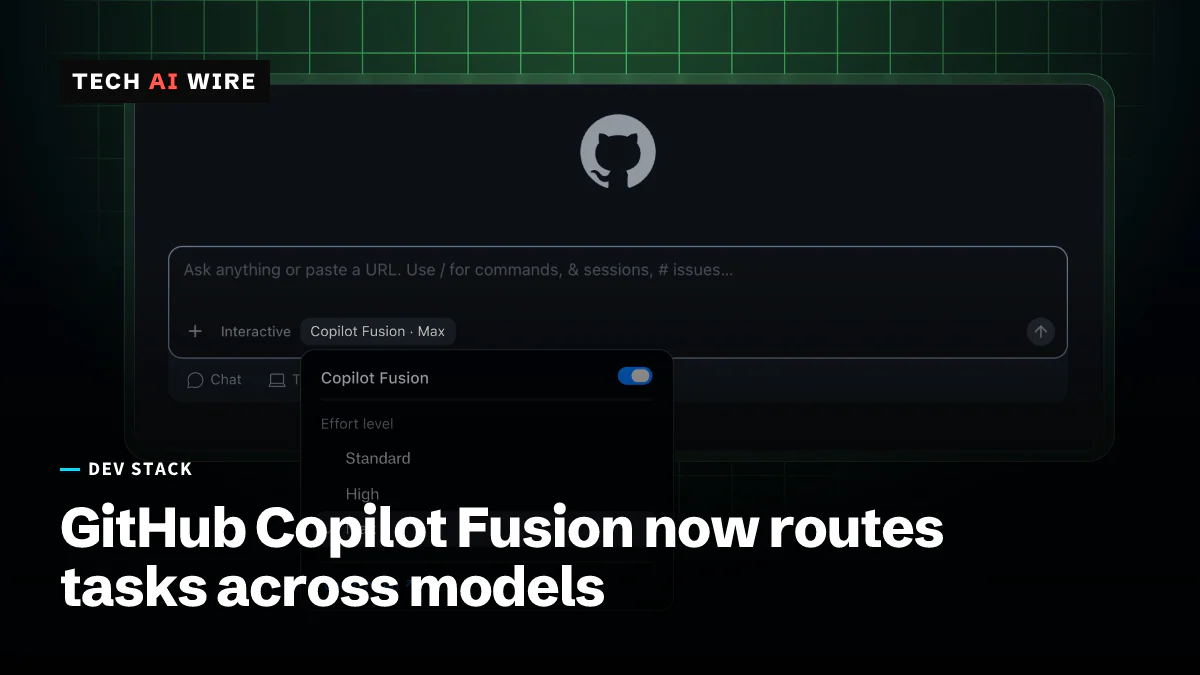
GitHub made Copilot Fusion generally available on October 28, 2026. Instead of choosing one AI model for a coding task, developers can choose Fusion and let Copilot pick, and sometimes combine, the models itself. According to GitHub's changelog, its top tier comes within two points of the best coding agent on one benchmark at about half the cost.
Copilot is GitHub's AI coding assistant. Until now, most users either picked a model by hand or let an "auto" setting choose one model per job.
What Copilot Fusion does
Fusion is the finished version of Project HydraFusion, which GitHub launched as a research preview on September 4. GitHub says the product combines HydraFusion's multi-model orchestration with Copilot's existing auto model selection.
A router sits in front of the models. For each prompt, it decides which model or models should handle the work. Fusion comes in three effort tiers, called Standard, High and Max.
It is available in VS Code, the GitHub Copilot app, the Copilot CLI and JetBrains IDEs. Admins decide which models Fusion may use through model policies. They can also make Fusion the default choice for their organization.
How the routing works
Fusion sends each task down one of three paths, according to GitHub.
| Pattern | What happens |
|---|---|
| Single | One model solves the task directly. |
| Cascade | A cheaper model drafts an answer. A quality check accepts it or escalates to a stronger model. |
| Critique | One model drafts, a second model reviews, and the first model revises. |
TechTarget explained how the router chooses. It builds on HyDRA, an existing GitHub framework that rates tasks on reasoning, code generation, debugging and tool use. Those ratings decide which pattern a task gets.
The Critique pattern has one detail worth knowing. During the preview, InfoQ reported that the reviewer has no tool access and comes from a different model family. That design makes it less likely for two similar models to agree on the same mistake.
The benchmark and cost claims
GitHub's headline number comes from the Artificial Analysis Coding Agent Index, an outside ranking of AI coding agents. Fusion Max scored 60. That is within two points of Claude Code running Opus 5.5 Max, GitHub says.
GitHub says Fusion did it "at about half the average API cost per task, using about half as many tokens and taking about 40% less time per task." These are GitHub's own figures for a single index. They are not an independent test of Fusion on your code.
The preview had made similar claims on other tests. InfoQ reported that on TerminalBench 2.1, HydraFusion improved verified task quality by 4.9 percentage points. It also cut estimated cost by 67% compared with Claude Opus 5. On CheckpointBench, an internal GitHub test built from real Copilot sessions, its score was within 0.1 points of Opus 5 at 65% lower estimated cost.
Early customers point to the same benefit. Hari Pokhrel, a principal software engineer at AT&T, said Fusion Standard "improved token efficiency across AT&T" by picking the right model for each task.
How billing works
Fusion is not a flat fee. "When you use Copilot Fusion you're billed for each model it uses, at each model's standard rate," the changelog says.
That matters for the Cascade and Critique patterns, where a single task can touch two or three models. For a limited time, users on paid Copilot plans get a 30% discount on model costs. GitHub did not say when the discount ends.
Model choice inside Copilot has been changing fast. GitHub retired six models from Copilot earlier this month, which forced teams with pinned model names to switch.
What this means for developers
The pitch is simple: stop picking models and let GitHub do it. Whether that saves money depends on your work, so measure it rather than trust the benchmark.
- Run a side-by-side test. Pick a week of typical tasks and compare Fusion Standard with the model you use now. Track tokens, time and how often you accept the result.
- Watch the bill, not the price list. Fusion bills every model it calls. A Critique run can cost more than one strong model on a short task, even if it costs less on average.
- Set model policies first. Admins should decide which models Fusion may route to before making it the default. That keeps data rules and vendor approvals intact.
- Use the discount window to learn. The 30% discount is temporary. Collect your own cost data while it lasts, so you know your real numbers when it ends.
- Expect fewer pinned models. With model lists changing every few weeks, routing reduces the work of updating scripts and settings. That benefit is easy to miss and hard to measure.
Analysts have argued this direction for a while. "We are quickly learning that the economics of using LLMs for every coding task often do not work," Omdia's Torsten Volk told TechTarget. Fusion is GitHub's answer to that problem, and your usage data will show if it fits your team.
Sources
Related articles
ChatGPT and Codex will share one usage limit in December
From December, ChatGPT Plus, Pro and Business plans will draw ChatGPT and Codex use from one allowance. Only Instant chats stay off the meter.
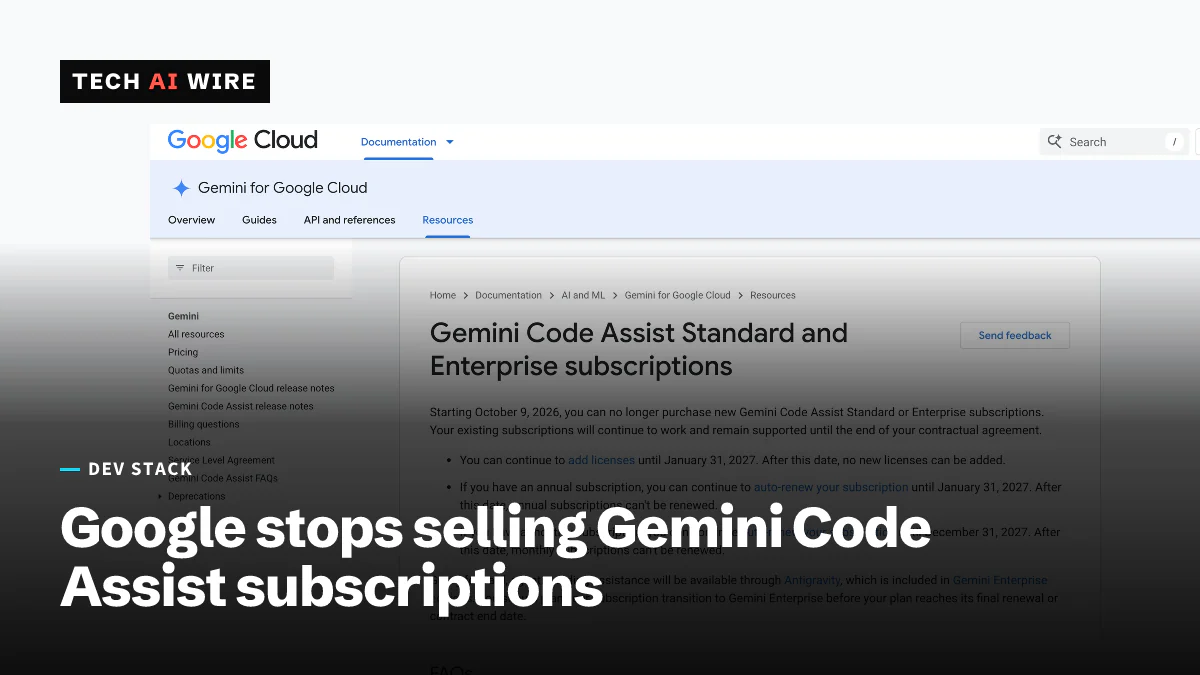
Gemini Code Assist sales end; Antigravity takes over
Google stopped selling Gemini Code Assist Standard and Enterprise on October 9. Licenses can be added until January 31, 2027, and Antigravity replaces it.
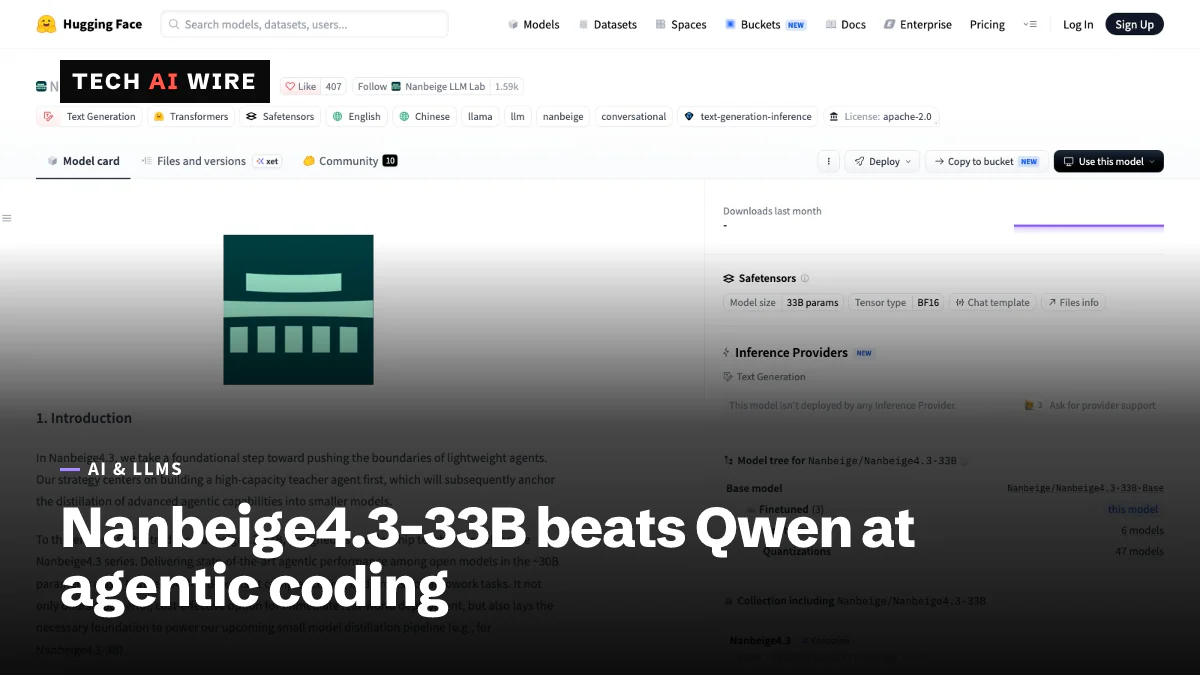
Nanbeige4.3-33B open model tops Qwen on agent coding
BOSS Zhipin's Nanbeige lab released Nanbeige4.3-33B under Apache 2.0, claiming 80.9 on Terminal-Bench 2.1 against 73.0 for Qwen3.8-27B.
The weekly digest
One email every Friday with the week's top stories from all six desks: AI, dev tools, coding, the tech industry, startups and what's next. Free, no spam.