Eka Robotics raises $150M at $1.45B for force-aware robots
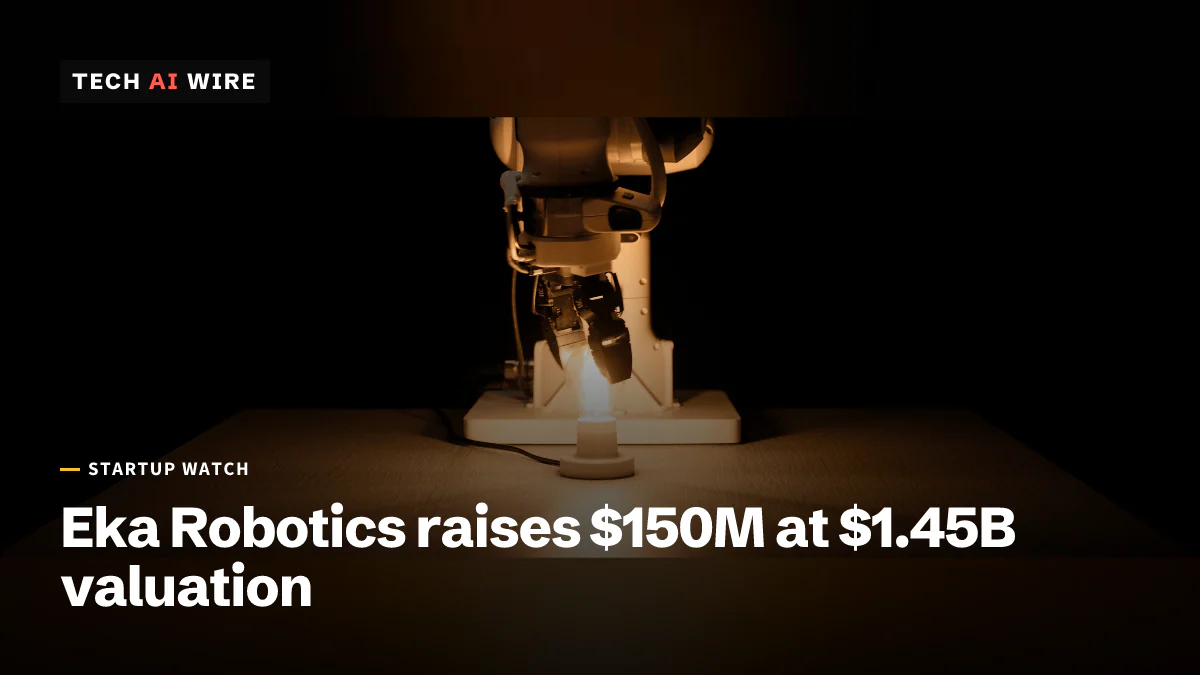
Eka Robotics raised $150M at a $1.45B valuation, led by a16z and F-Prime, for robots that grip by feel and pick about 1,500 items an hour.
3 min read
By the numbers
- Series A, led by a16z and F-Prime
- $150M
- picks an hour Eka claims, against about 600 for a person
- 1,500
- cost of Eka's custom gripper hardware
- <$1,000
- Eka robot
- 1500 items
- Human worker
- 600 items
Eka Robotics, a startup that builds robots able to grip objects by feel, has raised a $150 million Series A at a $1.45 billion valuation. TechCrunch reported the round on October 20, 2026. Andreessen Horowitz (a16z) and F-Prime, an affiliate of Fidelity's parent company, led it. The bet is that a robot that senses force can handle unfamiliar objects faster than one that mostly relies on cameras.
The valuation is post-money, meaning it includes the new cash. Eka's seed lead investors, Obvious Ventures and E14 Fund, also joined the round.
What Eka builds
Eka's core product is what it calls a vision-force-action (VFA) model. Most robot AI today uses vision-language-action models, which turn camera images and text instructions into arm movements. Eka adds force data from sensors in its own gripper, the robot's hand.
That lets the robot react to touch. If an object starts to slip, the robot can change its grip mid-task, SiliconANGLE reports. "The actual grabbing, the actual searching is happening through forces," co-founder Pulkit Agrawal told TechCrunch.
Eka trains its robots mostly in simulation. A physics simulator models grasp forces, and the robot learns by trial and error, a method called reinforcement learning. The company says this yields "thousands of hours of robot experience in minutes." The skills are then moved onto real hardware.
That is a different path from some rivals. Mecka AI, which raised $60 million this month, pays people to record everyday tasks so robots can copy them. Eka's announcement argues that imitation alone does not hold up at speed.
The numbers Eka claims
All of these figures come from the company, as reported by TechCrunch and SiliconANGLE. None has been independently verified.
| Claim | Figure |
|---|---|
| Picks per hour on objects it was not trained on | About 1,500 |
| A human worker on the same task | About 600 |
| Pick success rate | More than 95% |
| Heaviest object handled | 1 kg |
| Gripper hardware cost | Less than $1,000 |
| Gripper rated life | 5 million cycles, aiming for 20 million |
The 20 million target matches what standard industrial arms are built for, SiliconANGLE notes. Demos so far include screwing in a light bulb, inserting wires, packing strawberries and assembling GPU server racks.
Kris Hauser, a professor at the University of Illinois Urbana-Champaign, told TechCrunch the system "was able to adapt to a large number of different objects without retraining." Raghu Raghuram, the a16z general partner who co-led the deal, said Eka is "already exceeding superhuman performance for certain tasks."
Who is behind it
Agrawal is an MIT professor who leads the university's Improbable AI Lab. His co-founder, Tuomas Haarnoja, came from Google DeepMind, where his team trained small humanoid robots to play soccer. The two met as graduate students at UC Berkeley, according to TechCrunch.
Eka raised its seed round in May 2025. PitchBook puts it at $11 million, SiliconANGLE reports. The company is based in Cambridge, Massachusetts, per TechFundingNews.
Eka says it will use the money to extend its model to more tasks and to speed up customer rollouts. It is running pilots with industrial customers in picking and wire handling, but has not named them.
What this means for developers
For teams that run warehouses or factory lines, Eka's pitch is a robot that handles new items without retraining. That is the expensive part of automation today. Still, every number here is a company claim from demos and early pilots.
If you are evaluating picking robots, ask any vendor for data from a production line, not a demo. The useful questions are concrete: picks per hour across a full shift, the failure rate on your own products, and the weight limit, which for Eka is 1 kg.
Budget for wear too. A gripper rated for 5 million cycles, against an industry norm of 20 million, may need replacing sooner. Its sub-$1,000 cost softens that.
For robotics developers, the round is a signal about method. Investors are now paying unicorn prices for touch sensing and simulation training, not only for camera-and-language models.
Watch for the proof point TechFundingNews names: a customer running Eka's robots on a production line for months. Eka put it plainly in its own announcement: "generality without performance isn't a product. It's a lab demo."
Sources
- Eka is worth $1.45B thanks to a physical AI model that has experts raving - TechCrunch
- Eka Robotics raises $150M to build superhuman intelligence for the physical world - Eka Robotics
- Eka Robotics nets $150M at a $1.45B valuation for robot hands that sense force - SiliconANGLE
- Eka Robotics raises $150M at $1.45B valuation led by a16z and F-Prime for dexterous robots - TechFundingNews
Related articles

Warp Sciences raises $215M to automate drug chemistry
Warp Sciences, led by ex-OpenAI product chief Kevin Weil, raised a $215M Series A at an $865M valuation to build AI and robot chemistry labs in the US.
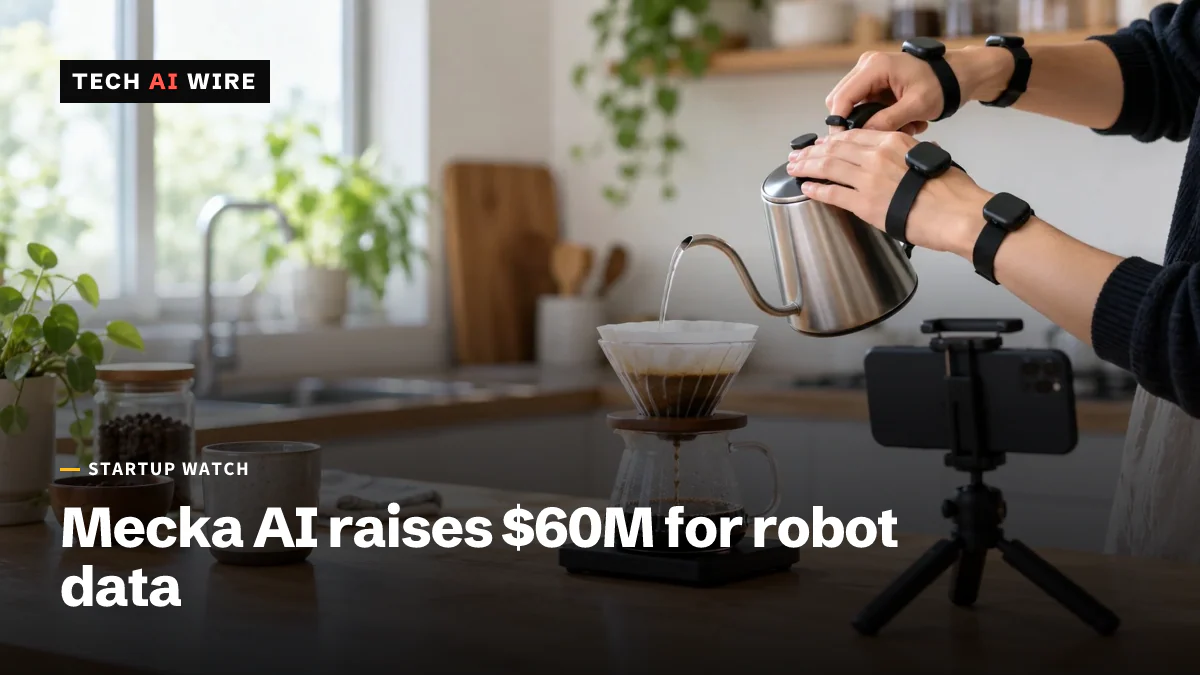
Mecka AI raises $60M from Sequoia for robot training data
Mecka AI raised a $60M Series B led by Sequoia, with Nvidia and M12. The startup pays people to record everyday tasks with body sensors to train robots.
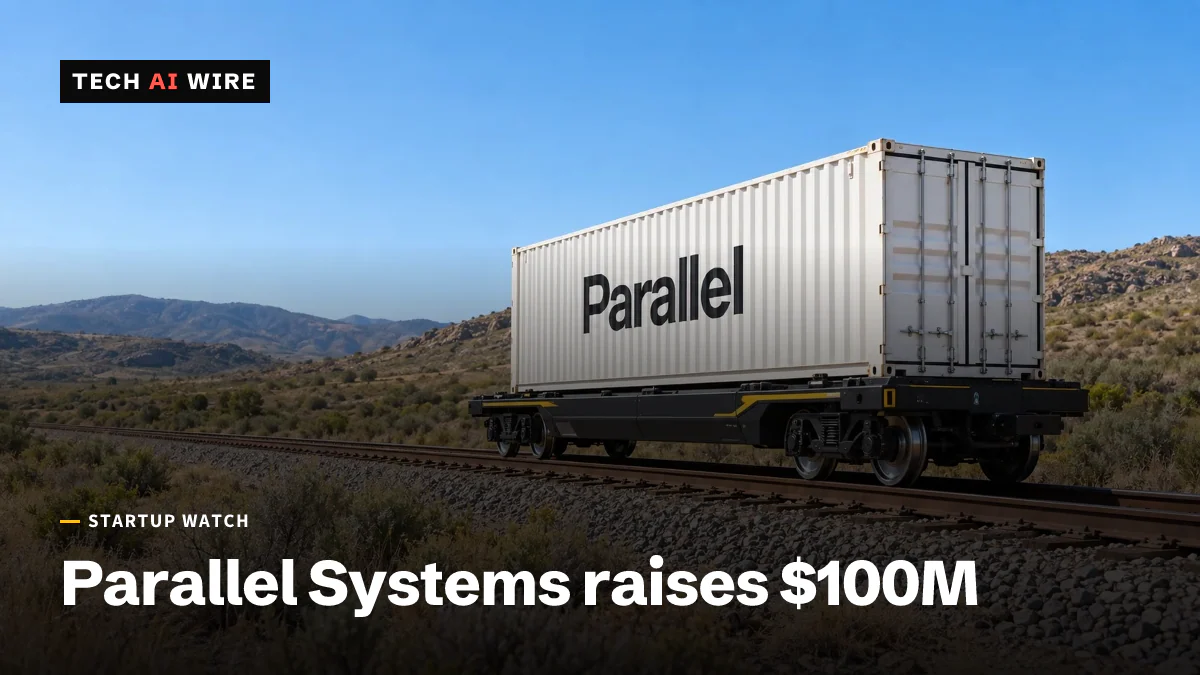
Parallel Systems raises $100M for driverless freight rail
Parallel Systems, founded by ex-SpaceX engineers, raised a $100M Series C led by AVP to build battery-powered rail vehicles that run without drivers.
The weekly digest
One email every Friday with the week's top stories from all six desks: AI, dev tools, coding, the tech industry, startups and what's next. Free, no spam.