Dev Stack
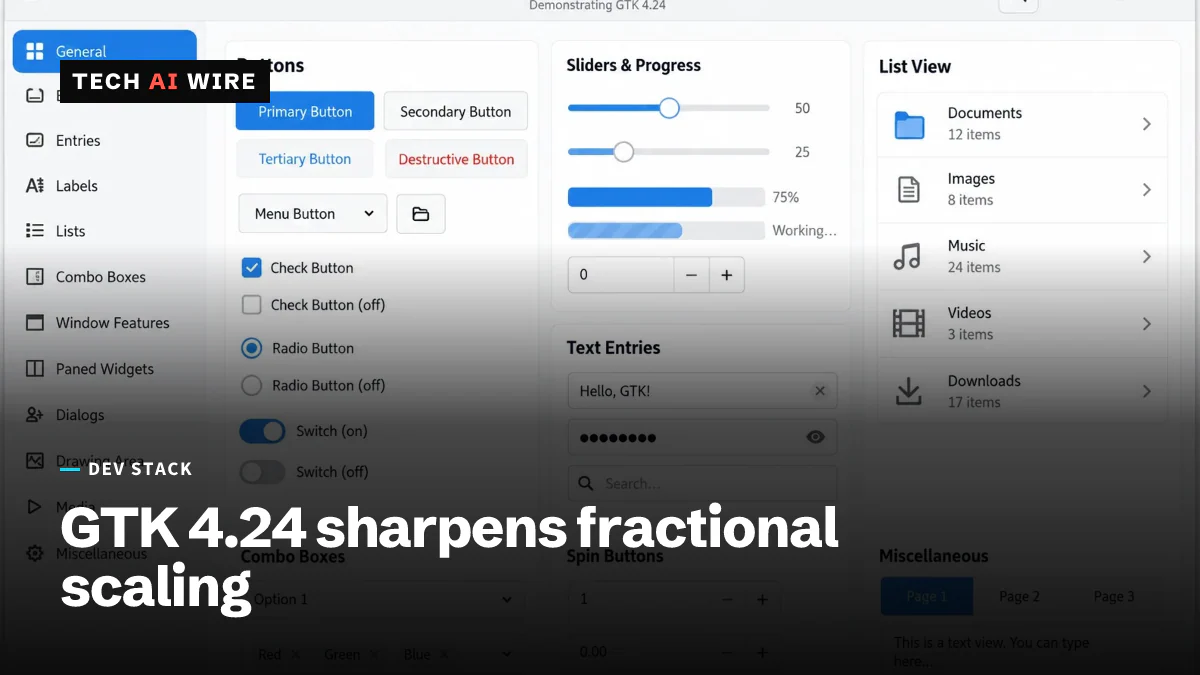
GTK 4.24 sharpens fractional scaling and frame timing
GTK 4.24 snaps content to whole screen pixels for sharper fractional scaling, reworks the frame clock, and pushes session restore back to 4.26.
The latest Open Source coverage on Tech AI Wire.
GTK 4.24 snaps content to whole screen pixels for sharper fractional scaling, reworks the frame clock, and pushes session restore back to 4.26.
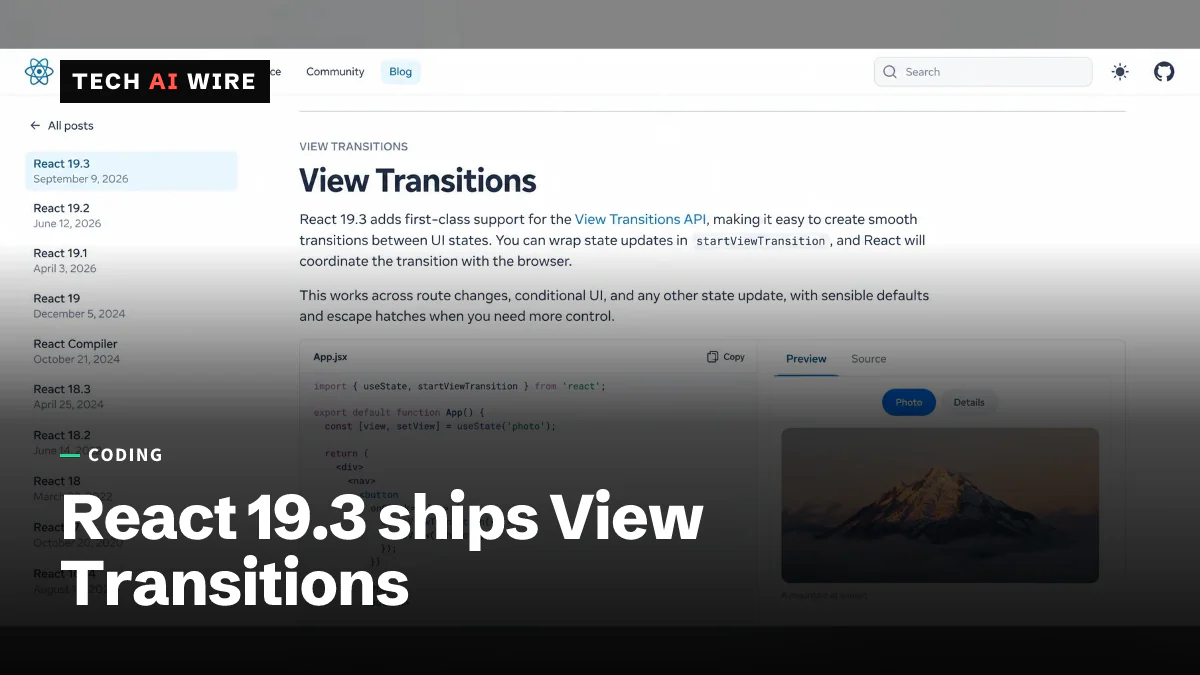
React 19.3 shipped on September 9, 2026. View Transitions and Fragment Refs are now stable, and the release carries no breaking changes.
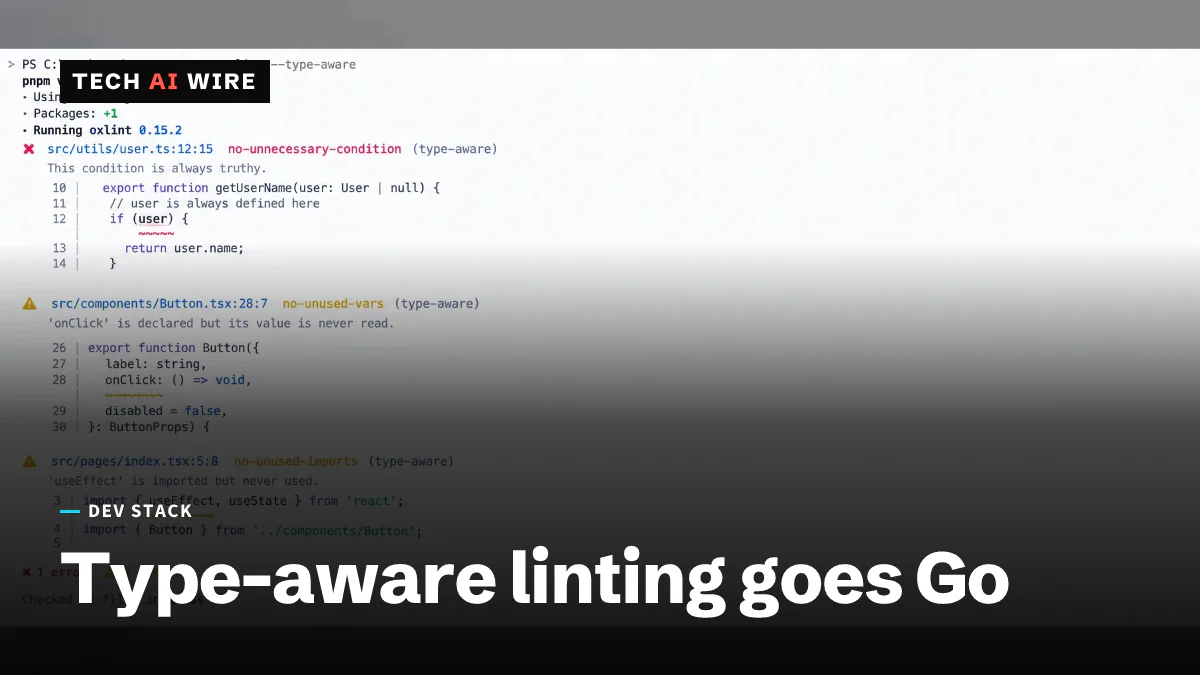
tsgolint v7 runs typescript-eslint's type-aware rules in Go. It covers 59 of 61 rules, and the project's own two speed claims do not agree.
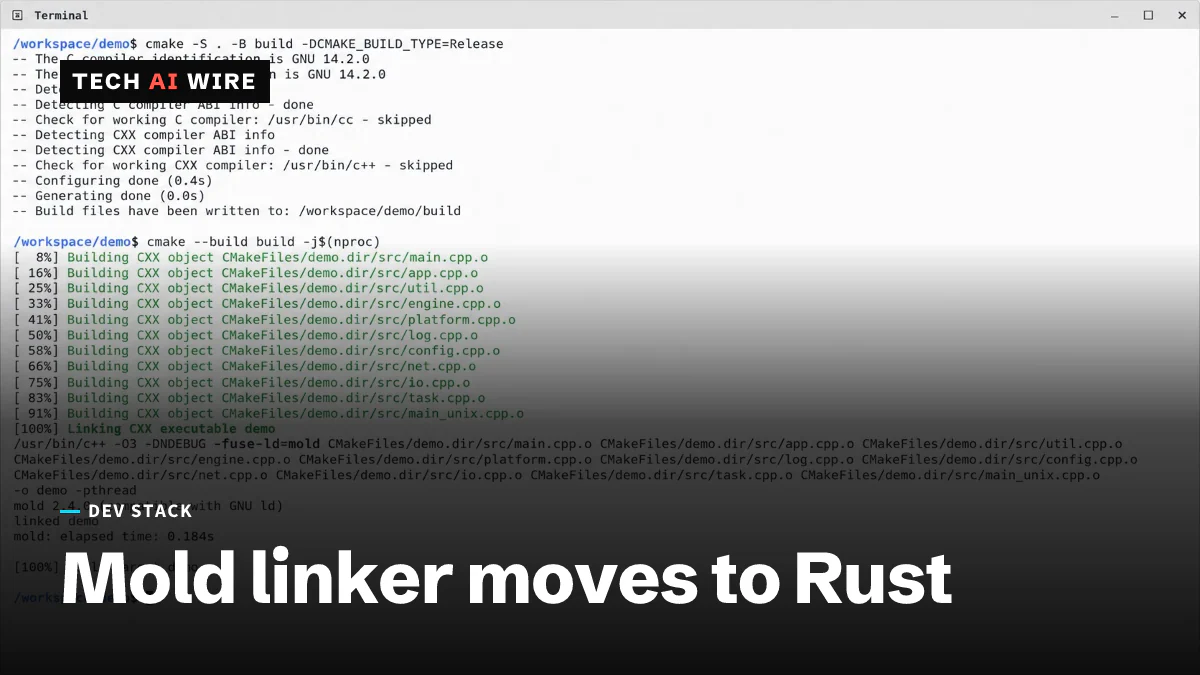
Mold links 4.9x faster than LLVM lld. Its author is rewriting it in Rust and wants distributions to install it as the default linker, /usr/bin/ld.
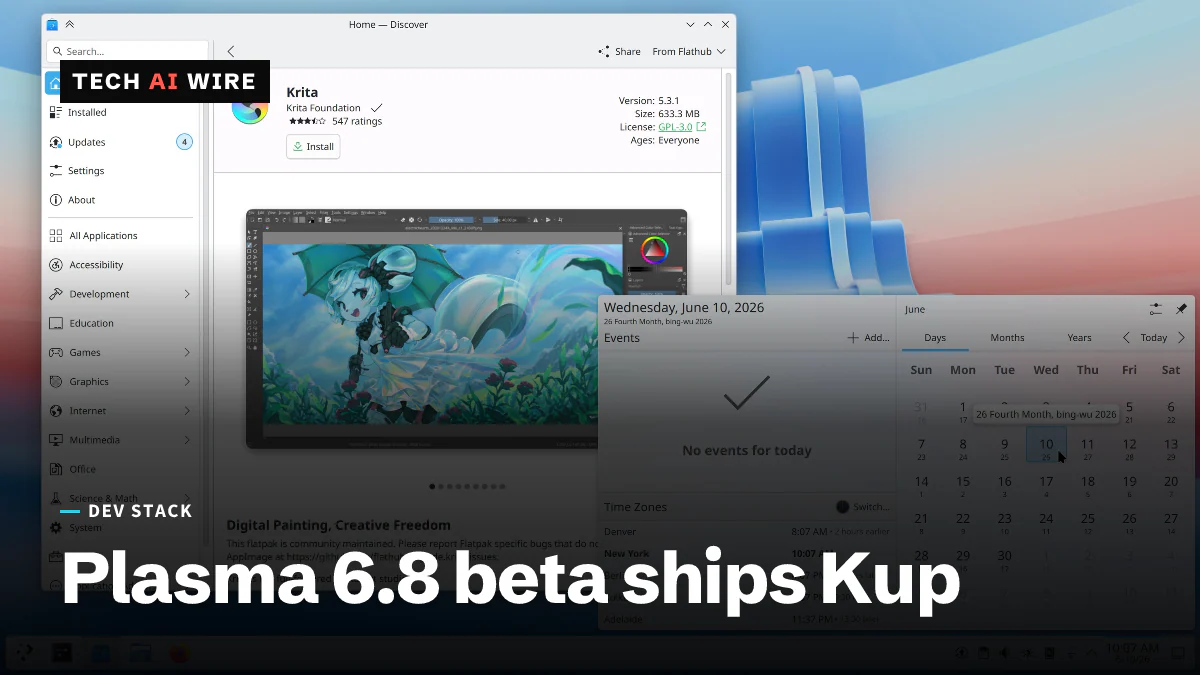
KDE shipped the Plasma 6.8 beta as version 6.7.90 on September 10, 2026. It adds Kup as the desktop's backup scheduler, with stable due October 14.
GNU Automake 1.19, its first release in 15 months, fixes a 14-year-old bug that broke concurrent commands like make dist-bzip2 dist-xz.
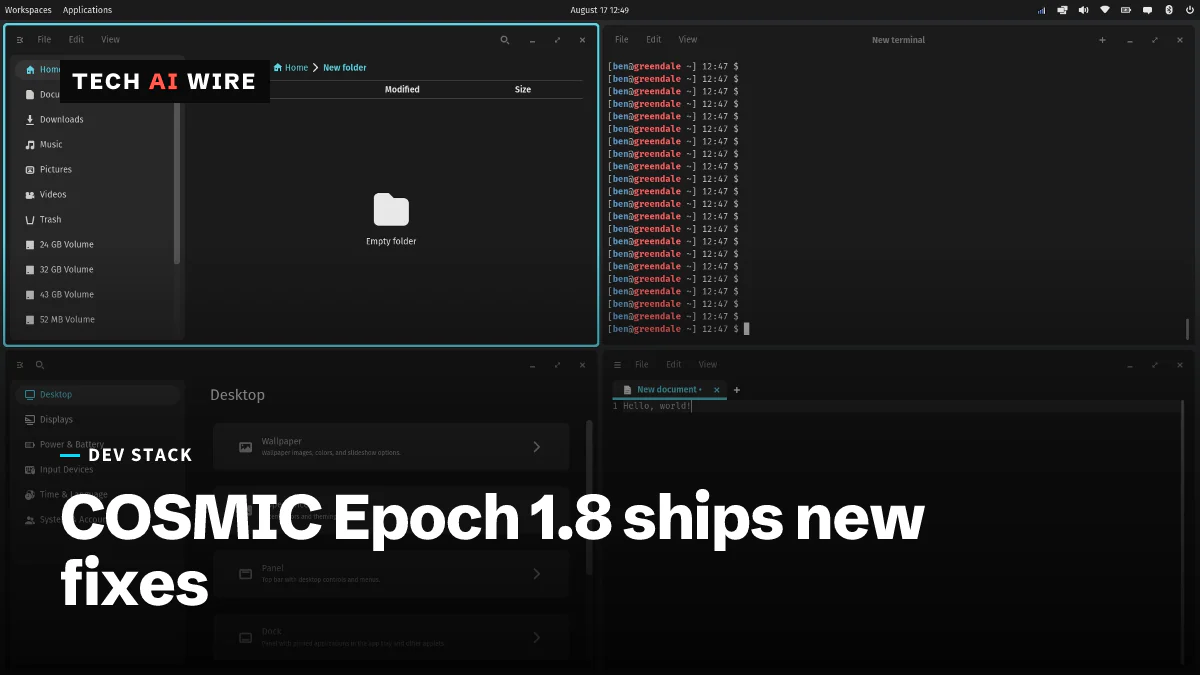
COSMIC Epoch 1.8 shipped two weeks after 1.7 with tablet grab support and Bluetooth device renaming, but System76's own changelog is still pending.
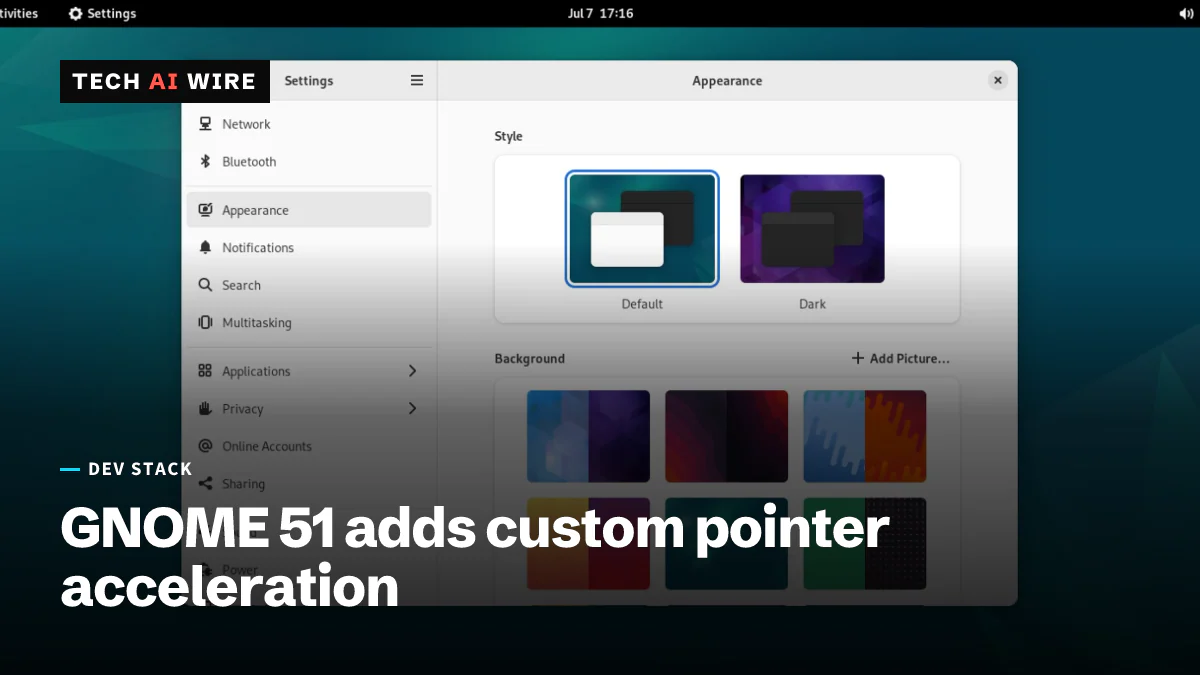
GNOME 51, shipping September 16, 2026, lets users define a custom pointer acceleration curve instead of picking one fixed speed profile.

Coreboot and AMD's openSIL now run on the MSI B850P, a real desktop AM5 board. It cuts closed-source firmware code by 79.1%, but it ships as a paid product, not a free download.

A Red Hat engineer got the open-source Nouveau driver and NVK running on Nvidia's DGX Spark GB10. It took about 100 patches, and upstreaming isn't settled yet.
YSERVER 1.5, an X11 server written from scratch in Rust, adds Reverse PRIME multi-GPU support and 40 other fixes. Claude Code helped write its early code.
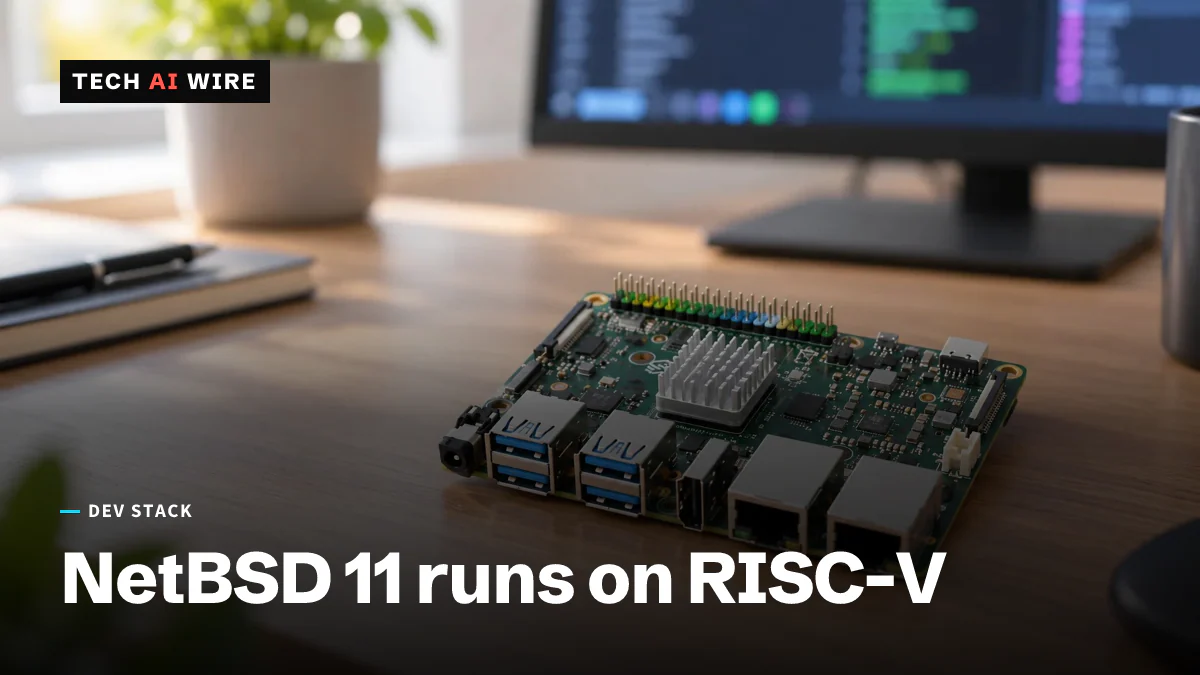
NetBSD 11.0 boots a virtual machine in about 10 ms with its new MICROVM kernel. It is also the first stable release to run on 64-bit RISC-V boards.
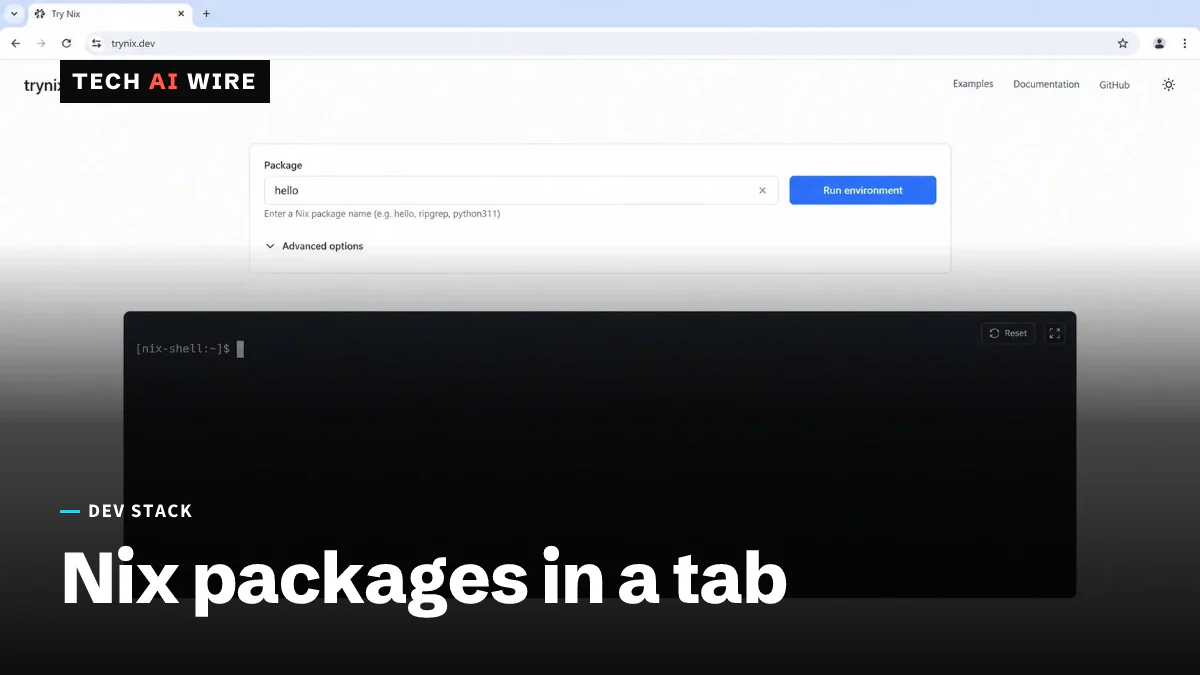
TryNix boots a Linux kernel compiled to WebAssembly and runs any of 310,083 nixpkgs versions in a tab. Python 3 takes 7.5 seconds on a first visit.
An LLVM RFC proposes compiling ClangIR into Clang by default. Nobody would use it without a flag, but some estimates put build times at more than double.
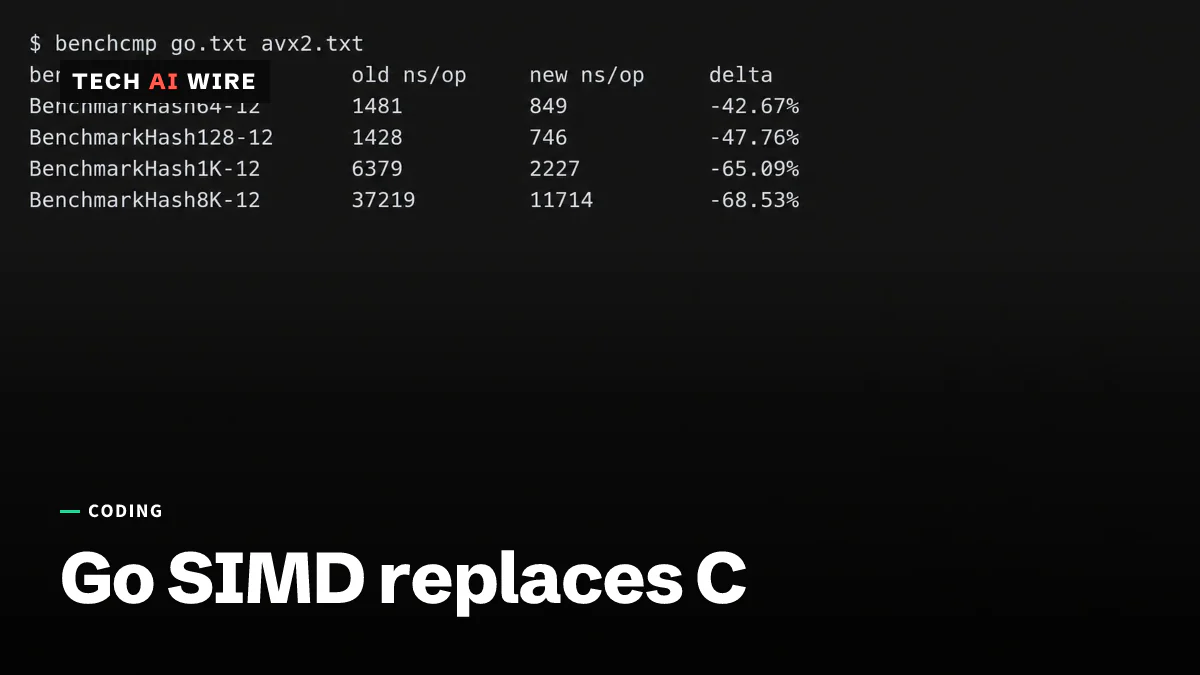
Michael Stapelberg replaced a 7-year-old C library with pure Go using the experimental SIMD package, and matched the C version's speed.
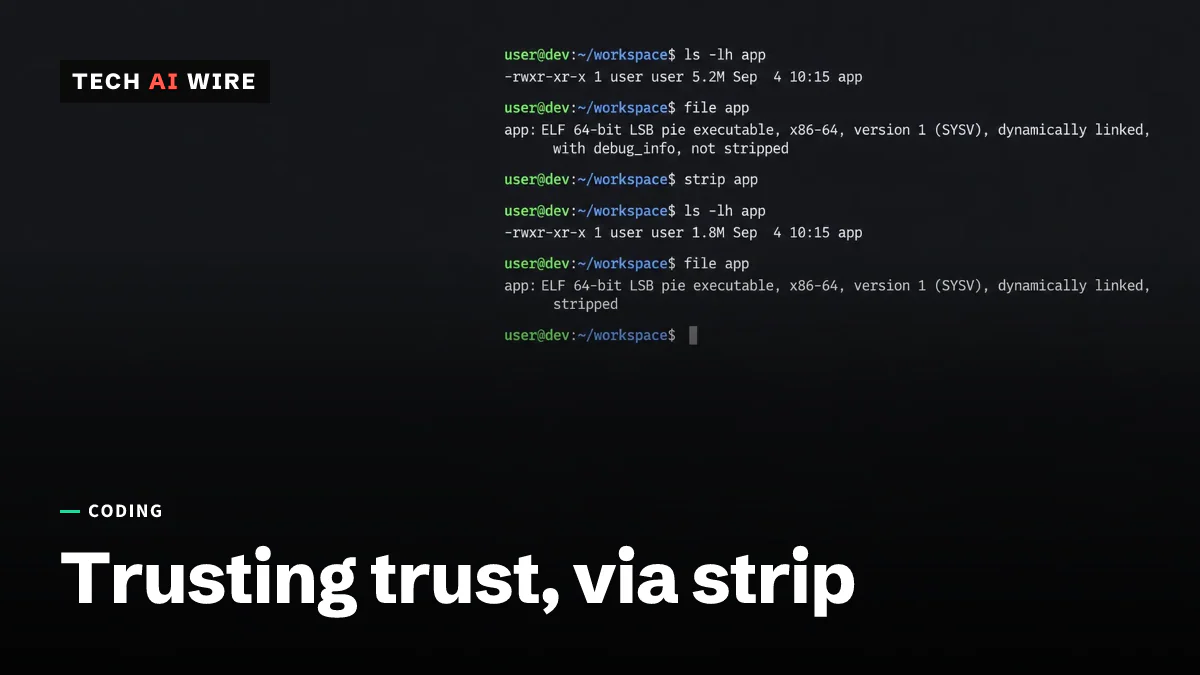
Researchers built Ken Thompson's trusting-trust attack out of GNU strip, not a compiler, and used it to backdoor almost every binary in a NixOS installer.
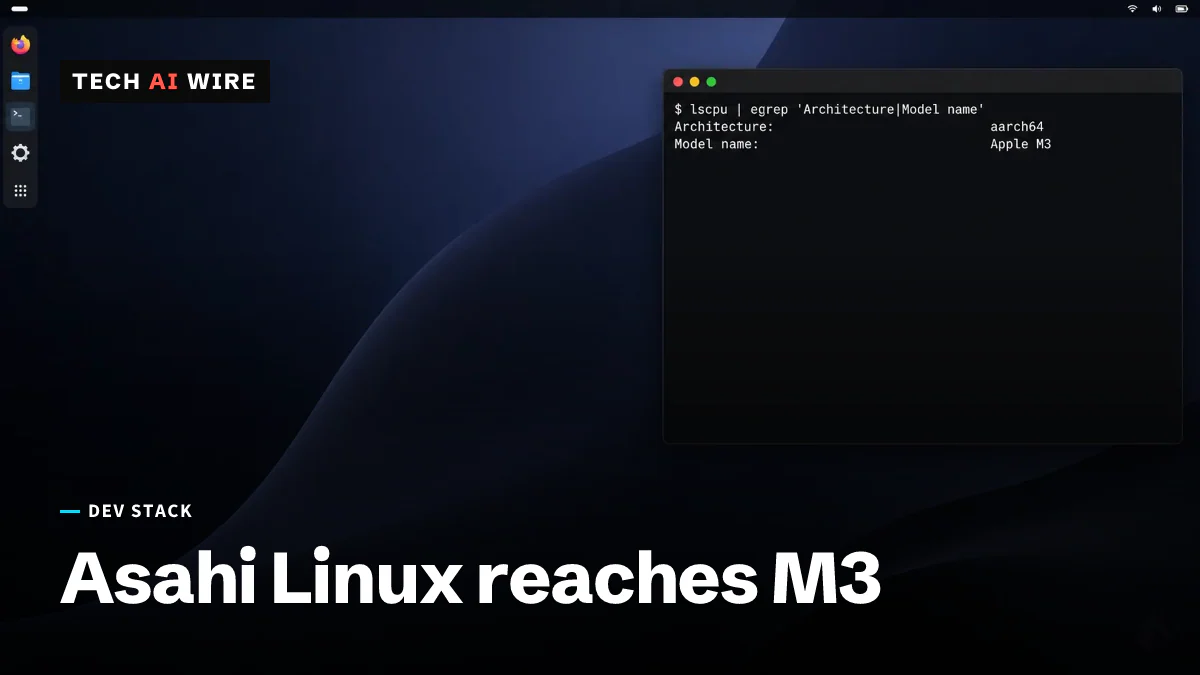
Asahi Linux has merged M3, M3 Pro and M3 Max support into its installer. Wi-Fi, USB 3 and AV1 decoding work. Sleep, HDMI and fast 3D do not.
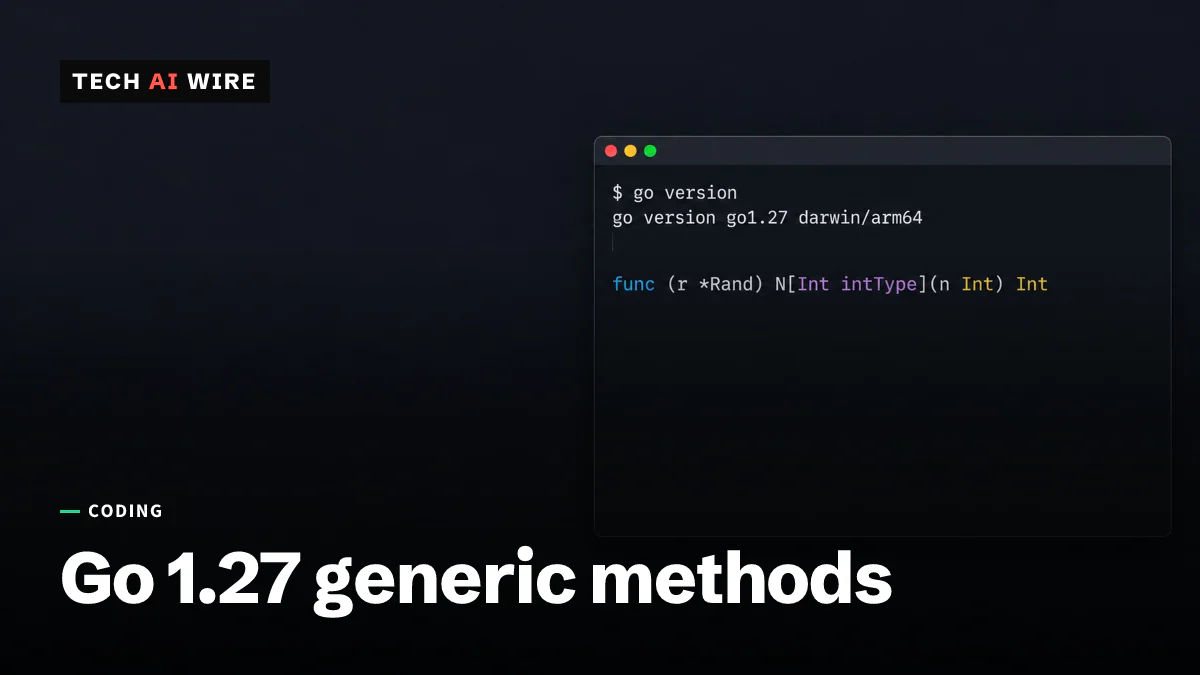
Go 1.27 shipped on August 19, 2026 with generic methods, a v2 engine under encoding/json, goroutine leak profiles and post-quantum signatures.
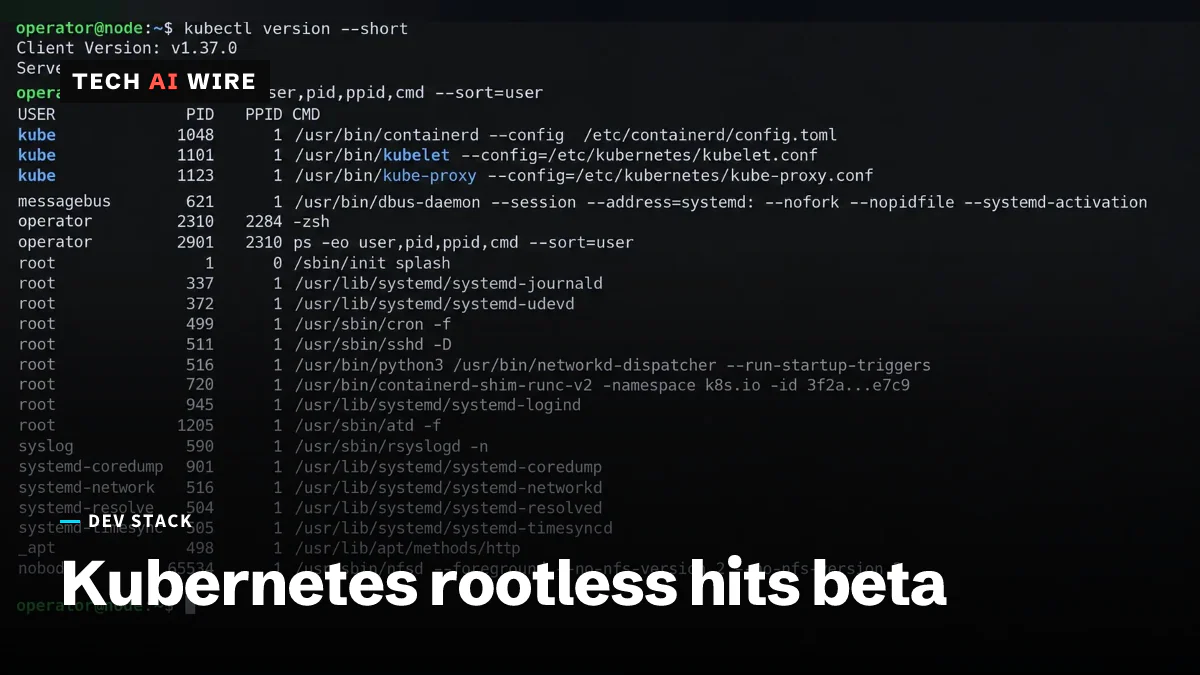
Kubernetes 1.37 moves KubeletInUserNamespace to beta. The kubelet, container runtimes, CNI plugins and kube-proxy can now all run as a non-root user.
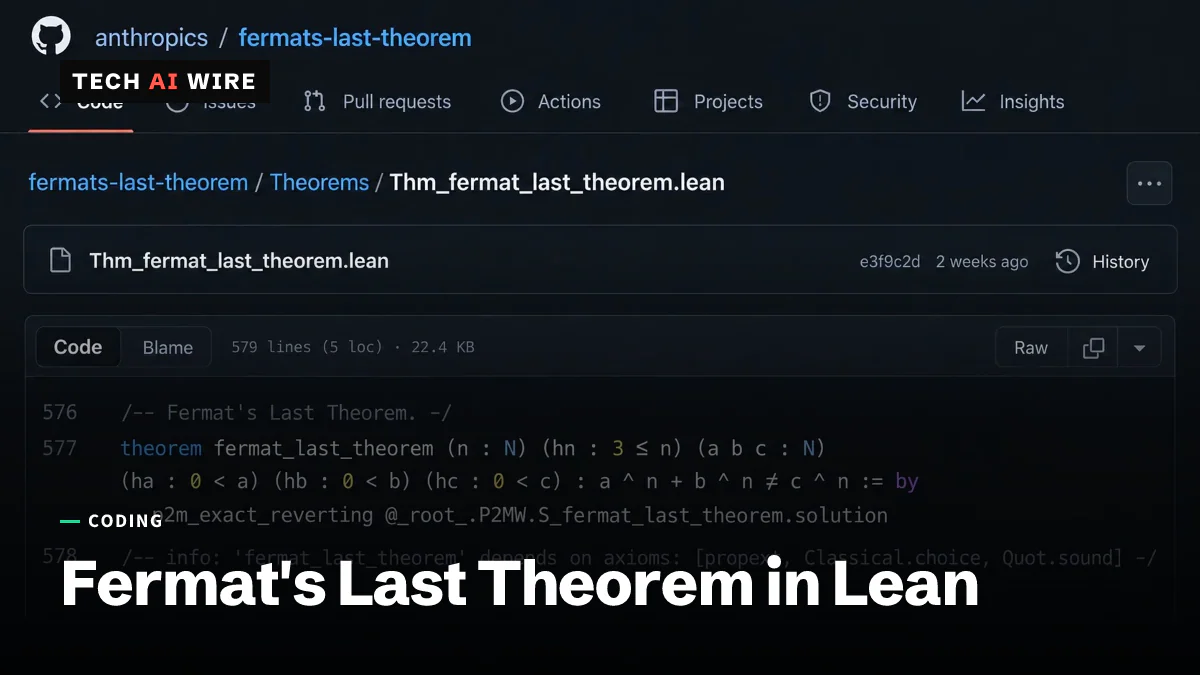
Anthropic says an internal model wrote 13 million lines of Lean in 11 days, producing a complete machine-checked proof of Fermat's Last Theorem.
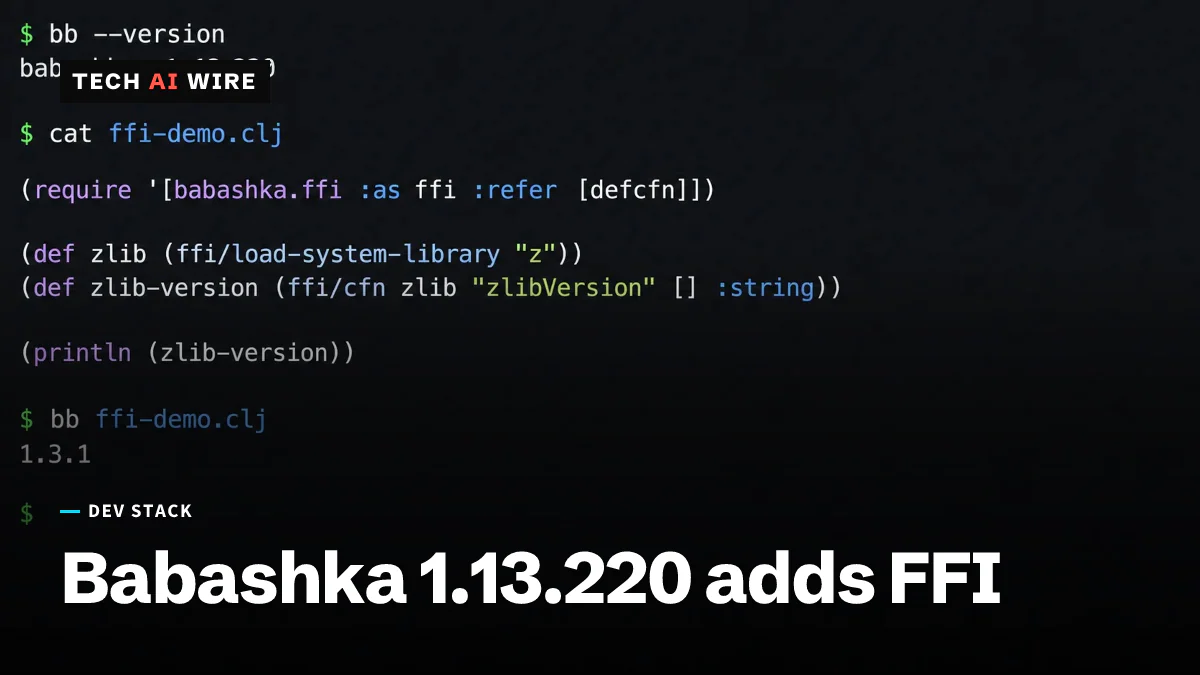
Babashka 1.13.220 adds an FFI built on Java's Panama API, so a Clojure script can call a native library without writing a pod or any Java.
A 14-day comment period, named stakeholders and a merge request: GNOME has drafted a formal way to settle the decisions it now makes in chat.
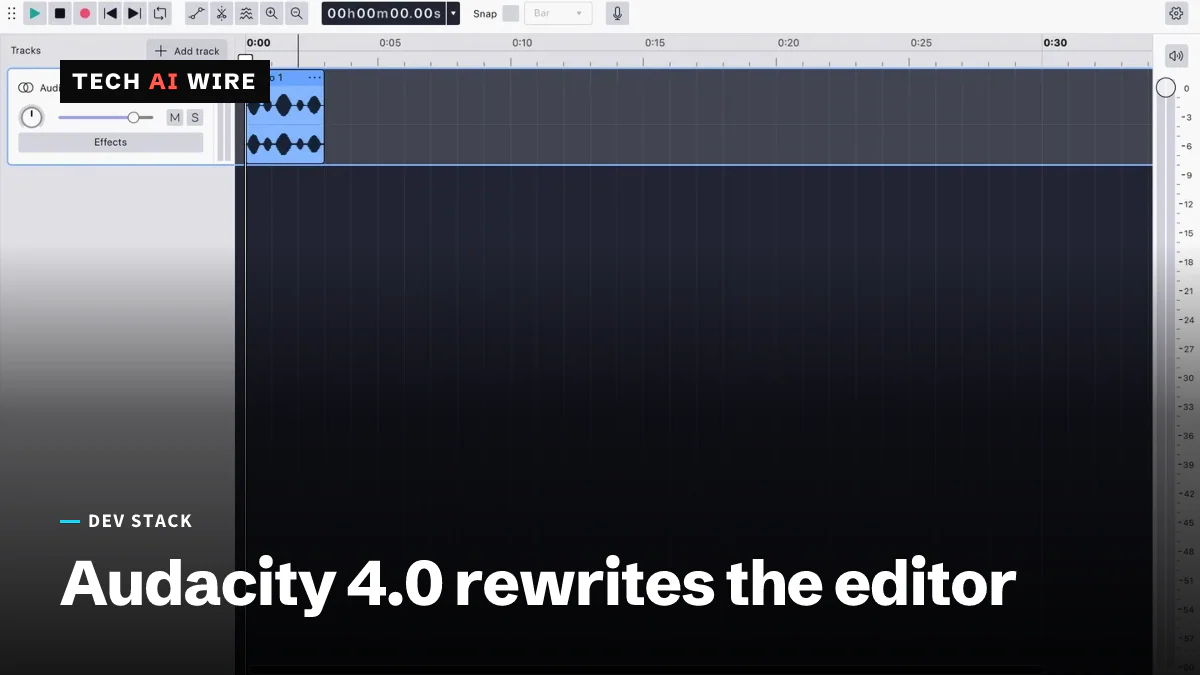
Audacity 4.0 ships a full Qt rewrite with a new clip-editing model and project format. Eight features, including scripting and plugin hosting, are gone for now.

Nvidia confirmed its $12.9 billion purchase of Hugging Face and promised the platform stays open to non-Nvidia hardware. It turned down a $500 million offer just last year.
Three to five stories a day, and what each one means for the people who build software. Free, no spam.