KDE Plasma 6.8 ships on KDE's 30th birthday without X11
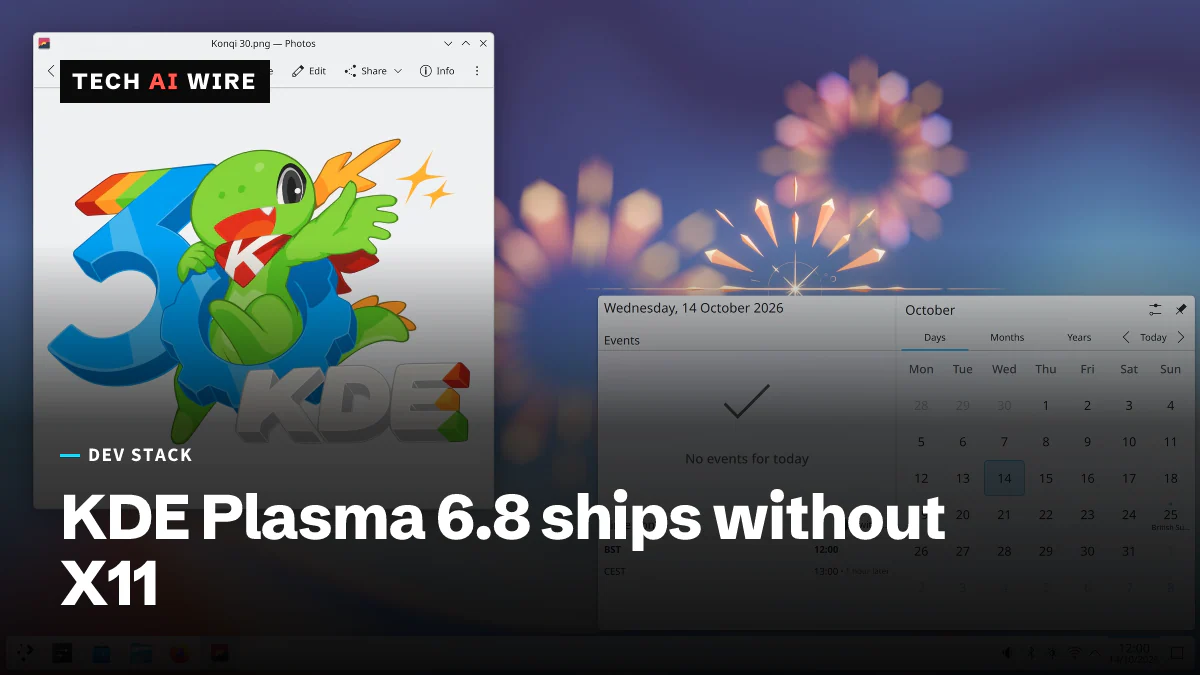
KDE released Plasma 6.8 on October 14, 2026, its 30th anniversary. It retires the X11 session, ships the Kup backup tool and adds a dwell clicker.
3 min read
By the numbers
- Plasma version released on October 14, 2026
- 6.8.0
- years since the KDE project began
- 30
- year X11 first shipped, per KDE
- 1984
KDE released Plasma 6.8 on October 14, 2026, the day the KDE project turned 30. It is the first version of the Linux desktop without an X11 session: Plasma now runs on Wayland, the newer display system. Older X11 apps keep working through a compatibility layer. The release also ships Kup, a backup tool, as part of Plasma and adds a dwell clicker for people who cannot easily press a mouse button.
The end of the X11 session
X11 is the display system that Linux desktops have used for decades. Wayland is its modern replacement. In Plasma 6.8, starting an X11 session "is being retired," KDE's announcement says.
Apps that still need X11 are not left behind. They "will continue to work via the 'XWayland' compatibility layer," KDE says. XWayland runs X11 programs inside a Wayland session.
The Register notes that Plasma 6.7 still offers the X11 session as an optional install. So users who depend on it can stay on 6.7 for now.
We covered the Plasma 6.8 beta in September.
What else is new
According to KDE, the release brings these changes:
| Area | Change |
|---|---|
| Backup | Kup is polished and now released as part of Plasma |
| Accessibility | A built-in dwell clicker clicks when the pointer stops moving |
| Screen recording | Spectacle can record system audio and the microphone |
| Remote desktop | Better speed and quality, an exclusive mode and two-way clipboard |
| Window rules | Shadows, outlines and rounded corners for apps that draw their own borders, plus a built-in Steam rule |
| Graphics | Triple buffering on by default for NVIDIA cards, and better HDR |
| Language support | Bikram Sambat calendar and an Amharic on-screen keyboard |
KDE also says Plasma loads faster and uses less memory. Phoronix highlights lower video memory use, better handling of several graphics cards and multi-monitor improvements.
A new theme engine called Union is in beta. It can now style both Qt Widgets apps, such as the Dolphin file manager and the Kate editor, and Qt Quick apps. It is not on by default.
Thirty years of KDE
The release lands on KDE's 30th anniversary. KDE scheduled a screening of a documentary about the project, made by Cult.Repo, for October 14. "30 years is an impressive milestone for a community like KDE," the announcement says.
The Register also points to Klassik, a separate project that rebuilds the look of the KDE 3 desktop on modern Qt 6 code. It is not a fork of KDE 3 itself.
How to get it
KDE says distributions have created, or are creating, packages for Plasma 6.8. The easiest way to try it is a live image booted from a USB drive. KDE also offers Docker images.
What this means for developers
For people who build apps or run Linux desktops:
- Test your app on Wayland. Plasma 6.8 has no X11 session. Apps that relied on X11-only tricks, such as global hotkeys or screen capture, should be checked under Wayland and XWayland.
- Plan for fleets that need X11. Teams with tools that break under Wayland can stay on Plasma 6.7, which still offers an X11 session. Treat that as a bridge, not a destination.
- Use the new capture options. Spectacle can now record system audio, and the screencast portal can create a virtual screen at a custom resolution. That helps when recording demos and tutorials.
- Check accessibility. The built-in dwell clicker makes Plasma usable without pressing buttons. Apps with small or hover-only controls may need a second look.
Sources
Related articles
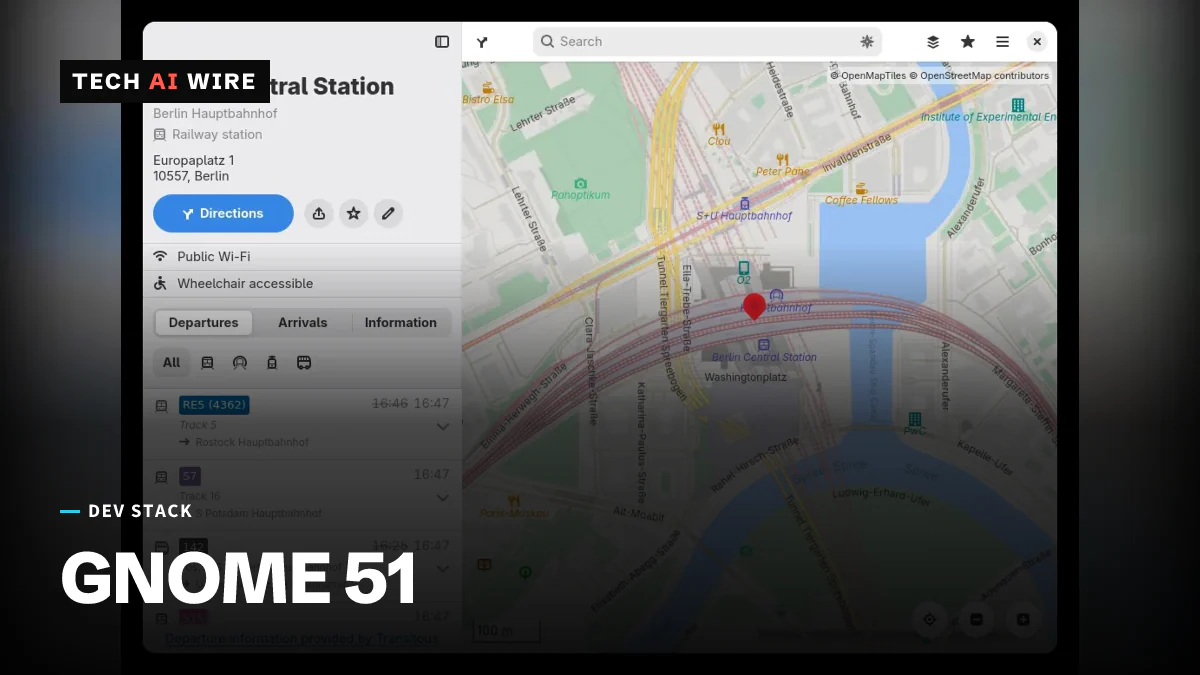
GNOME 51 ships reworked frame scheduling in Mutter
GNOME 51 arrived September 16 with smoother frame scheduling, FIDO2 passkey login, and one removal developers should note: legacy NVIDIA EGLStreams.
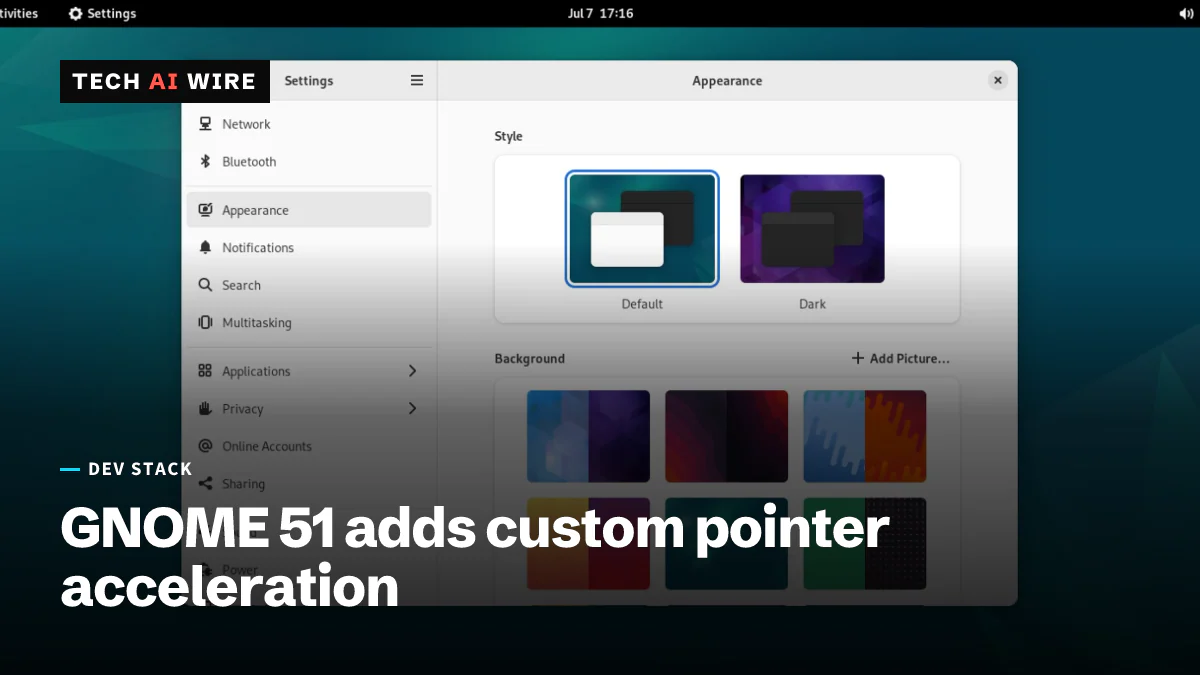
GNOME 51 adds custom pointer acceleration profiles
GNOME 51, shipping September 16, 2026, lets users define a custom pointer acceleration curve instead of picking one fixed speed profile.
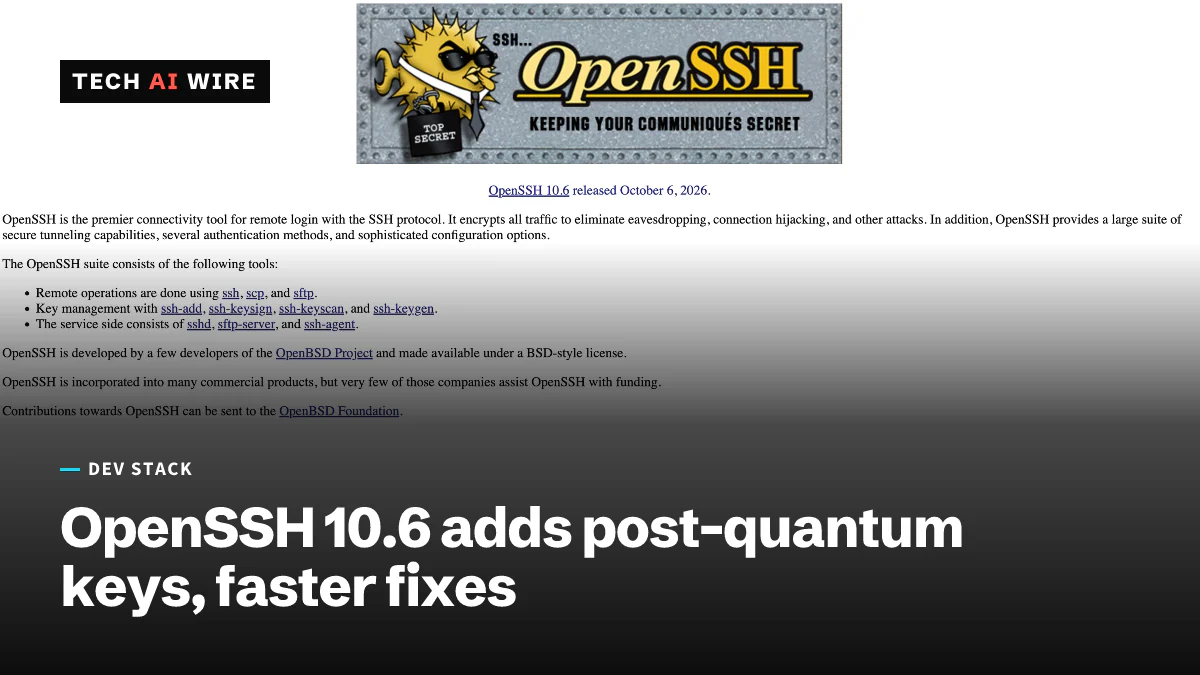
OpenSSH 10.6 adds post-quantum signatures, speeds releases
OpenSSH 10.6, out October 6, adds a post-quantum signature type, turns off LZ77 compression and promises faster fixes as AI bug reports pour in.
The weekly digest
One email every Friday with the week's top stories from all six desks: AI, dev tools, coding, the tech industry, startups and what's next. Free, no spam.