Meta claims $3.9B research tax credit on AI data centers
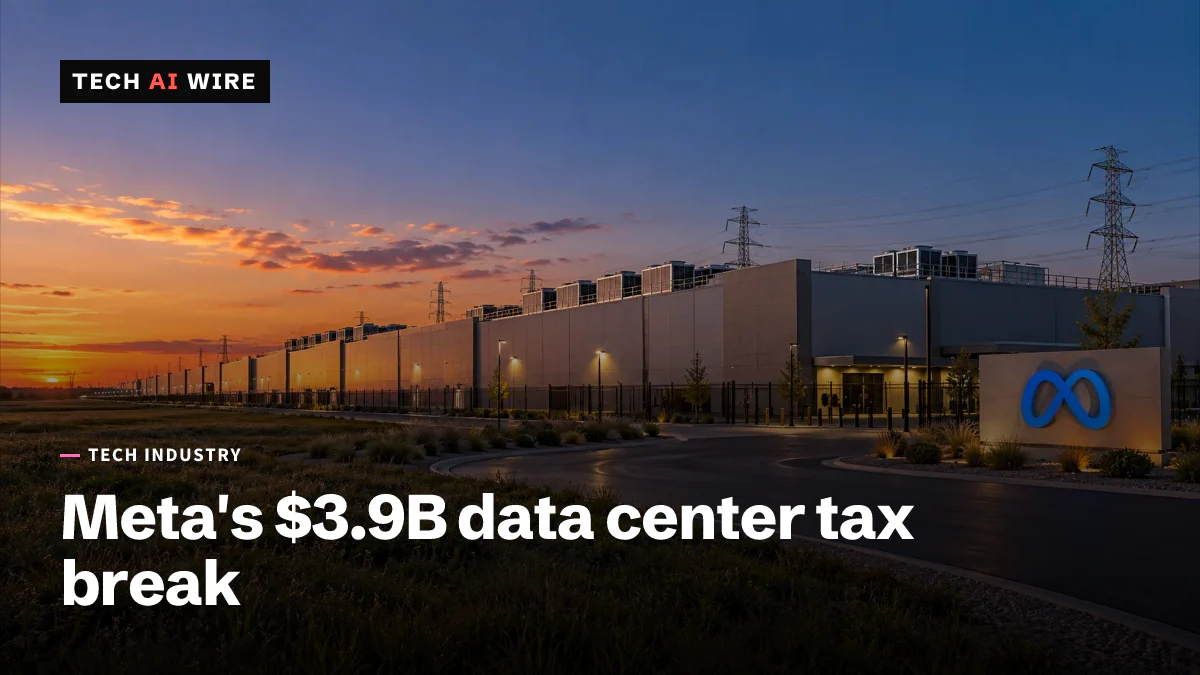
Meta saved $3.9 billion in 2025 by calling AI data centers research 'pilot models' under a 1981 tax credit, the New York Times reports.
3 min read
By the numbers
- research tax credit savings in 2025
- $3.9B
- rise in Meta's uncertain-tax reserve
- 45%
- reserve against possible IRS challenges
- $18.74B
- year the research credit was created, per The Decoder
- 1981
- 2023
- 0.7B
- 2024
- 2B
- 2025
- 3.9B
Meta has been treating its AI data centers as experiments to claim billions of dollars in a federal research tax credit, the New York Times reported on September 30, 2026. The savings grew from $700 million in 2023 to $3.9 billion in 2025. Meta's own accountants see the approach as legally risky, The Decoder reports.
The story matters beyond Meta's tax bill. If the IRS accepts that AI infrastructure counts as research, every company building data centers has a reason to try the same move. If it rejects the claim, Meta could owe billions.
How the strategy works
The research and experimentation tax credit rewards companies for developing new products and processes. The Decoder says it dates from a 1981 law, and Implicator.ai identifies it as section 41 of the tax code.
Meta's approach is to label its AI data centers as "pilot models," a term for prototype facilities, according to Yahoo Finance. It also counts the Nvidia chips inside them as research supplies, Implicator.ai reports. Meta began this treatment in late 2024, Yahoo Finance says.
The savings have climbed each year:
| Year | Research tax credit savings |
|---|---|
| 2023 | $700 million |
| 2024 | $2 billion |
| 2025 | $3.9 billion |
That makes Meta the largest beneficiary of the credit among public companies, Yahoo Finance reports.
Why it could unravel
Meta is setting money aside in case it loses. Its reserve for uncertain tax positions, money held against possible IRS challenges, rose 45% from $12.9 billion to $18.74 billion, according to Yahoo Finance. Implicator.ai says Meta's June 30, 2026 filing lists $18.74 billion in gross unrecognized tax benefits.
The IRS has pushed back on similar claims before. It has rejected credits applied to "proven and commercially available equipment and technology," Yahoo Finance reports. Implicator.ai points to the IRS audit guide, which says research supplies must be property that is not depreciated, used directly in qualified research. Depreciated property falls outside that definition, the outlet notes.
Meta's own words may also work against it. The Decoder notes that Mark Zuckerberg has described these facilities as infrastructure to "drive our core products and business," language that sits awkwardly with calling them experiments. The Decoder also reports that the accounting firm EY approved Meta's strategy and is marketing it to other AI companies.
What experts and Meta say
Tax specialists are doubtful. Andre Shevchuck called the approach "kind of wild and out there," Yahoo Finance and Implicator.ai report. Implicator.ai quotes another specialist, Shawn Marchant, as "skeptical."
James Shannon, the former congressman behind the 1981 law, said Meta's use has "gone way, way beyond what anybody could have imagined," according to The Decoder.
Meta defends the claims. Spokesman Andy Stone said Meta uses "the tax incentives Congress established decades ago to encourage this type of domestic investment," as quoted by Yahoo Finance. Implicator.ai reports Stone's figure of $200 billion in Meta research spending over five years, including $57 billion in 2025.
The scale of the building is huge. Yahoo Finance reports that Meta is spending more than $50 billion to expand its Hyperion data center in Louisiana to 5 gigawatts.
What this means for developers
For most teams, this is a story about what AI compute really costs. Tax breaks like this one lower the price big companies pay for the chips behind their AI services. If the IRS claws the money back, that cost moves onto their books, and prices or spending plans can follow.
If you work at a company that builds or rents AI hardware, ask your finance team how it treats that spending. The research credit is real and can apply to genuine experimental work. Claiming it on production infrastructure is the part the IRS has challenged before, and Meta's reserve shows how large that risk can get.
Keep records that separate research from production. Teams that run real experiments, such as new model architectures or new hardware setups, should document what was tested and why. Clear records are what support a research credit if it is ever audited.
Watch the IRS response. A ruling on Meta's claims would set the rules for every company now building AI data centers, and for the accounting firms selling the same strategy.
Sources
Related articles
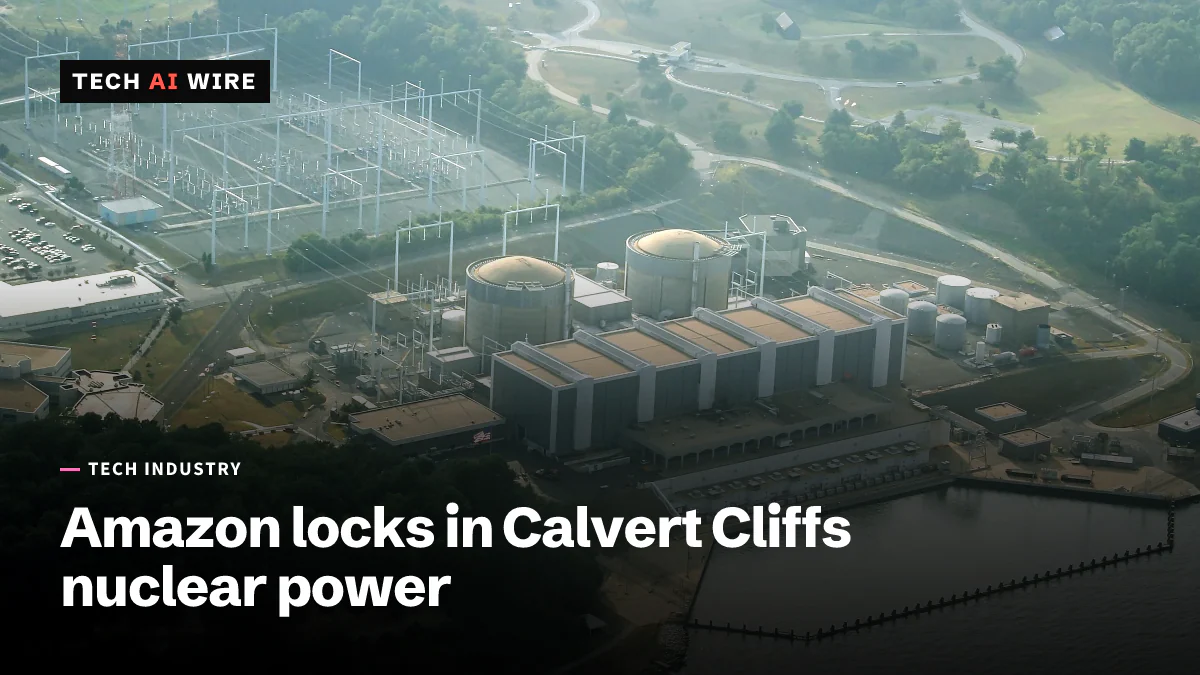
Amazon signs 20-year Calvert Cliffs nuclear power deal
Amazon will buy 690 MW from Maryland's Calvert Cliffs nuclear plant for 20 years, backing a $3 billion upgrade that adds 190 MW between 2030 and 2032.

Newsom vetoes SB-1130, California's smart glasses bill
California Gov. Gavin Newsom vetoed SB-1130, which would have required recording lights on smart glasses and fined secret recording up to $1,500.

Micron sees tighter memory supply in 2027 and 2028
Micron posted $54.23 billion in fiscal Q4 revenue and guided to $61.5 billion, then warned memory supply will be tighter in 2027 and 2028 than in 2026.
The daily brief
Three to five stories a day, and what each one means for the people who build software. Free, no spam.