Capcom REX plans an AI-ready rebuild of its RE Engine
Capcom unveiled REX on October 2, a staged plan to turn RE Engine, used on 27+ games, into an AI-ready engine. Two of its parts are going open source.
3 min read

By the numbers
- Capcom games built on RE Engine since 2017
- 27+
- developers who use RE Engine
- 2,000+
- REX components going open source
- 2
Capcom plans to rebuild RE Engine, the in-house engine behind Resident Evil and its other recent games, so that AI tools can work with it. Programmer Satoshi Ishida presented the multi-stage project, called REX, at the CAPCOM Open Conference RE:2026 on October 2, 2026. The long-term goal is what Capcom calls an "AI-generation game engine." It is a concrete plan from a major studio to reshape a large codebase for AI coding tools.
What REX is
REX stands for "RE next ENGINE," according to VGTimes. A game engine is the core software a studio uses to build games, handling graphics, physics, sound and tools. RE Engine first shipped with Resident Evil 7 in 2017, and work on it began in 2014, VGTimes reports.
The engine is used widely inside Capcom. TBreak reports it has powered more than 27 Capcom titles and is used by more than 2,000 developers.
Capcom is not starting over. It will build on the existing engine instead of writing a new one from scratch, Gamereactor reports. The project has four goals: development efficiency, game performance, better tools and better quality assurance.
Why Capcom is doing it
Ishida named three pressures, according to TBreak and Gamereactor:
- Games keep getting bigger, so simple tasks take longer.
- Teams keep growing, so tools need to be easier to use.
- AI is becoming important to how games get made.
The AI goal is practical. Capcom wants a future engine where AI can understand the code, write it and play test builds to look for bugs, TBreak reports.
The parts of REX
REX is split into several systems. TBreak and AI Miracle list them:
| Component | What it does | Open source? |
|---|---|---|
| RE:Dox | Standardizes how data is handled | Yes |
| RE:UI | Interfaces for development tools, using less memory | No |
| RE:Log | Rebuilt logging and telemetry with compact identifiers | Yes |
| RE:Flows | Visual scripting for gameplay logic | Not stated |
| RE:Runtime | Runs the game, managing characters and objects | Not stated |
RE:Dox and RE:Log are being released as open source to support AI training, TBreak reports. AI Miracle adds a sixth piece, RE:C++, a shared programming foundation. Its stated purpose is "one common programming foundation" that both human developers and AI can understand.
No AI-generated assets in the games
Capcom draws a line between tools and content. "We will not implement assets generated by AI into our games," the company said, as quoted by VGTimes. "However, we plan to proactively use it as a contributing technology to improve the efficiency and productivity of the game development process."
TBreak reports Capcom describes generative AI as "a supporting tool to improve the efficiency of routine tasks." Gamereactor says the company is exploring AI in graphics, sound and programming for that purpose.
What this means for developers
REX is a useful model for any team with a large, old codebase that wants AI tools to help. Capcom's first steps are not about AI models at all. They are about consistency: one programming foundation, one way to handle data and one logging format. AI coding agents work best on code that follows clear, repeated patterns, and so do new hires.
Look at your own logs and data formats with that in mind. Capcom is rebuilding RE:Log with compact identifiers and RE:Dox to standardize data. Structured, predictable logs are easier for an AI agent to read when it tests a build or hunts a bug.
Watch the open-source releases. When RE:Dox and RE:Log appear, they will show how a large studio structures data and logs for machine reading. Capcom has not given a date in the reports so far.
For game studios, note where Capcom put its limit. AI helps with code, tools and testing, but generated art and sound do not ship in its games. That split may become a common policy across the industry, and it is worth deciding your own before a project starts.
Sources
Related articles
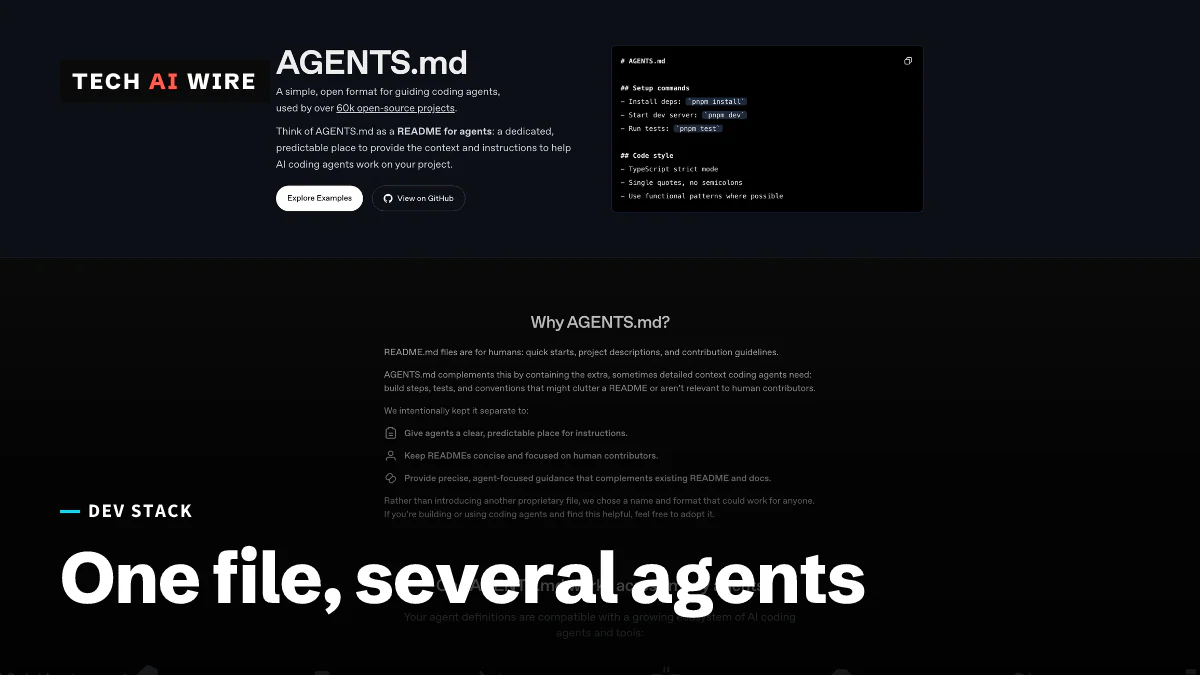
Claude Code 2.1.277 reads AGENTS.md as a fallback
Claude Code 2.1.277 reads AGENTS.md when a project has no CLAUDE.md. Over 60,000 open-source projects already ship that file.
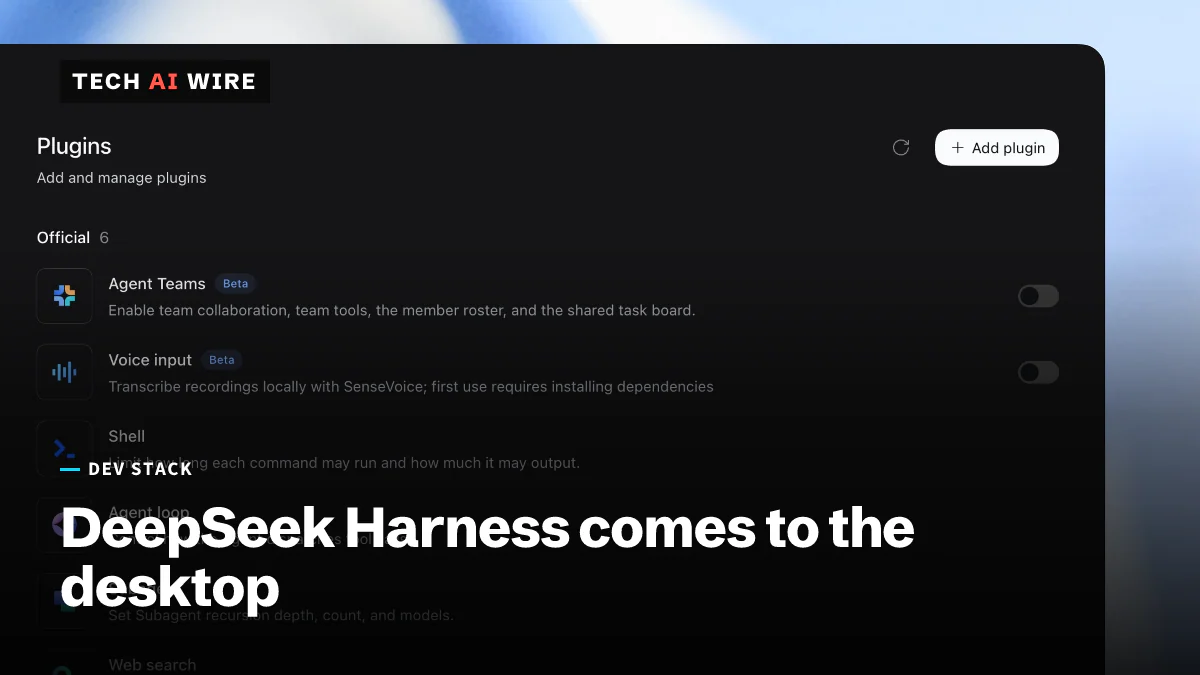
DeepSeek Harness Desktop arrives for macOS and Windows
DeepSeek's MIT-licensed Harness agent now ships as an official desktop app for Apple-silicon Macs and 64-bit Windows, with no Node.js install needed.
Tools This Week: October 2, 2026 - SvelteKit 3, AG-UI 1.0
Eight new developer tools this week, including SvelteKit 3, Cloudflare's cf CLI, WSL containers and the AG-UI 1.0 agent protocol, with what each costs.
The daily brief
Three to five stories a day, and what each one means for the people who build software. Free, no spam.