Meta Commercial Terms face EU, UK suspension requests
Advertisers and publishers asked EU and UK regulators on October 22, 2026 to suspend Meta's Commercial Terms, eight days before they take effect.
4 min read

By the numbers
- date Meta's new Commercial Terms take effect, 2026
- Oct 30
- regulators asked for interim measures: the European Commission and the UK CMA
- 2
- of £46.7B in UK ad spend went to Google and Meta last year, per Press Gazette
- £28B
Advertisers and publishers asked European and British regulators on October 22, 2026 to suspend Meta's new Commercial Terms, Reuters reported. The terms take effect on October 30. They let Meta crawl websites linked to its business customers, and critics say that gives Meta content it could use for AI. Meta says the terms cover only its ads and business products.
Who complained, and what they asked for
The sharpest request came from the Movement for an Open Web, an advocacy group whose members include digital advertisers and publishers. According to Reuters, it complained to the European Commission and to the UK's Competition and Markets Authority (CMA). It asked both for interim measures. That is a temporary order that pauses a practice while a regulator examines it.
"Meta's new terms are clearly anti-competitive," said Tim Cowen, the group's co-founder. "The terms would give Meta a free hand to scrape content from nearly every website in the world," he told Reuters.
Publisher groups had moved first:
| Group | Regulator | When | What it asked for |
|---|---|---|---|
| Movement for an Open Web | European Commission and UK CMA | October 22 | Interim measures to suspend the terms |
| German publisher associations (Reuters names BDZV and MVFP) | European Commission | October 20, per MLex | An investigation of the changes |
| European Publishers Council | European Commission | Last week, per Reuters | Scrutiny of the terms |
The German complaint argues that the new clause "infringes Meta's obligation to grant business users fair and reasonable conditions of access," MLex reported. The associations add that it "constitutes an abuse of its dominant position." The European Publishers Council is contacting Commission Executive Vice Presidents Teresa Ribera and Henna Virkkunen, according to The Media Copilot.
What the regulators have said so far
Neither regulator has paused the terms. The European Commission told Reuters it received a complaint and will assess it under its standard procedure.
The CMA has gone further. Its head, Sarah Cardell, told lawmakers on October 20 that the CMA would meet Meta the next day, MLex reported. The CMA had asked Meta to explain the changes. It has also named Meta as a potential candidate for designation under the UK's digital markets regime.
"We are engaged in urgent discussions with Meta as we consider our next steps," a CMA spokesperson told Reuters.
What the terms allow
The disputed clause lets Meta "access, index, cache, analyse, collect, retrieve or crawl" content, The Media Copilot reported. According to MLex, the revised terms would extend that access automatically to linked domains, including content published off Meta's own apps.
An earlier draft also said Meta could use what it collected to "train" its products. Meta dropped the word "train" from the clause last week. Critics say the rest is still broad. "I think 'develop' is broad enough to include 'train,'" US media lawyer Matt Topic told The Media Copilot.
Meta disputes the reading. "The crawling terms we consolidated only applied to our ads and business products," a spokesperson told Reuters. "As always, content owners can use robots.txt to signal their preferences." Robots.txt is a plain text file on a website that tells automated crawlers which pages they may visit.
The stakes are large because few businesses can skip Meta. Press Gazette estimates that Google and Meta took at least £28 billion of the £46.7 billion spent on UK advertising last year. The Movement for an Open Web still urges publishers to delete their Facebook Pages and Instagram business accounts before the deadline.
What this means for developers
The terms reach anyone whose site is linked from a Meta business account or ad, not only news publishers. Teams that run those sites have one week.
- Read the clause before October 30. The terms apply to customers of Meta's ads and business products. Ask your legal team whether your accounts are covered and what "develop" permits.
- Check your robots.txt rules. Meta points to robots.txt as the opt-out. Confirm which Meta crawlers your file allows, then watch server logs after October 30 to see whether they follow it.
- Separate what you link. Pages you promote through Meta ads are the ones in scope. Content you want kept out of any crawl should not sit on those domains.
- Watch for interim measures. If the Commission or the CMA orders a pause, the terms could slip past October 30. If not, they apply on schedule, with complaints still pending.
- Weigh the cost of leaving. Deleting Pages and business accounts removes the link to Meta's terms, but it also removes a large share of reach. Model that loss before following the advice.
Sources
- Publishers, advertisers call EU, UK antitrust regulators to suspend Meta's new commercial terms - Reuters via MarketScreener
- Meta's expanded content access draws EU complaint from German publishers - MLex
- Meta faces UK scrutiny over website scraping terms as watchdog weighs action - MLex
- Publishers face Oct. 30 deadline over Meta's updated crawling terms - The Media Copilot
Related articles
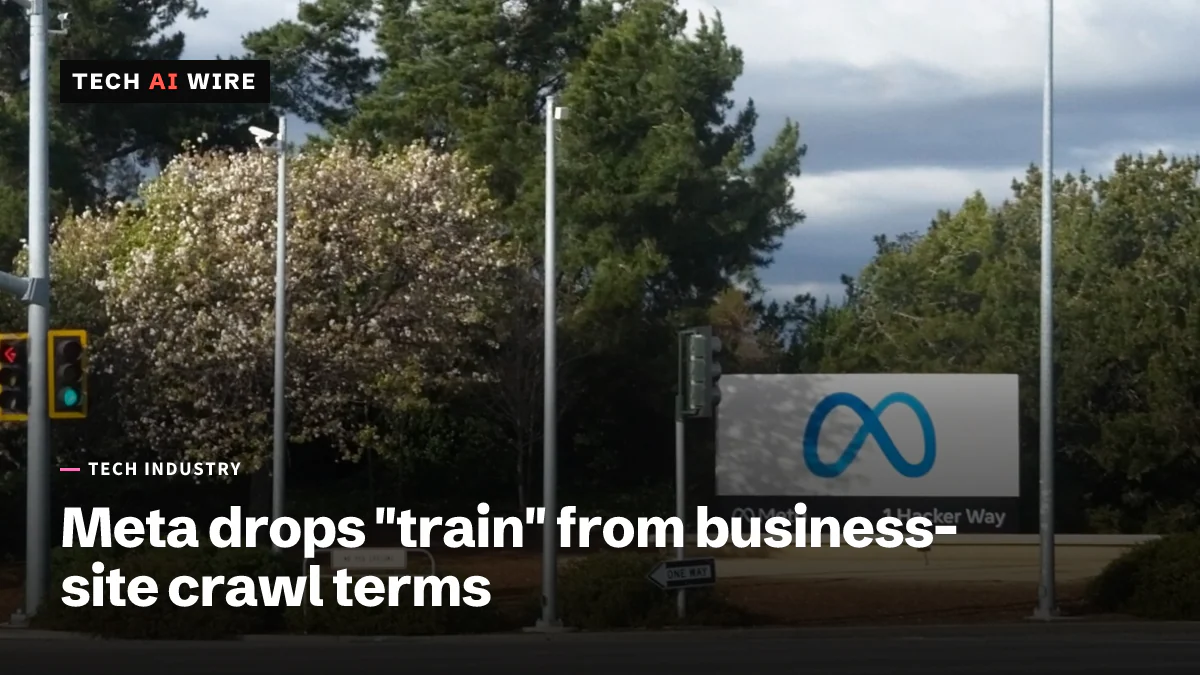
Meta narrows web-crawling clause in its business terms
Meta cut the word "train" from a clause letting it crawl business customers' websites, days before its Commercial Terms take effect on October 30, 2026.
Meta ordered to pay New Mexico $25B for misleading users on privacy
A New Mexico judge ordered Meta on October 21, 2026 to pay $25 billion after a jury found over 43 million privacy violations. Meta will appeal.
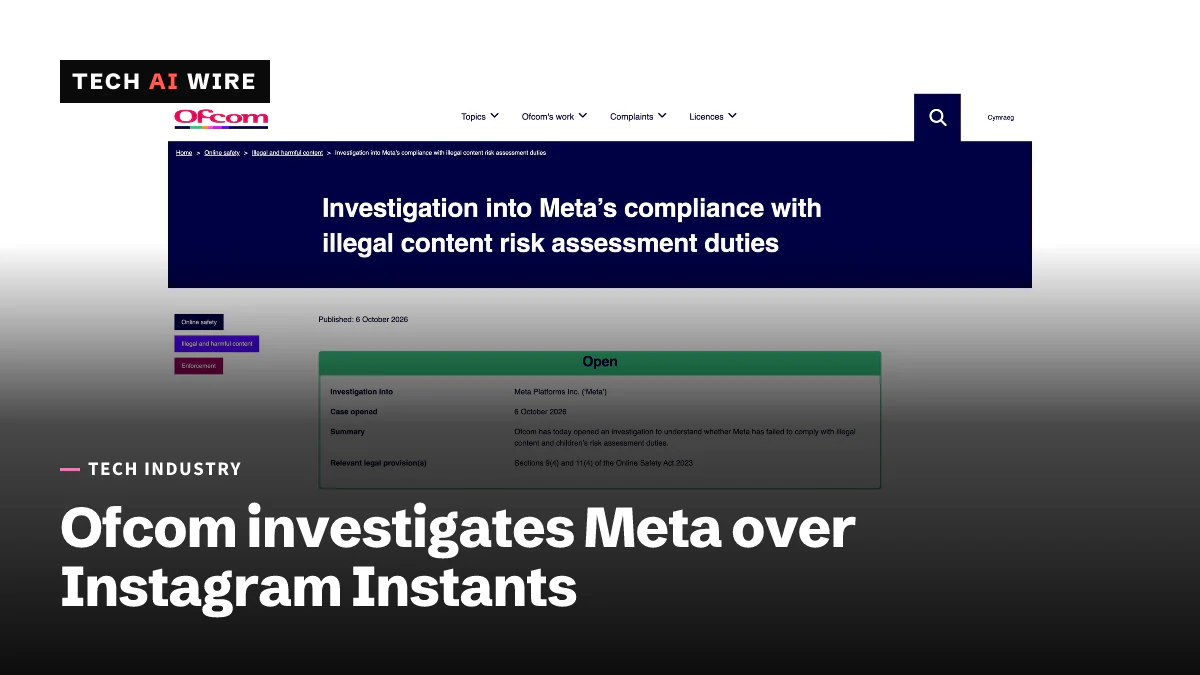
UK regulator Ofcom investigates Meta over Instagram Instants
Ofcom is checking whether Meta skipped required safety risk assessments before launching Instagram Instants. Fines can reach £18 million or 10% of worldwide revenue.
The weekly digest
One email every Friday with the week's top stories from all six desks: AI, dev tools, coding, the tech industry, startups and what's next. Free, no spam.