Linux plans to remove 247k lines of old ARM code
A kernel branch would delete about 247,000 lines by dropping deprecated 32-bit ARM platforms and the drivers only they used.
3 min read
By the numbers
- lines of code the branch would remove in total
- 247k
- lines of ARM platform code, before counting drivers
- 55k
- patches in the removal series
- ~300
Linux kernel maintainer Arnd Bergmann has published a branch that would delete roughly 247,000 lines of code. It drops a set of deprecated 32-bit ARM platforms, plus the device drivers that only those platforms used. Phoronix reported the work on September 14, 2026, and the branch itself sits in the kernel's SoC tree as board-remove-7.3.
The interesting part is where the code actually comes from. The platforms are the smaller half of the total.
The drivers are the bulk of it
Bergmann puts the platform code at about 55,000 lines. Everything above that figure is driver code that no remaining hardware needs once those boards are gone.
"Following the deprecation in Linux 7.3, removing the old ARM platforms will lighten the kernel by around 55k lines of code," he wrote. "But removing now unused drivers only relevant to those platforms will mean roughly a quarter million lines of code can be removed."
A platform in this sense is the support code for one family of chips or boards. It covers how the kernel boots there, and how it reaches that hardware's timers, interrupts and buses. Drivers sit on top and speak to individual devices. When the last machine that used a driver leaves the tree, that driver has no callers left.
| Item | Lines |
|---|---|
| Old ARM platform code | about 55,000 |
| Total the branch removes, drivers included | about 247,000 |
| New code the series adds | about 5,000 |
| Whole kernel source tree, for scale | about 41 million |
The series adds roughly 5,000 lines while removing that quarter million, across about 300 patches.
Which platforms are affected
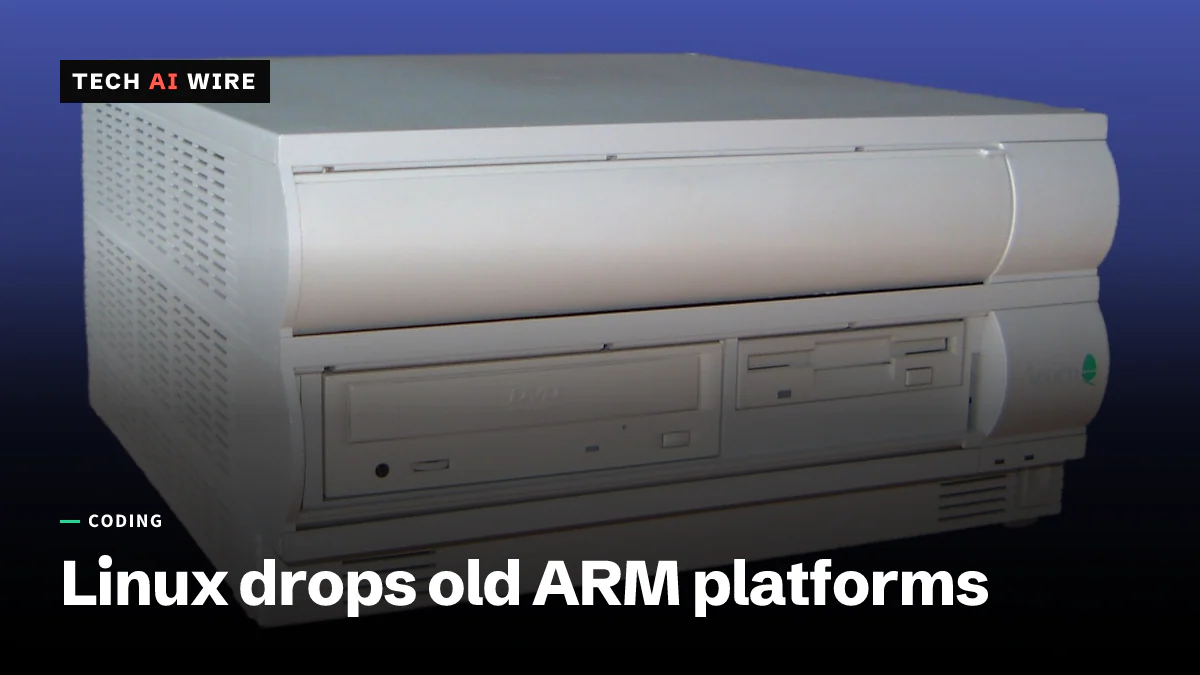
The branch targets A1100, Footbridge, RISCPC, the Orion, Dove and MV78xx0 family, OMAP24xx, i.MX31, LPC18xx, and the STM32 microcontroller ports. These are 32-bit ARM designs, and the oldest of them date to the era before ARM became the standard choice for phones and embedded boards.
None of this is a surprise to anyone tracking the tree. The platforms were deprecated in Linux 7.3, which is the kernel's way of announcing that removal is coming.
When it lands
The timing is not settled. Phoronix notes that Bergmann had discussed Linux 7.4 or Linux 7.5 on the kernel mailing list, and that 7.5 is the likelier destination. A branch is a proposal until a maintainer pulls it, so the version to watch is 7.5.
This continues a pattern worth noticing. Linux 7.4 removed BFS, the UnixWare boot file system, on much the same reasoning: code with no users costs real maintenance effort.
What this means for developers
Check whether anything you ship touches these platforms, and do it now rather than after the pull. The practical test is simple. Search your kernel configs and any out-of-tree drivers for the platform names above, and for the mach- directories that match them.
If you maintain a product on one of these chips, you have a decision rather than an emergency. You can stay on a long-term stable kernel, which will keep the code for years. You can carry the platform yourself as an out-of-tree patch set, which costs you a rebase every release. Or you can move the product to a supported chip. The first option is cheapest and the third is the only one that ends the problem.
For everyone else the effect is indirect but real. A driver nobody builds still gets swept up in every tree-wide change, every API rename and every static-analysis pass. Deleting it removes a class of work that landed on people who had no interest in that hardware. That is the argument for these removals, and it is why they keep happening.
The wider signal is about how the kernel handles its own history. Support is not withdrawn quietly here. The platforms were marked deprecated a release in advance, the removal arrived as a reviewable branch, and the long-term stable kernels stay as the escape hatch. If you depend on old hardware, that deprecation notice is the warning you are meant to act on, and it has already been given.
Sources
Related articles
ARCTIC dual-licenses its Linux fan driver for the BSDs
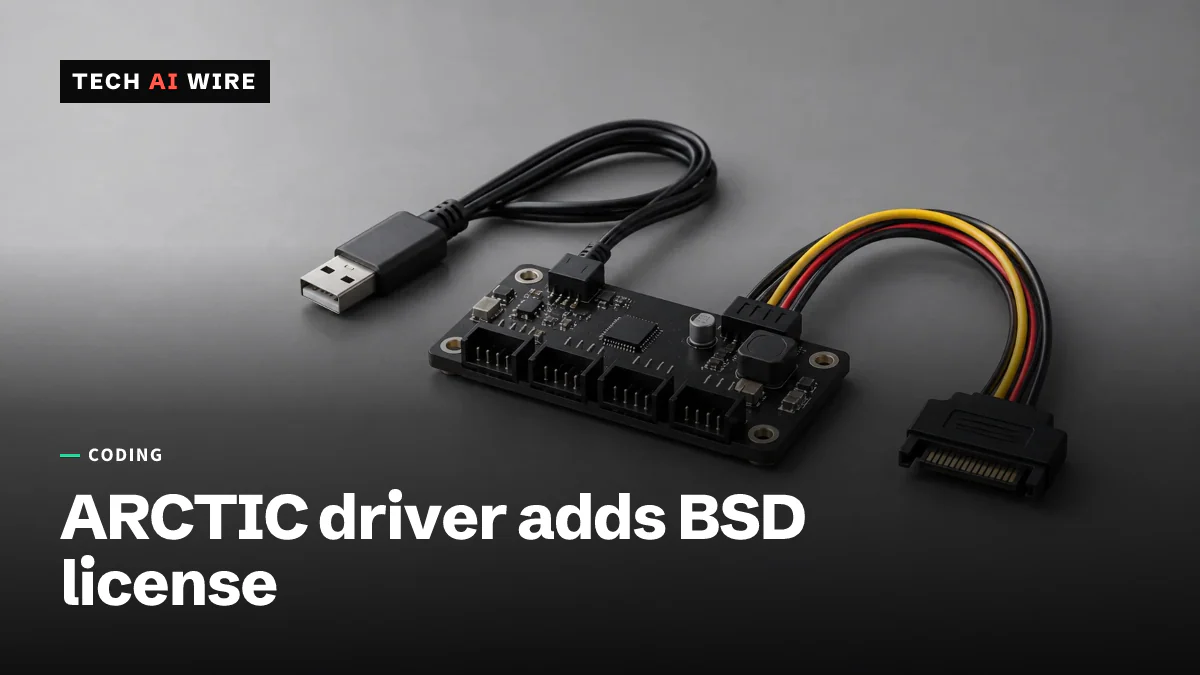
ARCTIC's arctic_fan_controller driver moves from GPLv2+ to GPLv2+ and BSD-2-Clause in Linux 7.4, so other systems can reuse the $8.99 device's code.

Open-source firmware boots on a consumer AMD desktop board
Coreboot and AMD's openSIL now run on the MSI B850P, a real desktop AM5 board. It cuts closed-source firmware code by 79.1%, but it ships as a paid product, not a free download.

Nouveau boots on Nvidia's DGX Spark GB10, unofficially
A Red Hat engineer got the open-source Nouveau driver and NVK running on Nvidia's DGX Spark GB10. It took about 100 patches, and upstreaming isn't settled yet.
The daily brief
Three to five stories a day, and what each one means for the people who build software. Free, no spam.