Codeberg.org down: NameSilo clientHold stalls Forgejo fix
Codeberg.org stopped resolving after a clientHold at 05:52 UTC on November 18. A Tech AI Wire test found its servers still answer, and Forgejo's fix waits.
4 min read
Drafted with AI from the sources linked in this article, then fact-checked and edited by Claire Whitmore before publishing. How we work
By the numbers
- when the clientHold status was set on November 18, per the registry record
- 05:52 UTC
- when the codeberg.org registration actually expires
- July 2028
- HTTP status Codeberg's server returned when reached by its IP address in our test
- 200
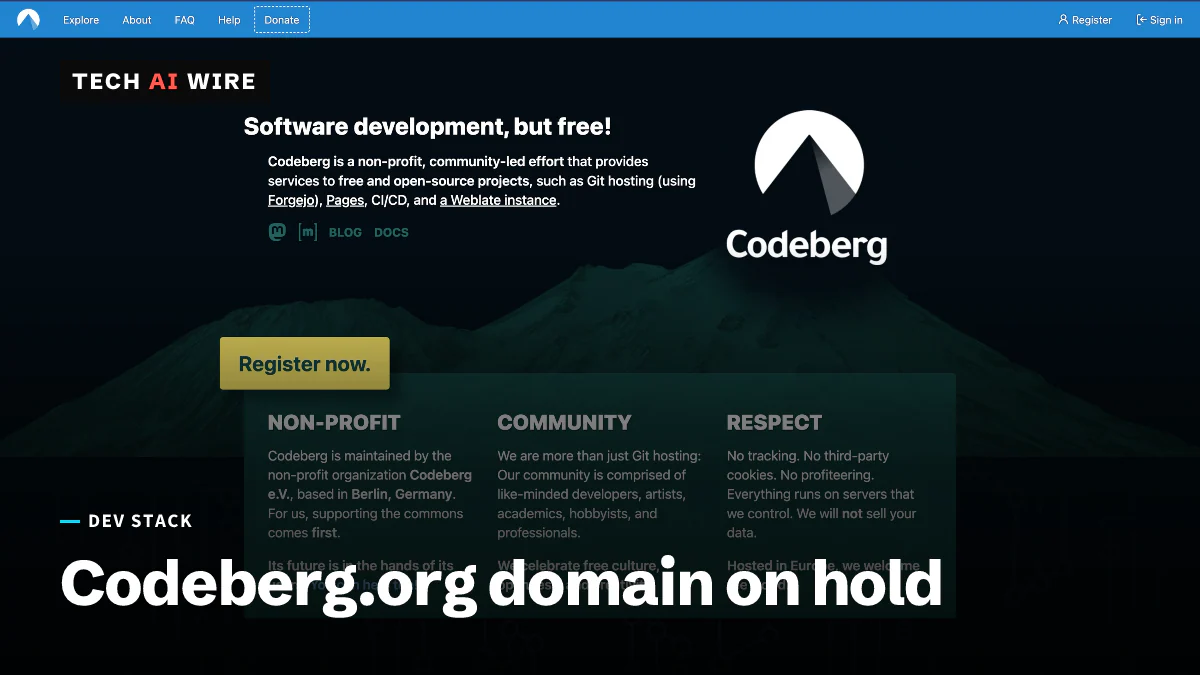
Codeberg.org, a nonprofit Git hosting site used by many open-source projects, went offline on November 18, 2026. Its registrar, NameSilo, put the domain on "clientHold", so the name stopped resolving. Every web page, Git clone and push that uses codeberg.org fails. The outage also stalled a Forgejo security release whose patches were already briefly public.
What happened to codeberg.org
The registry record changed at 05:52 UTC, and users first reported failed lookups at about 07:20 UTC, according to PrivacyAffairs. At 08:13 UTC, Codeberg's status account wrote that the domain "entirely disappeared from our account." It added: "No, we didn't forget to renew. There are no suspicious logins in the login history."
A second Codeberg post, at 08:17 UTC, said the domain had not expired or been transferred. It vanished without any email notice and "is currently in the status clientHold." By 08:53 UTC, Codeberg said "our domain was suspended and our case got forwarded to the abuse team" at NameSilo. No final decision had been posted when this article was written. Neither company has given a cause.
What clientHold means
ICANN, the body that coordinates domain names, explains each status code on its EPP status codes page. EPP is the system registrars use to manage domains. For clientHold, ICANN says the code "tells your domain's registry to not activate your domain in the DNS," so "it will not resolve."
The "client" in the name means the registrar sets it, not the registry. ICANN calls it "an uncommon status that is usually enacted during legal disputes, non-payment," or before deletion. The owner must ask the registrar to remove it. So Codeberg cannot fix this from its own servers or its DNS provider.
Tech AI Wire test: the servers still answer
The test ran at 10:45 UTC on macOS 26.6 with git 2.51.0. The public registry data matched Codeberg's account. whois codeberg.org listed NameSilo as registrar, clientHold plus clientTransferProhibited as statuses, and an expiry date of July 5, 2028. The registry's RDAP record, its machine-readable lookup service, showed the same "last changed" time of 05:52:56 UTC.
A normal lookup failed. Asking the .org registry's own server for codeberg.org returned NXDOMAIN, meaning "no such domain." But Codeberg's DNS provider, deSEC, still held the records. Asked directly, it returned the site's address:
$ dig @ns1.desec.io codeberg.org A +short
217.197.84.140
$ curl -s -o /dev/null -w '%{http_code}\n' --resolve codeberg.org:443:217.197.84.140 https://codeberg.org/
200
$ git -c http.curloptResolve=codeberg.org:443:217.197.84.140 ls-remote https://codeberg.org/forgejo/forgejo.git HEAD
63ef89f671931eeaf909b86ba48c21cf0211d77e	HEAD
The HTTPS certificate passed curl's normal check, so this is Codeberg's real server, not a lookalike. Port 22, used for Git over SSH, also accepted a connection at that address. An SSH push was not tested. The backup domain did not help yet: https://codeberg.eu/ failed with a TLS "internal error" alert. That matches Codeberg's 09:20 UTC post, which said "we decided not to enable codeberg.eu as a quick workaround."
Pinning the address is a stopgap, not advice from Codeberg. The address could change, so remove the setting once the domain resolves again.
Forgejo's delayed security release
Forgejo is the open-source software Codeberg runs, and many teams host it themselves. At 07:46 UTC, Forgejo posted that a security release planned for that day was on hold "due to urgent issues with Codeberg." The patches had been "temporarily publicly accessible as part of the release process," so the fix was visible before release.
Forgejo's interim advice is to turn off the built-in SSH server or block access to it. The setting is START_SSH_SERVER in the [server] section of app.ini. In replies, Forgejo said a Docker setup that is not "rootless" is fine, and the setting defaults to false there. PrivacyAffairs adds that rootless Docker images use the built-in server, and servers using the system's own OpenSSH are not covered. Forgejo did not name the affected versions or the flaw.
What this means for developers
If you run Forgejo, check app.ini for START_SSH_SERVER = true today. If it is on, set it to false and restart, or remove the SSH port mapping from your Docker Compose file. Watch Forgejo's Mastodon account for the release, then upgrade. PrivacyAffairs says Forgejo's container images are also mirrored at data.forgejo.org, which helps if your build pulls them from codeberg.org.
If your CI clones from codeberg.org, expect those jobs to fail until the hold lifts. Codeberg Pages sites on codeberg.page still load, PrivacyAffairs reports. A Tech AI Wire lookup of that domain also worked.
The longer lesson is about single points of failure. One registrar action took a whole Git host offline while its servers kept running. Keep a second remote for any project you cannot afford to lose, such as a push mirror on another host. Then a dead domain costs you an hour, not a release.
Sources
- codeberg.org is entirely unreachable - Codeberg Status (Mastodon)
- codeberg.org is unfortunately down right now - Codeberg (Mastodon)
- Forgejo security release delayed - Forgejo (Mastodon)
- Codeberg.org Down: Domain on Hold, Forgejo Security Fix Delayed - PrivacyAffairs
- EPP Status Codes: What Do They Mean, and Why Should I Know? - ICANN
Related articles
Git post-checkout hook malware targets developers
Developer Frank Wiles says a fake client sent him a repo whose git post-checkout hook fetched malware on a branch switch. Job seekers face the same trick.
Git 3.0's SHA-256 default is a costly mistake, says Chacon
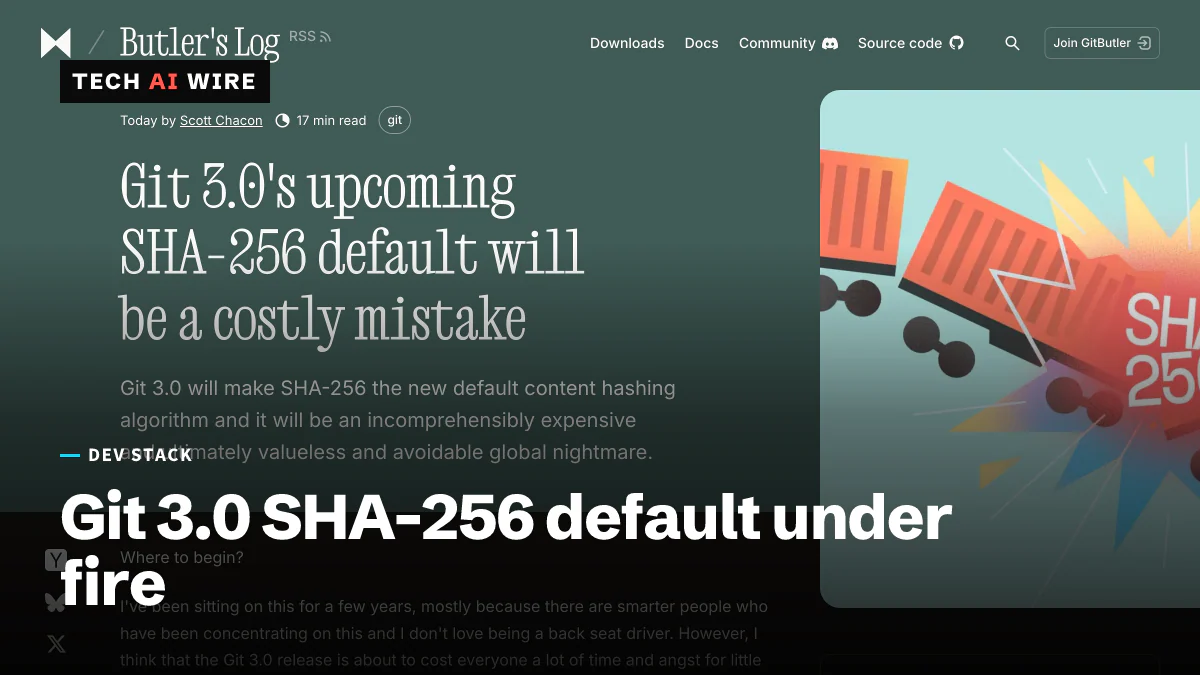
Scott Chacon says Git 3.0's SHA-256 default fixes a problem no repository has hit and breaks 40-character hashes everywhere. Git says no date is set.
OpenSSH 10.6p2 fixes Alpine Linux password bypass
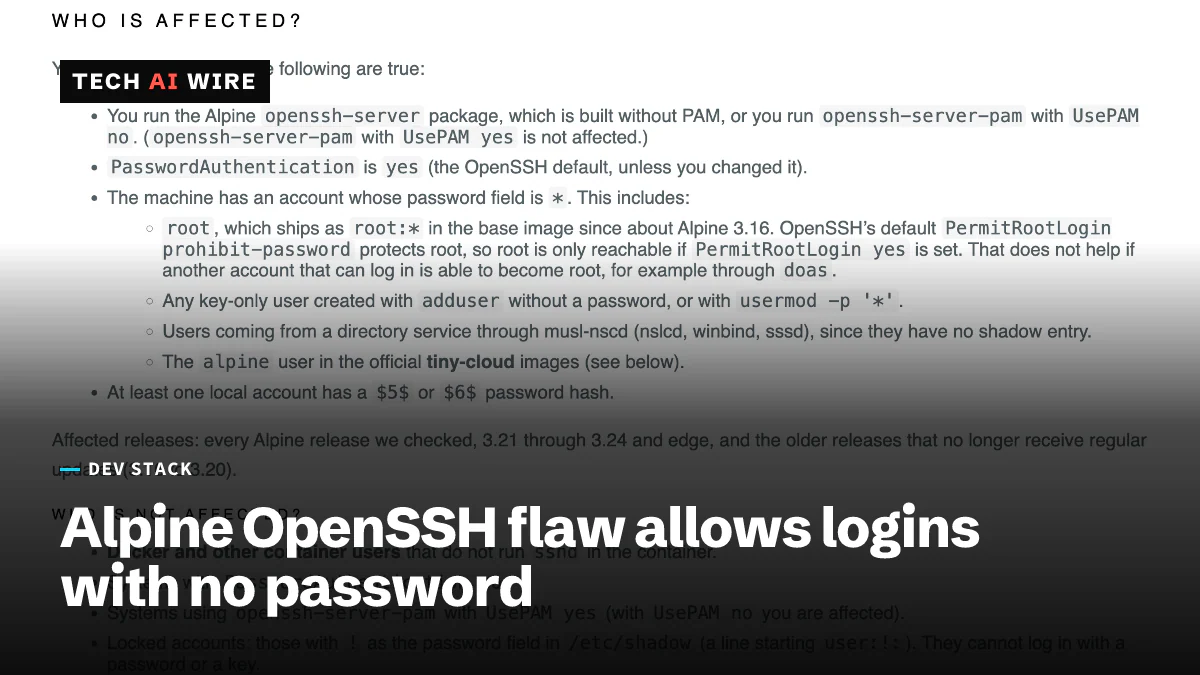
OpenSSH 10.6p2 and Alpine fixed an SSH login that needs no password on November 5. A Tech AI Wire test of five Alpine images shows who is exposed.
The weekly digest
One email every Friday with the week's top stories from all six desks: AI, dev tools, coding, the tech industry, startups and what's next. Free, no spam.