Ledger wallets sold with spy chips that stole seed phrases
Ledger says criminals hid spy chips in genuine wallets resold through CryptoBilis. Onchain estimates put losses at up to $93.2 million from 300+ wallets.
3 min read
By the numbers
- top onchain loss estimate, per CoinDesk via TheStreet
- $93.2M
- wallets in that estimate
- 300+
- in USDT frozen by Tether
- $10M
Ledger says a criminal group bought genuine Ledger hardware wallets, hid a spy chip inside each one, and fed them back into stores through resellers in Southeast Asia. The chip read each buyer's recovery phrase as it appeared on screen and sent it out over a mobile network. Thieves then emptied the wallets. Onchain researchers estimate losses of up to $93.2 million across more than 300 wallets, TheStreet reports, though Ledger has not confirmed a total.
A hardware wallet is a small device that stores the keys to cryptocurrency offline. Its whole promise is that the secret never touches an internet-connected computer. This attack did not break that design. It went around it.
How the implant worked
All confirmed thefts trace to devices sold by CryptoBilis, a Malaysia-based reseller, BleepingComputer reports. Researchers say those devices were offered at nearly half the normal price.
Mark Karpelès and Tibane Labs took apart affected units and described what they found, BleepingComputer says:
- A hidden board behind the screen. It captured what the display showed and which buttons were pressed.
- A smaller replacement battery to power the extra chip.
- A built-in eSIM, a digital SIM card, so the chip could send data over an LTE mobile network.
The target was the recovery phrase, or seed phrase. That is the list of 24 words a wallet shows once during setup, and anyone who has it controls the funds. The chip did not touch Ledger's secure element, the locked chip that holds the keys, and it did not change any transactions, Ledger told TheStreet.
That is why Ledger's own checks missed it. Its Genuine Check is a test that confirms a device is authentic. Ledger's support pages warn that it does not detect added parts if the original secure element is intact, BleepingComputer reports.
What Ledger says happened
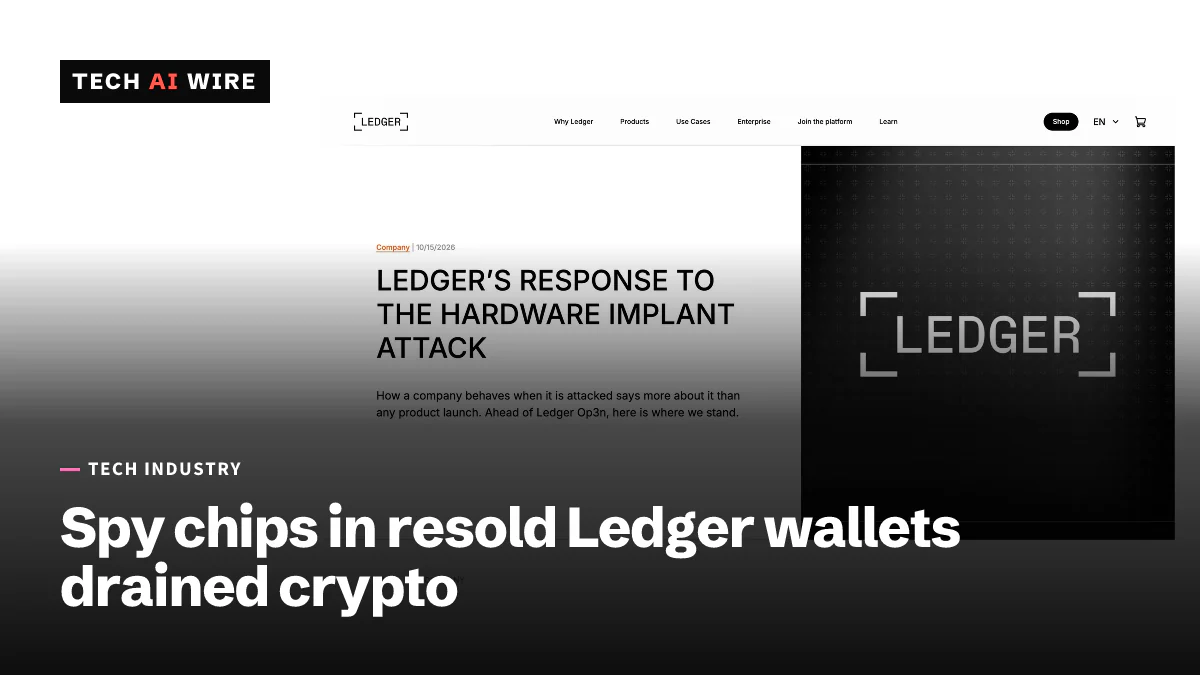
Ledger opened an investigation on October 9 after users reported drained wallets and confirmed the tampering a day later. On October 15 it published its fullest account in a blog post. The company says the group bought real devices over many months, modified them and returned them to the supply chain.
"This was an attack on the distribution channel after the devices left our control," Ledger wrote. It says its chips, operating system and servers were not compromised.
Ledger's chief executive, Pascal Gauthier, told TheStreet that "physical supply chain tampering is a risk for the whole industry."
Reports on the size of the losses differ:
| Estimate | Source |
|---|---|
| Up to $93.2 million, more than 300 wallets | CoinDesk onchain estimates, via TheStreet |
| Above $90 million | Galaxy Digital, via TheStreet |
| Unknown | Ledger and Privacy Guides |
Tether, which issues the USDT stablecoin, froze $10 million in USDT, TheStreet reports.
A dispute over German stores
TheStreet reports that tampered devices also turned up at German retailer MediaMarkt, which removed Ledger products from its stores and website. Ledger's own blog post says it bought devices from German stores and checked warehouse samples. "Every unit examined was clean," it says. The two accounts have not been reconciled.
What this means for developers
The lesson reaches beyond crypto. Any security device, from a hardware key to a phone, is only as trustworthy as the path it took to your desk.
For Ledger owners, the advice is direct. "If you bought a Ledger signer from CryptoBilis and have not set it up, do not set it up," Ledger's chief technology officer, Charles Guillemet, told TheStreet. If you already set one up, move your funds to a new device with a new recovery phrase, Ledger says, according to Privacy Guides.
For teams that buy security hardware:
- Buy from the maker or an authorized seller. A price far below retail is a warning sign, not a deal.
- Do not trust a software check to find extra hardware. Ledger's Genuine Check passed these devices.
- Never show a long-lived secret on a device you have not inspected.
Ledger has asked resellers to stop sales in Southeast Asia and Hong Kong. It is adding rules for its sellers: no products on open shelves or displays, stock kept in the back until purchase, and fast reporting of anything unusual. It says it is working with police and will publish more technical details.
Sources
- Ledger confirms hardware wallet spy implant behind crypto thefts - BleepingComputer
- Ledger's Response to the Hardware Implant Attack - Ledger
- Spy Chip Implanted in Ledger Wallets to Steal Cryptocurrency - Privacy Guides
- Ledger spy chip scandal raises fears over crypto wallet security - TheStreet via Yahoo Finance
Related articles
Yamato and Nikkei breaches expose 5.31M and 1.83M records
Yamato Transport says about 5.31 million records leaked from its pay-later service, and Nikkei about 1.83 million from a development cloud, on October 16, 2026.

Burger King Japan app breach exposes 11.18M members
BK Japan says a third party reached about 11.18 million Burger King app member records from October 2 to 7, 2026. No card numbers were stored there.
Japan steps up cyber warnings after 20+ company breaches
Japan told companies and banks to tighten security on October 9, 2026 after 20+ firms reported attacks. Times Car alone leaked about 6.6 million accounts.
The weekly digest
One email every Friday with the week's top stories from all six desks: AI, dev tools, coding, the tech industry, startups and what's next. Free, no spam.