Infinity Core: six Linux kernel flaws with public exploits
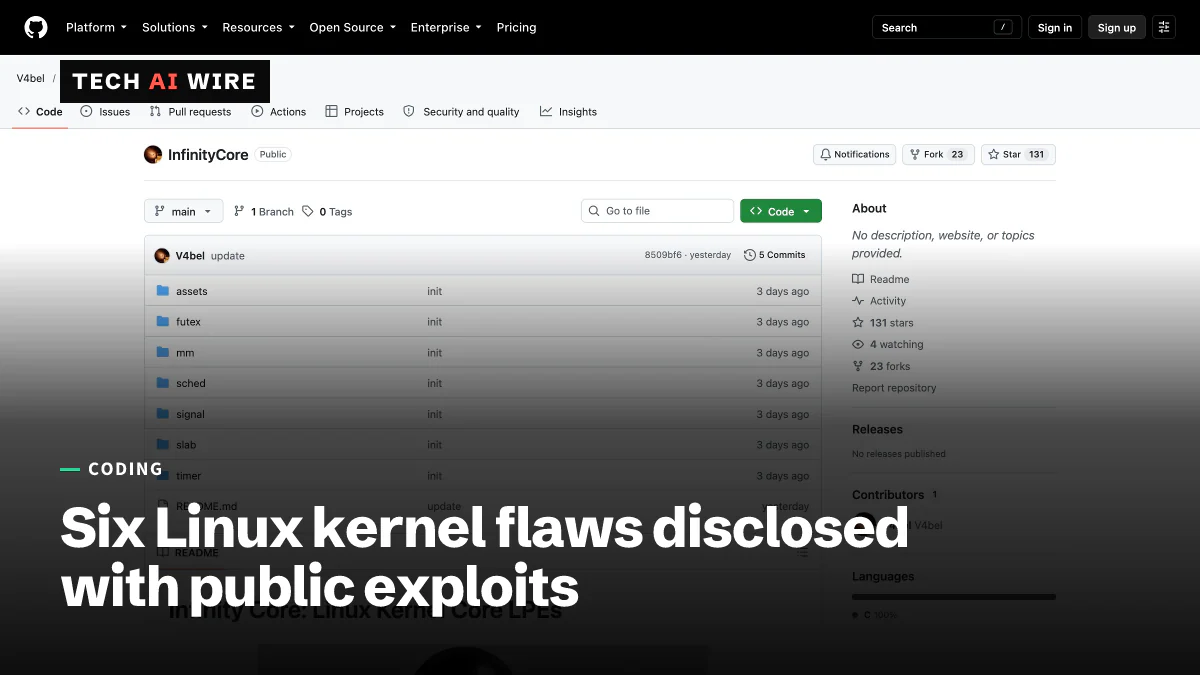
Six Linux kernel bugs called Infinity Core, including CVE-2026-98260, come with public exploits. Five of them give a normal user a root shell.
4 min read
By the numbers
- kernel vulnerabilities in the Infinity Core set
- 6
- come with a public exploit that gives a root shell
- 5
- highest CVSS score, per SecurityOnline
- 7.8
Security researcher Hyunwoo Kim disclosed six Linux kernel vulnerabilities, together called "Infinity Core", on the oss-security mailing list on October 16, 2026. Kim says they "can be exploited for Linux server LPE, container escape, and Android LPE." LPE, or local privilege escalation, means a normal user becomes root. Working exploits are already public, so anyone running shared Linux machines or container hosts should update their kernels now.
The six Infinity Core vulnerabilities
The oss-security post lists each bug with its CVE ID, the subsystem it sits in and the commit that fixed it. It gives no version numbers. The fixed kernel versions below come from SecurityOnline, not from Kim's post.
| Subsystem | CVE | Bug type | Fixed in (per SecurityOnline) |
|---|---|---|---|
| Timer | CVE-2026-98260 | Use-after-free in POSIX CPU timer cleanup | 6.6.158, 6.12.112, 6.18.54, 7.2.8 |
| Signal | CVE-2026-98256 | Use-after-free in the pending signal queue | 6.18.54, 7.2.8 |
| Memory | CVE-2026-89754 | Out-of-bounds write in the page-table walker behind mincore() | 6.18.50, 7.2.4 |
| Futex | CVE-2026-80775 | Use-after-free in the private futex hash setup | 6.18.47, 7.1.11, 7.2.1 |
| Scheduler | CVE-2026-98385 | Use-after-free in scheduler cache accounting | 7.2.9 |
| SLAB | CVE-2026-97941 | List corruption in the SLUB memory allocator | 7.2.7 |
Most of these are use-after-free bugs. The kernel frees a piece of memory but keeps using it, and an attacker can refill that memory with data of their choosing. Several also depend on a race, where two operations collide at an exact moment. The timer and signal bugs, for example, are triggered when exec() fails or races in a multi-threaded program. The exec() call replaces a running program with a new one.
SecurityOnline says the timer bug goes back to Linux 5.7, which is why it reaches older long-term kernels. The scheduler and SLAB bugs affect only the 7.2 series, by its account.
How serious they are
Five of the six come with a public proof-of-concept exploit that gives a root shell, according to Kim's GitHub repository and SecurityOnline. The sixth, the SLAB bug, only crashes the kernel so far. "An LPE chain has not yet been written," the repository says.
Kim tested the exploits on Ubuntu 26.04 with kernel 7.0.0-30-generic and on Arch Linux with kernel 7.2.4-arch1-2. The scheduler bug is narrower than the rest. It needs the CONFIG_SCHED_CACHE build option and a runtime setting turned on, and its exploit assumes four virtual CPUs.
SecurityOnline rates four of the bugs High, with a top CVSS score of 7.8, and two still await analysis. It reports no attacks in the wild. None of the six is in CISA's Known Exploited Vulnerabilities catalog, the US list of bugs seen in real attacks.
The research deliberately skipped networking, BPF and bugs that need user namespaces. SecurityOnline argues that a common hardening step, turning off unprivileged user namespaces or BPF, would not block these bugs.
Android phones are in scope
The timer bug also works on Android, Kim's repository says. It gives root on a Samsung Galaxy S26 Ultra from an ordinary app, "with no additional application privileges." Kim is holding back that Android exploit. It will be published once Samsung patches its devices or someone else releases an exploit first. No Samsung advisory or patch date appears in the sources.
How the disclosure happened
Kim reported the bugs privately to linux-distros, the closed list where Linux vendors prepare fixes before a bug goes public. Kim's public post says the embargo agreed with those maintainers has expired. The disclosure landed two days before Linux 7.3 was released on October 18.
What this means for developers
Install your distribution's latest kernel and reboot. A kernel fix does nothing until the machine boots the new kernel. Distributions often backport fixes into their own version numbers. So search your vendor's security notices for the six CVE IDs rather than comparing version numbers with the table above.
Patch the riskiest machines first. A container escape lets code inside one container take over the whole host. That puts Kubernetes nodes, shared build servers and CI runners first in line, especially runners that build pull requests from strangers.
Do not count on disabling user namespaces or BPF as a stopgap. If you run Android test devices, install Samsung's security update when it ships, because the timer bug works from an ordinary app.
The pattern is worth noting too. These bugs sit in core kernel code, such as timers, signals and the memory allocator, which every system runs. Container isolation relies on that shared kernel, so a kernel bug can cross a boundary that looks solid from user space.
Sources
- Infinity Core: six Linux kernel vulnerabilities (oss-security post) - oss-security (Openwall)
- Infinity Core: Linux Kernel Core LPEs - GitHub
- Six Linux Kernel Flaws Disclosed With Public PoC Exploits for Root Access and Container Escape - SecurityOnline
Related articles
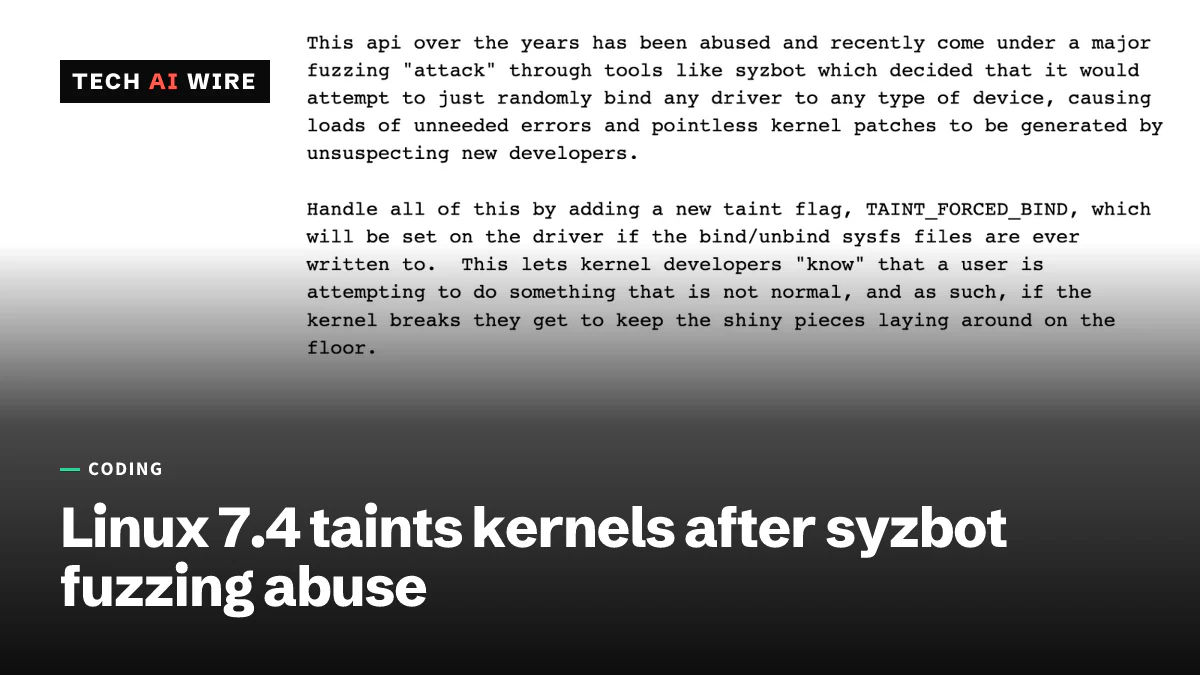
Linux 7.4 adds TAINT_FORCED_BIND for forced driver binds
Linux 7.4 will taint the kernel with flag Y whenever driver bind or unbind sysfs files are used, after syzbot fuzzing produced piles of pointless bug reports.
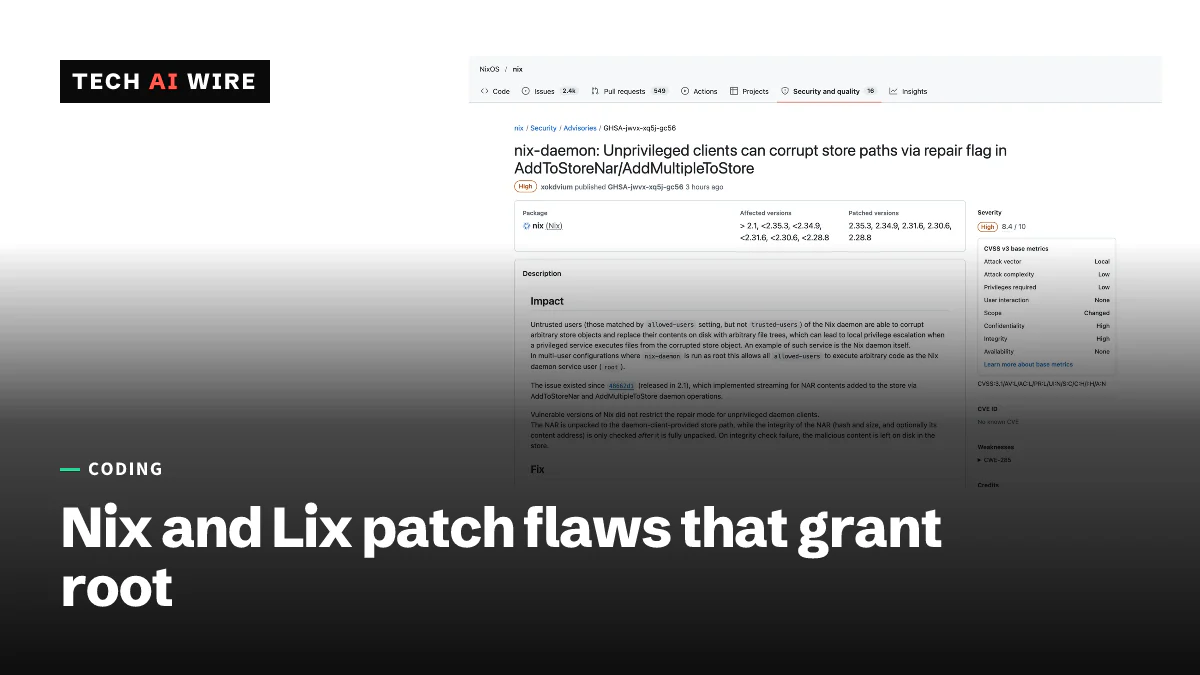
Nix and Lix patch daemon flaws that allow local root
Nix and Lix disclosed flaws on October 13 that can be chained into root access. Fixes are in Nix 2.35.3 and Lix 2.95.4, among other patch releases.
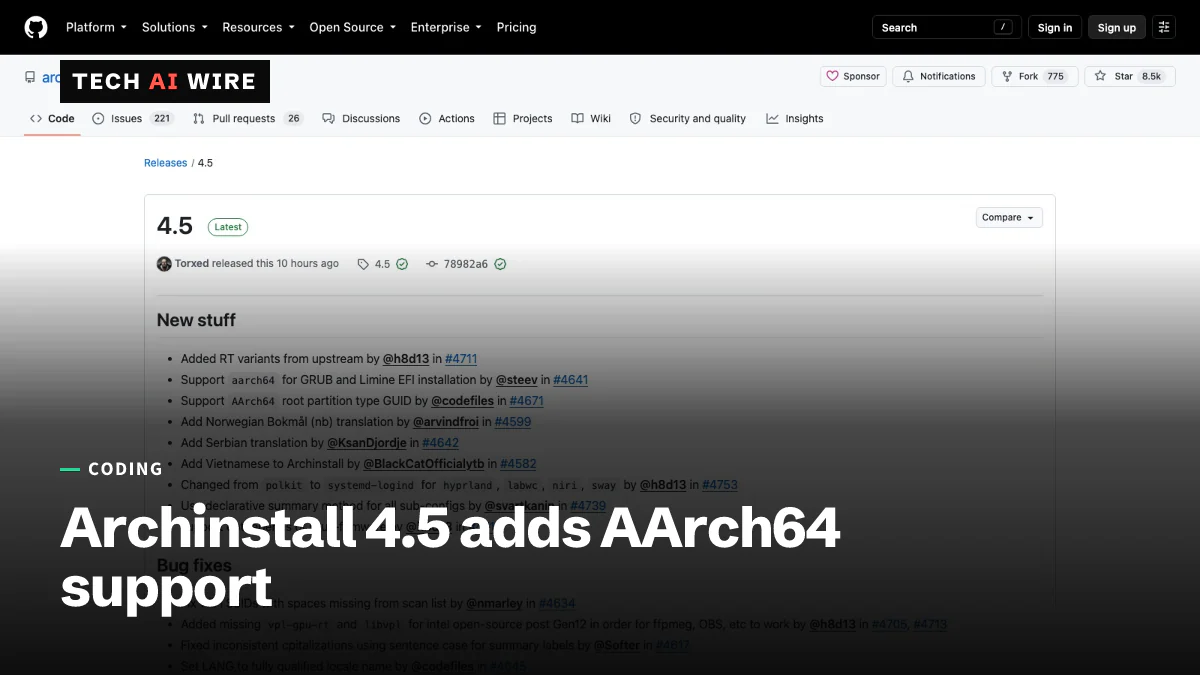
Archinstall 4.5 adds AArch64 boot support and RT kernels
Archinstall 4.5, out September 29, 2026, sets up 64-bit ARM machines with GRUB or Limine, adds real-time kernels and turns on TLS verification.
The weekly digest
One email every Friday with the week's top stories from all six desks: AI, dev tools, coding, the tech industry, startups and what's next. Free, no spam.