Gemini 4 Carbon launches for cyber defenders first
Google's Gemini 4 Carbon scores 59 on Artificial Analysis' index and 88.2% on SEC-bench Pro, but only cyber defenders in the Fairwind Program can use it now.
3 min read
Drafted with AI from the sources linked in this article, then fact-checked and edited by Claire Whitmore before publishing. How we work
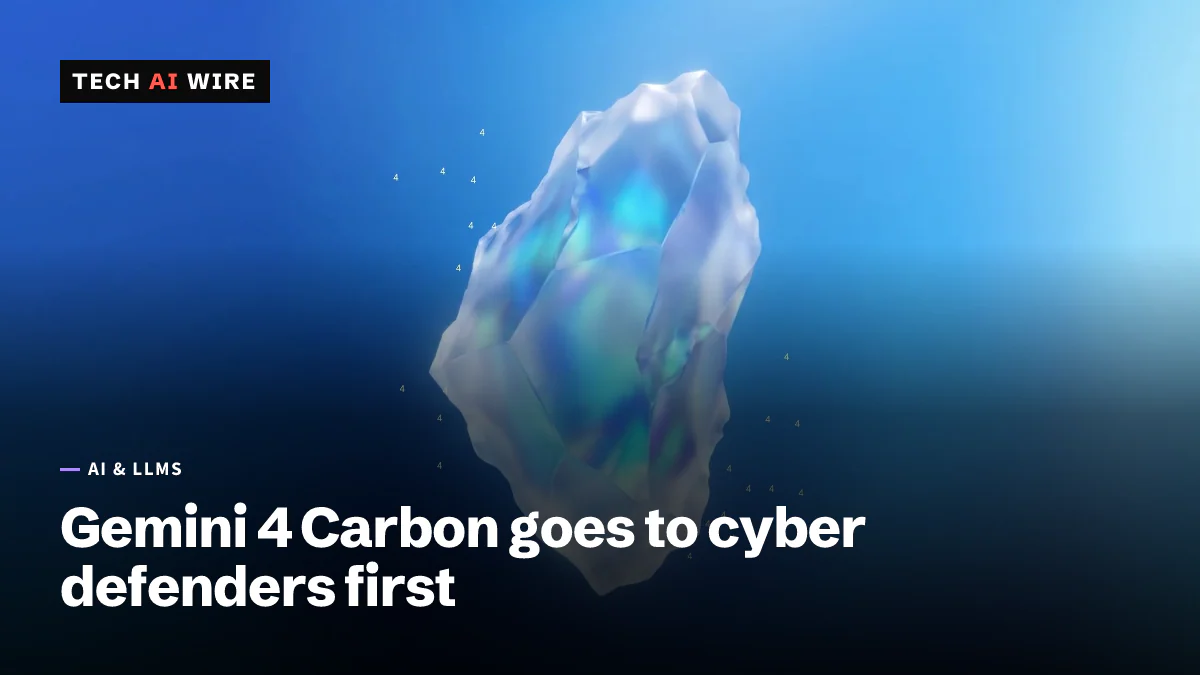
By the numbers
- Artificial Analysis Intelligence Index score, ranked first
- 59
- introductory price per million input / output tokens
- $2 / $10
- standard price after the introductory period
- $4 / $20
- token context window, per Artificial Analysis
- 1M
- SEC-bench Pro
- 88.2%
- CWE-bench (patching)
- 71%
- ExploitGym
- 54.8%
Google announced Gemini 4 Carbon on October 28, calling it "our next frontier model." It is Google's strongest model so far on the independent Artificial Analysis Intelligence Index. But almost nobody can use it yet. Carbon goes first to a subset of cyber defenders through Google's Fairwind Program, and developers will get it "soon," with no date given.
The announcement on Google's blog carries the byline of Koray Kavukcuoglu, Google DeepMind's senior vice president and Google's chief AI architect.
Who can use Gemini 4 Carbon now
Starting this week, Carbon is open only to selected security teams that defend systems against attacks. Google says access will widen step by step to more trusted partners in the Fairwind Program. It also says Carbon is part of the U.S. government's voluntary testing of models before release.
This is the same path Gemini 4 Argon took. Argon opened to cyber defenders first on October 1 and became generally available on October 13. Google's post says Argon launched two weeks before Carbon.
Google gives the reason plainly. The model is very good at finding and exploiting software flaws, so Google wants to test its guardrails before a wide release. The company reports its benchmark scores "without guardrails."
Pricing
Carbon launches at the same introductory price as Argon, Google says. That is $2 per million input tokens and $10 per million output tokens. Tokens are the small chunks of text a model reads and writes, and they are how AI APIs are billed.
After the introductory period, the price doubles to $4 for input and $20 for output. Google did not say how long the cheaper period lasts. Cached input, meaning text the model has already seen in a recent request, costs 95% less than normal input.
| Item | Price per million tokens |
|---|---|
| Input, introductory | $2 |
| Output, introductory | $10 |
| Input, standard | $4 |
| Output, standard | $20 |
| Cached input | 95% off the input price |
Benchmarks and safety numbers
Google's headline claims are about security work. Carbon scored 88.2% on SEC-bench Pro and 54.8% on ExploitGym, both of which Google calls state of the art. On CWE-bench, which tests patching flaws, it scored 71.0%. Google's Chrome team says Carbon was "more than 10X better" than another lab's large frontier model at writing high-quality patches.
Against Argon, Google reports more than twice the success rate on generating secure code. It says unsupported claims fell by about half, and high-severity misalignment alerts in live coding work fell by almost 80%. Misalignment means the model doing something its users did not intend. On the Gray Swan prompt-injection test, attacks succeeded 0.0% of the time against Carbon, compared with 0.7% for Argon.
Outside testers back up the general picture. Artificial Analysis gives Carbon 59 on its Intelligence Index, first of the 57 models it ranks, with a 1 million token context window. It also flags that Carbon is very wordy. Running the full index took 200 million output tokens, against a median of 71 million.
OfficeChai, reporting on those results, says a typical index task cost $7.76 on Carbon versus $10.04 on Claude Opus 5.5. On Artificial Analysis' coding agent test, Carbon paired with Google's Antigravity CLI scored 59, three points behind Claude Code with Opus 5.5.
What this means for developers
- You probably cannot call it yet. Unless your security team is in the Fairwind Program, plan around Argon for now. Argon went from defenders-only to general availability in 12 days, so a similar wait for Carbon is possible but not promised.
- Budget for the standard price, not the launch price. Google has not said when $2/$10 ends. Model your costs at $4/$20 so a price change does not surprise you.
- Count output tokens, not just the rate. Carbon is cheaper per task than Opus 5.5 in OfficeChai's numbers, but Artificial Analysis says it writes far more tokens than most models. Test on your own prompts before switching.
- Security teams should apply now. If you do vulnerability research or patching, the Fairwind Program is the only way in today, and Carbon's SEC-bench Pro and CWE-bench scores are its strongest results.
- Use caching for long prompts. At 95% off cached input, repeated system prompts or large code files become much cheaper once Carbon is broadly available.
Sources
- Introducing Gemini 4 Carbon, our next frontier model - Google
- Google launches Gemini 4 Carbon AI model with cybersecurity focus - Khaleej Times (Reuters)
- Gemini 4 Carbon (High): Intelligence, Performance and Price Analysis - Artificial Analysis
- Gemini 4 Carbon Beats Claude Opus 5.5 On Intelligence While Being 23% Cheaper - OfficeChai
Related articles
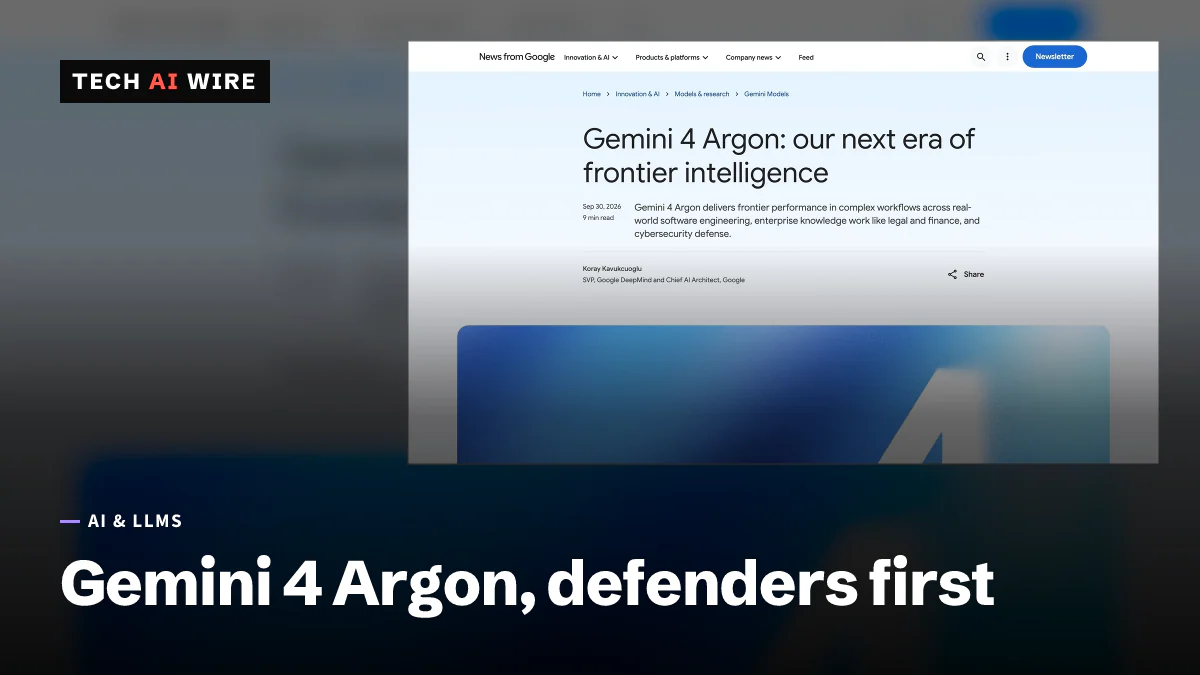
Gemini 4 Argon opens to cyber defenders before developers
Gemini 4 Argon scores 77.9% on DeepSWE v1.1 and can write 1M tokens per answer, but only cyber defenders in Google's Fairwind Program can use it so far.
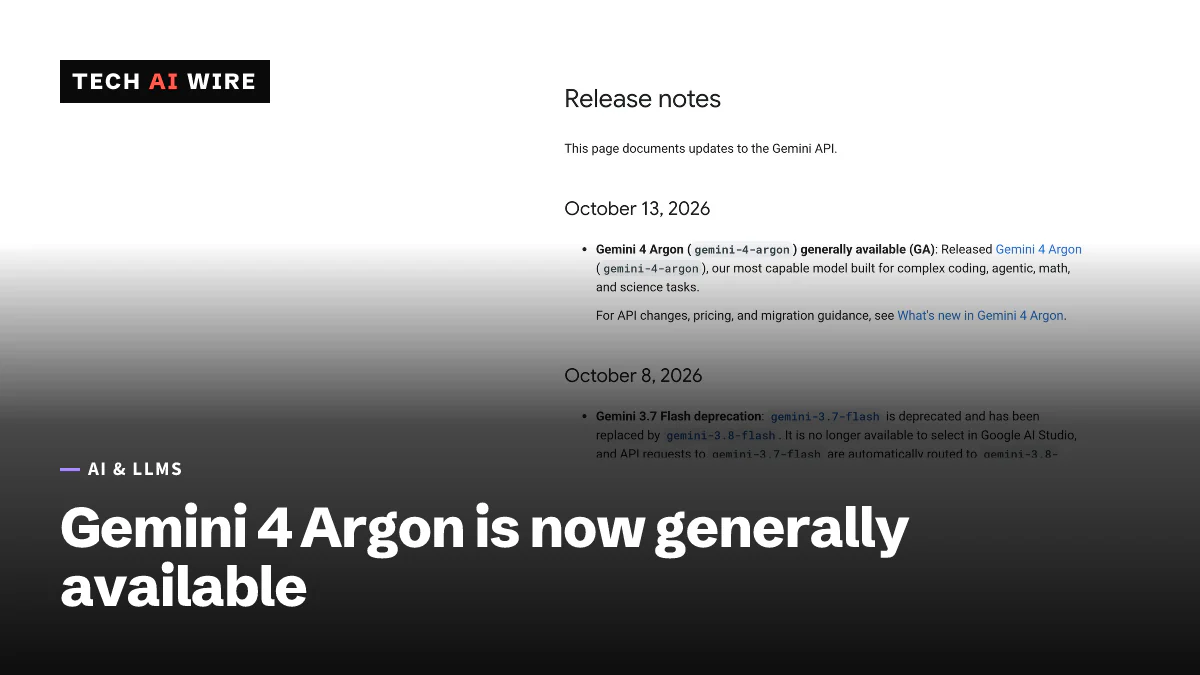
Gemini 4 Argon is now generally available at $2/$10
Google made Gemini 4 Argon generally available on October 13 at $2 per million input tokens and $10 output, a price that doubles on December 1.
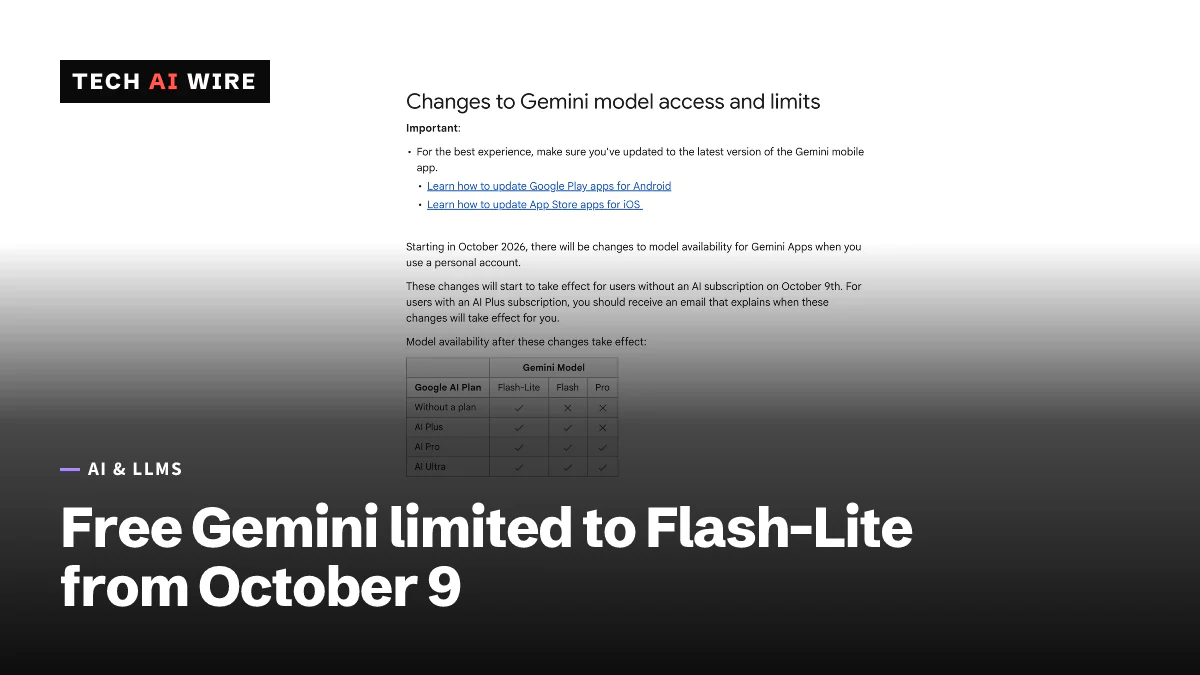
Gemini's free tier drops to Flash-Lite only on October 9
From October 9, free Gemini app users can only use Flash-Lite. AI Plus, at $4.99 a month, loses Pro on a date Google emails to each subscriber.
The weekly digest
One email every Friday with the week's top stories from all six desks: AI, dev tools, coding, the tech industry, startups and what's next. Free, no spam.