Gemini 4 Argon is now generally available at $2/$10
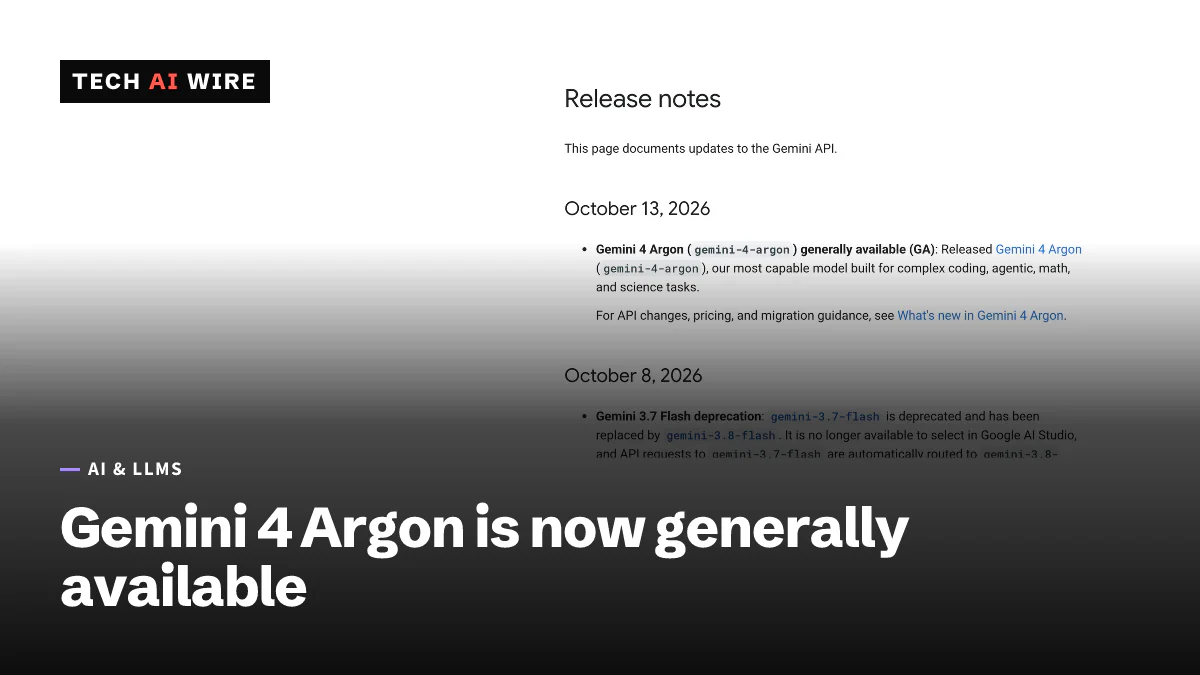
Google made Gemini 4 Argon generally available on October 13 at $2 per million input tokens and $10 output, a price that doubles on December 1.
3 min read
By the numbers
- per million input / output tokens until November 30
- $2 / $10
- standard price from December 1, 2026
- $4 / $20
- token context window, shared by input and output
- 1,048,576
- DeepSWE v1.1 score, per VentureBeat
- 77.9%
- Claude Opus 5.5
- 58
- Claude Sonnet 5.5
- 56
- Muse Wonder Full
- 56
- Gemini 4 Argon
- 53
- GPT-6 Astra
- 53
- Muse Wonder
- 52
Google made Gemini 4 Argon generally available on October 13, 2026, two weeks after limiting it to cybersecurity partners. Developers can now call it through the paid Gemini API at $2 per million input tokens and $10 per million output tokens. That launch price runs until November 30, and the standard price from December 1 is double.
Where Argon is available
The Gemini API release notes list gemini-4-argon as generally available from October 13. VentureBeat lists the places it now runs:
- The paid Gemini API and Google AI Studio
- Antigravity, Google's agentic coding environment (individual subscribers need the Ultra plan)
- Eligible Gemini Enterprise subscriptions
- The Gemini app and AI Mode in Search, for Google AI Pro and Ultra subscribers
- Android Studio and Firebase AI Logic, for Android developers
Google's developer pages say the model is not on the API's free tier. When Tech AI Wire covered the September 30 launch, only cyber defenders in Google's Fairwind Program could use it. VentureBeat reports that hundreds more security partners now join that program.
What it costs
The pricing page lists every tier, in dollars per million tokens:
| Tier | Input | Output | Cached input | From December 1 (in / out / cached) |
|---|---|---|---|---|
| Standard | $2.00 | $10.00 | $0.10 | $4.00 / $20.00 / $0.20 |
| Batch and Flex | $1.00 | $5.00 | $0.05 | $2.00 / $10.00 / $0.10 |
| Priority | $3.60 | $18.00 | $0.18 | $7.20 / $36.00 / $0.36 |
Output prices include thinking tokens, the model's internal reasoning. Cached input is text the model has already processed, billed at a discount. Batch and Flex trade speed for a lower price. Priority costs more for faster, more reliable responses.
For comparison, the same page lists Gemini 3.8 Flash at $0.75 input and $3.75 output.
Limits and features
Google's model guide gives Argon a context window of 1,048,576 tokens. That window is shared by the input, the model's thinking and its output. By default a reply can run to 65,536 tokens. Longer background requests can produce up to about 1 million tokens, minus the input.
The model accepts text, images, video, audio and PDFs, and replies in text only. It supports function calling, code execution, search grounding, structured outputs and computer use in preview. It does not generate images or audio.
Three settings control how hard it thinks: low, medium and high, with medium as the default. Caching is automatic for prompts of at least 4,096 tokens, and the usual temperature and top-p sampling settings are ignored.
Benchmarks
VentureBeat reports these scores against rival models:
| Benchmark | Gemini 4 Argon | Claude Opus 5.5 | GPT-6 Astra |
|---|---|---|---|
| DeepSWE v1.1 (coding) | 77.9% | 74.2% | 74.1% |
| Zapier AutomationBench | 51.3% | 42.5% | 41.4% |
| Terminal-Bench 4.0 | 57.4% | 66.4% | not reported |
| Artificial Analysis index | 53 | 58 | 53 |
VentureBeat also cites Google's safety figures: unauthorized shortcuts in 2% of coding evaluation attempts, and a 0.7% success rate for indirect prompt injection attacks over 15 adaptive attempts.
Sam Witteveen, chief executive of Red Dragon AI, gave a mixed verdict to VentureBeat. "This is a really, really, really good model. But is it the best model out there? I actually don't think it is," he said.
What this means for developers
- Lock in tests before December 1. The launch price lasts until November 30. Benchmark Argon on your workload now, then budget at the doubled standard price.
- Use Batch or Flex for offline jobs. At half the standard price, they suit evaluations, data labeling and other work that can wait.
- Set output limits deliberately. Replies stop at 65,536 tokens by default. Google suggests 131,072 or 262,144 tokens for complex tasks, and every output token is billed at the output rate.
- Drop sampling settings. Argon ignores temperature, top-p and top-k. Code that tunes them for variety will need another approach.
- Compare on agent work, not just coding. Argon leads on DeepSWE and AutomationBench in VentureBeat's table but trails Claude Opus 5.5 on Terminal-Bench 4.0 and the Artificial Analysis index. Meta's Muse Wonder, launched a day earlier, sits in the same range.
Sources
- Release notes | Gemini API - Google AI for Developers
- Gemini Developer API pricing - Google AI for Developers
- Google makes Gemini 4 Argon broadly available with limited-time low API pricing of $2/$10 per 1M token - VentureBeat
Related articles
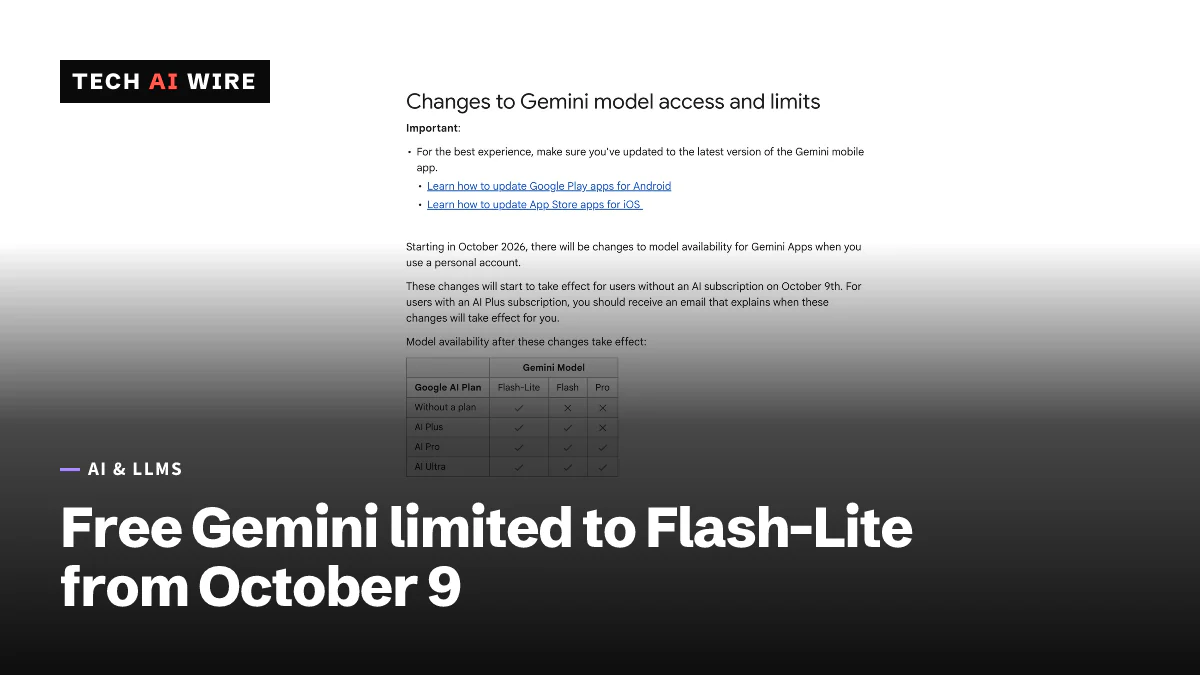
Gemini's free tier drops to Flash-Lite only on October 9
From October 9, free Gemini app users can only use Flash-Lite. AI Plus, at $4.99 a month, loses Pro on a date Google emails to each subscriber.
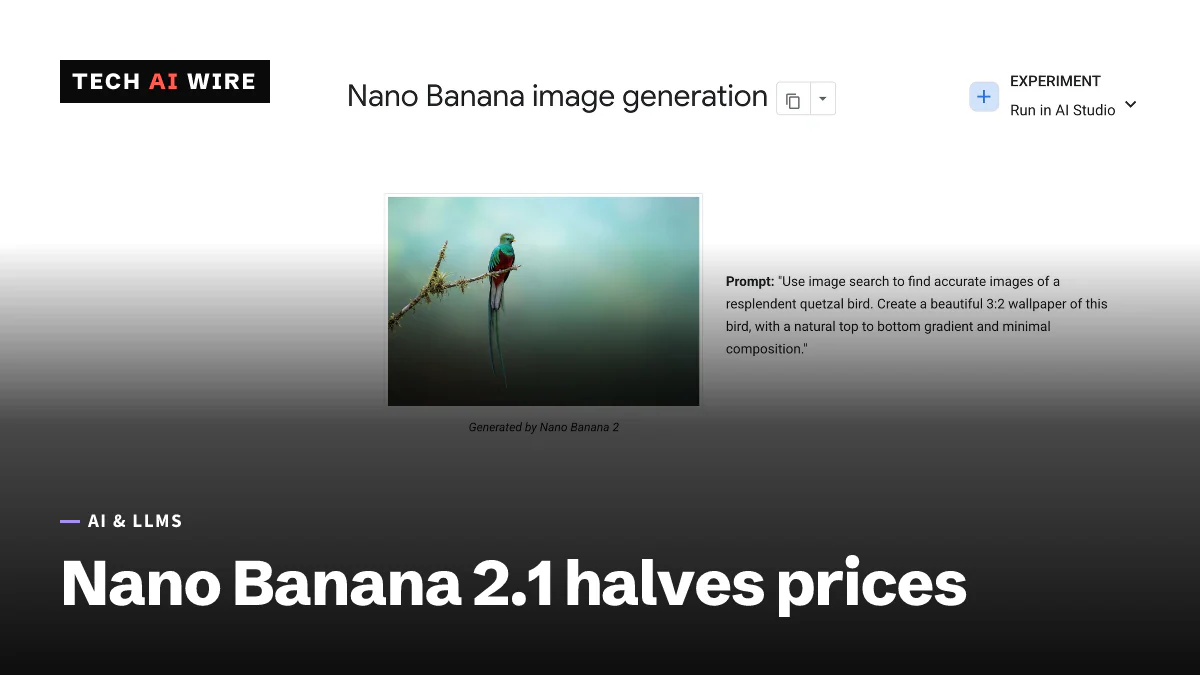
Nano Banana 2.1 halves the price of Gemini images
Google's Nano Banana 2.1 image model costs $0.0336 per 1K image in the Gemini API, half the price of Nano Banana 2, which Google has now deprecated.
Gemini 4 Argon opens to cyber defenders before developers
Gemini 4 Argon scores 77.9% on DeepSWE v1.1 and can write 1M tokens per answer, but only cyber defenders in Google's Fairwind Program can use it so far.
The weekly digest
One email every Friday with the week's top stories from all six desks: AI, dev tools, coding, the tech industry, startups and what's next. Free, no spam.