CERN migrates 2,200 industrial computers from RHEL to Debian 13
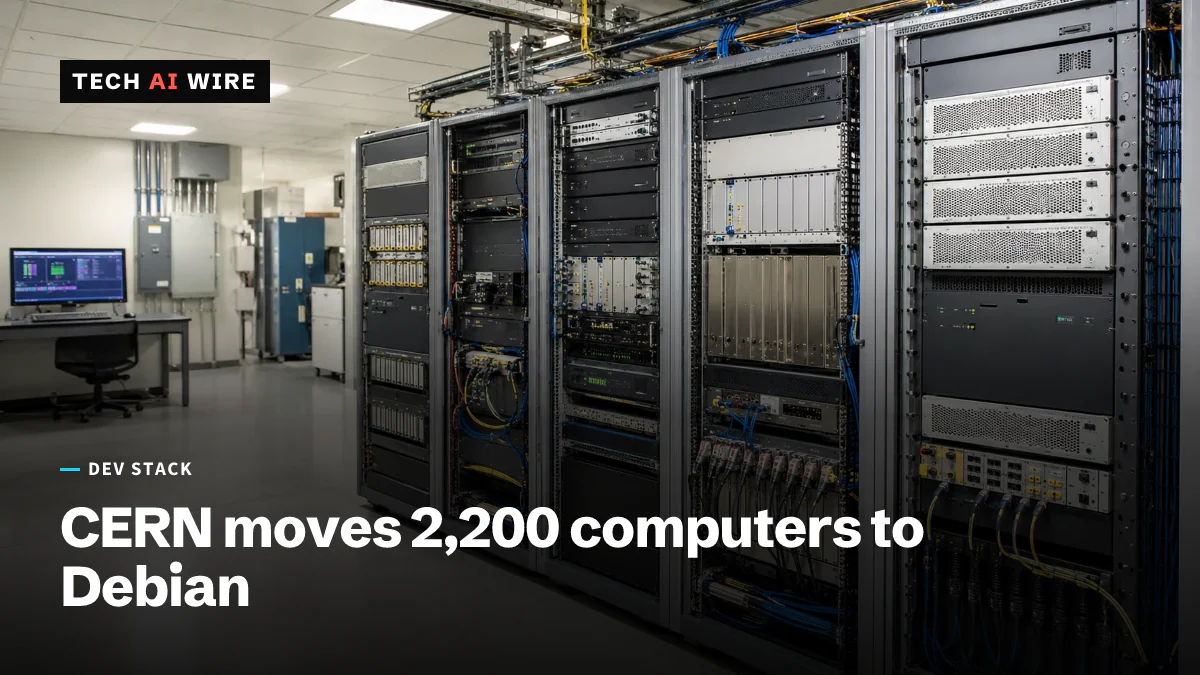
CERN is moving more than 2,200 industrial and embedded computers from RHEL to Debian 13, after a RHEL default compiler setting threatened to lock out older hardware.
3 min read
By the numbers
- industrial and embedded computers CERN is migrating to Debian 13
- 2,200+
- CERN ran Scientific Linux before switching to CentOS in 2015
- 10 years
- the RHEL default compiler baseline that pushed the migration
- x86-64-v2
CERN is migrating more than 2,200 industrial and embedded computers away from Red Hat Enterprise Linux and onto Debian 13, Phoronix reports. The reason is not a security flaw or a licensing dispute. It is a compiler default that would have quietly locked out hardware CERN still relies on to run its particle accelerators.
CERN's main data centers and experimental computing are not part of this move. Phoronix reports that infrastructure stays on RHEL and AlmaLinux. Only the industrial and embedded fleet, the machines that control physical accelerator hardware, is switching.
Why a compiler default forces a full migration
RHEL 9 compiles software against a baseline CPU instruction set called x86-64-v2. Phoronix reports that default would leave some of CERN's older machines unable to run RHEL at all. Slashdot describes the affected hardware as older systems, including some 2013-era Xeon processors, and reports that CERN characterizes the change as "forced obsolescence."
The hardware in question still works. It runs the job it was built for. It becomes unsupportable only because a newer operating system version assumes a newer processor sits underneath it.
Not CERN's first move away from Red Hat's family
CERN has changed its Linux base before. Phoronix reports the lab ran its own Scientific Linux, built on Red Hat's code, for about a decade before switching to CentOS in 2015.
| Era | Operating system |
|---|---|
| About a decade, ending 2015 | Scientific Linux |
| 2015 to now | CentOS, then RHEL-family systems |
| Migration target | Debian 13 |
That earlier switch did not last either. Linuxiac reports the more immediate trigger for leaving the RHEL family behind this time was CentOS's own change of direction, which the outlet describes as a premature end-of-life. Two CERN engineers, Federico Vaga and Nikos Tsipinakis, presented the migration plan at MiniDebConf Winterthur in 2026, according to Linuxiac.
What the move will not fix right away
The migration carries real cost. Phoronix reports CERN has flagged genuine tooling gaps in the Debian ecosystem. There is no standard infrastructure yet for automated package building and publishing. Existing tools also struggle to handle multiple versions of the same package at once.
Those gaps are the unglamorous operational tools a fleet this size actually needs day to day. A smaller distribution's default tooling does not always provide them out of the box.
What this means for developers
Read this as a warning about compiler baseline defaults, not about RHEL specifically. Any operating system or toolchain can quietly raise its minimum CPU baseline in a routine-looking release. If you maintain software that runs on long-lived embedded or industrial hardware, check what instruction set your build target assumes today. Then confirm whether your vendor has a public policy for how that baseline moves over time.
Separate what breaks from what merely ages out. CERN's hardware did not fail. It was excluded by an assumption baked into a newer compiler default. That is a different failure mode than a broken part, and it deserves a different response. Pin your build target explicitly, rather than trusting a distribution's default to keep matching your oldest deployed machine forever.
Expect the packaging-tooling gap CERN describes if you consider a similar migration yourself. Enterprise-grade fleets lean on infrastructure, like automated builds and clean multi-version package handling, that a smaller distribution's default tooling was not necessarily built for at that scale. Budget real time for that gap specifically, rather than assuming a like-for-like distribution swap.
Sources
Related articles
Debian Code Search drops its last cgo dependency
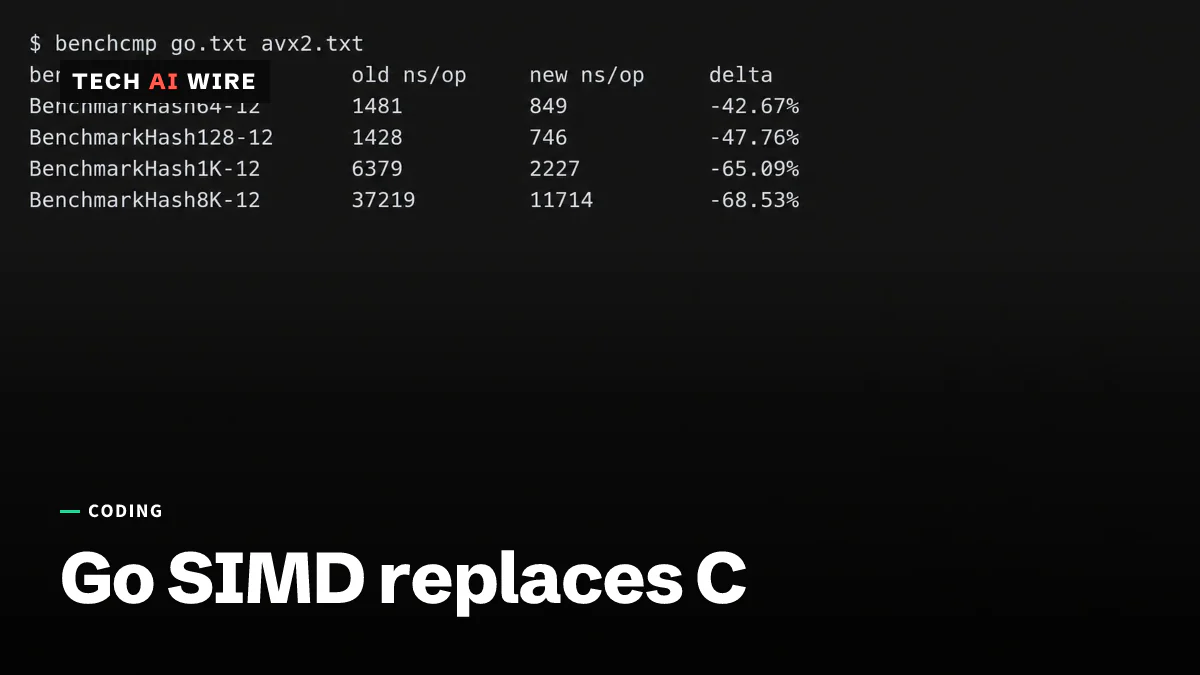
Michael Stapelberg replaced a 7-year-old C library with pure Go using the experimental SIMD package, and matched the C version's speed.
COSMIC Epoch 1.11 adds xdg-dialog-v1, hybrid GPU fixes
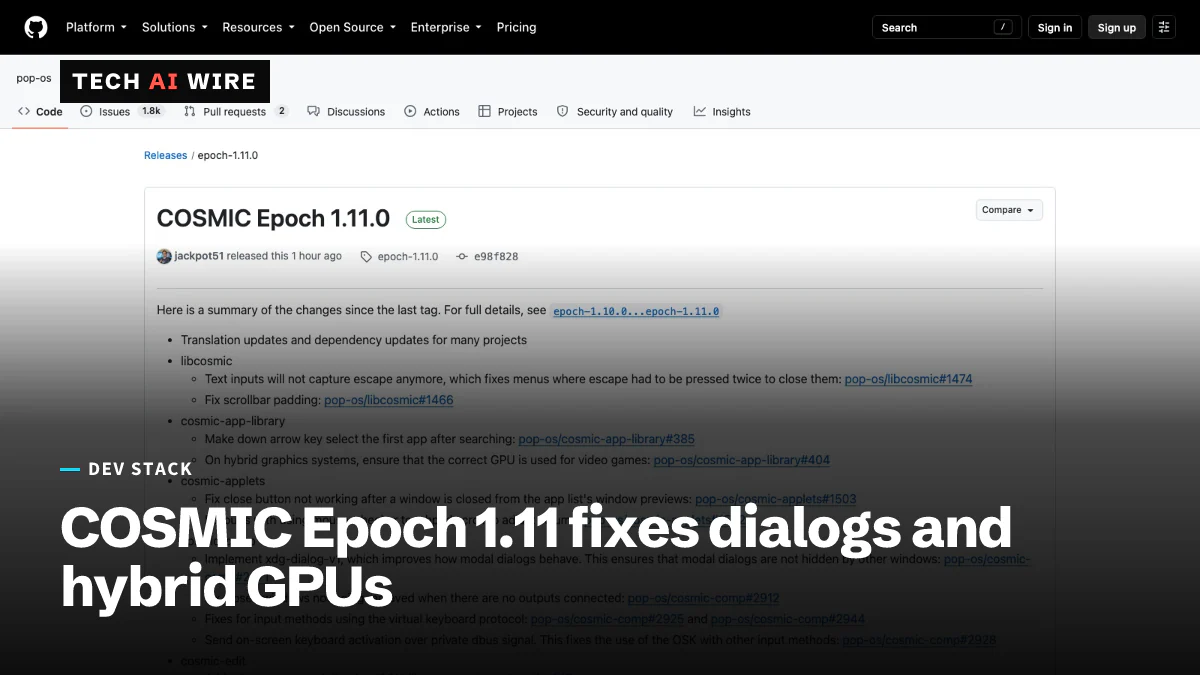
COSMIC Epoch 1.11 keeps modal dialogs on top with Wayland's xdg-dialog-v1 and sends games to the right GPU on hybrid laptops, 12 days after 1.10.
KDE Plasma 6.8 ships on KDE's 30th birthday without X11
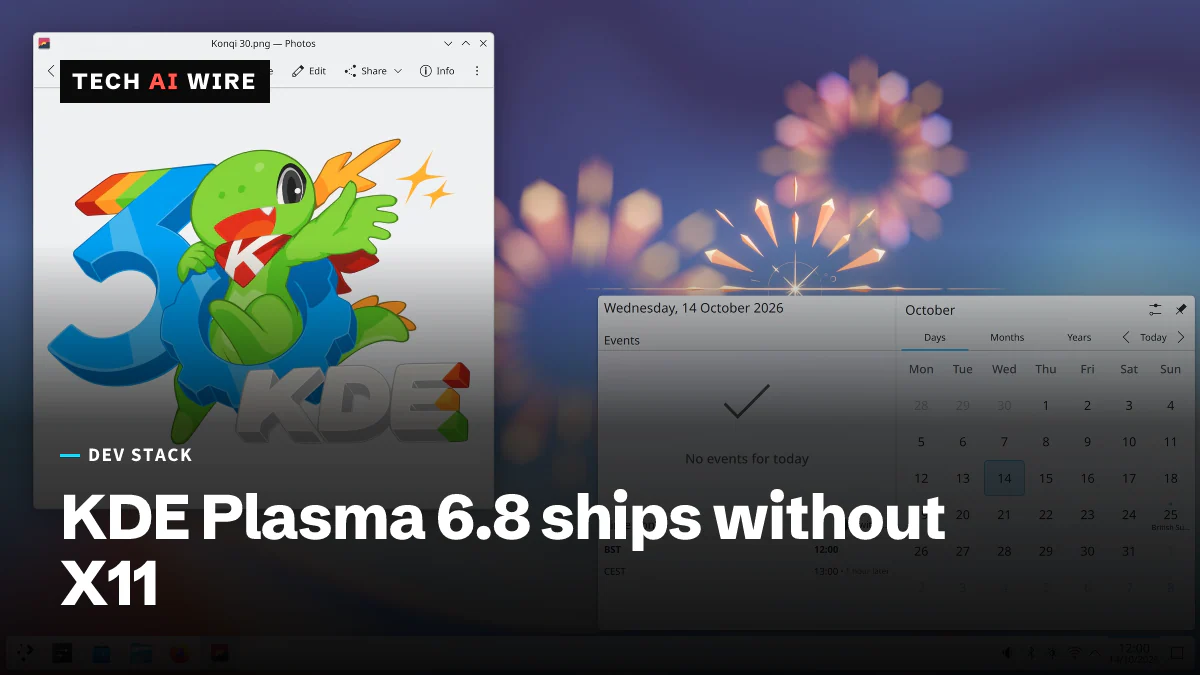
KDE released Plasma 6.8 on October 14, 2026, its 30th anniversary. It retires the X11 session, ships the Kup backup tool and adds a dwell clicker.
The weekly digest
One email every Friday with the week's top stories from all six desks: AI, dev tools, coding, the tech industry, startups and what's next. Free, no spam.