Volvo expands NVIDIA deal for eyes-off driving
Volvo will build its next automated driving system on NVIDIA Hyperion, Halos OS and Alpamayo. It should reach Volvo cars before 2030, with China excluded.
3 min read
By the numbers
- NVIDIA layers named: Hyperion, Halos OS, Alpamayo
- 3
- Volvo cars should get it before this year
- 2030
- trillion operations a second for DRIVE Thor, Volvo's planned chip
- 1,000
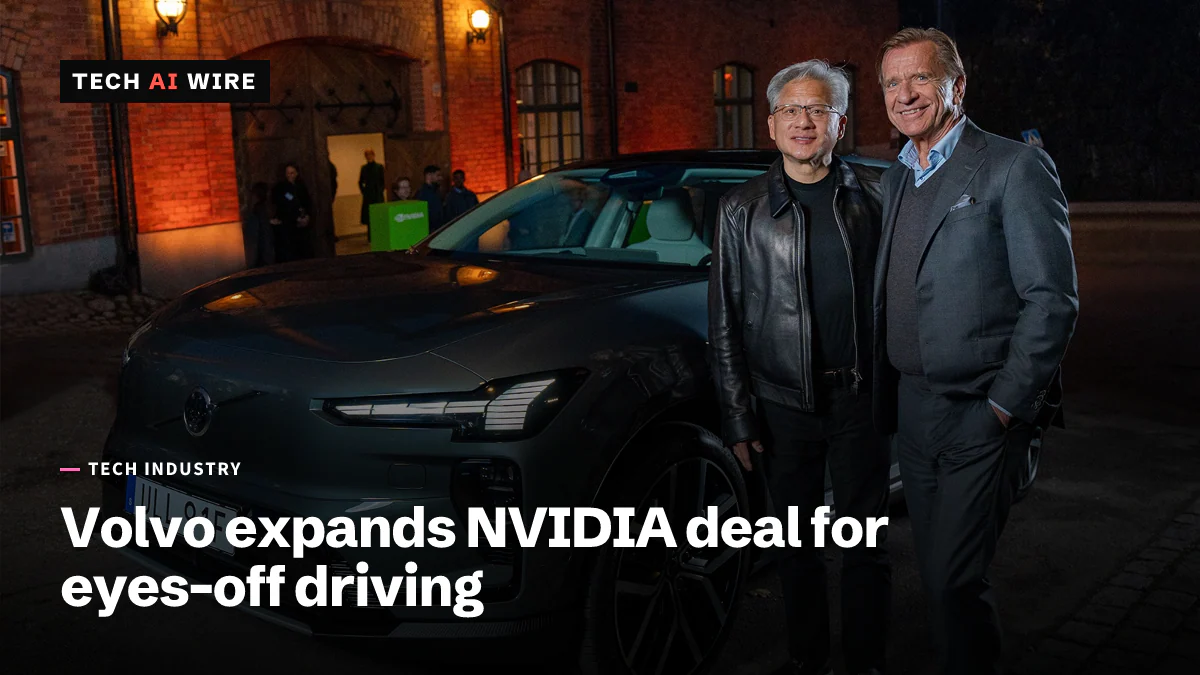
Volvo Cars and NVIDIA expanded their partnership on October 15, 2026. Volvo's next automated driving system will run on NVIDIA's Hyperion hardware platform, its Halos operating system and its Alpamayo driving software. The deal matters because a carmaker known for safety is handing much of its self-driving stack to a chip company. The first cars should arrive before 2030.
What the deal covers
NVIDIA's announcement names three parts of its automotive stack:
| NVIDIA part | What it is |
|---|---|
| Hyperion | The sensor and computer architecture in the car |
| Halos OS | The operating system that runs the driving software |
| Alpamayo | The driving software stack |
The technology will debut in "a next-generation Volvo car" that is part of Volvo's largest product push to date, NVIDIA says. Neither company named the model or a launch date. NVIDIA describes a system that covers highways, city streets and parking, "from door to door." It promises a "gradual introduction of eyes-off and mind-off driving," where the person at the wheel can stop watching the road.
Jensen Huang, NVIDIA's founder and CEO, framed it as a computing story: "Accelerated computing has transformed the car into an intelligent machine that can understand the world around it." Volvo's statement leaned on its safety record. "Volvo has been synonymous with car safety for almost 100 years," said Håkan Samuelsson, president and CEO of Volvo Cars.
The rollout plan
Reuters, in a report carried by Global Banking & Finance Review, added the timeline the press release left out:
- First step: supervised driving features, where the driver stays responsible for the car.
- Later: hands-free driving on highways and in cities, added gradually. No dates were given.
- Timing: the technology should appear in Volvo cars before 2030.
- Markets: it will launch in several regions at once, but not in China.
Volvo has not chosen a pricing model, Reuters reports, and the features will not be limited to its more expensive cars. Ali Kani, who runs NVIDIA's automotive business, told Reuters that "the most important functionality of autonomous driving assist technology is safety."
Reuters also notes that Volvo is majority owned by China's Geely Holding. NVIDIA's other car partners include Mercedes, Jaguar Land Rover and Hyundai.
How the partnership got here
The two companies have worked together for years. In 2024, Volvo said its EX90 ran on NVIDIA's DRIVE Orin computer, at over 250 trillion operations per second. It also said cars on the next chip, DRIVE Thor, would arrive later this decade, Electronic Specifier reported. Thor was rated at up to 1,000 trillion operations per second, four times Orin. Volvo's software unit, Zenseact, already trains its driving models on NVIDIA's DGX systems.
The new deal goes further than chips. Volvo is now taking NVIDIA's operating system and driving software as well, not only its computers.
What this means for developers
For engineers in automotive software, the deal is another sign that carmakers are buying a full driving stack instead of building every layer. Teams that work on Volvo platforms should expect NVIDIA's Halos OS and its tooling to become a skill worth learning.
For companies that build parts and services around cars, the China exclusion matters. A product that plugs into Volvo's new driving system will need a separate plan for China, Volvo's largest owner's home market.
For anyone budgeting for driver-assistance features, watch the pricing. Volvo says the features will not be limited to premium models, but it has not said whether they will cost extra or come as a subscription.
The main open question is timing. "Before 2030" leaves a wide window, and hands-free driving has no date at all. Watch for the name of the first car and its launch date.
Sources
- Volvo Cars and NVIDIA Expand Partnership to Advance Safe Automated Driving - NVIDIA Newsroom
- Volvo Cars Expands Automated Driving Partnership With Nvidia - Reuters via Global Banking & Finance Review
- Volvo Cars expands collaboration with NVIDIA - Electronic Specifier
Related articles
Nvidia Shield TV Pro rises $100 to $299 on memory costs
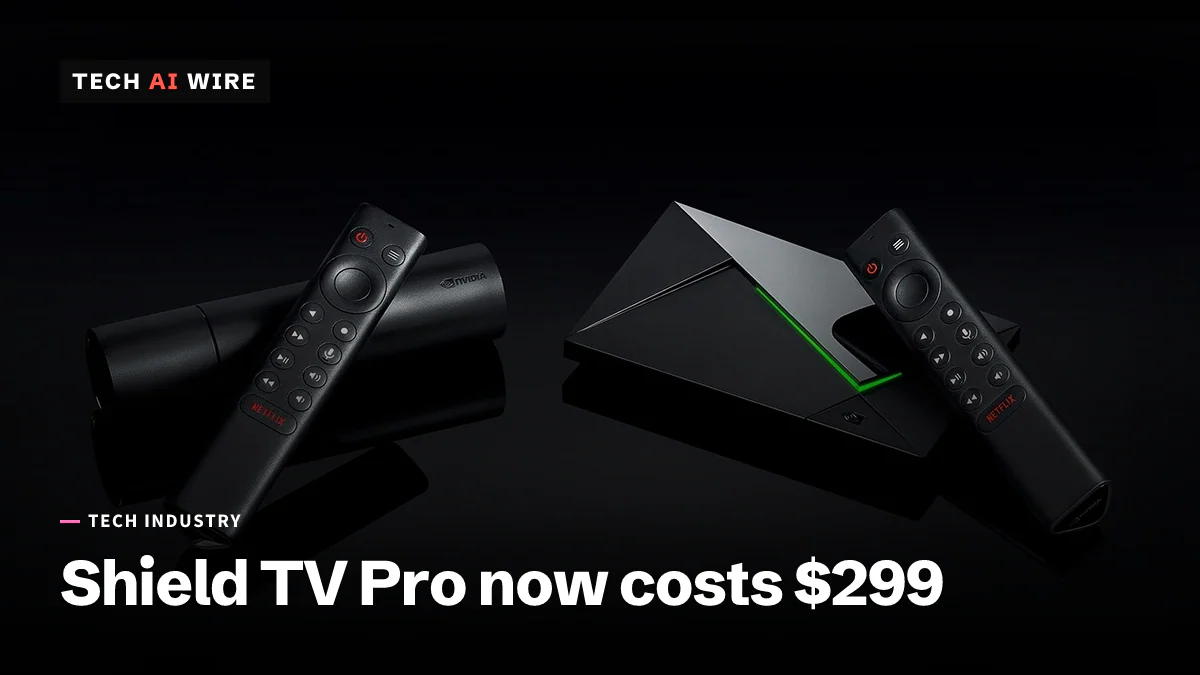
Nvidia raised the Shield TV Pro by $100 to $299.99 on October 2, citing memory costs, and discontinued the cheaper Shield TV. The hardware dates from 2019.

Nvidia posts $96.2B quarter and guides to $108B for Q3
Nvidia reported $96.2 billion in revenue, up 106% in a year, with data centre sales at $89 billion. Its own release guides to $108 billion for this quarter.

Nvidia RTX Spark laptops go on sale from $2,599
Nvidia RTX Spark laptops from six makers went on sale on October 16 from $2,599, with up to 128GB of memory and a new 74B open model, Nemotron 3.5 Bolt.
The weekly digest
One email every Friday with the week's top stories from all six desks: AI, dev tools, coding, the tech industry, startups and what's next. Free, no spam.