iPhone 18 Pro Max may get a camera the smaller Pro can't fit
A leaker says the iPhone 18 Pro Max alone gets a variable-aperture main camera, because the mechanism needs more room than the smaller Pro's chassis has.
4 min read
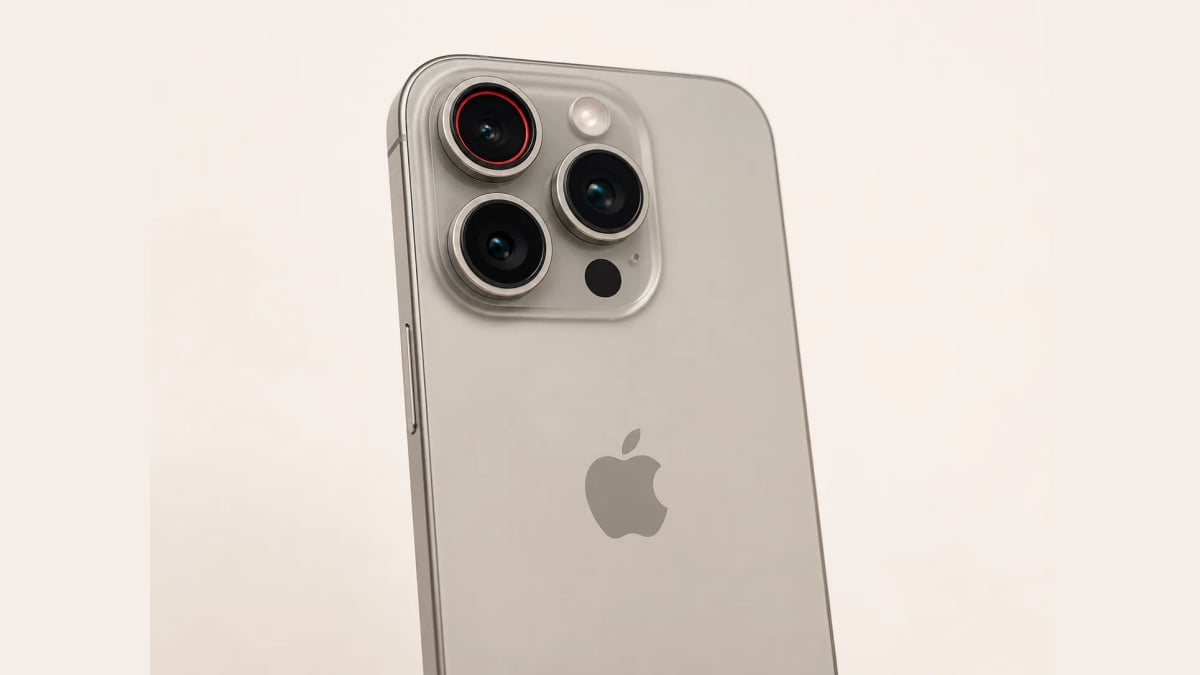
The iPhone 18 Pro Max will get a variable-aperture main camera and the smaller iPhone 18 Pro will not, according to the Weibo leaker Ice Universe, whose claim was picked up on 18 August by MacRumors, 9to5Mac and Cult of Mac. The reason given is physical rather than commercial: per Cult of Mac, "the mechanism needs more internal room than the smaller chassis can offer." If that holds, the two Pro iPhones stop being the same phone in two sizes - and any app that treats "Pro" as a single capability tier starts making a bet it can lose.
What a variable aperture actually does
A fixed-aperture phone camera has one opening size; everything else is software. A variable aperture adds a physical iris that widens and narrows the opening, as Cult of Mac describes it, changing how much light reaches the sensor. MacRumors frames the effect in familiar terms: manual control over the lens opening, the way a DSLR works, and with it real control over depth of field and background blur.
That matters because the blur in a phone portrait today is largely computed - estimated from depth data and applied afterwards. An iris produces the same effect optically, in one exposure. It also gives a photographer the other half of the trade: closing the aperture down for a deeper focal plane, which no amount of post-processing reconstructs convincingly.
Why the smaller Pro is said to miss out
The space argument is the whole story, and it has one piece of supply-chain evidence behind it. MacRumors and Cult of Mac both point to internal files from Apple supplier Tata Electronics, leaked in June, showing the Pro Max with a Sony IMX905 sensor that supports variable aperture. Both outlets are careful about what the documents did not say: the smaller Pro was not mentioned in them at all.
That is absence of evidence, not evidence of absence, and MacRumors says so plainly - the leaked files simply may not have covered the other model. The mechanism-size explanation comes from Ice Universe, not from the documents. On Cult of Mac's account, the Pro Max's larger body is what makes room for both a bigger battery and the iris assembly.
What each model is claimed to get
Everything in this table is rumour-grade and none of it is confirmed by Apple.
| Claim | iPhone 18 Pro | iPhone 18 Pro Max |
|---|---|---|
| Variable-aperture main camera | Not expected | Expected (Ice Universe) |
| Optical zoom | 5x–6x (9to5Mac) | 6x (9to5Mac) |
| Five-refraction prism | Not mentioned | Expected (9to5Mac) |
| Display size | 6.3in (Macworld) | 6.9in (Macworld) |
| Battery | Not specified | 5,235 mAh Nano SIM, 5,425 mAh eSIM-only (Macworld) |
| Chip | A20 Pro, TSMC 2nm | A20 Pro, TSMC 2nm |
How much to trust this
The claim comes from one leaker, and the outlets carrying it do not fully agree. 9to5Mac describes two camera features as possibly Pro Max-exclusive - 6x optical zoom and a five-refraction prism - while MacRumors and Cult of Mac concentrate on the aperture alone. 9to5Mac does not mention the Tata Electronics leak. Cult of Mac adds the caveat that matters most this close to an event: camera specs are known to shift right up until launch.
There is precedent for the split, at least. MacRumors notes this would be the first differentiation between Pro models since the iPhone 15 Pro, which went without the tetraprism telephoto its larger sibling got.
A useful calibration on leak precision: the same week's reports could not agree on the A20 Pro's performance. MacRumors put it at up to 18% faster than the A19, Macworld at up to 15%, with both landing on 30% better power efficiency. Numbers at this stage are directional.
What this means for developers
The concrete action is capability detection. If two phones sold in the same tier, the same week, differ in camera hardware, then branching on a model name or a "Pro" label is a bug waiting for September. Ask the system what the attached camera can do and build the UI from the answer - an aperture control that appears on one device and not another, rather than a control that exists and silently does nothing.
Anyone shipping a camera app should also plan for optical and computed blur coexisting on the same lineup. If the Pro Max produces depth-of-field optically while the Pro keeps synthesising it, your output stops being comparable across two devices your users think of as the same product. Decide now whether that difference is something you surface honestly or normalise away.
For everyone else, the calendar is the practical part: MacRumors expects both Pro models next month alongside the foldable iPhone Ultra, and Macworld has the standard iPhone 18 slipping to spring 2027. Test-device budgets for the autumn should assume the Pro and Pro Max are now two different test targets, not one in two sizes. That is a cheap assumption to hold and an expensive one to discover in October.
Update, September 9, 2026: this did not hold. Apple gave both Pro sizes the variable-aperture main camera, and named the foldable iPhone Duo rather than iPhone Ultra - see iPhone 18 Pro and iPhone Duo, Apple's first foldable.
Sources
- iPhone 18 Pro Max Rumored to Get Exclusive Camera Upgrade - MacRumors
- Two camera features may be unique to the iPhone 18 Pro Max, suggests leaker - 9to5Mac
- iPhone 18 Pro Max might get big camera upgrades that regular Pro lacks - Cult of Mac
- iPhone 18 Pro & Pro Max Rumors: Release Date, A20 Chip, Dynamic Island Changes and more - Macworld
- iPhone 18 Pro and iPhone Ultra: New Details Leak as Apple Event Nears - MacRumors
Related articles
iPhone Duo cover layer is replaceable, $19 with AppleCare+
Apple's Kate Bergeron says the iPhone Duo's crease-hiding cover layer peels off and is replaced for $19 with AppleCare+. No price yet without coverage.

iPhone 18 Pro and iPhone Duo, Apple's first foldable
Apple announced the iPhone 18 Pro at $1,199 and its first foldable, the iPhone Duo, arriving in October. Variable aperture landed on both Pro sizes, not just the Max.
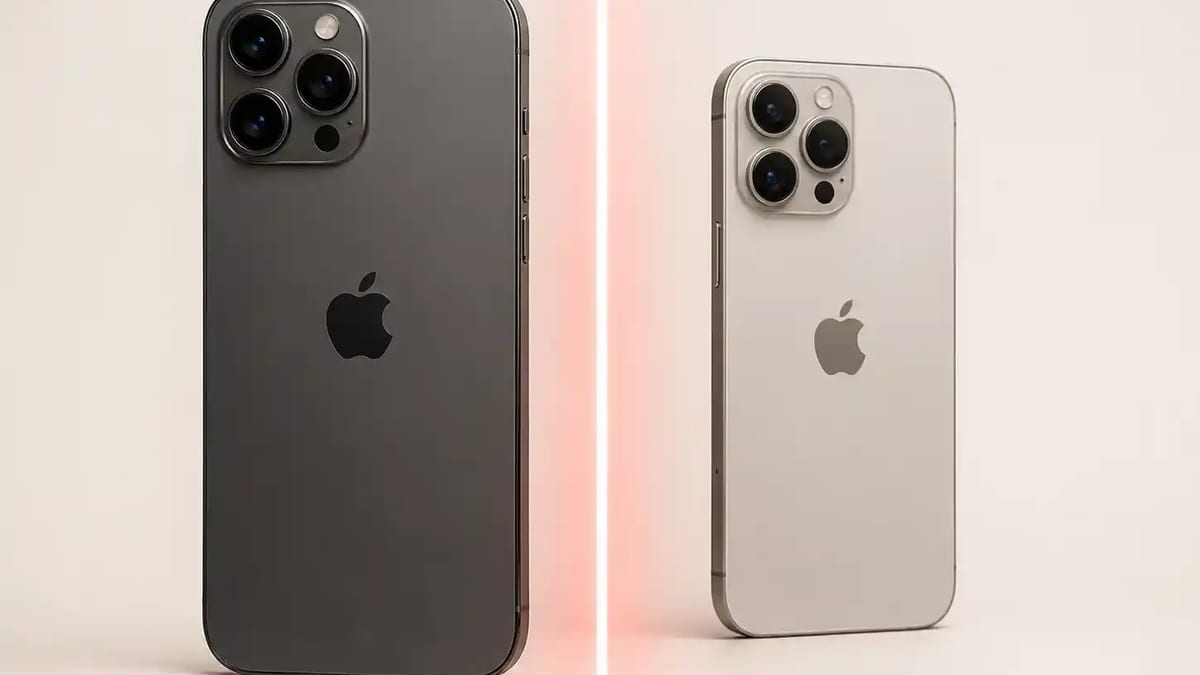
Apple splits the iPhone 18 launch: Pro this fall, the rest in 2027
Apple will reportedly split the iPhone 18 launch for the first time since iPhone 11: Pro and foldable models arrive this September, the standard 18 waits for 2027.
The weekly digest
One email every Friday with the week's top stories from all six desks: AI, dev tools, coding, the tech industry, startups and what's next. Free, no spam.