Edge begins dropping Manifest V2, leaving uBlock Origin to Firefox
Microsoft Edge has begun phasing out Manifest V2 extensions, cutting off classic uBlock Origin and leaving Firefox as the last major browser still running it.
3 min read
By the numbers
- of top Manifest V2 extensions already have MV3 versions, per Winaero
- 95%
- MV2 extensions still have meaningful user adoption
- 58
- of those 58 lack a publicly available MV3 version
- 3
Microsoft Edge has started phasing out Manifest V2, the extension architecture the classic uBlock Origin ad blocker is built on, with the consumer rollout beginning in August 2026 and finishing by the end of the year, according to Winaero. With the rest of the Chromium family on the same path, PCWorld reports that Firefox is now the only major browser where the full extension still works - which means anyone who builds, tests, or depends on browser extensions now has a hard deadline instead of a vague warning.
Why Manifest V3 breaks ad blockers
Manifest V3 is the extension architecture Google introduced across Chromium to replace Manifest V2. According to PCWorld, the new model removes access to the functions ad-blocking extensions use to identify and block ads, which is why the change hits blockers harder than most extension categories. uBlock Origin's developer ships an MV3 version, uBlock Origin Lite, but PCWorld describes it as reduced-functionality and Winaero calls it noticeably less capable than the Manifest V2 original. On Chromium browsers, users are left choosing between the Lite version and whatever ad blocking the browser builds in itself.
Microsoft's timeline for Edge
Winaero reports the following schedule for Edge's Manifest V2 phase-out:
| Milestone | Timing |
|---|---|
| Consumer phase-out begins | August 2026 |
| Consumer transition complete | End of 2026 |
| Enterprise deprecation | Early 2027 |
Microsoft's position, quoted by Winaero, is that "the ecosystem is now largely ready for the change": 95% of the most-used Manifest V2 extensions already have MV3 versions, only 58 MV2 extensions retain meaningful user adoption, and just 3 of those 58 lack a publicly available MV3 version. The catch sits inside that framing - "has an MV3 version" is not the same as "works as well as before," and uBlock Origin is the highest-profile case where the two diverge.
Where each browser stands
- Firefox keeps supporting Manifest V2 and uBlock Origin. Its official statement, posted on Bluesky and quoted by PCWorld: "Our support for uBlock Origin isn't going anywhere."
- Microsoft Edge is phasing MV2 out on the timeline above, per Winaero.
- Opera, Brave, Vivaldi, and Samsung Browser are built on Chromium and are following Google's lead on the V2-to-V3 transition, according to PCWorld.
- Safari and DuckDuckGo are the only other major non-Chromium browsers, and PCWorld notes neither supports uBlock Origin either.
Because Firefox runs its own engine rather than Chromium, it is not tied to Google's extension roadmap - which is how it can hold the line while every Chromium-based browser converges on MV3.
What this means for developers
If you maintain a Manifest V2 extension, the deprecation clock now has real dates: consumer Edge finishes the transition by the end of 2026 and enterprise follows in early 2027, per Winaero. Port to MV3 now, and if your extension is one of the few with no MV3 version, decide this quarter whether it has a future on Chromium at all - or whether Firefox, which still runs MV2, becomes its primary home.
If you build websites, expect the mix of ad blockers hitting your pages to shift: fewer full uBlock Origin installs on Chromium, more Lite variants and built-in browser blocking. Any analytics, consent, or ad-recovery logic that was tuned against classic uBlock Origin behavior is worth re-testing against that new mix.
And if your team standardizes browsers for extension testing, the practical matrix just changed: Chromium-family browsers for MV3 behavior, Firefox as the one mainstream environment where full MV2 extensions still run.
Sources
Related articles
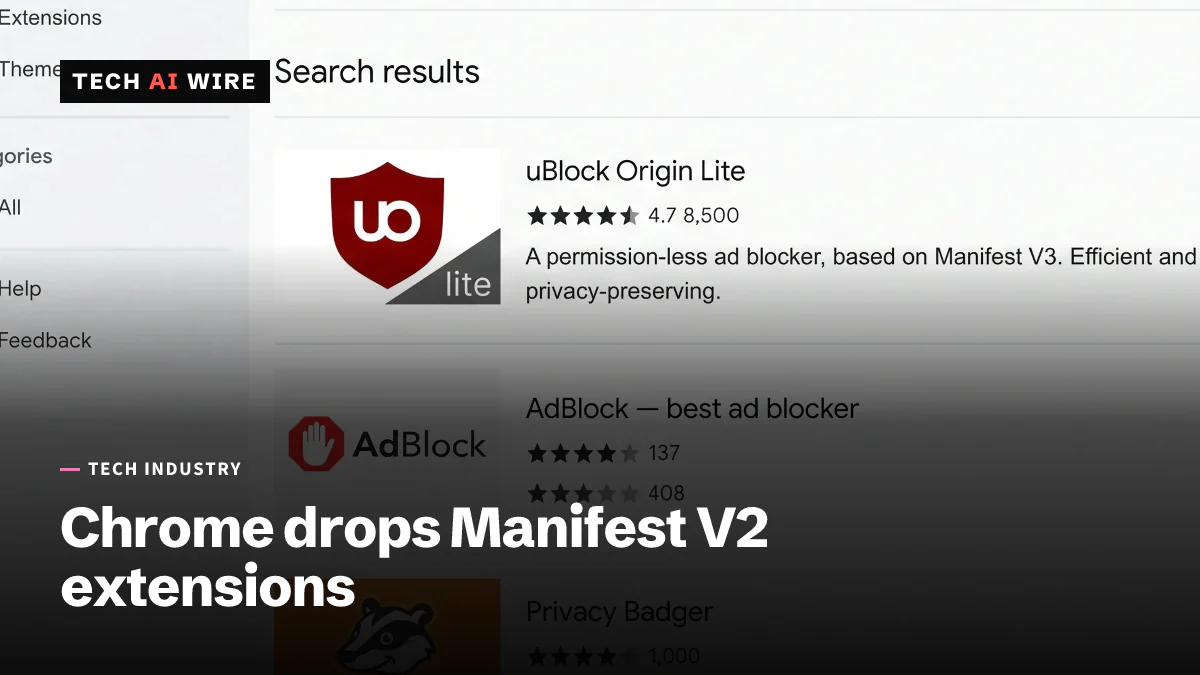
Google pulls every Manifest V2 extension from the Chrome Web Store
The last Manifest V2 extensions, classic uBlock Origin among them, are gone from the Chrome Web Store. Copies already installed keep running, but they get no updates.
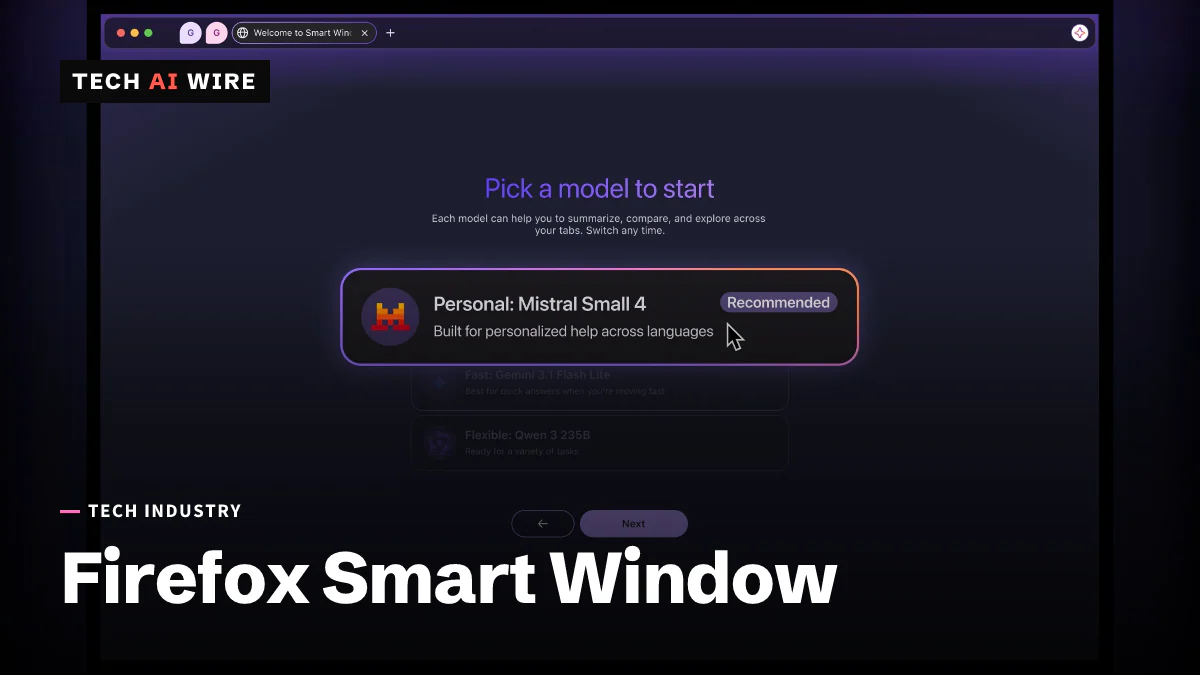
Firefox Smart Window beta now runs on Mistral Small 4
Mozilla says Mistral Small 4 powers the Smart Window beta in the US, Canada and France, and that users can still pick a different model.
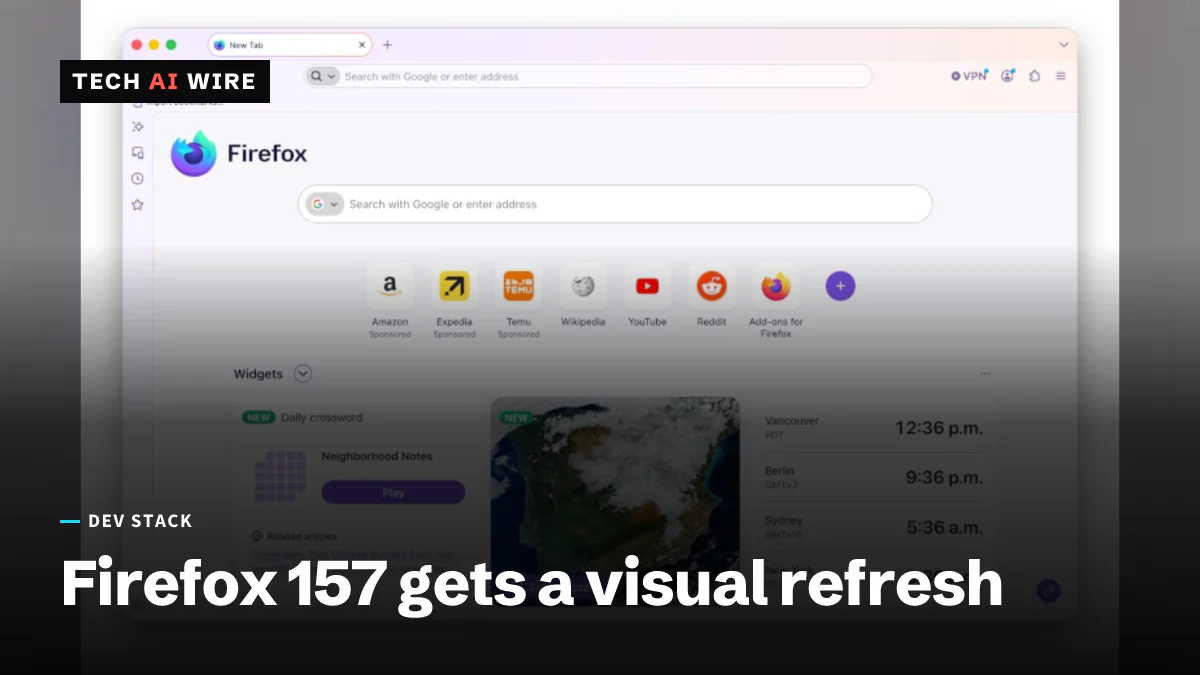
Firefox 157 ships a redesign and hardware AV1 for WebRTC
Firefox 157, out September 29, 2026, adds hardware AV1 decoding for WebRTC calls, a CSS at-rule() test and Mozilla's biggest visual refresh in years.
The daily brief
Three to five stories a day, and what each one means for the people who build software. Free, no spam.