Apple's $250 million Siri AI settlement opens for claims
Apple's $250 million settlement over delayed Siri AI features opened for claims on September 21, 2026, paying up to $95 per iPhone.
3 min read
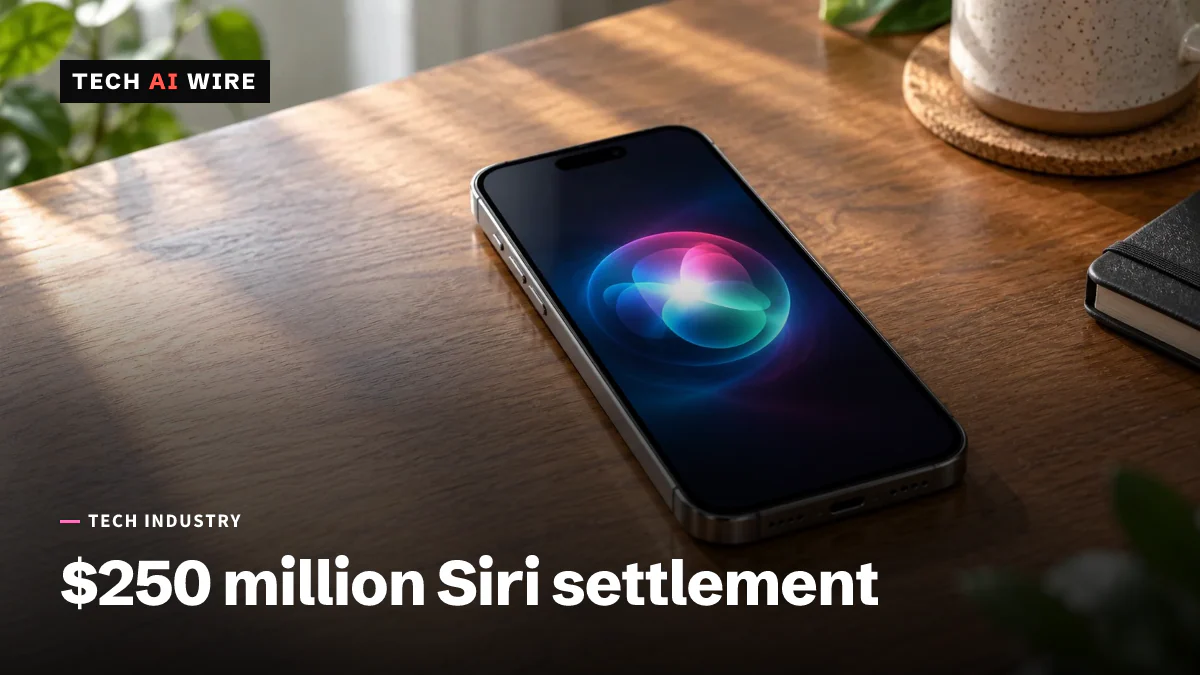
Apple's $250 million settlement over Siri AI features it advertised but had not shipped opened for consumer claims on September 21, 2026. The case covers buyers of the iPhone 15 Pro, 15 Pro Max, 16, 16e, 16 Plus, 16 Pro, and 16 Pro Max. Qualifying owners can file for $25 to $95 per device through December 21, 2026, MacRumors reported.
The lawsuit, Landsheft v. Apple Inc., accused Apple of advertising personalized Siri features, built on Apple Intelligence, as available starting in June 2024. Those features did not actually ship until June 2026, classaction.org reported. For any company marketing AI features before they exist, this case puts a real price on the gap between a roadmap and a shipped product.
What the lawsuit alleged
The suit accused Apple of advertising two Siri capabilities it had not yet built: understanding a user's personal context, and awareness of what is on screen. The suit was filed in California state court on March 19, 2025. It argued that ads and marketing materials led buyers to think they were paying for AI features that would work right away, not two years later. ClassAction.org reports the case number as 5:25-cv-02-668.
Apple denies the allegations and has not admitted wrongdoing. The company agreed to settle "to avoid the costs and risks of a trial," according to the settlement terms MacRumors cited.
What's in the settlement
| Detail | Figure |
|---|---|
| Settlement fund | $250 million |
| Qualifying devices | iPhone 15 Pro, 15 Pro Max, 16, 16e, 16 Plus, 16 Pro, 16 Pro Max |
| Base payment estimate | About $25 per device |
| Maximum payment | Up to $95 per device |
| Claims window | September 21 to December 21, 2026 |
| Final approval hearing | February 24, 2027 |
Payments scale with how many people file. Fewer claims mean a bigger check per device, up to the $95 cap, MacRumors reports.
Where the promised features stand now
Apple says it plans to ship the Siri Apple Intelligence features named in the lawsuit in a future software update, at no extra cost to owners, according to classaction.org. That timeline matches the features actually shipping around June 2026, roughly two years after Apple first advertised them.
What this means for developers
This case puts a real dollar cost on the gap between a marketing claim and a shipped AI feature: $250 million for a roughly two-year delay on two Siri capabilities. If you build or market an AI feature, treat "coming soon" language in ads and demos as a promise. A court can hold you to it, not just treat it as a note on a roadmap.
The safer pattern is to advertise what ships today. Label anything not yet available as a preview or a future update, and attach a real date if you have one. Apple never admitted wrongdoing and settled only to avoid trial costs, and it did eventually ship the feature. Even so, it still paid out. Shipping a feature later does not make an earlier advertising claim accurate at the time it ran.
If your product pages or launch demos describe capabilities still in development, this is a good week to check that language against what a buyer actually gets today.
Sources
Related articles
iOS 27.2 gives EU apps an alternative tracking prompt
The new prompt is mandatory in 5 EU countries and optional elsewhere. It drops the word track, and developers may ask again after a year.
Apple Reference Image signs photos inside the sensor
Reference Image negatives move to deleted photos after 30 days, and EU capture is off at launch. Apple's September 15 post explains the signing chain.
iOS 27 ships with Xcode 27 and no dropped iPhones
Apple shipped six platform updates on September 14, 2026, claiming app launches up to 30% faster, and iPhone 11 still makes the cut.
The daily brief
Three to five stories a day, and what each one means for the people who build software. Free, no spam.