Alibaba Qwen N1 AI glasses go on sale in China
Alibaba's Qwen N1 AI glasses went on sale in China on October 13 from 2,999 yuan, about $450. The N1 Pro adds eye tracking and iris-scan payments.
3 min read
By the numbers
- Qwen N1 list price, about $450, per Bloomberg via TNW
- 2,999 yuan
- N1 Pro list price
- 3,499 yuan
- camera on both models, with 4K video
- 50MP
- lowest N1 price with subsidies and launch offers
- 2,218 yuan
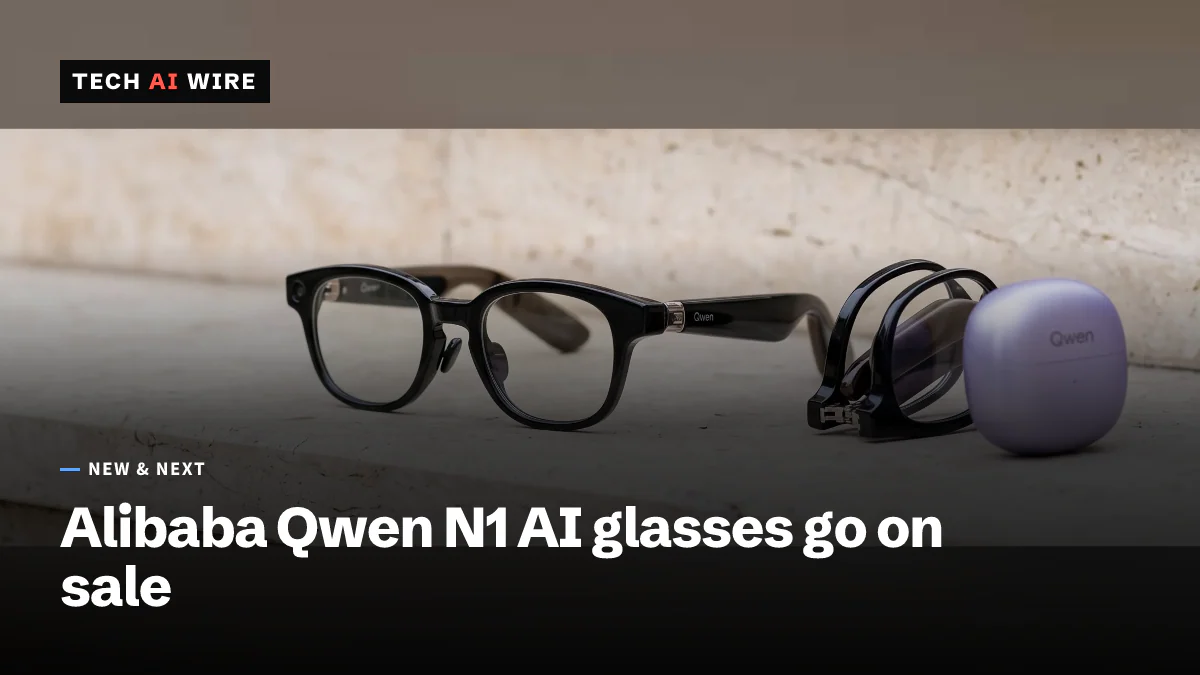
Alibaba began selling its Qwen N1 and N1 Pro AI glasses in China on October 13, 2026. The N1 starts at 2,999 yuan, about $450, before discounts, The Next Web reports, citing Bloomberg. The launch puts Alibaba's Qwen AI assistant into glasses with a camera, microphones and payments built in.
What the glasses do
Both models have a 50-megapixel camera that records 4K video. Users talk to the Qwen assistant by voice, through microphones that pick up sound through the bones of the head. The assistant can translate, take meeting notes, help with shopping and handle payments, according to The Next Web.
The batteries sit in the temples, the arms that rest over the ears. TechNode reports that users can swap them while wearing the glasses, so the device does not have to shut down.
Song Gang, a vice president in Alibaba's Qwen business, described the glasses as a second pair of eyes and ears for the wearer. The Next Web reports this, citing the Chinese site ZOL.
Prices and models
Sources give two sets of prices, 100 yuan apart. The Next Web, citing Bloomberg, gives the list prices. TechNode, citing the Chinese site IT Home, gives the starting price of each standard package.
| Model | List price (TNW, Bloomberg) | Package from (TechNode) | Battery life |
|---|---|---|---|
| Qwen N1 | 2,999 yuan | 2,899 yuan | 9 hours |
| Qwen N1 Pro | 3,499 yuan | 3,399 yuan | 8 hours |
Bloomberg's figure for the N1 is 25 hours on standby or 9 hours of music per charge. Government subsidies and launch offers can cut the N1 to as little as 2,218 yuan, The Next Web reports, citing Yahoo Finance Hong Kong.
The N1 Pro adds three features the base model lacks:
- Eye tracking, so the glasses know where the wearer is looking.
- Iris-scan payments, which confirm a purchase by scanning the eye.
- Health sensors for heart rate, blood oxygen and skin temperature.
The glasses are sold on Taobao, Tmall, JD.com and Douyin. Alibaba first showed them at its Apsara conference in September and opened pre-orders on September 22. The company also launched Qwen Clip, its first AI earbuds, made with Bose, for 1,299 yuan.
Where the glasses fit
Smart glasses are a crowded field, and privacy is the main fight. In California, Governor Gavin Newsom vetoed a bill on smart glasses recording earlier this month. In Europe, the optician chain Hans Anders pulled Ray-Ban Meta glasses over privacy concerns. Alibaba's glasses add two new privacy questions: iris scans and health data on a device tied to a shopping and payment company.
What this means for developers
For developers, the Qwen N1 matters mostly as a sign of where Alibaba wants its AI to run. Alibaba already offers Qwen models to developers through its cloud. Glasses with a camera, microphones and payment built in give those models a way into daily life in China. Neither source says whether outside developers can build apps for the glasses, so treat it as a closed device for now.
For product teams that sell into China, the payment link is the part to watch. Iris-confirmed payments through Alibaba's shopping apps could become another checkout route to support, much like phone wallets did.
For anyone handling personal data, the N1 Pro is a reminder that wearables now collect eye, health and location data together. Expect regulators to look at that mix closely. Teams building similar devices should plan clear consent screens and local data storage from the start.
Sources
Related articles

Apple Intelligence heads to China in iOS 27.3
Apple plans to launch Apple Intelligence in China in December with iOS 27.3, Bloomberg reports, running on Alibaba's Qwen models and without Siri AI.
E Ink Kaleido 4 doubles the color range of e-paper
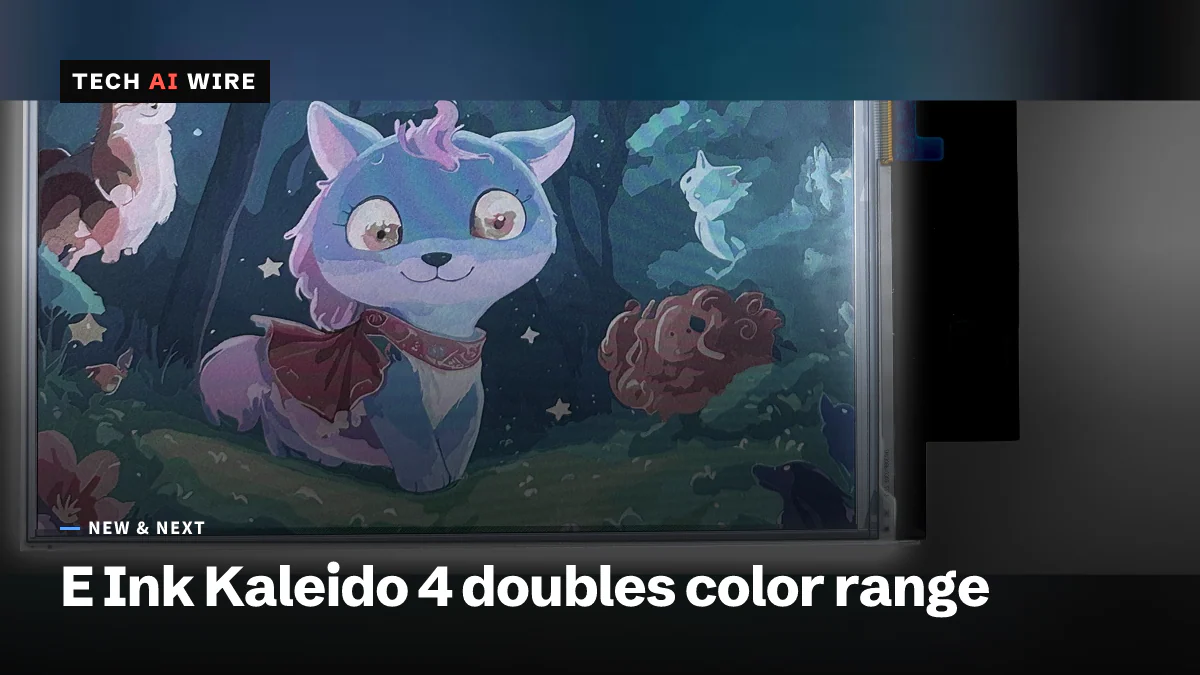
E Ink's Kaleido 4 color e-paper doubles color range, adds 50% contrast and plays video at 18 fps. Hanvon's M10C II, sold in China, is the first device.
OnePlus 16 launches with a 9,000mAh battery in China
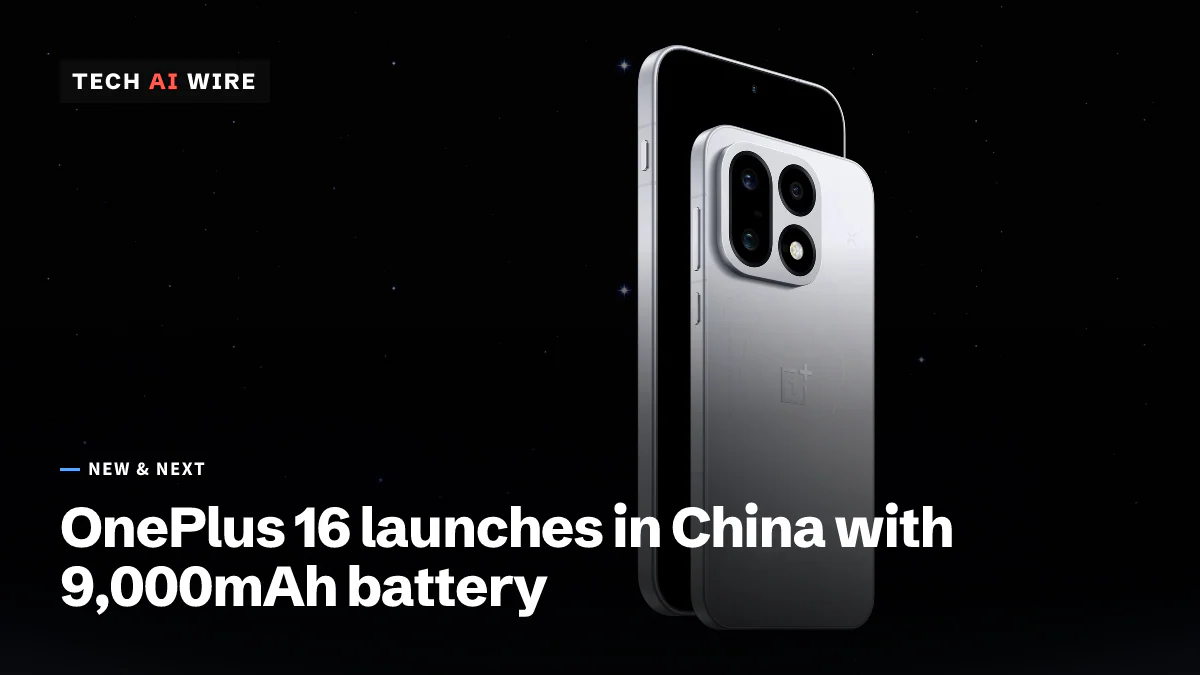
OnePlus launched the OnePlus 16 in China on October 12 from CNY 5,999, with a 9,000mAh battery, a 200MP camera and a display that reaches 185Hz in games.
The weekly digest
One email every Friday with the week's top stories from all six desks: AI, dev tools, coding, the tech industry, startups and what's next. Free, no spam.