SpaceX closes $40B GPU debt, Musk warns neoclouds
Elon Musk says SpaceX closed $40 billion in debt to buy GPUs, and warned that more than 200 neoclouds face a shakeout as lenders pull back.
3 min read
By the numbers
- debt SpaceX says it closed to buy GPUs
- $40B
- neoclouds Musk expects to shrink or merge
- 200+
- Goldman's 2027 borrowing estimate for AWS, Microsoft, Google and Meta
- $400B
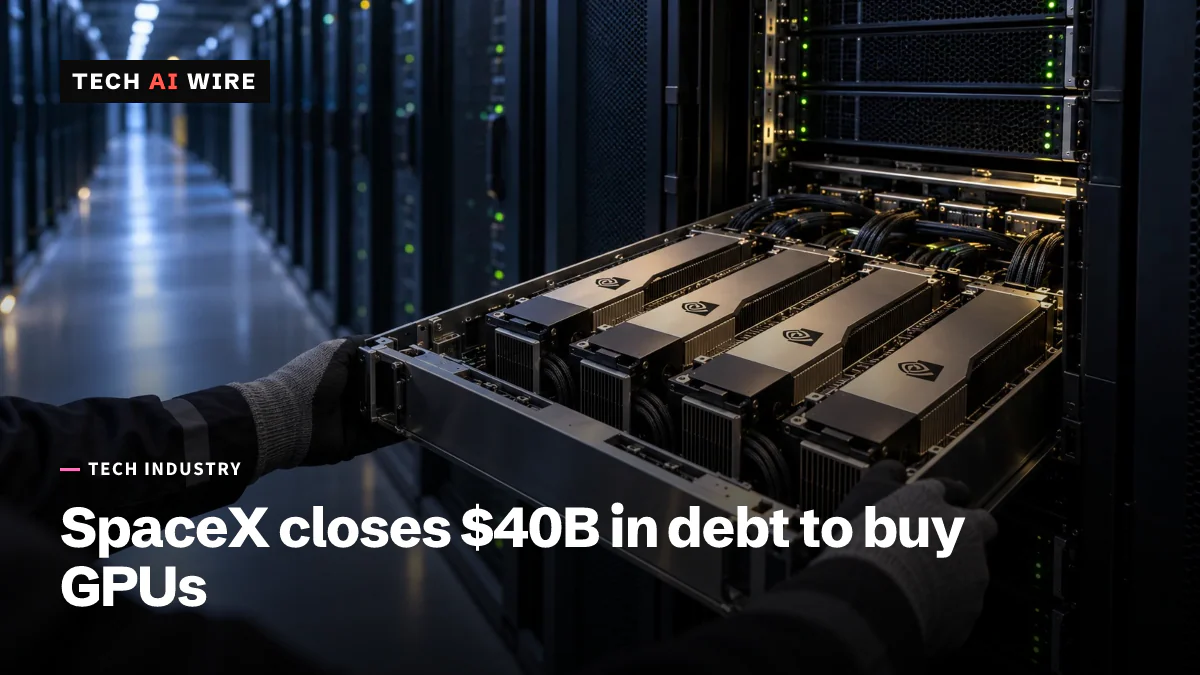
SpaceX has closed $40 billion in debt to buy graphics processors (GPUs) for AI data centers, Elon Musk said on X late on October 25, US time. In the same post, he warned that lenders have nearly stopped funding "neoclouds," the young companies that rent out GPU servers. Musk expects most of them to fail or merge.
What Musk said about the deal
The money will buy GPUs from Nvidia and other suppliers, DigitalToday reports. Musk did not name the lenders. Reuters had earlier reported that SpaceX was in talks with banks and asset managers to raise $40 billion for Nvidia chips, according to CoinDesk.
The debt is mainly callable, CoinDesk says. That means SpaceX can pay it back early. DigitalToday reports that Musk expects to repay a large part of it early. He also said it will not have a big effect on SpaceX's fourth-quarter results.
The two outlets differ on timing. DigitalToday says the GPUs arrive in the first and second quarters of 2027. CoinDesk says the money could fund deliveries in the first half of 2027, but that Musk did not say so directly.
SpaceX is a public company, listed on the Nasdaq as SPCX. It reported its third-quarter results last week.
Why SpaceX can borrow when others cannot
Musk tied the deal to SpaceX's credit rating and its other businesses. "SpaceX closed $40B of debt for GPUs, but we're investment grade and have Starlink & launch revenue," he wrote, as quoted by DigitalToday. Investment grade is the rating that tells lenders a borrower is likely to repay.
Starlink, SpaceX's satellite internet service, and its rocket launches earn money that does not depend on AI. Musk argues that this is now what lenders want to see. According to CoinDesk, he wrote:
"As of the past few weeks, debt markets have almost entirely shut off access to money for any company that doesn't have substantial revenue independent of AI data centers."
The neocloud squeeze
A neocloud is a cloud provider built mainly to rent GPUs to AI companies. Many have borrowed heavily to buy chips. Musk predicts a sharp shakeout. "More than 200 neoclouds will see guppy-level death and consolidation," he wrote, as quoted by DigitalToday. "Some will make it through, but not many." CoinDesk reports that Musk also said SpaceX is not buying any neoclouds.
The warning lands in a nervous market. Investors are demanding higher yields on bonds that fund AI infrastructure, Reuters has reported, according to DigitalToday. A higher yield means a higher cost to borrow. CoreWeave, one of the largest neoclouds, saw a 2031 bond briefly yield over 16% earlier this month.
The biggest cloud companies keep borrowing too. DigitalToday cites a Goldman Sachs estimate that AWS, Microsoft, Google and Meta will borrow $250 billion in 2026 and $400 billion in 2027. It also cites Morgan Stanley figures for AI spending of $700 billion in 2026 and $1 trillion in 2027.
Investor Chamath Palihapitiya added a warning of his own, CoinDesk reports. He said many neoclouds look poorly funded and badly run. He also said delayed data center builds could leave chips sitting idle in 2027.
What this means for developers
Musk's post is a claim from a competitor, not a credit report. Still, it points to real risks for teams that rent GPUs.
- Check who runs your GPU capacity. If your training or inference runs on a smaller neocloud, ask how it funds its chips and data centers. A provider that loses access to debt may raise prices or cut capacity.
- Avoid long prepaid contracts with a single small provider. Reserved-capacity deals are cheaper, but they tie your money to that company's survival.
- Keep your workloads portable. Container images, standard drivers and scripts that work on more than one cloud make a forced move cheaper.
- Watch the biggest clouds' spending plans. If lenders keep backing AWS, Microsoft and Google while smaller renters struggle, GPU capacity will move toward the largest clouds, as Musk suggests.
- Expect more consolidation news. If Musk is right, mergers and closures among GPU renters will follow. Plan for your provider to change hands.
Sources
Related articles
Nasdaq falls 2.6% as AI spending doubts hit tech stocks
The Nasdaq fell 2.6% on October 22, its worst day since June, as doubts about AI spending hit Meta, Nvidia, AMD and Intel. Big Tech reports next week.
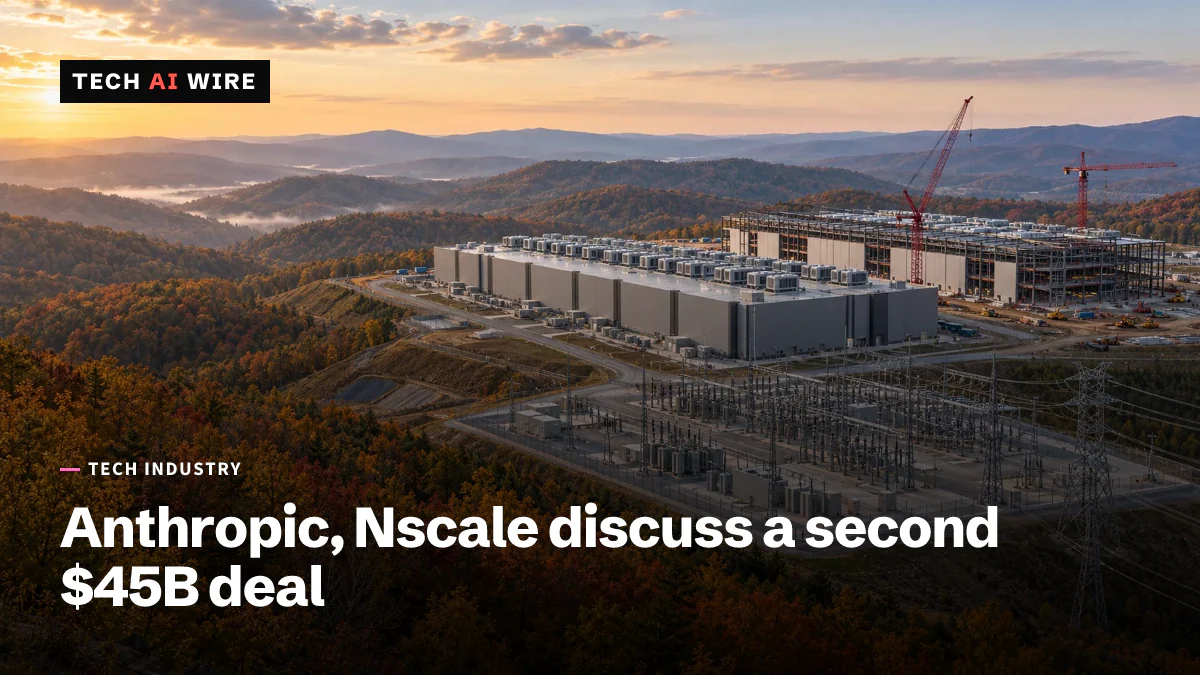
Anthropic, Nscale in talks on second $45B compute deal
A second building at Nscale's West Virginia campus would give Anthropic 460 MW of Nvidia Vera Rubin chips in a deal worth about $45 billion, sources say.
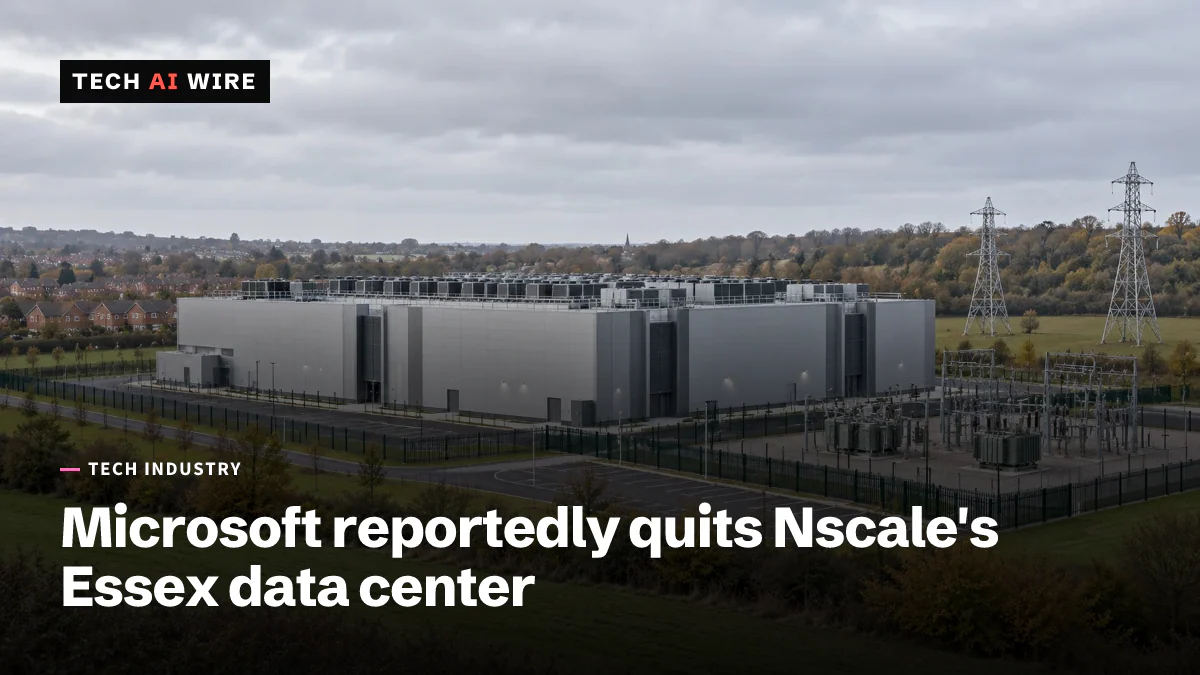
Microsoft reportedly exits Nscale's Loughton data center
Microsoft has reportedly dropped its deal to anchor Nscale's Loughton site, where power may not arrive until the 2030s, weeks before a $3 billion IPO.
The weekly digest
One email every Friday with the week's top stories from all six desks: AI, dev tools, coding, the tech industry, startups and what's next. Free, no spam.