ReactOS 0.4.16 ships a graphical installer and a Wine 10 sync
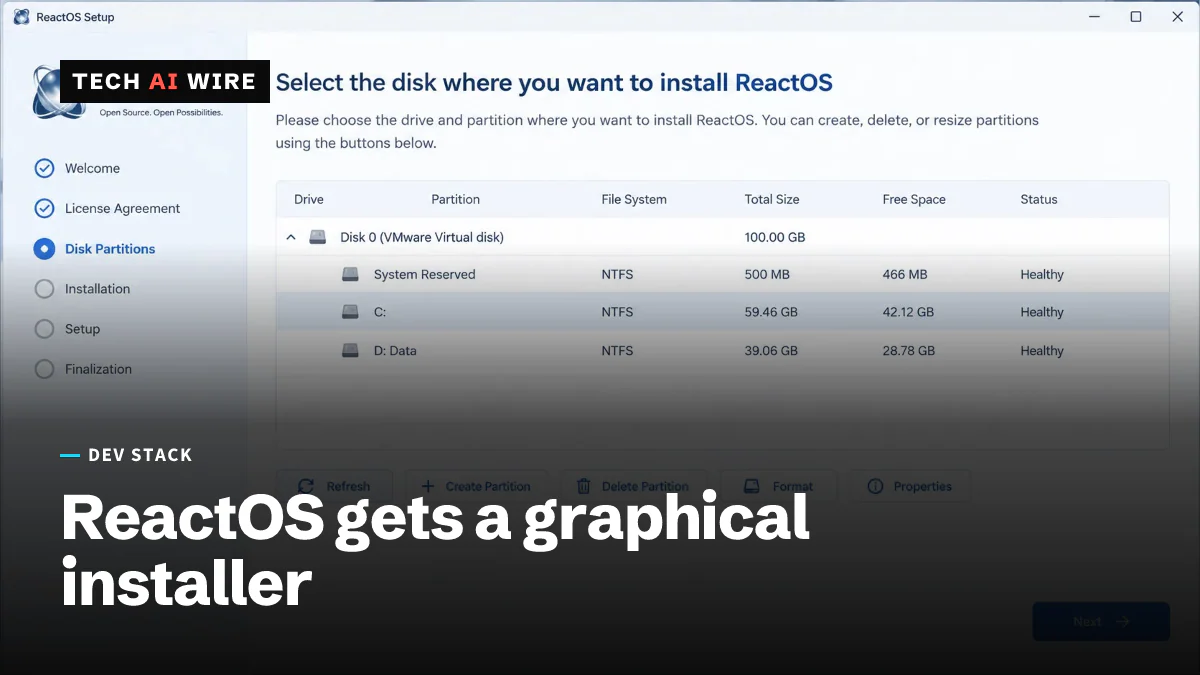
ReactOS 0.4.16 arrived on August 29, 2026 after about 18 months and 2,808 commits. It adds a graphical installer, a new ATA driver, and a Wine 10 sync.
4 min read
By the numbers
- commits since version 0.4.15
- 2,808
- tracker issues closed in this cycle
- 381
- roughly, since the previous release
- 18 months
ReactOS released version 0.4.16 on August 29, 2026, after about 18 months of work. The release replaces the text-mode installer with a graphical one, swaps out a storage driver that dated to 2009, and pulls its Wine fork up to Wine 10.0. For anyone who tests Windows software without owning Windows, this is the most useful ReactOS release in years.
ReactOS is an open-source operating system that aims to run Windows programs and drivers. It is not Linux, and it is not built on Linux. It reimplements Windows itself. The project counted 2,808 commits and 381 closed tracker issues in this cycle, according to its release notes.
The installer is now one image
Until now, testing ReactOS and installing it meant two different downloads. There was a LiveCD to try it and a BootCD to install it. Version 0.4.16 merges them into a single image.
The new graphical installer was written by Hermès Bélusca-Maïto, per the project's release notes. Linuxiac reports that it also offers basic partition management. The release notes describe the goal simply: you can "test and install ReactOS using the same image."
Phoronix compares the result to a Linux live environment, where trying the system and installing it happen from one medium.
The driver work matters more than it sounds
The headline fix is storage. ReactOS replaced UniATA, the ATA driver it had used since 2009, with a new one. ATA is the older interface that connects hard disks and optical drives to a PC.
That swap fixes real failures. The release notes say the change improves boot performance and removes the INACCESSIBLE_BOOT_DEVICE bugcheck. A bugcheck is Windows' name for a stop error, the blue screen. Linuxiac reports the old driver caused slow boots and outright failures on newer machines. One of the underlying tickets, CORE-3804, was filed on February 3, 2009.
Audio was rebuilt too. A driver called sklhdaudbus replaces the incomplete hdaudbus.sys, and it supports HD audio controllers compatible with Windows XP and Windows Server 2003, per the release notes.
Virtual machines gain support as well. The release adds asynchronous connection support, which lets ReactOS boot under Virtual PC 2007 and Hyper-V Generation 1. There is also a new DC21X4 network adapter driver. Separately, the project fixed an Nvidia slowdown by expanding the system's page table entries.
What changed, in one table
| Area | Before | In 0.4.16 |
|---|---|---|
| Install media | Separate LiveCD and BootCD | One image, graphical setup with basic partitioning |
| Storage | UniATA driver, used since 2009 | New ATA driver, no INACCESSIBLE_BOOT_DEVICE stop error |
| Audio | Incomplete hdaudbus.sys | sklhdaudbus, for XP and Server 2003-class HD audio |
| Wine fork | Wine 2.x and 3.x | Wine 10.0, with Vista-and-later APIs behind a build flag |
| 16-bit apps | Not supported | WineVDM included for the first time |
A server mode and 16-bit support
Version 0.4.16 adds a Server Core installation type. It disables the graphical Explorer shell while keeping full access to the Win32 subsystem, the layer that Windows programs actually call. Phoronix likens it to Windows Server Core.
The Wine jump is the other large piece. ReactOS shares code with Wine, the project that runs Windows programs on Linux. Its fork was stuck on Wine 2.x and 3.x. It now tracks Wine 10.0, and Vista-and-later API support is available through a build flag. WineVDM ships for the first time, which brings back 16-bit Windows applications.
The project is still blunt about maturity. Linuxiac describes ReactOS as "a work in progress rather than a drop-in replacement for modern Windows."
What this means for developers
If you keep a Windows-only tool alive, ReactOS is now cheaper to try. Download one image, boot it in a virtual machine, and see whether your binary runs. The Hyper-V Generation 1 and Virtual PC 2007 support means fewer fights with the hypervisor before you get to your actual test.
Two groups get concrete value today. Driver and kernel developers get a readable, hackable target that behaves like Windows, and the new ATA and HD audio drivers are fresh code worth reading. Teams maintaining old line-of-business software get WineVDM, so a 16-bit installer or utility can finally be tested somewhere.
Wine users benefit indirectly. Work that flows between the two projects reaches more people, and a fork sitting eight major versions behind was slowing that down. Watch how quickly the Wine 10.0 sync produces fixes that land in both.
Treat the caveat as a hard limit. Do not put ReactOS under production load, and do not read a passing test as certification. Use it as a compatibility signal and a debugging surface, then confirm anything important on real Windows.
Sources
Related articles
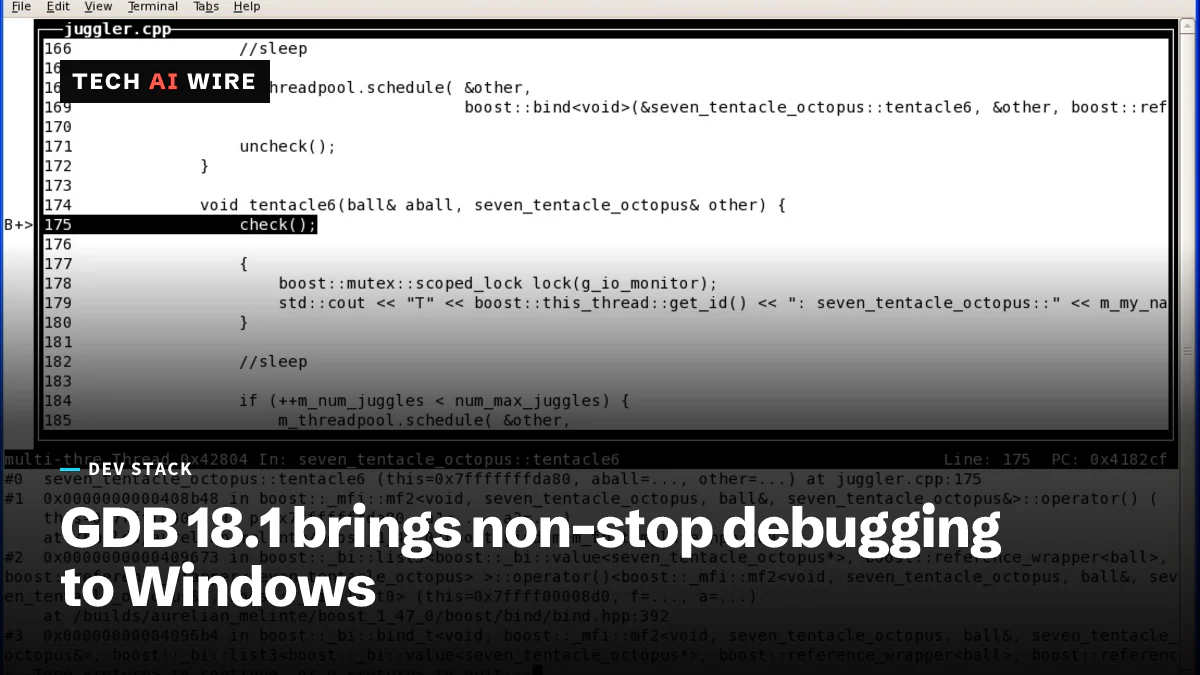
GDB 18.1 adds Windows non-stop debugging, drops stabs
GDB 18.1, out September 25, brings non-stop debugging to Windows 10+, new save and environment commands, and drops the old stabs debug format.
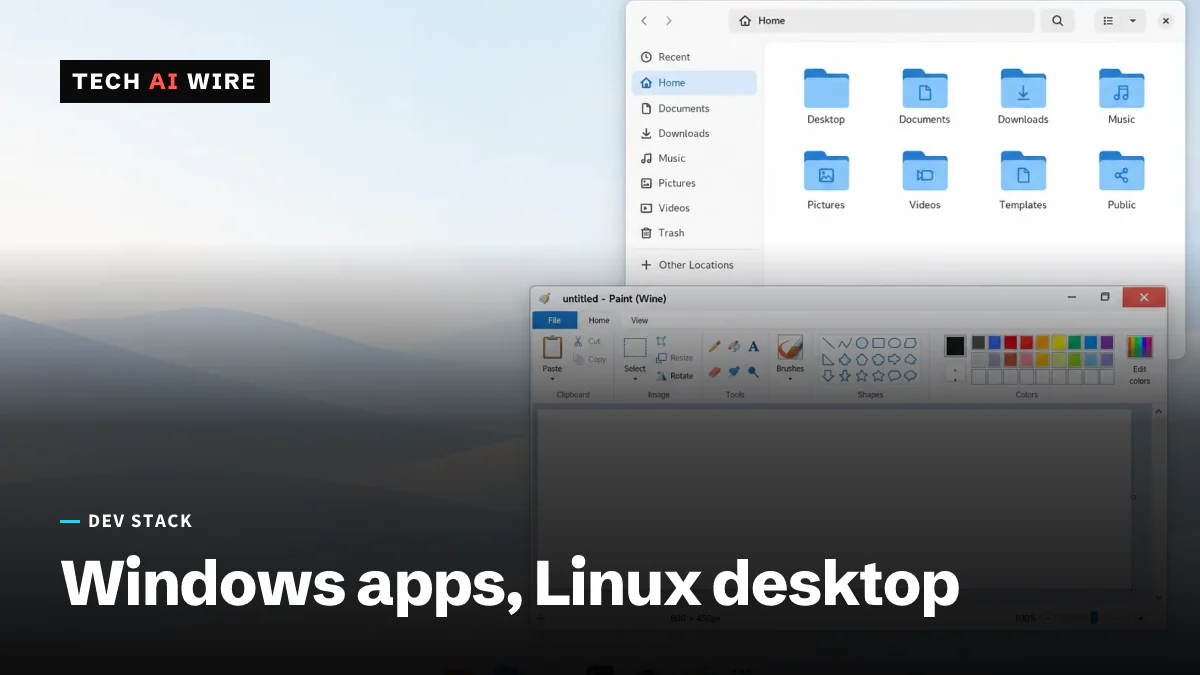
Wine 11.18 adds kernel-driver support, Staging fixes WoW64
Wine 11.18 landed on September 18 with 380 commits and 21 bug fixes. Wine-Staging carries 273 extra patches, two of them for WoW64 services.
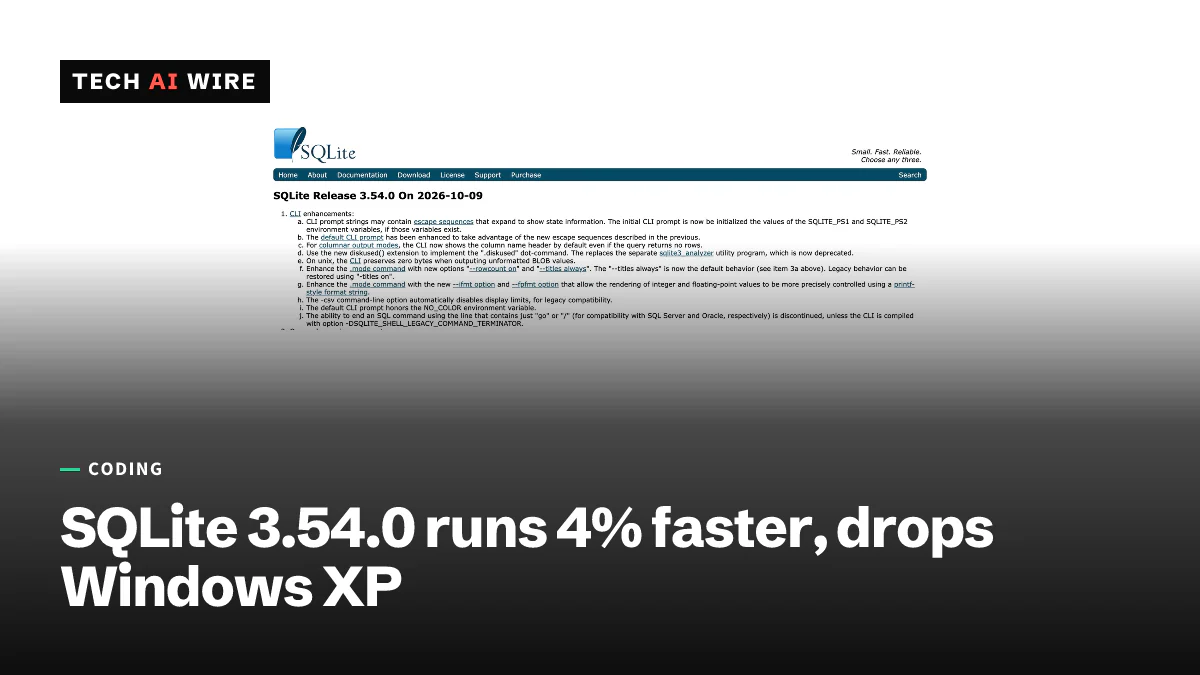
SQLite 3.54.0 gets 4% faster and drops Windows XP
SQLite 3.54.0 runs about 4% faster, adds a diskused() function that replaces sqlite3_analyzer, changes CLI defaults and drops Windows XP support.
The weekly digest
One email every Friday with the week's top stories from all six desks: AI, dev tools, coding, the tech industry, startups and what's next. Free, no spam.