MacBook Pro with PROLED XDR brings touch to the Mac
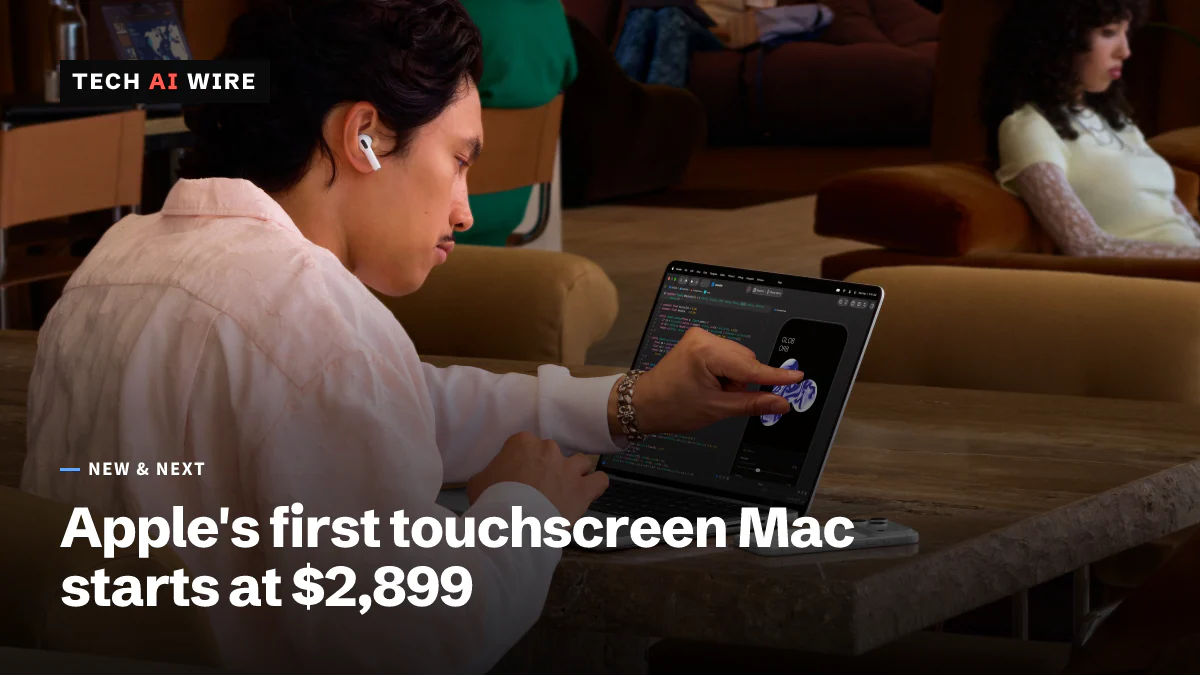
Apple's first touchscreen Mac is a MacBook Pro with a tandem OLED panel from $2,899. It ships November 6, and existing apps get touch as clicks.
4 min read
Drafted with AI from the sources linked in this article, then fact-checked and edited by Claire Whitmore before publishing. How we work
By the numbers
- starting price, 14-inch with M5 Pro
- $2,899
- nits peak brightness for HDR and SDR
- 2,000
- weight of the 14-inch model, half a pound lighter
- 3 lb
- maximum battery life, per Apple
- 24 hours
Apple announced the MacBook Pro with PROLED XDR Display on October 28, 2026, the first Mac that responds to touch. The 14-inch model starts at $2,899 and the 16-inch at $3,399. Both run on M5 Pro or M5 Max chips and ship on November 6.
The touchscreen ends a long holdout, since Apple resisted touch on the Mac for years. TechCrunch notes it comes about a decade after the 2016 Touch Bar MacBook Pro, whose thin touch strip Apple later removed. It follows the OLED iPad mini Apple announced earlier in the week. For the people who write Mac apps, it adds an input method that most apps were never designed for.
Price and availability
Apple's press release lists these U.S. starting prices:
| Model | Chip | Price | Education price |
|---|---|---|---|
| 14-inch | M5 Pro | $2,899 | $2,749 |
| 16-inch | M5 Pro | $3,399 | $3,199 |
| 14-inch | M5 Max | $4,499 | $4,199 |
| 16-inch | M5 Max | $4,799 | $4,499 |
Apple says pre-orders opened on October 28 in 30 countries and regions, including the U.S. TechCrunch gave October 30 as the pre-order date. Both agree that buyers will receive the laptops on Friday, November 6, when they also reach stores.
The older MacBook Pro configurations from March stay on sale at the same prices, according to 9to5Mac. They keep the previous display and design. Apple also announced a 14-inch MacBook Pro with M6 the day before, starting at $1,999, TechCrunch reports. That model has no touchscreen.
How the PROLED XDR touchscreen works
PROLED XDR is Apple's name for a tandem OLED panel. OLED screens light each pixel on its own, and a tandem design stacks two light-emitting layers. Apple says the touch sensor is built into the panel itself instead of sitting in a layer on top.
| Spec | 14-inch | 16-inch |
|---|---|---|
| Screen size | 14.2 inches | 16.3 inches |
| Peak brightness | 2,000 nits HDR and SDR | 2,000 nits HDR and SDR |
| Contrast ratio | 10,000,000:1 | 10,000,000:1 |
| Refresh rate | 10Hz to 120Hz | 10Hz to 120Hz |
| Weight | 3 lb | 4 lb |
Apple redesigned the hinge so the screen stays steady when tapped. TechCrunch adds that this also keeps the camera stable during video calls.
The notch at the top of the screen is gone. In its place is the Dynamic Island, the pill-shaped area from the iPhone, which on the Mac holds Spotlight, Live Activities and Siri AI. Apple says Siri AI is in beta in macOS 27.2.
The rest of the specs are familiar. Apple lists up to 128GB of unified memory, up to 16TB of storage and three Thunderbolt 5 ports. Battery life is rated at up to 24 hours. Touch ID stays, and 9to5Mac notes there is no Face ID and no cellular option.
What touch does on macOS
Apple lists the gestures it supports: scrolling, pinch to zoom, drag and drop, double-tap to fill the screen and flicking a window to tile it. The system translates touches into clicks. As a result, many existing apps work with touch on day one without any update.
Some apps go further. Apple names Microsoft Word, Excel, PowerPoint and Outlook, plus Notion, Canva, Zoom, Adobe Lightroom, DaVinci Resolve and Blender as touch-ready. Its own Logic Pro gets a multi-touch keyboard and drum pads, and Final Cut Pro uses touch for marking ranges and placing clips.
Johny Srouji, Apple's chief hardware officer, called it "a monumental step forward for the Mac" in the release.
What this means for developers
Apple says in its developer news post that developers "can start preparing for the MacBook Pro with Touch today." It points to new videos, Group Labs and articles. The press release says developers get updated system gesture APIs for touch-specific features, and can test iPhone and iPad apps on the Mac display.
- Test your app with a finger before November 6. Because touches arrive as clicks, nothing crashes. But anything that relies on hover, like tooltips or controls that only appear under the pointer, has no touch equivalent.
- Check your hit targets. Buttons and handles sized for a precise trackpad pointer can be too small for a fingertip. Toolbars and dense sidebars are the usual problem areas.
- Review custom gesture code. Apps that read trackpad gestures directly should be checked against the updated system gesture APIs before launch day.
- Look at your iPad app. If you ship an iPad version, Apple's testing path for iPhone and iPad apps on the Mac display may be the fastest route to a good touch experience.
- Budget for test hardware. The touch models start at $2,899, nearly $900 more than the new 14-inch M6 model. QA teams will need at least one to see real behavior.
Developers have about a week before the first buyers start tapping. Watch the new developer videos and Group Labs for the API names Apple has not yet put in its press materials.
Sources
- Apple unveils groundbreaking MacBook Pro with PROLED XDR Display - Apple Newsroom
- Apple announces all-new MacBook Pro with PROLED XDR display, its first touchscreen Mac - 9to5Mac
- Apple launches its new touchscreen MacBook Pro - TechCrunch
- Say hello to Touch on Mac - Apple Developer
Related articles
iPad mini gets an 8.5-inch OLED and A20 Pro for $699
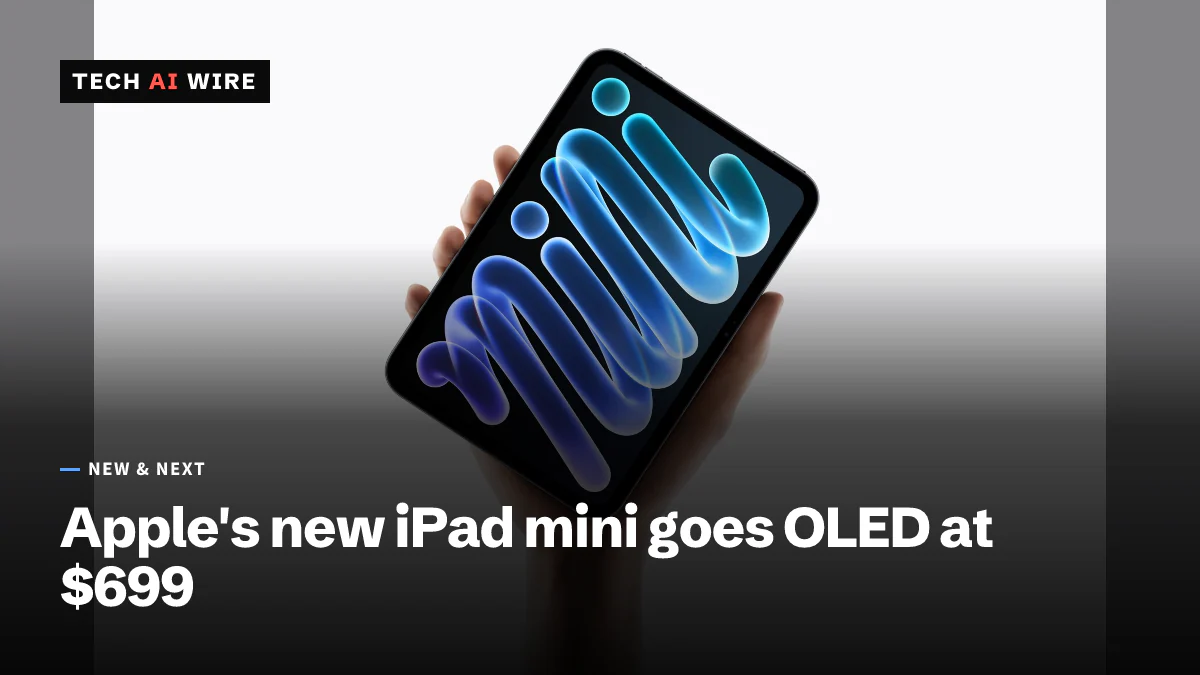
Apple's new iPad mini has an 8.5-inch OLED screen, an A20 Pro chip and IP67 water resistance. It starts at $699, with pre-orders opening October 28.
iPhone Duo screen cracks cluster at hinge, iFixit finds
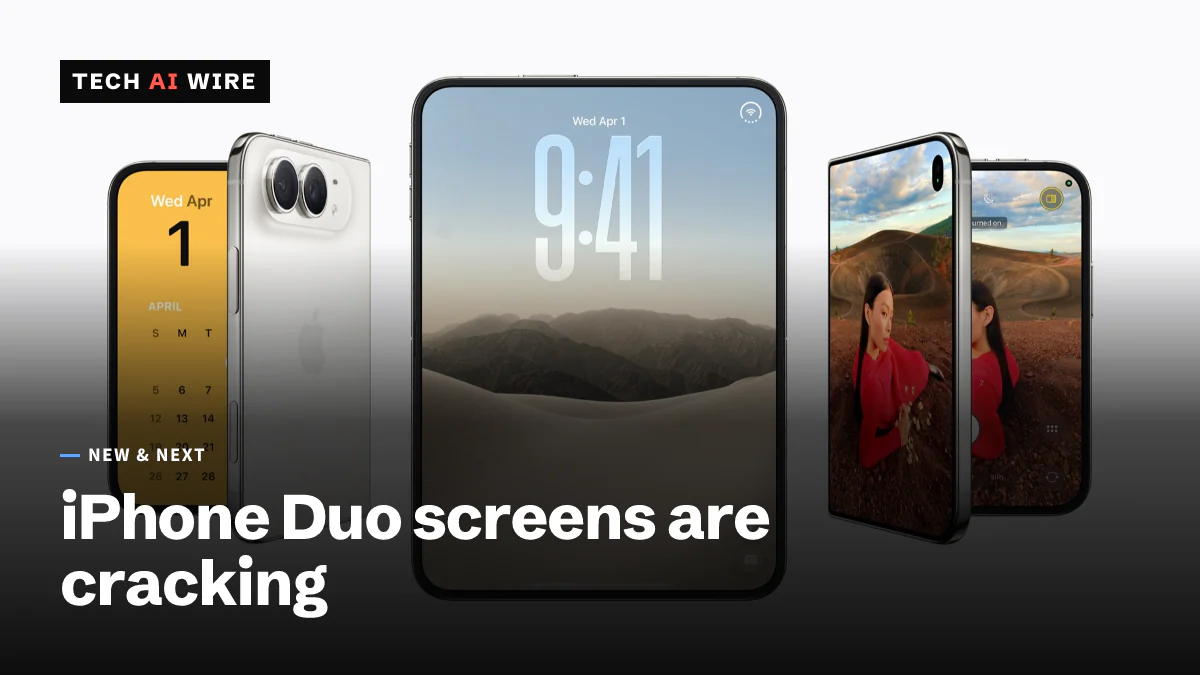
iFixit's October 25 teardown gives the iPhone Duo a provisional 5/10 and finds that reported inner-screen cracks cluster near the hinge support.

Apple TV 4K with A19 costs $299; HomePod mini 2 is $149
Apple announced a $299 Apple TV 4K with an A19 chip and a $149 HomePod mini 2 on October 13. Siri AI comes to the TV at launch, the speaker later.
The weekly digest
One email every Friday with the week's top stories from all six desks: AI, dev tools, coding, the tech industry, startups and what's next. Free, no spam.