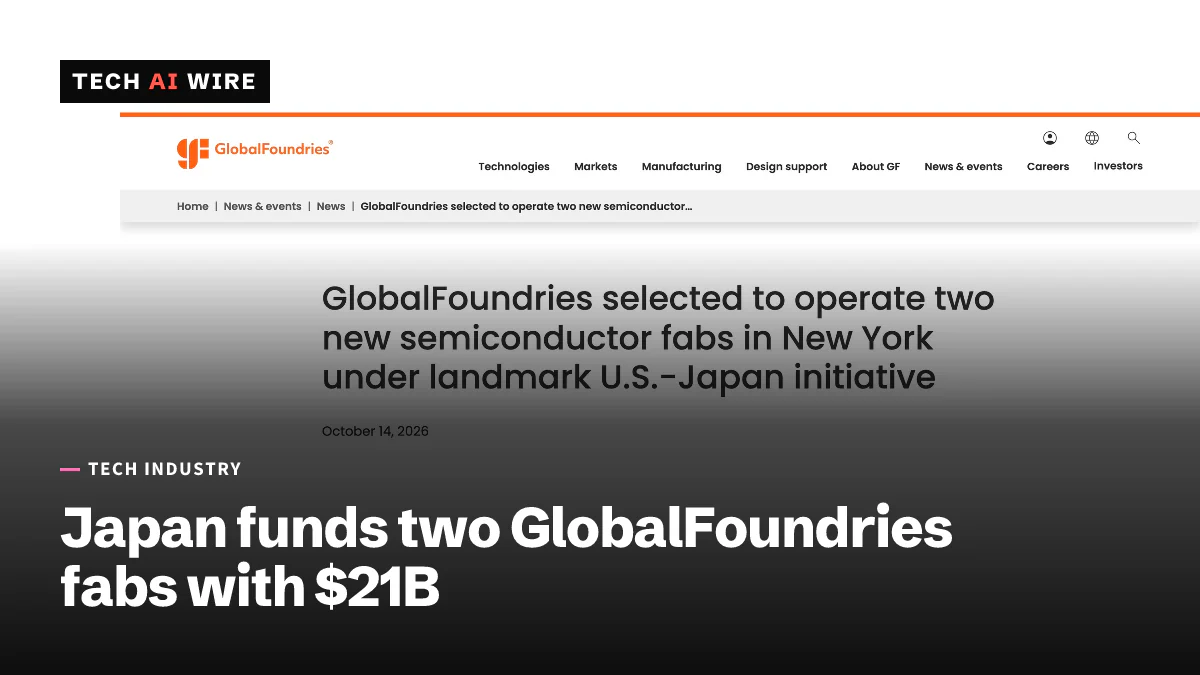
Japan backs two GlobalFoundries fabs in New York with $21B
GlobalFoundries will build and run two chip fabs in Malta, New York, funded by up to $21 billion from Japan. The first is due online in 2029.
3 min read
By the numbers
- maximum funding from Japan for the two fabs
- $21B
- year the first fab is expected online
- 2029
- 300mm wafers a year from each fab at full output
- ~900K
- manufacturing jobs, plus about 27,000 in construction and suppliers
- 1,000+
GlobalFoundries will build and run two new chip factories in Malta, New York, funded by up to $21 billion from Japan, the company said on October 14, 2026. The money comes from Japan's investment pledge under its trade deal with the US. The first factory, worth about $10 billion, is expected to start production in 2029. Apple and Renesas Electronics are among its first customers.
The deal
Japan provides the investment, and GlobalFoundries supplies the technology and runs the plants, according to the company's announcement. A fab is a chip factory.
| Part of the deal | Detail |
|---|---|
| Funding | Up to $21 billion from Japan |
| First fab | About $10 billion, expected online in 2029 |
| Second fab | About $10 billion |
| Output | About 900,000 300mm wafers a year from each fab at full capacity |
| Jobs | More than 1,000 in manufacturing, plus about 27,000 in construction and suppliers |
| Groundbreaking | Later this year, at a site the company says is already permitted |
A wafer is the thin disc of silicon that chips are made on, and 300mm is today's standard size. The partners will decide on the second factory before the end of 2028, Reuters reports via Nikkei Asia. Neither source says which chip types the new fabs will make.
The trade deal behind it
The project is part of a deal between Japan and the Trump administration, Reuters reports. Japan pledged to invest $550 billion in the US. In return, the US cut tariffs on Japanese cars and other imports from at least 25% to 15%.
Under that deal, President Trump selects the projects Japan funds. Cash from the projects is split evenly until a set amount is reached, after which 90% goes to the US, Reuters says. Japan has now announced two batches of projects worth more than $100 billion together.
The US stake
The sources give different figures for the US government's share:
- GlobalFoundries says the Commerce Department will receive an equity stake of about 4% under a separate agreement.
- Reuters reports that chief executive Tim Breen said the US stake rises from 3% to 7%. It adds that President Trump said the 7% stake is worth more than $2 billion.
GlobalFoundries also agreed to shift $955 million of its existing CHIPS Act award to silicon photonics, silicon-germanium and advanced packaging work in Malta and in Burlington, Vermont. Silicon photonics moves data with light on chips, a growing need in AI data centers.
What the companies said
"This is a bold new initiative for semiconductor manufacturing," Breen said. Breen also told Reuters that "we have a strong interest in the Japanese equipment suppliers to be part of it," naming tool makers such as Tokyo Electron.
Apple chief operating officer Sabih Khan said the plants will "produce essential chips for Apple products right here in the United States." GlobalFoundries shares rose more than 4% in afternoon trading, Reuters reports.
What this means for developers
For teams that design hardware or buy chips:
- New US capacity is years away. The first fab is due in 2029. Supply plans for the next three years should not count on it.
- Trade deals now shape chip supply. This fab exists because of a tariff agreement. Changes in trade policy can move where your chips are made.
- Watch the photonics money. The $955 million shift points at silicon photonics and advanced packaging. Both matter for the network links inside AI clusters.
- Big buyers are locking in US supply. Apple and Renesas signed on early. Smaller hardware companies may find US capacity booked by the time it opens.
Sources
Related articles

China drafts export curbs on AI models and chip designs
China's draft adds 23 AI technologies to its export control list, from models with 2 trillion parameters to chip designs. Comments close on November 15.
Solidigm ties a US NAND fab to China chip tool approval
SK hynix's Solidigm wants US approval to ship more chip tools to its Dalian, China plant, Reuters reports, and links it to a new US NAND factory.
Bitchat pulled from India's App Store and Google Play
India ordered Jack Dorsey's offline messenger Bitchat off Apple's and Google's stores under Section 69A, months after GitHub was told to remove its code.
The weekly digest
One email every Friday with the week's top stories from all six desks: AI, dev tools, coding, the tech industry, startups and what's next. Free, no spam.