ChatGPT plugin extensions add app panels and automations
OpenAI's plugin extensions, from DevDay on September 29, 2026, let developers ship app-like panels and automations to ChatGPT's 1.2 billion weekly users.
3 min read
By the numbers
- weekly ChatGPT users, per Thurrott
- 1.2B
- plugins already available, per Thurrott
- 4,000+
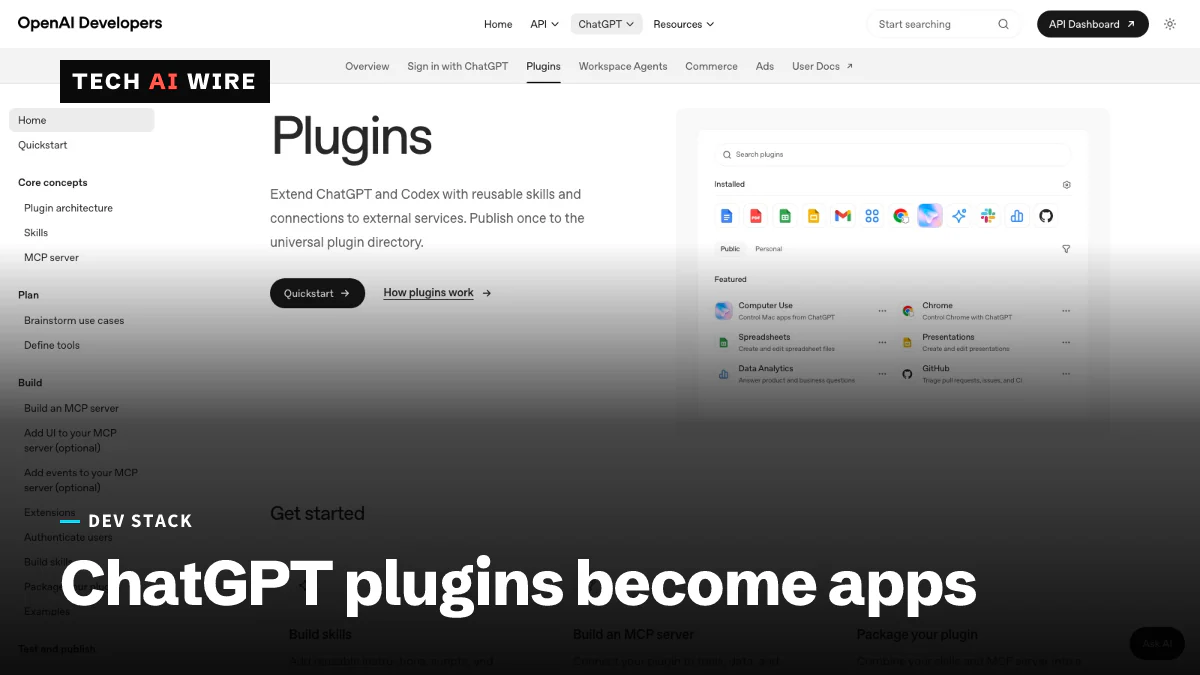
OpenAI launched plugin extensions at DevDay on September 29, 2026. A ChatGPT plugin can now have its own home in the sidebar, interactive panels, file viewers and automations that run when something happens in a connected app. For developers, that turns a plugin from a set of tools the model calls into something closer to an app people open.
TechCrunch reports that the goal is to let developers build "their own app-like experiences within ChatGPT." The audience is large. Thurrott reports that ChatGPT has 1.2 billion weekly users and more than 4,000 plugins already. The same plugin catalog lets OpenAI's new Dots agent connect to outside apps.
What plugin extensions add
Extensions give a plugin a visible place in ChatGPT's interface. TechCrunch and Thurrott list the same pieces.
| Feature | What it does |
|---|---|
| Sidebar home | A permanent spot for the plugin in ChatGPT's sidebar |
| Interactive panels | Tools that sit beside the conversation while the user works |
| File viewers | Views for the file types a developer's product supports |
| Automations | Actions triggered by events in a connected app, through the MCP Events specification |
| ChatGPT Sites | A way to host a plugin and share it with colleagues |
Automations change when a plugin runs. With the MCP Events specification, an event in a connected app can trigger the plugin, instead of a user typing a request.
How a plugin is built
OpenAI's plugin documentation says plugins are built on MCP servers. MCP, the Model Context Protocol, is an open standard for connecting AI models to outside tools and data. The MCP server does the plugin's real work.
The interface is optional. Developers can add UI components through a UI SDK and declare them in manifest files, the configuration files that describe a plugin. Those components run inside ChatGPT, while the MCP server runs on the developer's side. The documentation also covers Codex, OpenAI's coding agent, as a place plugins can target.
OpenAI is also changing how plugins get built and found. A new Plugin Creator tool helps developers build one, and a redesigned submission flow gives clearer feedback, TechCrunch reports. Improved ranking and recommendations should help people find plugins in the directory.
Who can use it and what review involves
Thurrott lists the features across the API and ChatGPT's Plus, Pro, Business, Healthcare, Education and Enterprise plans. Every plugin still goes through a formal review. OpenAI's documentation includes plugin guidelines, a security and privacy section, and requirements for reviewing MCP servers. It also has a Checkout API reference, which points to ways for developers to sell through plugins.
What this means for developers
If you already run an MCP server, you have most of a plugin. Start by publishing your tools, then add a panel once you know which task users repeat. The UI is optional, so a small first release is a fair test of demand.
Design automations with restraint. An event that fires on every small change can flood a user's ChatGPT with actions they never asked for. Decide which events matter, batch the rest, and make it obvious how to switch an automation off.
Read the guidelines and the security and privacy rules before you build, not after. Review is part of shipping now, and a rejected submission costs a release cycle. Budget time for it in your launch plan.
Keep your core logic in the MCP server, not in ChatGPT-only UI. MCP is an open standard, and OpenAI's Agents API also connects to MCP servers. A server that works in both places, and in other MCP clients, protects you if OpenAI changes the plugin rules later.
Treat the directory like an app store. With more than 4,000 plugins and new ranking signals, a clear name and description now decide whether anyone finds your plugin at all.
Sources
- OpenAI expands ChatGPT's plug-ins with app-like interfaces and automations - TechCrunch
- OpenAI Announces Massive Set of ChatGPT Upgrades - Thurrott.com
- Plugins - OpenAI Developers
Related articles
OpenAI Agents API adds computer use in a hosted browser
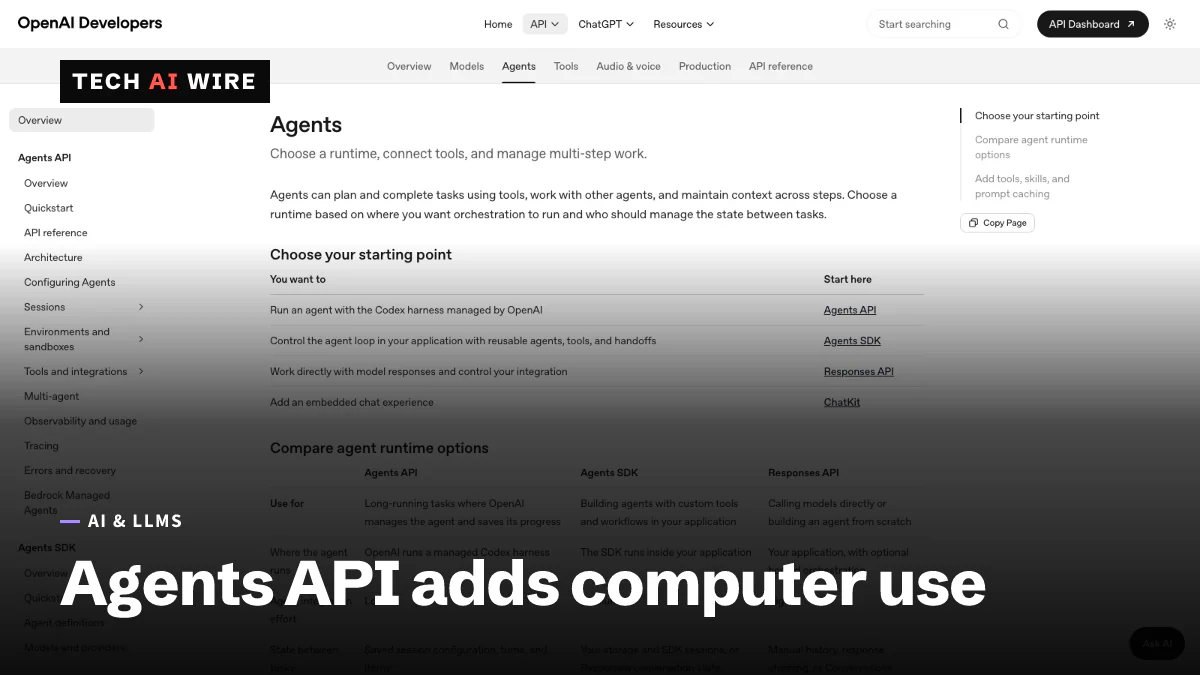
OpenAI's Agents API, in public beta since September 10, gained computer use at DevDay on September 29, 2026: agents can drive an OpenAI-hosted browser.

GPT-6 Astra is generally available on Bedrock and Copilot
GPT-6 Astra is GA on Amazon Bedrock at $10 per million input tokens, and in GitHub Copilot for Pro+, Max, Business and Enterprise plans.
Google Home adds an MCP server, gated at $20 a month
Early access to Google Home's MCP server needs the $20-a-month Premium Advanced tier, plus your own Google Cloud project, before an agent touches a device.
The daily brief
Three to five stories a day, and what each one means for the people who build software. Free, no spam.