Atlassian puts OpenAI models inside Rovo and Jira
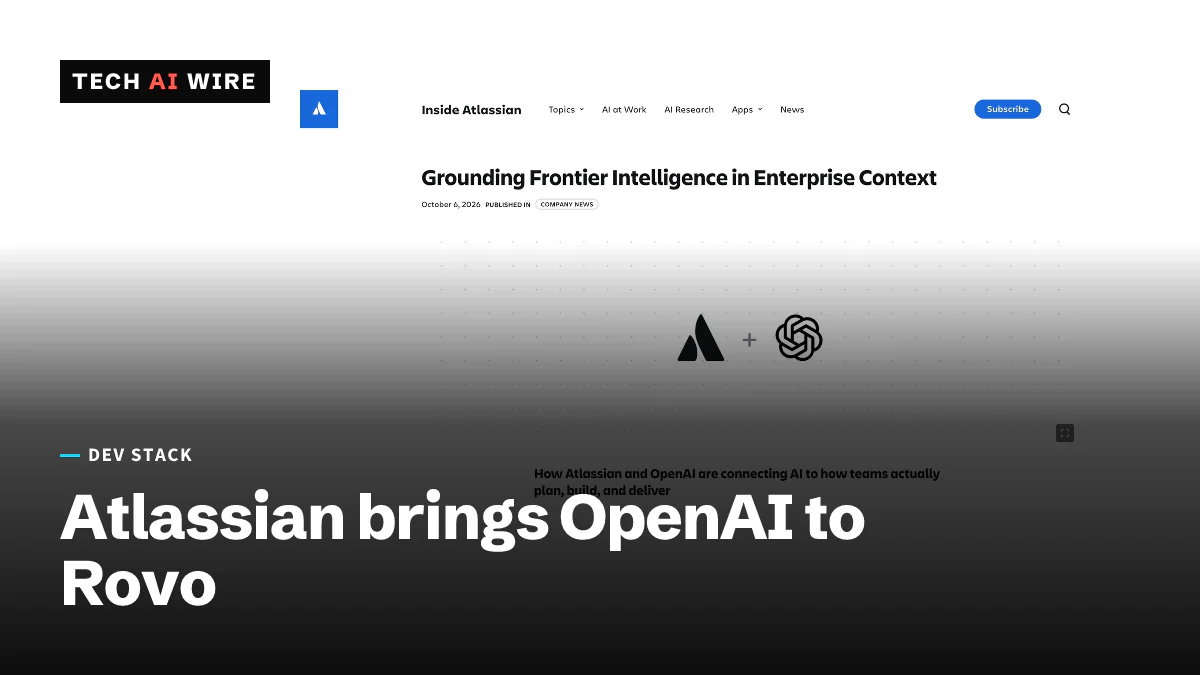
Atlassian and OpenAI expanded their partnership: OpenAI models now power Rovo, and ChatGPT and Codex reach Jira through an MCP server that takes 15M calls a day.
3 min read
By the numbers
- calls a day to Atlassian's MCP server, per VentureBeat
- 15M
- Atlassian developers using Codex
- 3,000+
- businesses using OpenAI products, per Atlassian
- 2.5M
Atlassian and OpenAI expanded their partnership on October 6, 2026. OpenAI's models now power the reasoning in Rovo, Atlassian's AI assistant, and ChatGPT and Codex can work with Jira and Confluence through a standard connector. Atlassian's announcement also describes a roadmap in which AI agents pick up Jira tickets on their own. For teams that track their work in Jira, that is where AI coding tools are heading next.
What the partnership includes
Atlassian makes Jira, the issue tracker many software teams plan their work in, and Confluence, a shared wiki. Rovo is its AI assistant that searches and acts across those products.
Atlassian's announcement lists two changes that apply today:
- OpenAI models power Rovo's reasoning. When Rovo works out an answer or a plan, an OpenAI model does the thinking.
- ChatGPT and Codex connect through MCP. MCP, the Model Context Protocol, is an open standard that lets an AI tool read and act on data in another app. Codex is OpenAI's coding agent.
VentureBeat lists the products in scope as Jira, Confluence, Bitbucket, Rovo, Loom, Goals and Jira Service Management. Bitbucket is Atlassian's code-hosting service. Loom records short videos, and Goals tracks team objectives.
The roadmap: agents that take tickets
The bigger promise is still ahead. Atlassian says future versions will let autonomous agents pick up work items directly. It also lists test runs, syncing of session history, and multi-agent orchestration, where several agents split one job between them.
In practice, a developer could assign a Jira ticket to an agent the way they would assign it to a colleague. Atlassian has not given dates for these features.
Atlassian is also using this work itself. Its announcement says more than 3,000 Atlassian developers use Codex.
Money, and why Atlassian stays multi-model
VentureBeat reports that Atlassian made a spend commitment to OpenAI as part of the deal. Neither source gives the amount. VentureBeat's main point is that Atlassian is not betting on one AI vendor. Its platform stays "firmly multi-model."
VentureBeat says the models in use include GPT-6 Astra, released on September 3, 2026, and the GPT-5.6 series. It lists Astra's price at $10 per million input tokens and $50 per million output tokens. GPT-6 Astra reached general availability on Bedrock and Copilot in September.
The same MCP server also serves other AI vendors. VentureBeat says it handles 15 million calls a day. Scott White, Anthropic's head of enterprise product, calls it "one of the most-used enterprise MCP integrations on Claude," VentureBeat reports. Support for Jira Service Management is coming soon.
The partnership builds on earlier steps. Atlassian Intelligence launched in April 2023, and the MCP integration for ChatGPT arrived in December 2025, according to VentureBeat.
What the companies say
Nikunj Handa, OpenAI's head of product for its API, is quoted in Atlassian's announcement. "Combining OpenAI frontier models with Atlassian brings powerful agentic capabilities together within the context of how businesses actually operate," he said.
Atlassian also quotes a customer. JR Harrell, an executive vice president at Datasite, said "Atlassian provides the connective tissue that allows OpenAI frontier models to reason across our entire enterprise."
What this means for developers
- Connect Codex or ChatGPT to Jira now, on a test project. The MCP connection works today. Try it on a sandbox Jira project first, so a misread prompt cannot edit real tickets.
- Review permissions before you connect. An agent that can read Jira and Confluence can read everything your account can. Give it a service account with only the projects it needs.
- Write tickets an agent can finish. If agents will pick up work items, the ticket becomes the spec. Clear acceptance criteria and links to the right code help a human reviewer as much as an agent.
- Do not build for one model. Atlassian's own platform is multi-model, and the same MCP server serves Claude. Keep your workflows tied to MCP, not to one vendor's API, so you can switch models without rewriting them.
- Watch for the agent features, and their prices. Neither source gives dates or prices for autonomous ticket handling. That release, and how Atlassian bills it, will decide whether it changes daily work.
The connector is the part to use today. The ticket-taking agents are a plan, and Atlassian has not set a date.
Sources
Related articles
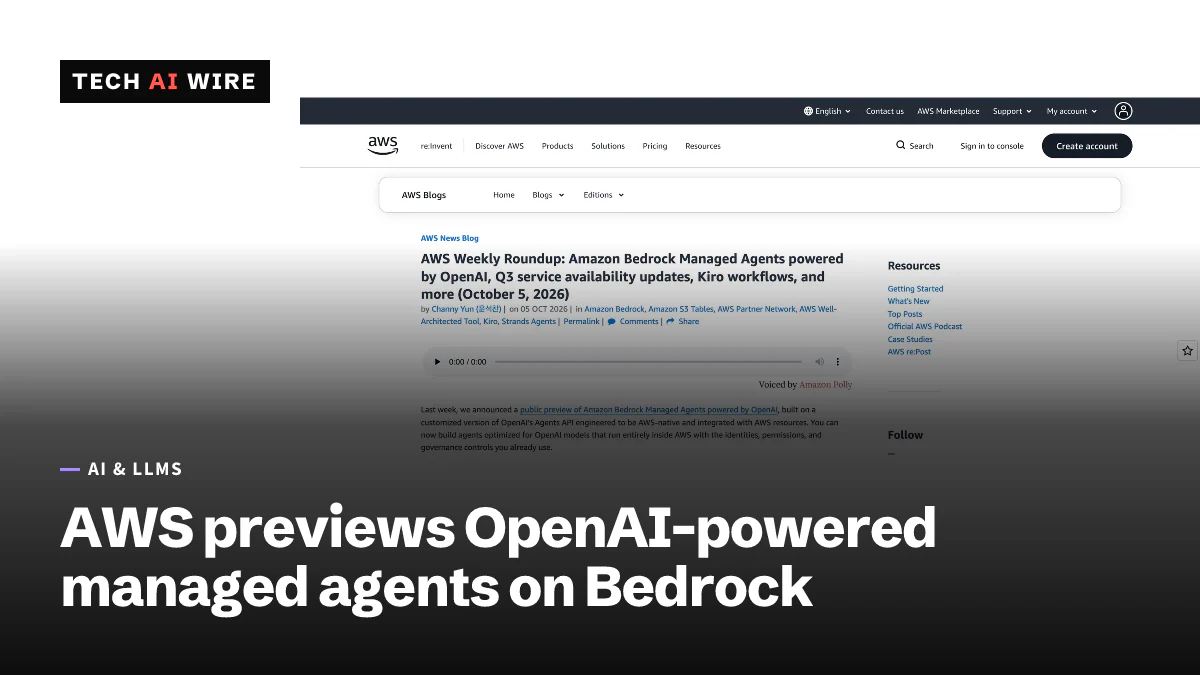
Amazon Bedrock Managed Agents for OpenAI enters preview
AWS opened a public preview of Bedrock Managed Agents on September 29, 2026: OpenAI-model agents that run inside your AWS account, in three US regions.
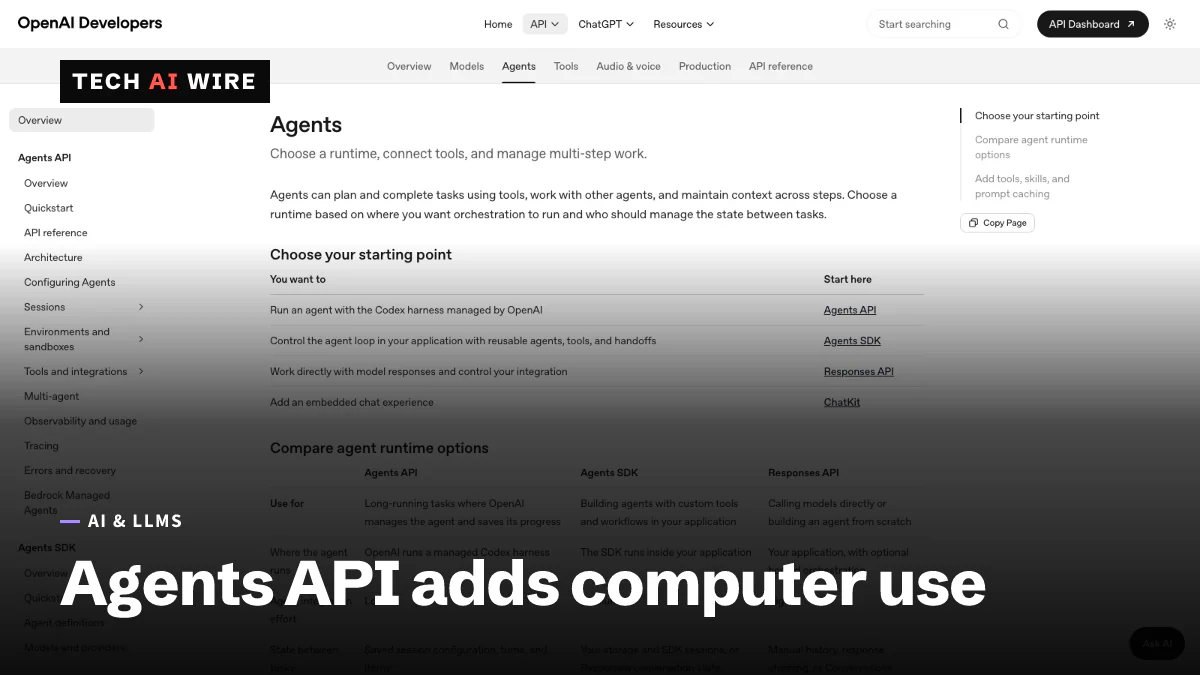
OpenAI Agents API adds computer use in a hosted browser
OpenAI's Agents API, in public beta since September 10, gained computer use at DevDay on September 29, 2026: agents can drive an OpenAI-hosted browser.
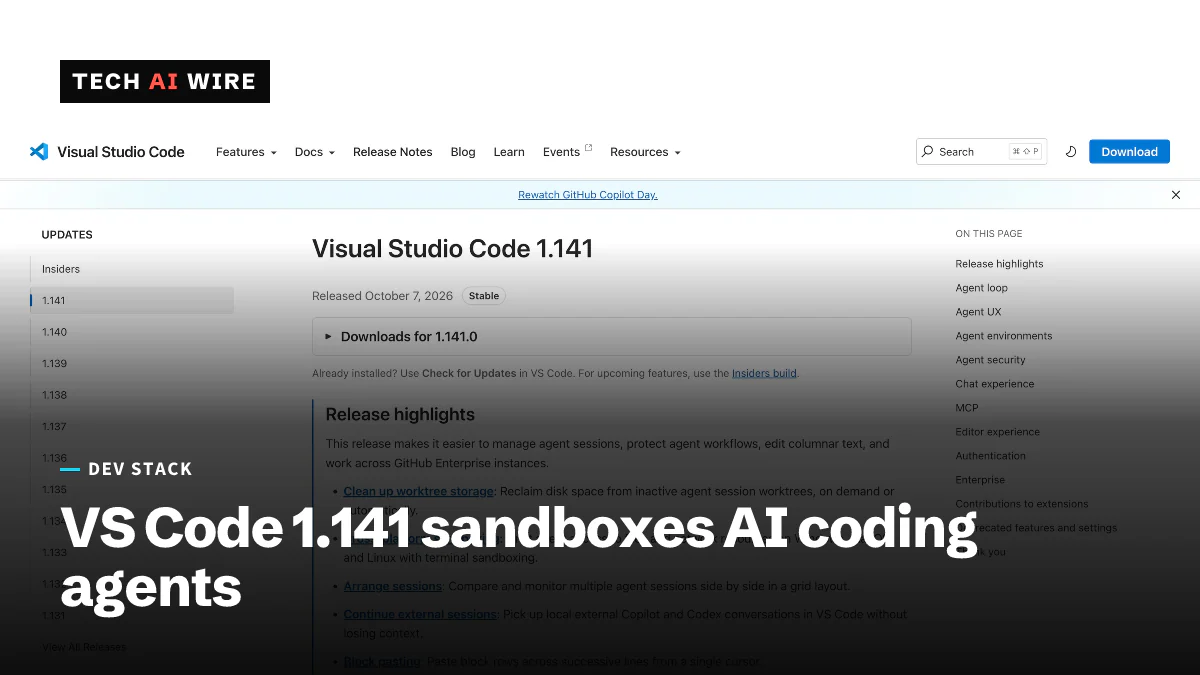
VS Code 1.141 sandboxes AI agents on Windows, macOS, Linux
VS Code 1.141 sandboxes AI agents on Windows, macOS and Linux, shows agent sessions in a grid and picks up Codex and Copilot chats started in other apps.
The weekly digest
One email every Friday with the week's top stories from all six desks: AI, dev tools, coding, the tech industry, startups and what's next. Free, no spam.