a16z lifts its fifth Growth fund to $8.5B and adds an AI hardware fund
Andreessen Horowitz said on August 31, 2026 that it added $1.75 billion to its fifth Growth fund, taking it to $8.5 billion. A separate $1.1B fund targets AI hardware.
3 min read
By the numbers
- the fifth Growth fund's new total
- $8.5B
- added since the January 2026 close
- $1.75B
- the separate Machine Age Fund for AI hardware
- $1.1B
- January 2026
- 6.75B
- August 2026
- 8.5B
Andreessen Horowitz said on August 31, 2026 that it has expanded its fifth Growth fund to $8.5 billion. TechCrunch reports the fund originally closed at $6.75 billion in January 2026, so this adds $1.75 billion. Days earlier the firm launched a separate $1.1 billion fund aimed at AI hardware, and that smaller fund says more about where the money is going.
a16z's Growth practice invests in companies that are already established rather than starting out. Unite.AI reports the practice manages more than $24 billion across five vintages, and TechCrunch puts the firm's total assets under management at $90 billion as of January 2026.
The reasoning the firm gives
a16z's own post credits six mega-trends running at once. They are enterprise AI adoption, consumer AI, American Dynamism, robotics and autonomy, healthcare transformation, and rebuilding compute for the AI era.
David George, a general partner who TechCrunch says leads the growth investment team, gave the blunter version. He said "companies are reaching the growth stage faster and gobbling up more cash at higher valuations than ever."
That sentence is the actual thesis. It describes a market where a company needs more money sooner, which is precisely the condition that makes a larger growth fund necessary rather than merely possible.
The hardware fund is the signal
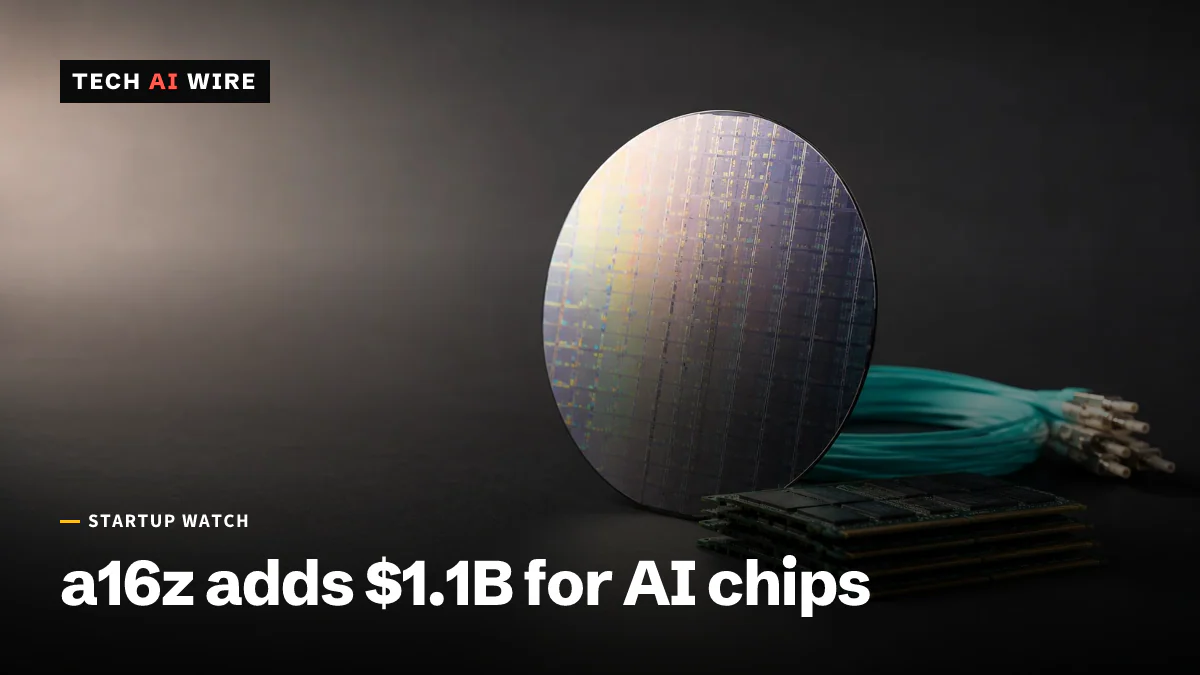
The $1.1 billion Machine Age Fund launched within days of the Growth expansion. TechCrunch reports its focus as AI hardware, naming chips, memory, networking and storage.
Set that next to the sixth mega-trend on a16z's list, rebuilding compute for the AI era, and the direction is clear. A firm best known for software has raised a dedicated pool for silicon and interconnects.
| Fund | Size | Focus |
|---|---|---|
| Fifth Growth fund | $8.5 billion | Established companies across six named trends |
| Machine Age Fund | $1.1 billion | AI hardware: chips, memory, networking, storage |
Alongside the capital, a16z detailed six new operational service areas in its Growth Platform. Its own post lists sales and marketing leadership, AI-native go-to-market, positioning, scaling sales motions, pricing and packaging, and revenue operations.
Whose names are on the list
The portfolio lists differ between sources, which is worth noting before repeating any of them.
a16z's own page names Databricks, SpaceX, Lovable, Atlassian, Samsara, 1Password, Miro, PagerDuty, Segment and Workday. Unite.AI's account names Anduril, Coinbase, Databricks, Figma, OpenAI, SpaceX, Stripe, Waymo and Wiz. TechCrunch says the practice spans more than 100 companies over seven years.
Only Databricks and SpaceX appear on both lists, so treat any single roster as partial.
What this means for developers
If you are raising at growth stage, the fund size is not the useful detail. What came with it is. a16z added pricing and packaging, revenue operations and go-to-market help as named services. Investors at this size now compete on operational help. When you compare term sheets, ask what the firm will actually staff for you, and get names rather than a logo slide.
The hardware fund is the part worth reading if you build infrastructure. Money moving into chips, memory, networking and storage suggests a bet that the constraint on AI is shifting from models to the machinery underneath them. That matches what the compute deals of the past year have implied. If you work on inference serving, memory bandwidth or interconnects, the funding environment for that work just improved.
For everyone else, treat this as a market temperature reading rather than news you act on. Faster-growing companies raising more cash at higher valuations means competitors may be better funded than last year, and it means capital is available if your metrics are strong. It also means valuations are being set in a market that has not yet been tested by a downturn.
One thing not to do: do not assume any named portfolio company confirms a specific investment. The two published lists overlap on only two names, which tells you these are marketing selections rather than complete records.
Sources
- Expanding the a16z Growth Fund and Platform - Andreessen Horowitz
- a16z brings growth fund to $8.5B days after launching new $1.1B fund - TechCrunch
- Andreessen Horowitz expands fifth Growth fund to $8.5B - Unite.AI
Related articles
Crusoe reportedly raises $3B at a $30B valuation
Crusoe has reportedly raised $3 billion at a $30 billion valuation, three times its October 2025 mark, after signing a $13 billion cloud deal with Jane Street.
AfterQuery hits $3.2B, reportedly YC's fastest unicorn yet
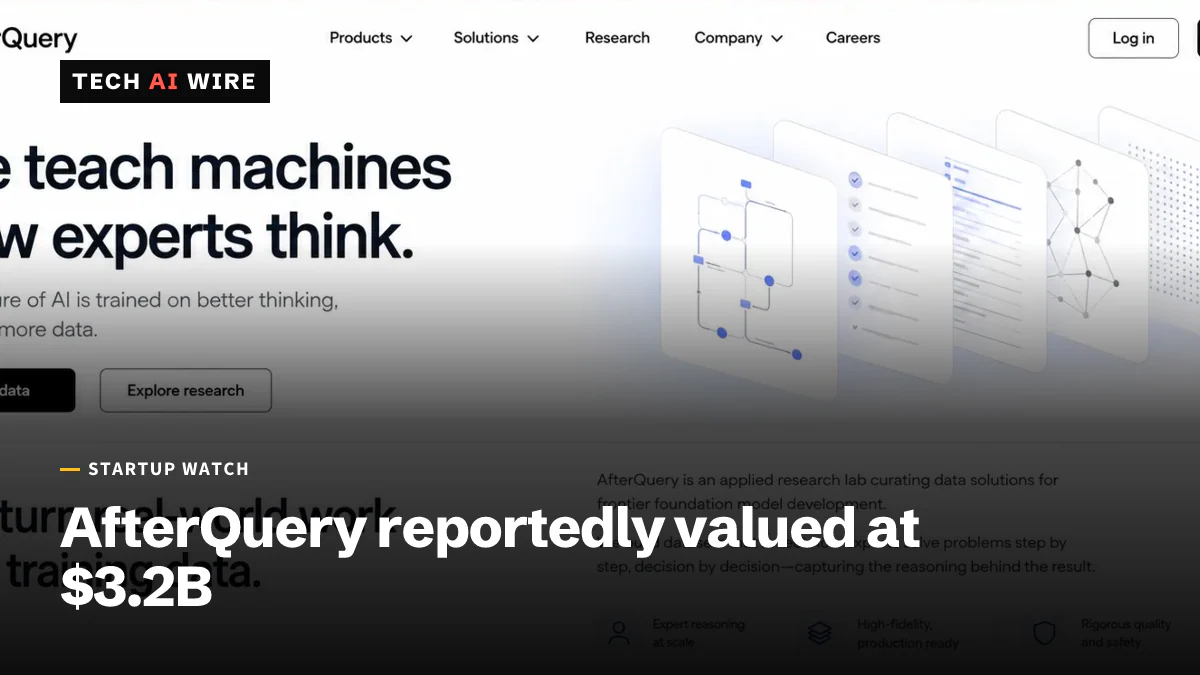
AfterQuery is reportedly valued at $3.2 billion, up from $300 million in April. It sells the professional reasoning data that labs use to train AI agents.
DeepSeek nears a $7.4B raise at a $74B valuation before a 2027 IPO
Reports dated August 28 and 29, 2026 say DeepSeek is close to raising about $7.4 billion, or 50 billion yuan, at a $74 billion valuation. The money buys compute.
The daily brief
Three to five stories a day, and what each one means for the people who build software. Free, no spam.