Python Language Summit 2026 debates Rust and a new GC
The Python Language Summit 2026 reports are out: 47 core developers weighed Rust in CPython, a new garbage collector, a std namespace and faster startup.
4 min read
By the numbers
- core developers and guests at the summit
- 47
- talks: 10 full-length and 5 lightning talks
- 15
- of Python run time spent in garbage collection, per Mark Shannon
- 11.67%
- faster Pyodide startup with memory snapshots
- 4x
The Python Software Foundation published its reports from the Python Language Summit 2026 on September 30. The summit is where Python's core developers argue about the language's future before anything becomes a formal proposal. One of the most concrete plans came from the Rust for CPython team: bring Rust into CPython, the main Python interpreter, step by step.
The PSF's summary says 47 core developers and guests met on July 14, 2026 in Kraków, Poland, at EuroPython 2026. They heard 10 full-length talks and 5 lightning talks. It was the first summit in Europe since Florence in 2011. "Going forward, the Python Language Summit will alternate between PyCon US and EuroPython on a yearly basis," the PSF writes. Seth Larson wrote the reports, and LWN pointed readers to them the same day.
Rust moves from experiment to plan
David Hewitt spoke for the Rust for CPython team, which is led by Kirill Podoprigora and Emma Smith and has about 60 developers. The team wants to add Rust to CPython a little at a time, starting with small, self-contained modules.
The first candidate is zlib, the compression module, built on the zlib-rs library. The Python Insider write-up quotes the team calling zlib-rs "faster than zlib and zlib-ng on many platforms." The case for Rust is safety. Issues with CPython's type-crash label rose from 82 in 2021 to a projected 353 in 2026.
The plan's phases run across Python 3.16 in October 2027, 3.17 in October 2028 and 3.18 in 2029 or later. Rust support on different platforms is now "less and less of a concern," the team says. Hewitt was also direct about the end state: "it would be disingenuous to say that Rust would be optional forever." CPython will stay "a dual-language project for a meaningful amount of time."
A new plan for garbage collection
Mark Shannon said garbage collection, the work of finding and freeing unused memory, takes about 11.67% of Python's run time. He proposed a hybrid of two designs. A generational collector checks new objects most often, because "most objects die young." An incremental collector does its work in small slices instead of one long stop.
Pause times are the reason. Shannon put incremental pauses at "tens of milliseconds," against about 3 seconds for the generational approach. His design starts the young generation at 20MB. The room disagreed on one point: whether Python should offer Java-style settings for tuning the collector.
After free-threading: a safer concurrency model
Free-threading is the new build of Python that can run threads truly in parallel. Tobias Wrigstad, Fridtjof Stoldt and Donghee Na asked what comes next. They proposed Behavior-Oriented Concurrency, a model where tasks declare which data they need before they run.
Each piece of shared data sits in a "cown," short for concurrent owner, which only one task can use at a time. A @when decorator names the cowns a task needs. The speakers say this design prevents deadlocks and data races. A proof of concept, bocpy, already runs on stable Python using subinterpreters. The summit endorsed no single approach and favored more research.
Typing, a std namespace and faster startup
| Talk | Speaker | The idea |
|---|---|---|
| PEP 827, type manipulation | Michael J. Sullivan | Types that compute other types, such as deriving ORM create and update types from one model |
| Namespacing | Pablo Galindo Salgado | A top-level std namespace, so import std.json always means the standard library |
| Memory snapshots | Hood Chatham | Save a started interpreter and restore it, cutting Pyodide's "Hello, world" from 1.406s to 0.353s |
| macOS support | Ned Deily | Add macOS to PEP 11, the platform-support policy, and modernize an installer carrying 25 years of technical debt |
Sullivan stressed that "users are not meant to write types like these or only use them very rarely." Galindo Salgado promised the old import json would keep working: "We can't break the world, that would be bad." The main risk with snapshots is security, because a hash seed meant to be random each run would be frozen and shared.
What this means for developers
Nothing here is decided yet. The summit is a discussion, and every change still needs a PEP, Python's formal proposal process. Read these reports as a map of where the next few releases are heading.
If you build CPython from source, start checking for Rust. That covers Linux distributions, embedded boards and unusual platforms. Hewitt's own words say Rust will not stay optional forever. Confirm that a Rust toolchain exists for every platform you ship on, before the zlib module makes it matter.
Stop naming local files after standard library modules. A file called json.py or random.py in your project can shadow the real module today. The std namespace is meant to fix that problem, but good naming fixes it now.
If your service suffers long garbage-collection pauses, follow Shannon's work. Do not build tuning around it yet, since the summit disagreed about offering settings at all.
Library authors should read PEP 827. ORM and framework maintainers are its audience. Application developers will mostly benefit without writing these types themselves.
Try bocpy if you write concurrent Python. It runs on today's Python, and feedback now shapes what the core team chooses to build.
Sources
- Python Language Summit 2026 blog posts are now available - Python Software Foundation
- Rust for CPython (Python Language Summit 2026) - Python Insider
- Reports from the 2026 Python Language Summit - LWN.net
Related articles
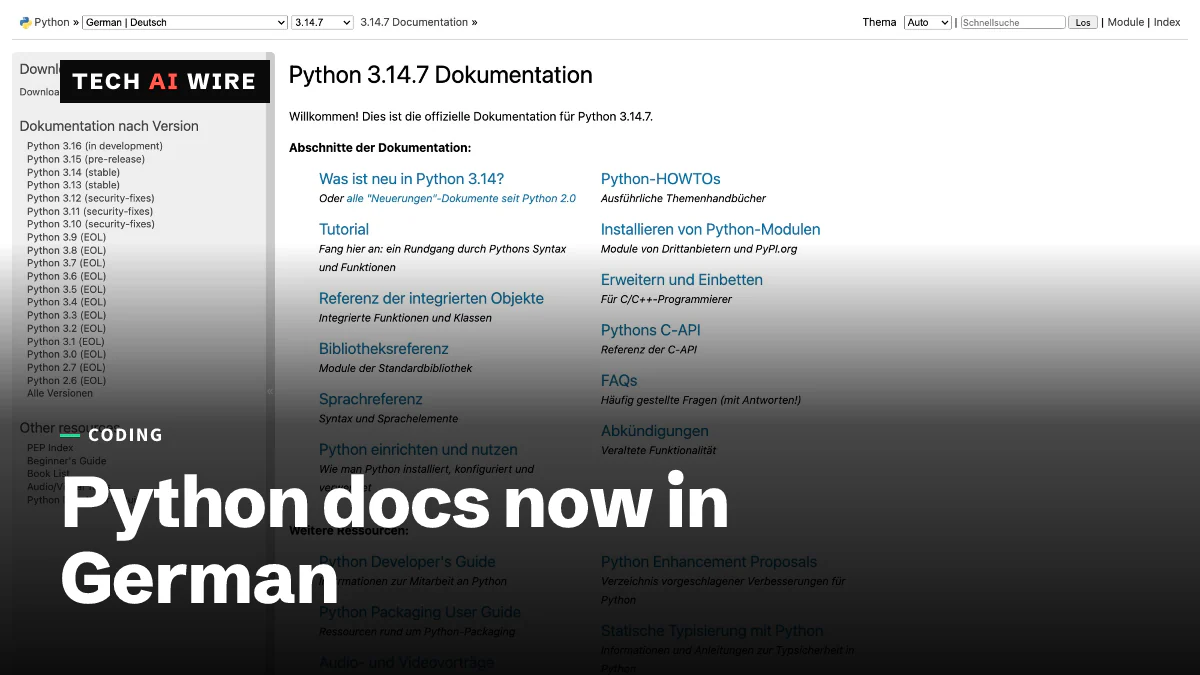
Python documentation is now available in German
The Python docs now have a German edition at docs.python.org/de/3/. The core pages are 100% translated; the full set stands at 9.17%.
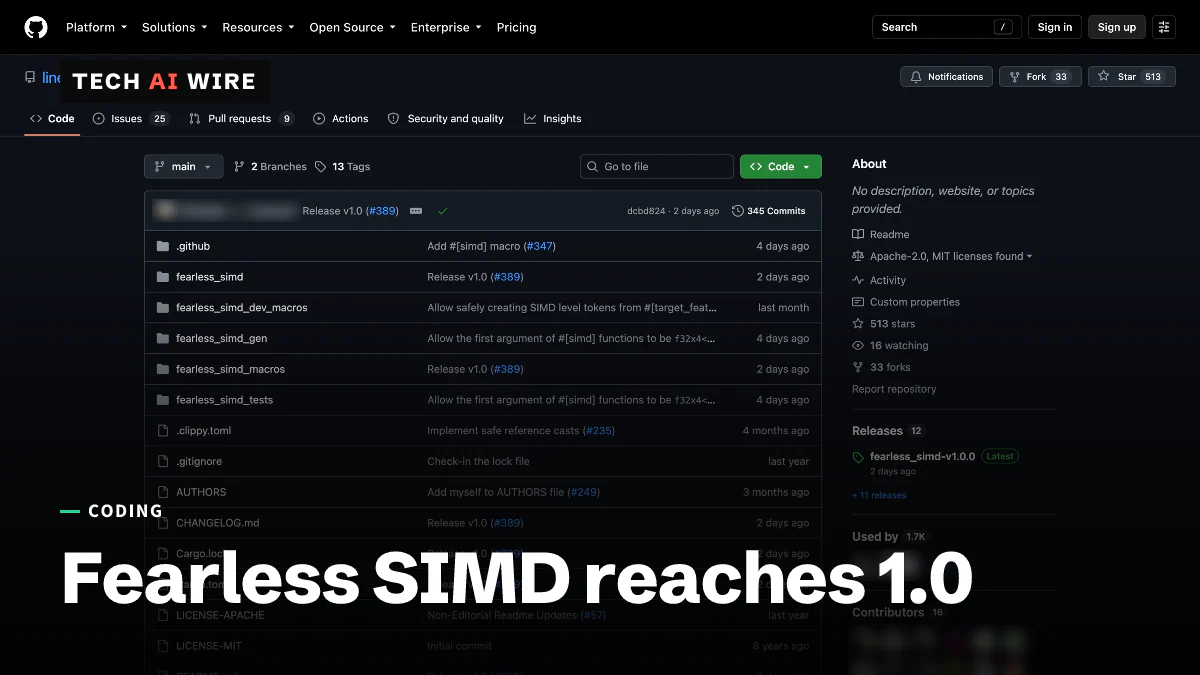
Fearless SIMD 1.0 brings stable, safe SIMD to Rust
Fearless SIMD 1.0, released September 21, gives Rust safe SIMD from SSE2 to AVX-512, NEON and WebAssembly, with a stable API and 3 years of security fixes.
Rust warns maintainers about fake job video calls
Rust's security team says attackers are booking video calls with crate owners under fake job offers, then asking them to install a missing codec.
The daily brief
Three to five stories a day, and what each one means for the people who build software. Free, no spam.