Omarchy 4.0.1 undoes AI agent defaults that skipped safety checks
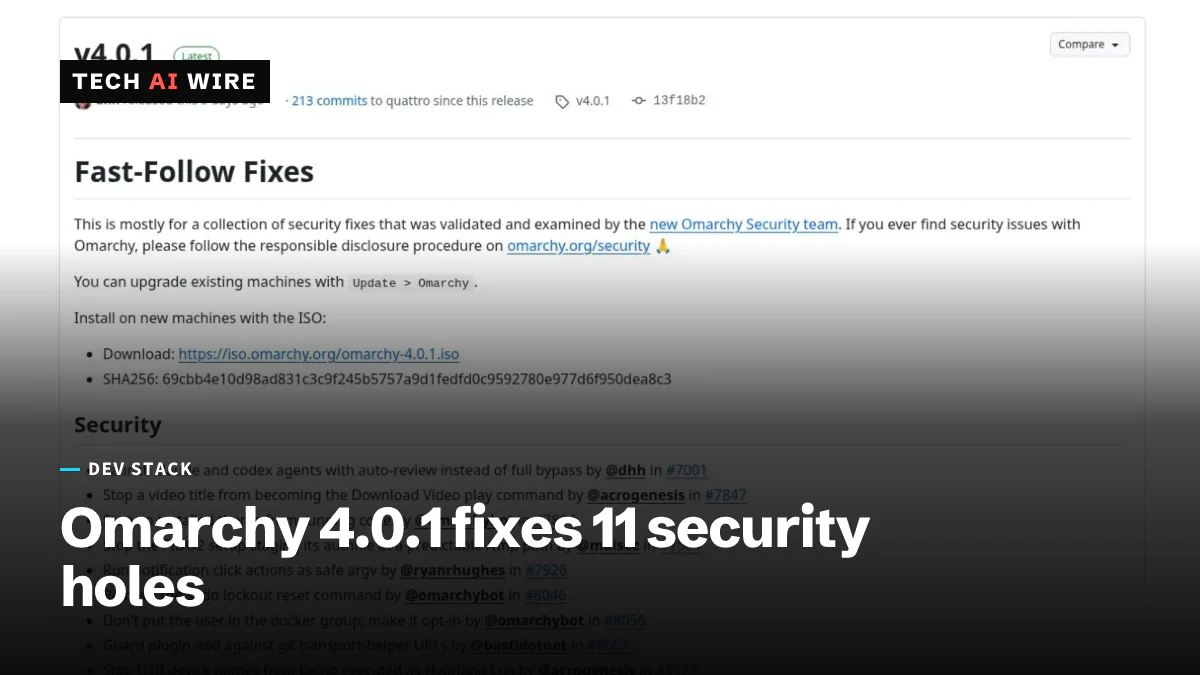
Omarchy 4.0.1 shipped 11 security fixes on August 25, 2026. The largest one stops launching Claude Code and Codex with their approval prompts turned off.
3 min read
By the numbers
- security fixes in Omarchy 4.0.1
- 11
- between version 4.0 and this patch
- 11 days
- pledged to the new Omacom Foundation
- $10M
Omarchy shipped version 4.0.1 on August 25, 2026 with 11 security fixes. The most consequential one changes how the system starts AI coding agents. Until this release, Omarchy launched Claude Code and OpenAI's Codex with the flags that turn off their approval prompts, so the agents could act without asking.
Omarchy is a ready-made Linux desktop built on Arch Linux, created by David Heinemeier Hansson of Basecamp. It first appeared in June 2025 and aims to give developers a working environment without hours of setup. Version 4.0 arrived in mid-August 2026, and this patch followed 11 days later.
What the agents were doing before
A coding agent normally pauses before it does something risky. It asks the developer to approve a shell command, a file write, or a package install. Omarchy's version 4.0 startup settings removed that pause.
Version 4.0.1 reverses it. According to the release notes, Claude and Codex now launch in auto-review mode instead of full bypass, and agent actions pass through a classifier before they run. A classifier here is a second model that inspects the proposed action and judges whether it is safe.
That is an improvement, not a guarantee. heise online's report makes the limit explicit: auto-review "is not a sandbox but a model that can be deceived." The publication points to work by the security firm PromptArmor, which showed OpenAI's review agent approving the installation of malicious packages after instructions were hidden in code.
The other fixes in the release
The release notes list fixes across seven more areas.
| Area | What changed |
|---|---|
| Docker group | Adding the user to the docker group is now opt-in, not the default |
| Installed themes | Fixes for vulnerabilities introduced through theme files |
| FIDO2 | Hardware security key handling patched |
| Git transport | Fixes in how repositories are fetched |
| USB devices | Safer handling of connected hardware |
| DNS helpers | Patched name-resolution scripts |
| Notification actions | Fixes to what a desktop notification is allowed to trigger |
The Docker change matters for anyone who was already running the system. Membership in that group lets any program in your desktop session talk to the Docker service, which runs with full system privileges. Making it opt-in narrows what a compromised program can reach.
A security team, and $10 million behind the project
Omarchy now has a security team of its own, and a published disclosure process at omarchy.org/security. The 4.0.1 notes credit three security contributors by handle: @acrogenesis, @mdisec, and @omarchybot.
The money arrived at the same time. Both heise online and The Register report the launch of the Omacom Foundation to fund the project's infrastructure. The two accounts differ slightly on the figure. The Register says the fund opened at $8 million and reached $10 million once backers including Dropbox joined; heise online reports the launch total as $10 million. Named patrons include Tobi Lütke of Shopify, Patrick Collison of Stripe, and Michael Dell.
The foundation also intends to support the open-source projects Omarchy depends on, including the Hyprland window manager and Quickshell.
Not everyone is convinced. The Register quotes a critic who says flatly: "Do NOT use Omarchy if you care about security of your machine even a little bit."
What this means for developers
Update first, then check the group. Run groups on any machine installed from version 4.0 or earlier. If docker appears in the output, the old default is still in place on that machine. A patch changes what new installs do, not what your system already did.
The broader lesson applies well beyond one distribution. A convenience default that disables an agent's approval prompt is a security decision, and it was made here on the user's behalf without a prompt. If you package agents for a team, make the permissive mode something a person opts into and can see.
Treat auto-review as a speed bump rather than a wall. PromptArmor's result is the useful data point: a reviewing model can be talked into approving a malicious install. Where an agent can install packages or run shell commands, a container or a virtual machine still does work that no classifier does.
Sources
- Release v4.0.1 - basecamp/omarchy - GitHub - basecamp/omarchy
- Omarchy Linux: Desktop Overhaul and $10 Million for Foundation - heise online
- Omarchy distro gains serious backing - The Register
Related articles
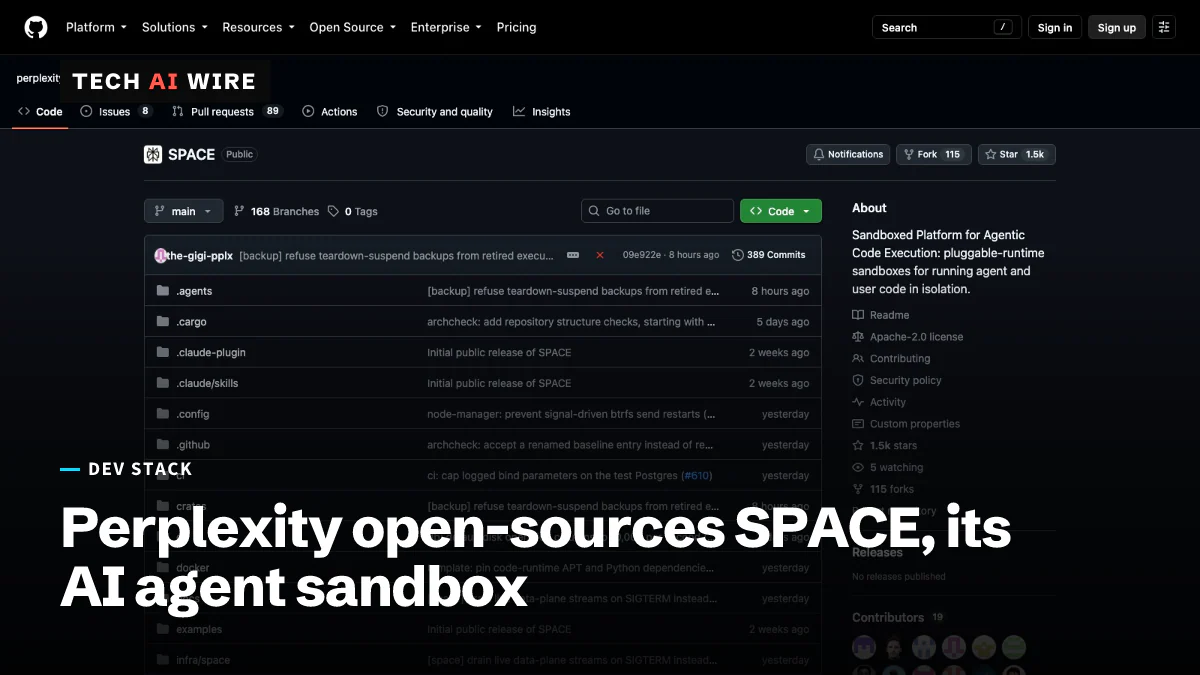
Perplexity SPACE sandbox for AI agents goes open source
Perplexity released SPACE, the Firecracker sandbox behind its Computer agent, under Apache 2.0 on October 15. Its own tests found 0 escapes in 108 tries.
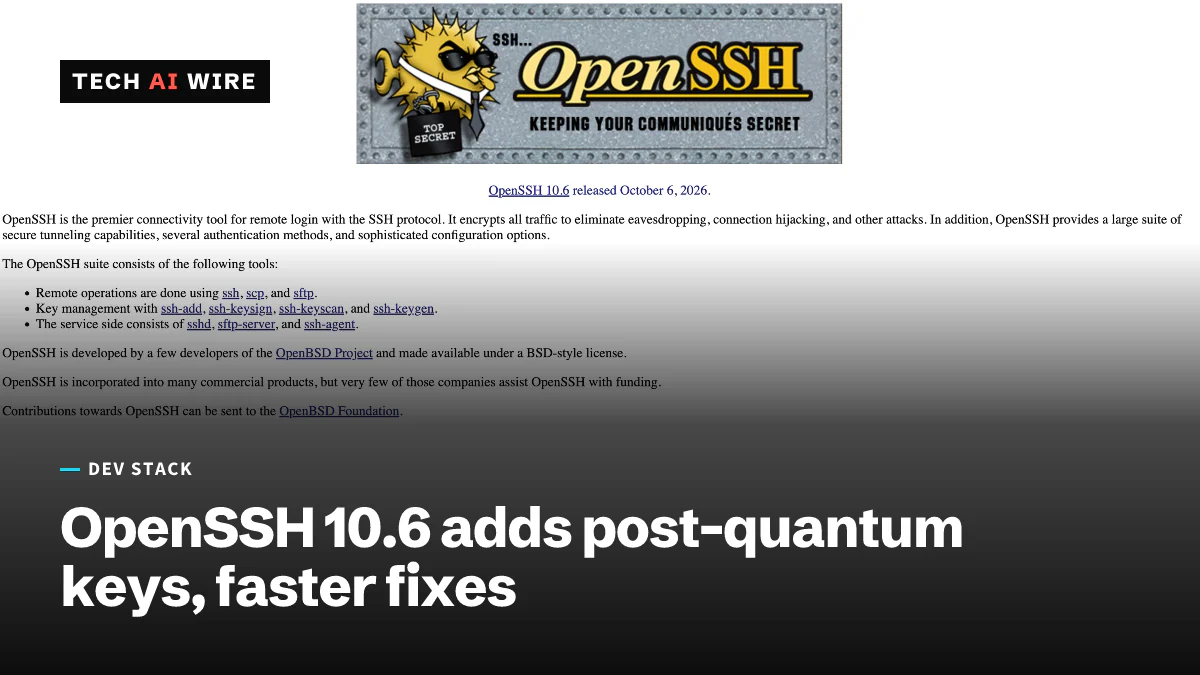
OpenSSH 10.6 adds post-quantum signatures, speeds releases
OpenSSH 10.6, out October 6, adds a post-quantum signature type, turns off LZ77 compression and promises faster fixes as AI bug reports pour in.
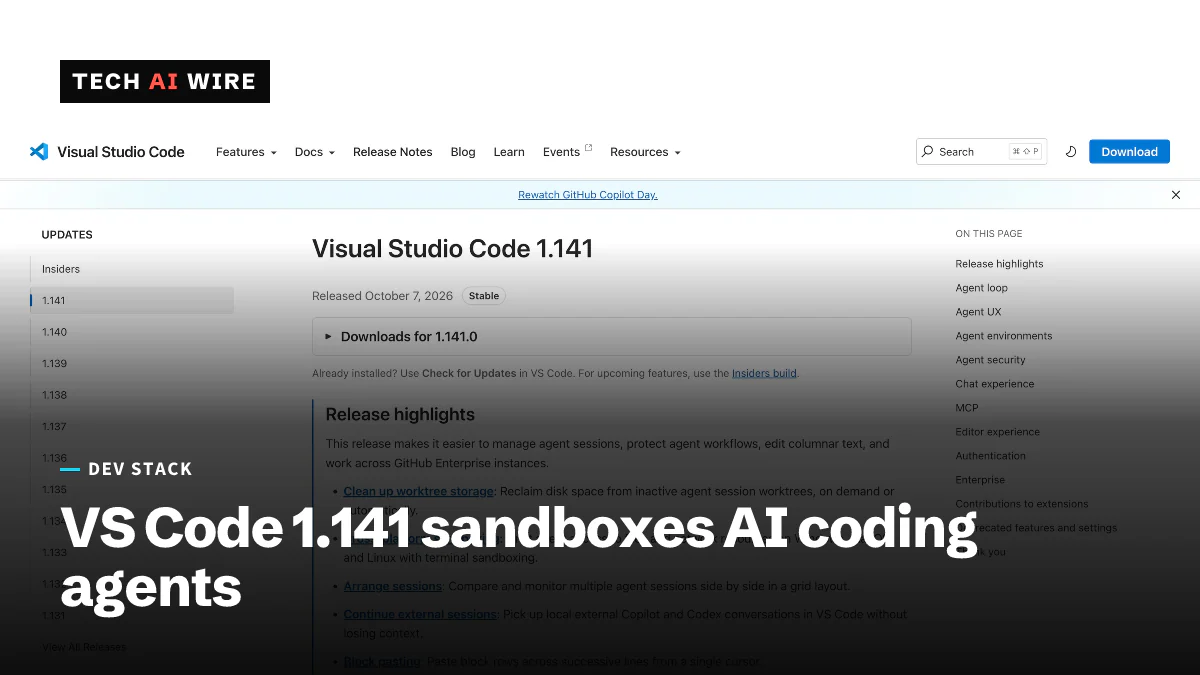
VS Code 1.141 sandboxes AI agents on Windows, macOS, Linux
VS Code 1.141 sandboxes AI agents on Windows, macOS and Linux, shows agent sessions in a grid and picks up Codex and Copilot chats started in other apps.
The weekly digest
One email every Friday with the week's top stories from all six desks: AI, dev tools, coding, the tech industry, startups and what's next. Free, no spam.