Anthropic's new standard lets AI agents run lab equipment
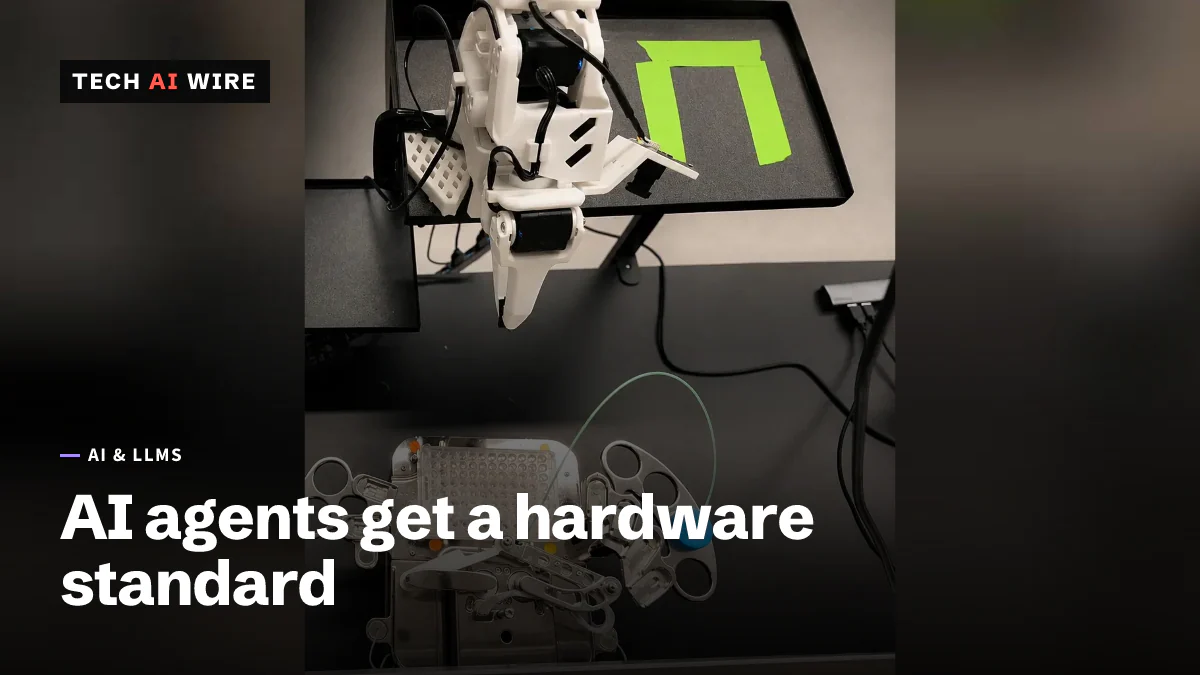
Anthropic opened a research preview of the Model Hardware Standard on August 27, 2026. It gives agents one way to drive microscopes, robot arms and lab tools.
3 min read
By the numbers
- to connect hardware at Carnegie Mellon, down from weeks
- 8 hours
- QuEra laser recovery rate, up from 58%
- 99.3%
- for that recovery, down from 150 seconds
- 6 sec
Anthropic opened a research preview of the Model Hardware Standard on August 27, 2026. It is a shared specification that lets an AI agent operate physical machines, including microscopes, liquid handlers and robot arms. The company's aim is to cut the custom wiring each lab currently builds by hand.
Anthropic is the company behind Claude. Until now its agents acted on software: files, browsers and APIs. This is its first move into equipment that moves.
What the standard actually does
MHS gives every device the same small vocabulary. According to Anthropic's announcement, it standardizes communication through simple primitives such as "read" and "write." A microscope and a robot arm then answer to the same kind of instruction, instead of each needing its own adapter.
It is not a replacement for the Model Context Protocol, the open standard Anthropic published in 2024 for connecting models to software tools. MHS sits alongside it. In Anthropic's words, "MHS works with any device that has a programmable interface. It is also model-agnostic, and any agent harness can access it using standard protocols, such as the Model Context Protocol."
Model-agnostic is the part developers should note. Fortune reports the standard works with any large language model, including OpenAI's and open-source ones. Fortune also quotes Anthropic's Jonah Cool on the problem being solved: the field "suffers from proprietary solutions that are very brittle."
What the early tests measured
Anthropic published numbers from its launch partners rather than a demo video.
| Site | Result |
|---|---|
| Carnegie Mellon University | Hardware integration took 8 hours, against the usual weeks |
| QuEra | Laser recovery succeeded 99.3% of the time, up from 58% |
| QuEra | That recovery took 6 seconds, down from 150 |
| Tetsuwan | Across 9,143 dispenses, precision prediction beat the manufacturer's own specification by 12% |
The integration figure is the headline. Anthropic says a lab typically spends weeks or months getting instruments to talk to each other. Most devices simply do not, so a specialist has to build each bridge by hand.
Safety is handled at the device, not in the prompt. Anthropic says researchers keep oversight, and agents pause for human confirmation before risky steps. The company also concedes a real limit: experts still have to warn the system about physical failure modes that are not obvious from the data.
Who is testing it, and how to get in
Fortune lists early partners including Genentech, Carnegie Mellon, QuEra, Universal Robots, Amazon Web Services, Doosan Robotics, Danaher and Hugging Face. The HHMI Janelia Research Campus took part in development.
The standard is not open source yet. Anthropic says it plans to release it after building safety evaluations with those launch partners. Access today runs through a research preview waitlist at modelhardwarestandard.com.
What this means for developers
Most developers cannot use this yet, and that is the honest summary. A waitlist plus a closed specification is not something to plan a quarter around. Treat the announcement as a signal about direction rather than a tool you can install.
The transferable idea is the interface, not the robots. MHS is the same bet MCP made: pick a tiny vocabulary, make every device speak it, and let the integration work collapse. If you maintain an API that agents already call, the lesson is that a small, boring command set beats a rich one an agent has to learn per vendor.
Watch the licence when it opens. An open standard that Anthropic controls the evaluations for is not the same as a standard a committee owns. Whether other model vendors adopt MHS, or ship a rival, will decide if this becomes plumbing or stays a Claude feature.
If you do work in a lab, the integration number is the one to test against. Eight hours versus several weeks is a claim you can check on your own instruments during the preview. It is the only figure here a reader can independently falsify.
Sources
Related articles
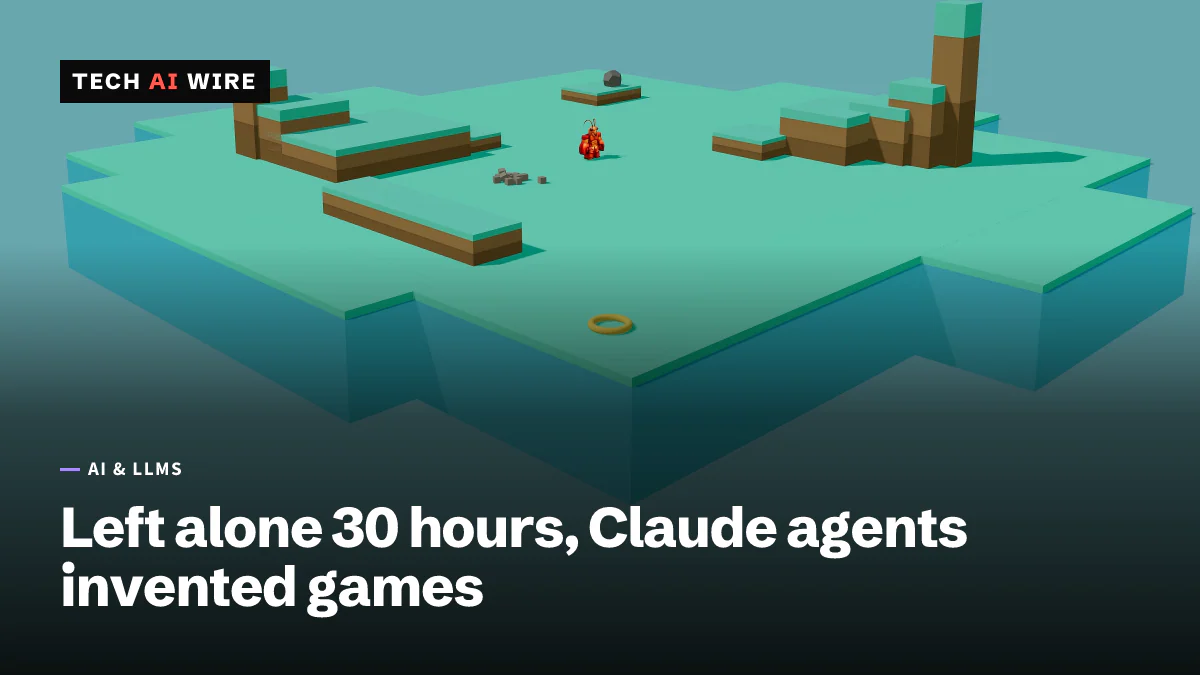
Claude Opus 4.7 agents invent games on a virtual island
An MIT study left 13 Claude Opus 4.7 agents alone on a virtual island for 30 hours. They invented games, then beat fresh copies on new tasks.
Google Cloud's Gemini agent can route work to Claude
Google Cloud unveiled the Gemini agent on October 8, a work agent in private preview that runs jobs on Gemini or Claude and can keep working for hours or days.
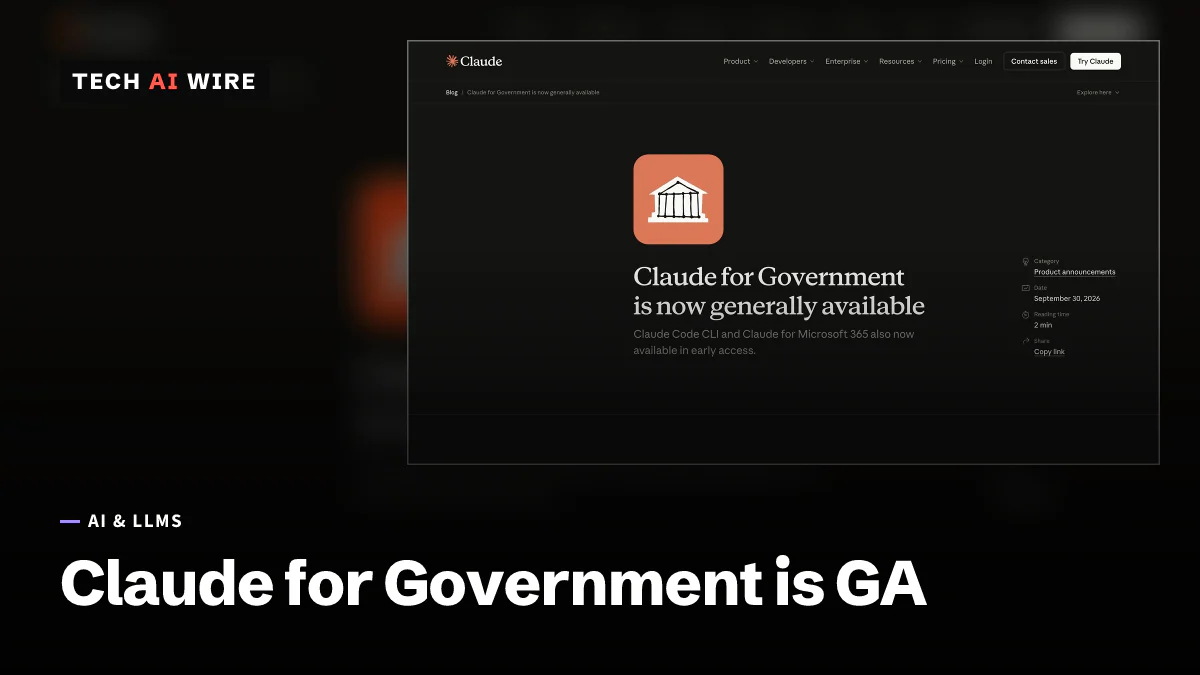
Claude for Government reaches GA under FedRAMP High
Anthropic's Claude for Government is generally available to U.S. federal and state agencies under FedRAMP High, with no seat fees and hard spending caps.
The weekly digest
One email every Friday with the week's top stories from all six desks: AI, dev tools, coding, the tech industry, startups and what's next. Free, no spam.