Amazon will take drone delivery to nearly 500 US cities this year
Amazon is expanding Prime Air from 11 sites to nearly 500 US cities and towns by the end of 2026 - a sixfold jump for a service that delivers 5-pound packages in about 30 minutes.
3 min read
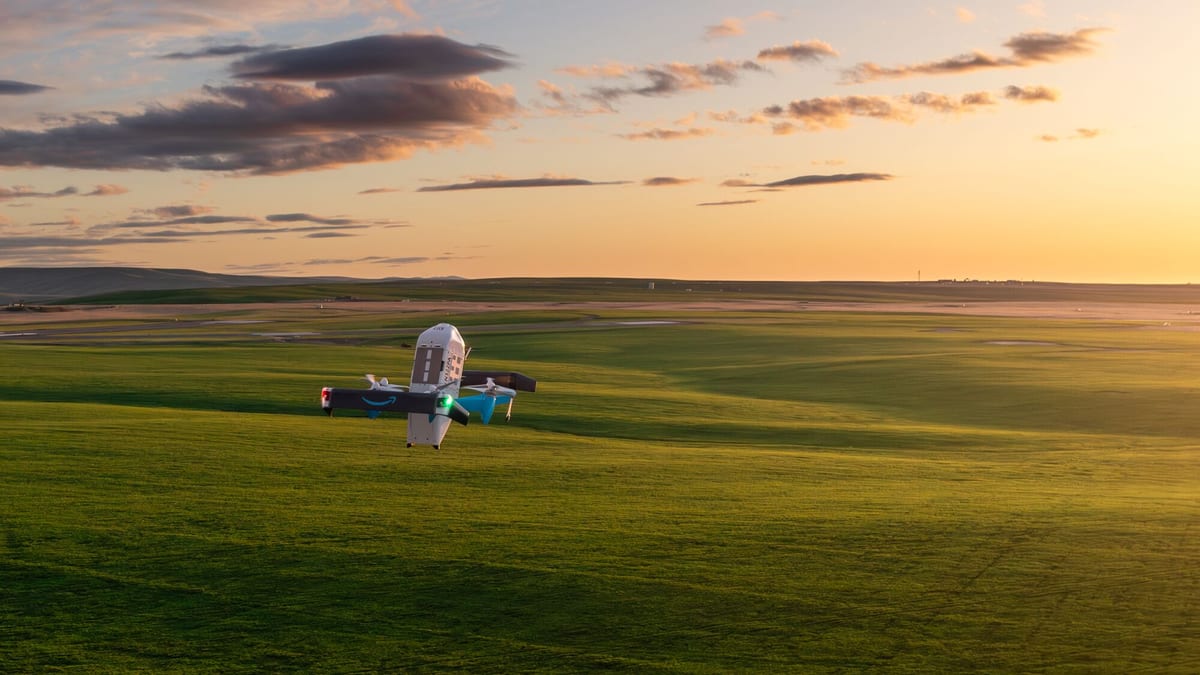
By the numbers
- US cities and towns by the end of 2026
- ~500
- expansion from the current 11 delivery sites
- 6x
- fastest delivery; about an hour is typical
- 30 min
- of frequently bought items are drone-eligible, per Amazon
- 60%
Amazon announced it will expand Prime Air drone delivery to nearly 500 US cities and towns by the end of 2026 - a sixfold jump from the 11 sites it operates today across 10 metro areas. After a decade of demos and pilot zones, this is the moment 30-minute airborne delivery stops being a novelty and becomes something a meaningful slice of the country can actually order.
Where the drones are going
The newly announced launch locations, per TechCrunch: Tolleson, Arizona; Ruskin, Florida; Kansas City, Kansas; Papillion, Nebraska; Baton Rouge, Louisiana; Hazel Park and Pontiac, Michigan; and Richmond, San Antonio, Richardson, and Waco in Texas - with metro areas around Chicago, Syracuse, Cleveland, Atlanta, and Boise coming later this year. Amazon says each delivery site covers roughly 175 square miles, and DroneLife puts the MK30 drone's operating radius at 7.5 miles with a maximum takeoff weight of 83.2 pounds. Per ABC News, the service already makes thousands of deliveries a day across seven states, and Amazon counts hundreds of thousands of drone deliveries so far in 2026.
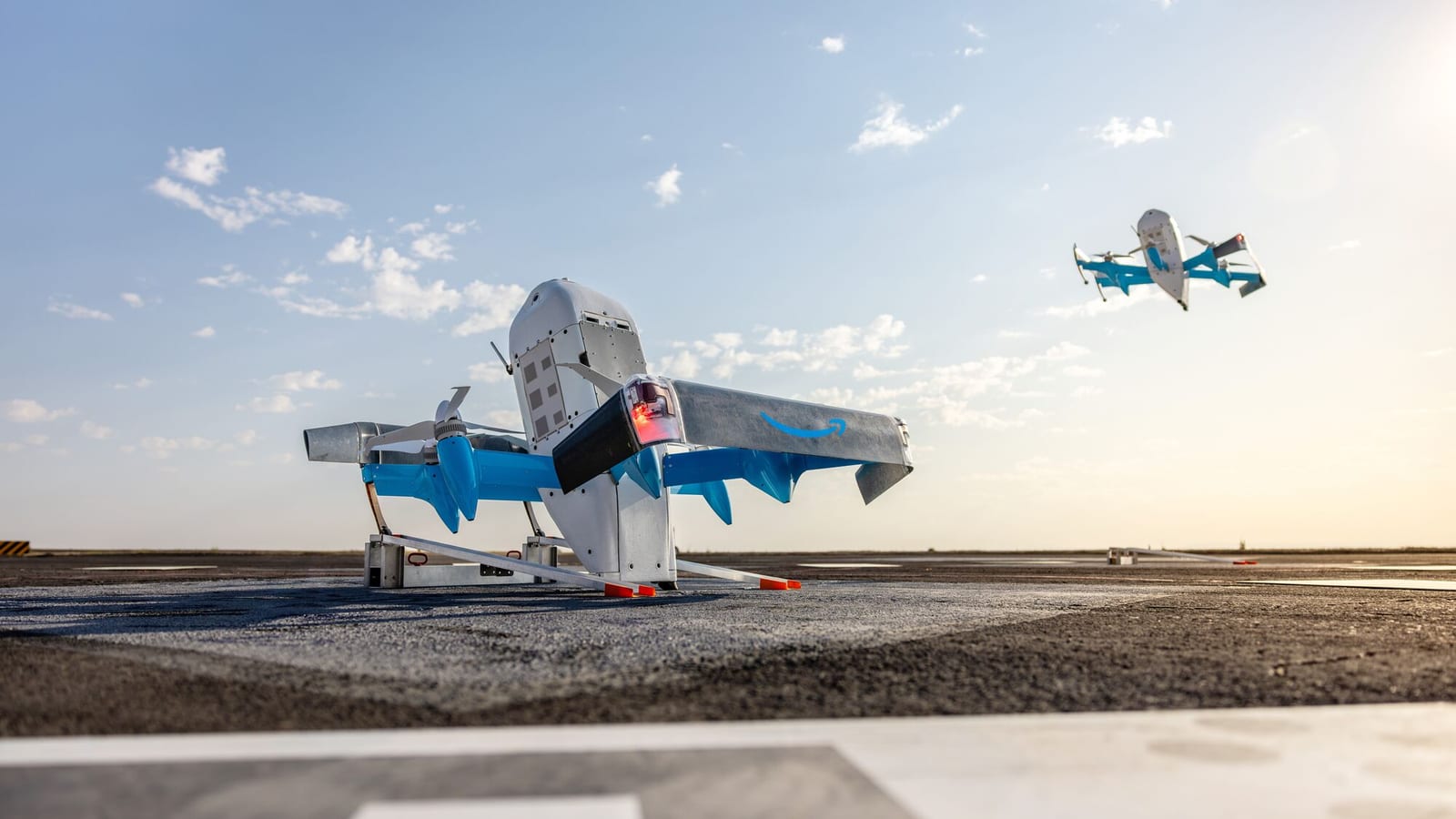 Image: Amazon
What it costs and what it carries
The constraint is weight: packages of 5 pounds or less, roughly shoebox-sized - which Amazon says still covers about 60% of frequently purchased items. "Customers already turn to Amazon for fast Same- and Next-Day Delivery, and Prime Air provides them an even speedier option when they need it," Prime Air vice president David Carbon said in the announcement.
| Customer | Order size | Drone delivery fee |
|---|---|---|
| Prime member | $50 or more | Free |
| Prime member | Under $50 | $2.99 |
| Non-Prime | Any | $4.99 |
The regulatory groundwork - and the incident record
The expansion rides on years of FAA work. Prime Air operates under a Part 135 air carrier certificate - the same framework as commercial airlines - and DroneLife notes Amazon was the first operator cleared to fly drones over 55 pounds as a standard Part 135 carrier, plus later authorization for flights beyond the operator's visual line of sight without ground observers. The drones navigate with onboard cameras, sensors, and a detect-and-avoid system; per ABC News there is no live video monitoring of each flight, and they fly in light rain and a range of temperatures.
The record is not spotless, and TechCrunch is the source that says so: its report lists an October 2025 collision with a crane boom in Tolleson, plus earlier incidents involving an internet cable, a garden, and an apartment building. Scaling from 11 sites to nearly 500 multiplies the exposure - Amazon's bet is that the safety systems scale with it.
What this means for developers
If you build commerce or logistics software, sub-hour delivery just moved from edge case to a checkbox your roadmap has to price in: checkout flows, delivery-promise APIs, and inventory placement all treat "30 minutes by air" differently than "tomorrow by van", and Amazon setting that expectation for ~500 cities resets what users consider normal in every other app they open.
The regulatory trail matters if you work anywhere near drones or robotics: Amazon's Part 135 + beyond-visual-line-of-sight stack is now the proven template a drone startup can point regulators at, and the same physics - 5-pound payloads, 7.5-mile radius, 175-square-mile cells
- defines the design space any competing service has to fit.
And the geospatial side is quietly the biggest software surface here: hundreds of sites times thousands of daily flights is a routing, airspace-deconfliction, and fleet-telemetry problem of a size that barely existed outside the military two years ago. The teams that build tooling for it - simulation, monitoring, incident forensics - are building for a market Amazon just said out loud is coming.
Sources
- Amazon Prime Air drone delivery is expanding to nearly 500 US cities and towns this year - Amazon
- Amazon's Prime Air is taking off in nearly 500 US cities - TechCrunch
- Amazon will expand drone delivery to 500 US cities and towns by end of 2026 - ABC News
- Amazon Prime Air Plans Drone Delivery Expansion to Nearly 500 U.S. Cities and Towns - DroneLife
Related articles

New Kindle, Paperwhite and Colorsoft start at $149.99
Amazon redesigned every Kindle with a flush-front screen. The 6-inch Kindle costs $149.99; the Paperwhite and Colorsoft ship October 28 from $199.99.
Amazon Bedrock Managed Agents for OpenAI enters preview
AWS opened a public preview of Bedrock Managed Agents on September 29, 2026: OpenAI-model agents that run inside your AWS account, in three US regions.

Amazon drops data center NDAs, pledges $1B to towns
AWS CEO Matt Garman says Amazon no longer signs NDAs with government agencies on data centers and will fund a $1B Built Together program for host towns.
The weekly digest
One email every Friday with the week's top stories from all six desks: AI, dev tools, coding, the tech industry, startups and what's next. Free, no spam.