Healthleap raises $38M to flag at-risk hospital patients
Healthleap raised $38M for AI that reads hospital records overnight and flags patients at risk of missed conditions such as malnutrition. It runs in 50+ hospitals.
3 min read
By the numbers
- seed and Series A combined
- $38M
- hospitals using it, up from 3 a year earlier
- 50+
- malnutrition sensitivity, against 0.24 for the old screening tool
- 0.49
- annualized impact reported by Penn Medicine
- $23.8M
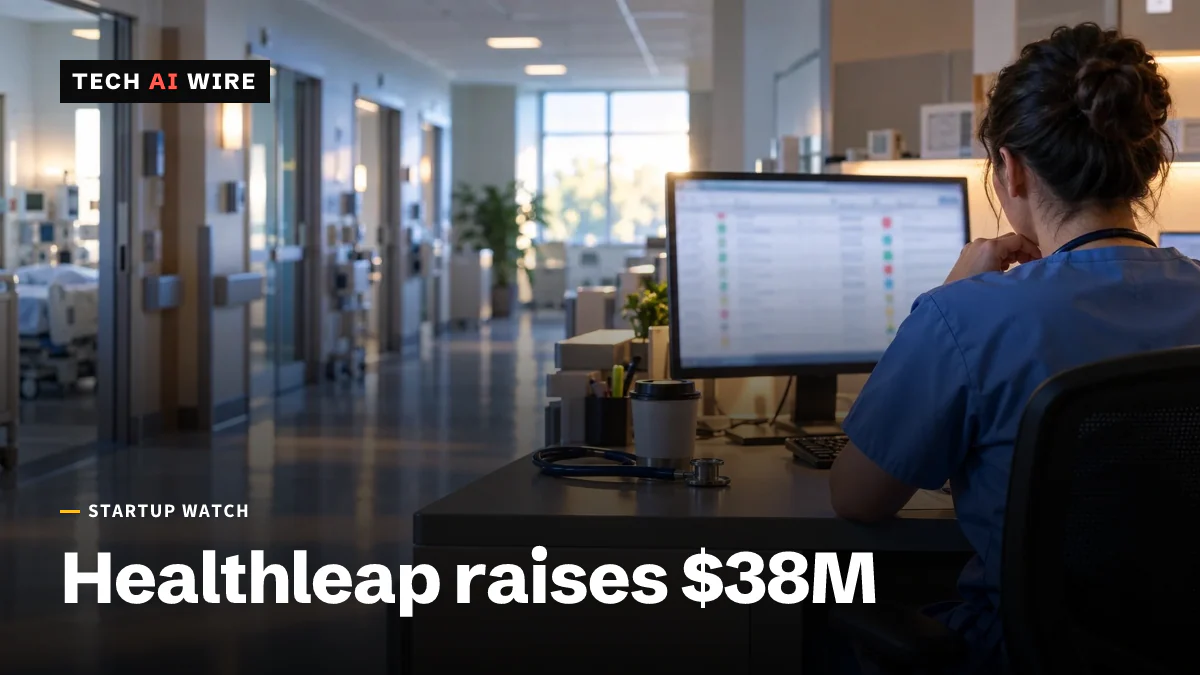
Healthleap, a startup whose AI reads hospital patient records to find people at risk of conditions that often go unnoticed, has raised $38 million. TechCrunch reported the round on October 7, 2026. It combines an $8 million seed round co-led by Sequoia Capital and First Round Capital with a $30 million Series A led by Hummingbird Ventures. The software already runs in more than 50 hospitals. It is a working example of language models reading clinical notes at scale, with a clinician still making the call.
What Healthleap does
Hospitals miss some conditions because nobody is looking for them. Malnutrition and delirium are two common examples. A patient admitted for surgery may also be undernourished without anyone noticing.
Healthleap connects to a hospital's electronic health record, or EHR, the system where staff record everything about a patient. Every night it reads each adult inpatient's chart. "Each night, we analyze every adult inpatient's record," CEO Josiah Meyer told TechCrunch. "Each morning, we write a risk score into the care team's existing workflow."
The system combines two kinds of data, according to RuntimeWire:
- structured fields, such as lab results, vital signs, medications and diagnoses
- clinicians' written notes, which a language model reads to pull out the relevant details
The output is a flag for a clinician to review, not a diagnosis. The software "flags patients who may merit attention. It does not diagnose them," RuntimeWire writes.
Which conditions it screens for
| Condition | Status, per Implicator.ai and RuntimeWire |
|---|---|
| Malnutrition | Deployed and validated |
| Delirium | Deployed |
| Aspiration pneumonia | Under validation |
| Pressure ulcers | Under validation |
| Heart failure readmission risk | Under validation |
Implicator.ai says the company aims to cover more than 40 conditions over time.
The evidence so far
The strongest numbers come from malnutrition. Implicator.ai cites a 2025 study at Cedars-Sinai covering 166,841 hospital admissions. Healthleap's sensitivity, the share of real cases it caught, was 0.49. The hospital's existing screening tool scored 0.24.
RuntimeWire adds more detail. It reports an AUROC of 0.92 on the first day of a stay. AUROC is a score from 0.5 to 1 that measures how well a model ranks at-risk patients above others. RuntimeWire also says the system flagged malnutrition a median 1.3 days before a dietitian first recorded it, in 72.7% of cases.
The hospitals also report money saved. Penn Medicine puts the annualized impact at $23.8 million, Implicator.ai reports. That splits into $6.3 million in reimbursement and $17.5 million from shorter stays. TechJuice says flagged patients left hospital 1.6 days sooner. RuntimeWire puts the figure at Cedars-Sinai at $11 million a year.
Who is behind it
Siblings Jemima and Josiah Meyer founded the company in South Africa in 2022. RuntimeWire says Jemima is a dietitian. Josiah is chief executive.
Growth has been fast. Healthleap went from 3 hospitals to more than 50 in 12 months, according to RuntimeWire and TechJuice. Customers named in the reports include Penn Medicine, Cedars-Sinai, Intermountain, Houston Methodist and Emory Healthcare. TechCrunch reports 10x revenue growth over the past year, and says customers report returns of 5x to 20x a year.
What this means for developers
For people building health software, or running IT for a hospital, Healthleap shows a pattern that is moving from pilots to production.
- Batch beats real time here. A nightly run over every chart is cheaper and easier to validate than live scoring. The result lands in the morning, when care teams plan their day.
- Put the score where clinicians already work. Healthleap writes into the existing workflow instead of adding a new dashboard. A flag that needs a separate login is a flag nobody reads.
- Notes are where the signal hides. Structured fields alone miss what doctors and nurses write in free text. A language model that reads notes reliably is the core of the product.
- Read the sensitivity honestly. 0.49 is twice the old tool, but it still means about half of malnutrition cases go unflagged. Treat the AI as a second screen, not a replacement for existing checks.
- Plan privacy and validation from day one. Every chart is protected health data. Any team copying this approach needs strict access controls, audit logs and a clinical validation study before go-live.
The next proof point is the conditions still under validation. Results on pneumonia, pressure ulcers and heart failure will show whether the approach works beyond malnutrition.
Sources
- Healthleap raises $38M for its AI that flags hospital patients who may need a closer look - TechCrunch
- Healthleap Raises $38M for Hospital AI Screening - Implicator.ai
- Healthleap raises $38M to expand its hospital screening software - RuntimeWire
- Healthleap Raises $38M to Flag Undiagnosed Hospital Patients - TechJuice
Related articles
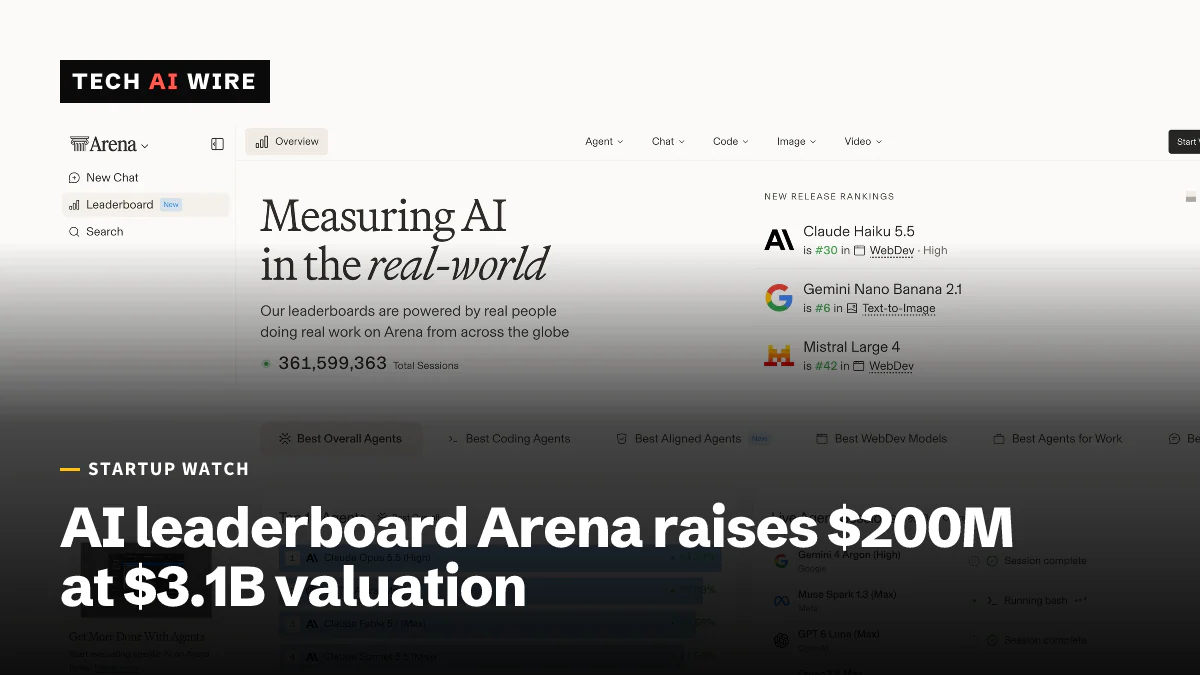
Arena, the AI leaderboard, raises $200M at $3.1B
Arena raised $200M at a $3.1B valuation, nearly double January's price, and previewed an index that ranks AI models on unsafe and deceptive behavior.
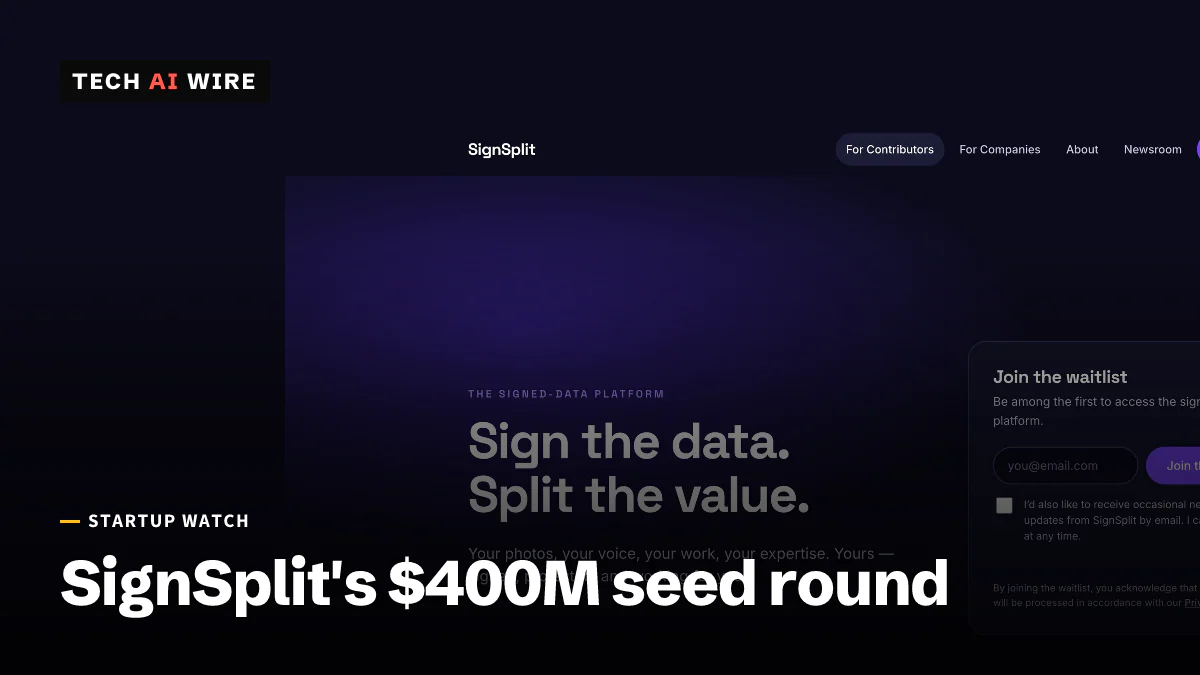
SignSplit gets $400M seed at $1B to license human data
SignSplit left stealth with a $400 million seed deal from W Group at a $1 billion valuation. It pays people to license their data and likeness to AI firms.
Mistral raises €3B at €21B, led by Samsung
Mistral raised €3 billion at a €21 billion valuation, nearly double its last round. It plans 1 GW of European compute by 2030 and will host rivals' open weights.
The weekly digest
One email every Friday with the week's top stories from all six desks: AI, dev tools, coding, the tech industry, startups and what's next. Free, no spam.