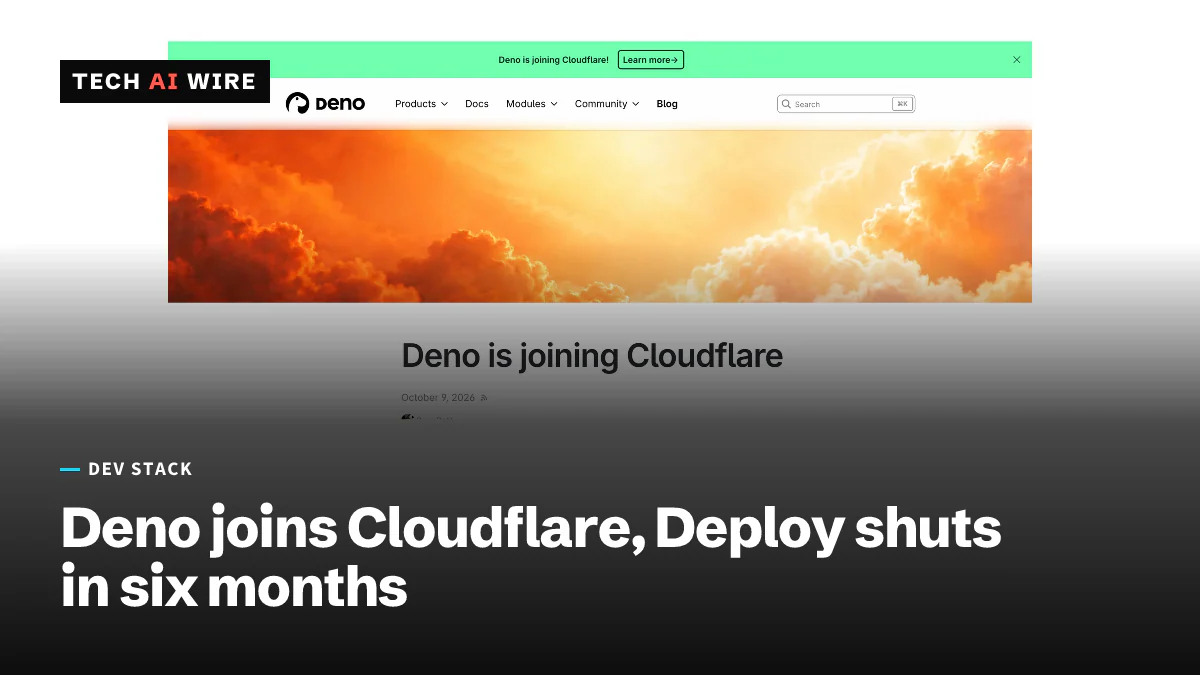
Deno joins Cloudflare; Deno Deploy shuts in six months
The Deno team is joining Cloudflare. Deno Deploy shuts down in six months, the runtime gets a final year of monthly fixes, and JSR moves to Cloudflare.
3 min read
By the numbers
- until Deno Deploy shuts down
- 6 months
- of monthly bug-fix and security releases left for the Deno runtime
- 1 year
- Series A Deno raised in 2022, led by Sequoia
- $21M
The entire Deno team is joining Cloudflare, Deno announced on October 9, 2026. Deno Deploy, the company's hosting service, will keep running for six months and then shut down. The Deno runtime, a JavaScript and TypeScript runtime, gets one more year of monthly bug-fix and security releases before official development ends. For every team that runs code on Deno Deploy, the migration clock has started.
"Today we're announcing that the entire Deno team is joining Cloudflare to take that work further," Deno creator Ryan Dahl wrote on Deno's blog. Neither company disclosed a price or how the deal is structured. Cloudflare files its post on the move under acquisitions.
What happens to each Deno product
The two announcements and the coverage agree on the timelines:
| Product | What happens |
|---|---|
| Deno runtime | Monthly bug-fix and security releases for one more year, then official development ends. It stays open source, and others may carry it on |
| Deno Deploy | Keeps running for six months, then shuts down. Paying customers get help moving to Cloudflare Workers |
| JSR | The JavaScript package registry keeps running, and its infrastructure moves to Cloudflare |
| rusty_v8 | Deno keeps supporting it and will work on bringing it into workerd |
Neither post says what happens to Deno KV, the company's database service, or to the Fresh web framework. Deno's post lists Fresh among its open-source projects, but gives no plan for it.
Deno raised a $21 million Series A led by Sequoia Capital in June 2022, RuntimeWire notes.
The plan: Workers you can run yourself
The joined team will work on running Cloudflare's model outside Cloudflare's own network. Workers is Cloudflare's platform for running code across its network. Durable Objects is its building block for apps that need to keep state.
Two pieces of software are being merged, the Cloudflare blog explains:
- workerd is Cloudflare's open-source Workers runtime. Today its Durable Objects run as a single instance, which works for local testing but cannot scale.
- celld is Deno's system for self-hosting distributed apps. It is one Rust binary whose only outside dependency is object storage. To scale, you run several celld instances against one storage bucket.
Code and ideas from celld will move into workerd. Dahl, now a senior principal engineer at Cloudflare, will lead the effort with Bert Belder. The goal is to make self-hosted workerd a fully supported way to run apps built on the Workers model.
"We're joining Cloudflare to make the Workers programming model a mainstream way to build servers," Dahl wrote. Cloudflare distinguished engineer Kenton Varda added: "We released workerd genuinely intending for people to use it in production." Self-hosters will run "the same code we run in production," not a separate copy, he wrote. Cloudflare promises more details "in the coming months."
What this means for developers
- Deno Deploy users: start planning now. Six months is short for a production move. List every project, domain, cron job and environment variable on Deploy this week.
- Paying customers: ask for migration help early. Cloudflare is offering support for moves to Workers. Get on that list before the deadline crowd does.
- Check your Deno KV data. The announcements do not say what happens to Deno KV. Ask Deno directly before you plan, and keep an export ready.
- Runtime users: you have a year of security fixes. Deno stays open source, but official development ends after that. Decide whether to stay, move to Node.js or another runtime, or wait to see if a community fork forms. Deno says Node.js compatibility was an important part of its work, which may make a move to Node easier.
- JSR publishers: no action needed yet. The registry keeps running on Cloudflare infrastructure.
- Self-hosters: watch workerd. If the celld merge lands, you could run the Workers model on your own servers instead of only on Cloudflare.
The first deadline that matters is Deno Deploy's shutdown, six months from October 9.
Sources
- Deno is joining Cloudflare - Deno
- Deno is joining Cloudflare (Cloudflare's announcement) - The Cloudflare Blog
- Deno team joins Cloudflare as runtime development winds down - AlternativeTo
- Deno joins Cloudflare to bring Workers to self-hosted infrastructure - RuntimeWire
Related articles
Zod 4.6.6 malware alarm: the bad commit never reached npm
Zod 4.6.6 shipped October 11 with malicious September 21 commits in its history. They were reverted that day, and none of them reached npm.
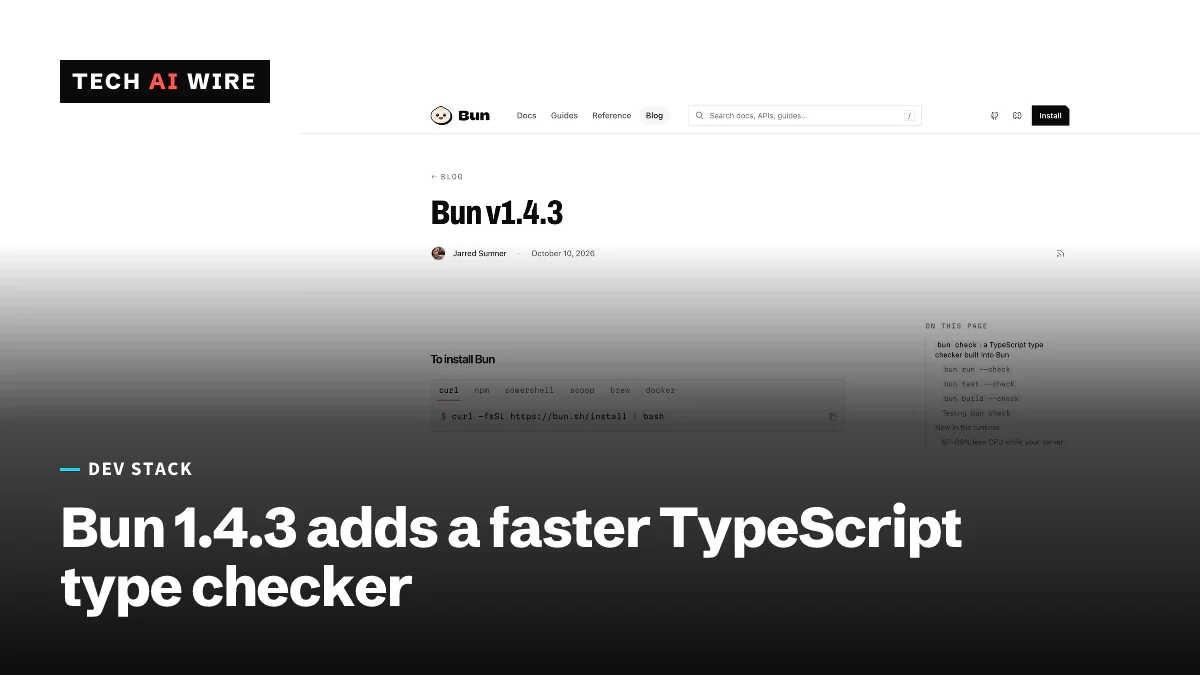
Bun 1.4.3 adds bun check, a faster TypeScript type checker
Bun 1.4.3 adds bun check, a built-in TypeScript type checker that Bun says runs 3x to 6.4x faster than tsc 7.0.2 and passes all 51,210 conformance tests.
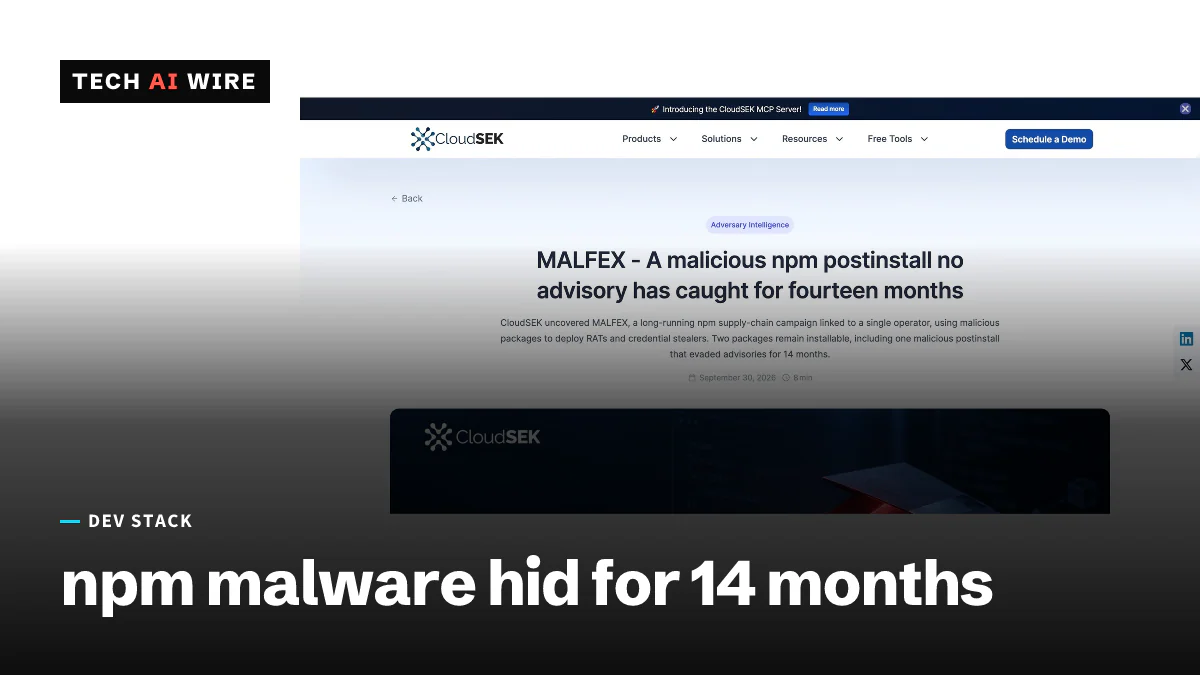
MALFEX npm malware ran undetected for 14 months
MALFEX, a one-person npm malware campaign, published 12 packages since 2023 and drew 40,767 downloads. Some packages are still live with no advisory.
The weekly digest
One email every Friday with the week's top stories from all six desks: AI, dev tools, coding, the tech industry, startups and what's next. Free, no spam.